














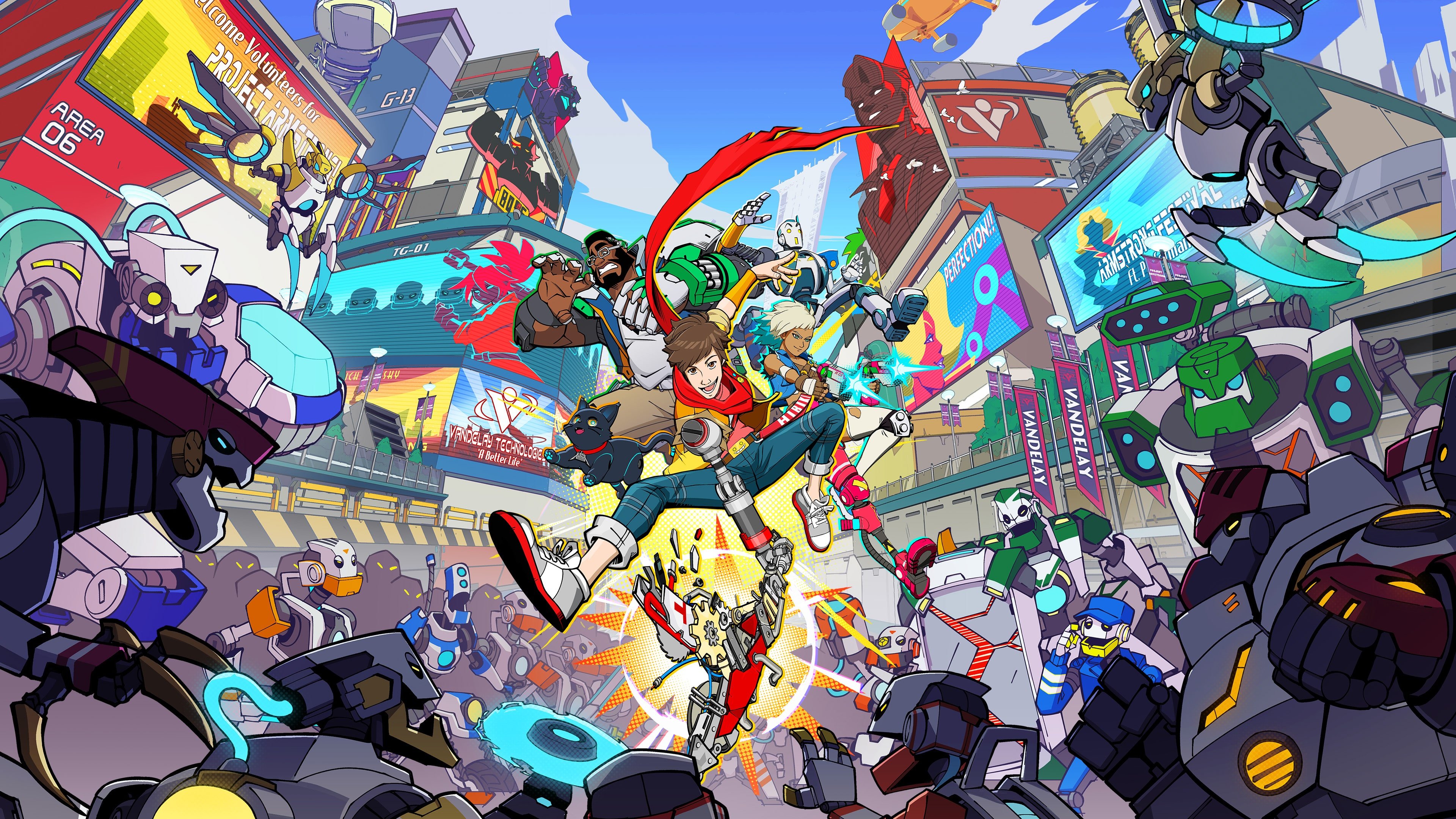
Summary:
Hi-Fi Rush popping up with a Nintendo Switch rating is the kind of small signal that can set the internet on fire, because it sits right in that sweet spot between “this is real paperwork” and “nothing is officially announced yet.” A ratings listing is not a trailer and it is not a release date, but it is rarely random. Someone has usually submitted materials, selected platforms, and followed a process that costs time and coordination. That is why fans notice it. It feels like spotting fresh footprints outside a locked door. We cannot see inside, but we can tell somebody has been there recently.
What makes this moment extra interesting is the context around the listing itself and the broader conversation it triggers. People remember that Hi-Fi Rush has been linked to Nintendo platform chatter before, and they also know the game is a natural fit for a system built around quick sessions and portable play. Rhythm combat works great when you can grab a handheld, pop in earbuds, and lock into a beat for twenty minutes. At the same time, we should keep our feet on the ground. A rating does not guarantee a launch, and it does not confirm features, frame rate targets, or whether any newer hardware variant is involved. It is a clue, not a conclusion.
So what can we do with this clue? We can treat it like a practical checklist. We can look at what ratings typically indicate, why platforms are listed, and what usually happens next when publishers move from classification to announcement. We can also talk about expectations that actually help players: how to plan your backlog, what to watch for in official channels, and how to avoid getting dragged into daily rumor whirlpools that never pay rent. If Hi-Fi Rush really is preparing to show up on Nintendo systems, we will likely see the next steps soon enough. Until then, we can read the signs without making them write the whole story for us.
Hi-Fi Rush on Nintendo hardware: why a rating sparks noise
A rating showing up for a new platform is like hearing a familiar song coming from the next room. You recognize it instantly, and your brain immediately fills in the missing details. That is exactly why this kind of listing creates chatter. Hi-Fi Rush is already a known quantity: a stylish rhythm-action game with a strong identity, sharp humor, and combat that leans on timing. When people see Nintendo Switch attached to it in a classification context, they do not just think “paperwork.” They think “portable runs,” “music in handheld mode,” and “this would feel at home here.” It is also a reminder that ratings are not done for fun. Someone, somewhere, took steps that usually happen when a release is being prepared for sale in a region. That does not mean we have a date, but it does mean the conversation is not built on pure imagination. It is built on a real-world process that exists to protect consumers and label products before they hit shelves and storefronts.
What a ratings listing can tell us, and what it cannot
Ratings are useful because they are one of the few public breadcrumbs that can appear before a company is ready to talk. They can confirm that a version has been submitted for review, and they can sometimes reveal which platforms are being considered in that submission. They also typically reaffirm the age band and content descriptors, which helps set expectations for parents and players. What ratings do not do is confirm release plans in the way people want them to. A listing does not guarantee a launch, and it does not promise a specific storefront, cartridge run, or a specific performance profile. The healthiest way to treat a rating is as evidence of preparation, not evidence of an imminent launch day. If you have ever seen someone buy ingredients for dinner, you know a meal is likely coming. You do not know when it will be served, and you definitely do not know if dessert is happening.
Ratings are paperwork first, marketing second
It is tempting to treat a ratings database like a secret announcement feed, but ratings exist for a simple reason: games need to be classified before they are sold in many regions. That means submissions can happen well before marketing starts, especially if a company wants flexibility. If a release is planned for a window, ratings can be handled ahead of time so there are fewer last-minute blockers. That is why a listing can feel exciting while still being incomplete. It is often an internal milestone becoming visible by accident, not a carefully timed hype moment. It also explains why silence can follow a rating for a while. Marketing teams work on their own schedules, platform holders have their own presentation calendars, and publishers may wait for a better moment to speak. So yes, a rating can be a strong hint that something is being lined up, but no, it is not a guaranteed “announcement tomorrow” button.
Why platforms show up on listings
When a platform appears on a rating entry, it usually means the submission is associated with that platform version in some form. That can be as straightforward as “this version is intended for sale on this platform.” It can also reflect the way the submission was filed, which may include platform selections even if plans later change. That is why we should treat the platform field as meaningful but not absolute. In this case, the Nintendo Switch mention matters because it is the entire reason people are paying attention, but it still lives in the same reality as every other listing: it is a snapshot of an administrative moment. If the publisher is actively preparing a Switch release, that field is exactly what you would expect to see. If plans shift, the field does not magically stop existing in the past. Databases remember. The internet definitely remembers.
How to read timing without overreading it
Timing is where people get themselves into trouble. A rating appearing in mid-January 2026 can suggest that the wheels are turning, but it does not tell us whether we are weeks away or months away. Different companies move at different speeds, and different releases have different needs, like localization updates, platform certification, or physical production planning. If you want a sane way to interpret timing, think in ranges, not dates. A rating can plausibly line up with an announcement in the near term, but “near” can still mean a few months, especially if a company wants to align with a showcase, a seasonal buying period, or a coordinated rollout across regions. The safest expectation is simple: if this is real and moving forward, we should eventually see official confirmation from the publisher, Nintendo, or both. That is the moment when the guessing game becomes a schedule.
Why this specific moment feels different to fans
Fans are not reacting in a vacuum. They are reacting with memory. People remember earlier noise around Hi-Fi Rush potentially showing up on Nintendo systems, and they remember how quickly plans can change in the industry. That history shapes the emotional temperature. On one hand, a renewed rating can feel like a second chance, the “okay, maybe this is actually happening” moment. On the other hand, it can trigger guarded optimism, because nobody wants to get excited over paperwork and then watch nothing happen again. That mix of hope and caution is actually healthy. It keeps the conversation grounded. If you are a Nintendo player who has heard the praise but never played, this moment is also a reminder that the door is not closed. It is simply not open yet. And if you are someone who already played on another system, it is easy to see why you would want this version to exist anyway. Great games spreading to more players is usually a win, even if it means the internet spends a week arguing about frame rates like it is a courtroom drama.
The Switch angle: portability, rhythm combat, and pick-up play
Hi-Fi Rush makes sense on Nintendo Switch in a very practical way. Rhythm-based combat thrives when you can focus, and the Switch is built for that quick “grab it and go” loop. Think about the real-life scenario: you are on a train, you have headphones, and you want something that feels energetic without requiring a three-hour commitment. That is Hi-Fi Rush’s sweet spot. The game’s structure, its pacing, and its emphasis on timing can feel even more personal in handheld mode, where the screen is close and the audio is right in your ears. Nintendo players are also used to stylish action experiences on the system, and they tend to show up for games with a strong identity. Hi-Fi Rush has that in spades. The humor, the bright presentation, and the music-forward personality all map cleanly onto the way people actually use the Switch day to day. If this version becomes real, it is not hard to picture it becoming a “show friends this cool thing” favorite, the kind of release that spreads through word of mouth because it is fun to watch someone else play it for five minutes.
Switch 2 chatter: what people hope for versus what’s confirmed
The moment Nintendo Switch gets mentioned, Nintendo Switch 2 inevitably joins the conversation. That is not because people are trying to be difficult. It is because players like options. They want the widest reach on the current system, and they want the best possible version on newer hardware. The important thing is separating hopes from confirmation. Right now, the talk around a Switch 2 version is speculation built on what players think would make sense, not on a confirmed listing that explicitly names it. That distinction matters, because it changes how you should set expectations. If you are hoping for enhancements, the sensible approach is to wait for official platform details before assuming anything about performance or features. If you are primarily hoping the game shows up at all, the Switch mention is the bigger deal. In other words, we can want the “deluxe” version while still appreciating that a standard version would already be a big win for people who have been waiting. It is like wanting both the pizza and the garlic knots. We can dream, but we should not claim the knots are already in the oven.
Publisher and rights context: why a new name can matter
One detail that has fueled discussion is the way the updated rating has been reported alongside publisher context, including references to Krafton in connection with the listing. That matters because publisher identity often affects priorities. When a game’s publishing arrangements shift, the new team may revisit platforms, timing, and release strategy. Sometimes that leads to ports that previously stalled. Sometimes it leads to renewed classification work, because the responsible party for distribution and compliance has changed. The key point is not gossip. The key point is logistics. A ratings entry tied to a particular publisher name can be a signal that someone is actively managing the release details rather than letting them sit in a drawer. Still, we should be careful with conclusions. A publisher name on a listing can support the idea that a version is being prepared, but it is not a press release. The clearest confirmation will always be a direct announcement with platform logos, storefront pages, or a trailer that ends with “available on” and makes everyone’s group chat explode.
Release pattern clues: announcements, shadow drops, and realistic windows
When a game is rated and then announced, the gap can vary wildly. Some releases are revealed and launched quickly, especially if the goal is to ride a wave of momentum. Others are announced and then given a broader window, especially if physical editions, regional storefront coordination, or platform promotional slots are involved. If you are trying to read the tea leaves without drinking the whole pot, focus on what tends to follow: official social posts, storefront listings, and platform holder mentions. Those are the things that convert a rating curiosity into a real plan. A shadow drop is always possible in the modern market, but it is not the default. The default is a clean reveal and a clear call to action. So if you are feeling impatient, that is normal. We all do the “refresh” dance sometimes. Just do not let impatience trick you into treating every rumor as a calendar invite.
Performance expectations: what tends to change across hardware
Performance talk is where enthusiasm can turn into a food fight, so it helps to keep it practical. Different hardware targets often mean different performance profiles, and players should expect trade-offs when a visually stylish action game moves to a portable system with a wide user base. That does not automatically mean the experience suffers. It means the experience may be tuned differently. Resolution targets, frame rate targets, and effects complexity can shift to keep gameplay responsive and consistent. For Hi-Fi Rush specifically, the feel of combat is tied to timing, so consistency matters more than flashy extras. If the game hits stable responsiveness and keeps the rhythm feel intact, many players will be happy. If there is ever a newer hardware version, people will naturally hope for improvements, but the core question remains the same: does it feel good to play? That is the standard that matters, whether you play docked, handheld, or on a future device that has more headroom. The beat has to land. If the beat lands, the rest is garnish.
What this could mean for Nintendo players who missed it
If you are a Nintendo-only player, a potential Switch release is not just another port. It is access. Hi-Fi Rush has built a reputation through word of mouth, clips, and people describing it with that tone that basically translates to “trust me, you will smile.” Not everyone wants to buy a second system to try one game, and not everyone has a gaming PC sitting around. A Switch release would remove friction, and friction is often the real villain. It also opens the door for a different kind of discovery, where a game that was once “over there” becomes something your friends can actually share, recommend, and play in the same ecosystem. Nintendo communities are good at turning a strong release into a little event, where everyone compares favorite moments and argues about bosses like it is sports. If Hi-Fi Rush lands, it is easy to imagine it becoming that kind of shared experience, especially for people who love stylish action games but want something with humor and music at the center instead of grim seriousness.
How we can track updates without living in rumor land
There is a difference between staying informed and living inside a rumor blender. Staying informed means watching official publisher channels, Nintendo’s own announcements, and reputable storefront updates. It also means treating ratings as a signal to pay attention, not a signal to panic-refresh. A good habit is to set simple checkpoints: check once a day during a hot news week, then back off. Another good habit is to look for the concrete steps that usually accompany a real release: a trailer, a press statement, a store page with a date, or a clear “coming to” message. If you see those, you can get excited with confidence. Until then, keep your expectations flexible. If the game arrives soon, great. If it arrives later, you have not spent weeks emotionally budgeting for a release that never had a date. That is the real goal. We can enjoy the hype without letting it hijack our mood, like a catchy chorus that refuses to leave your head at 2 a.m.
Conclusion
A renewed Nintendo Switch rating for Hi-Fi Rush is a meaningful signal because it points to real administrative motion, and administrative motion usually exists for a reason. At the same time, a rating is not an announcement, and it should not be treated like a guaranteed launch countdown. The smartest way to handle this moment is to combine excitement with discipline: notice the clue, understand what it suggests, and then wait for official confirmation before locking in assumptions about dates, versions, or upgrades. If Hi-Fi Rush is truly on the way to Nintendo platforms, the next steps should become visible through standard channels like announcements and storefront listings. Until then, we can keep the optimism, keep the humor, and keep the expectations realistic. That way, when the door finally opens, we are ready to walk through it instead of arguing about the hinges.
FAQs
- Does a Nintendo Switch rating confirm Hi-Fi Rush is coming to Switch?
- No. A rating can indicate preparation, but official confirmation requires an announcement or storefront listing from the publisher or Nintendo.
- Why do ratings sometimes appear before a game is announced?
- Ratings are part of the process required for sale in many regions, so submissions can happen earlier to avoid delays later.
- Does the rating mean a Nintendo Switch 2 version is also planned?
- Not necessarily. People may speculate, but a rating tied to Switch does not automatically confirm any other platform version.
- What should we watch for next if this is real?
- Look for official posts from the publisher, Nintendo mentions, and live storefront pages that list platforms and release timing.
- Is it normal for a game to be rated more than once?
- Yes. Listings can be updated or refiled due to publishing changes, re-releases, or administrative updates.
Sources
- Hi-Fi Rush Has Been Rated For The Switch… Again, Nintendo Life, January 16, 2026
- Updated PEGI rating suggests Hi-Fi Rush could still come to Switch, Vooks, January 16, 2026
- PEGI rates Hi-Fi Rush for Switch release (UPDATE), GoNintendo, January 16, 2026
- Hi-Fi Rush rated again for Nintendo Switch, Nintendo Everything, January 16, 2026
- Hi-Fi Rush Has Been Rated For Nintendo Switch, Twisted Voxel, January 17, 2026