














Summary:
High on Life 2 is officially lined up for Nintendo Switch 2, and the key details are simple but important. We’re looking at a Switch 2 release date of April 20, with a listed price around $60 for the physical edition. The big “read this twice” point is the format: the physical version is a Game-Key Card. That means the card does not carry the full game data like a traditional cartridge. Instead, we insert the card, follow the on-screen steps, and download the full game over the internet to system storage or a microSD Express card. After that, the card still matters because it acts like the key we need in the console whenever we want to play.
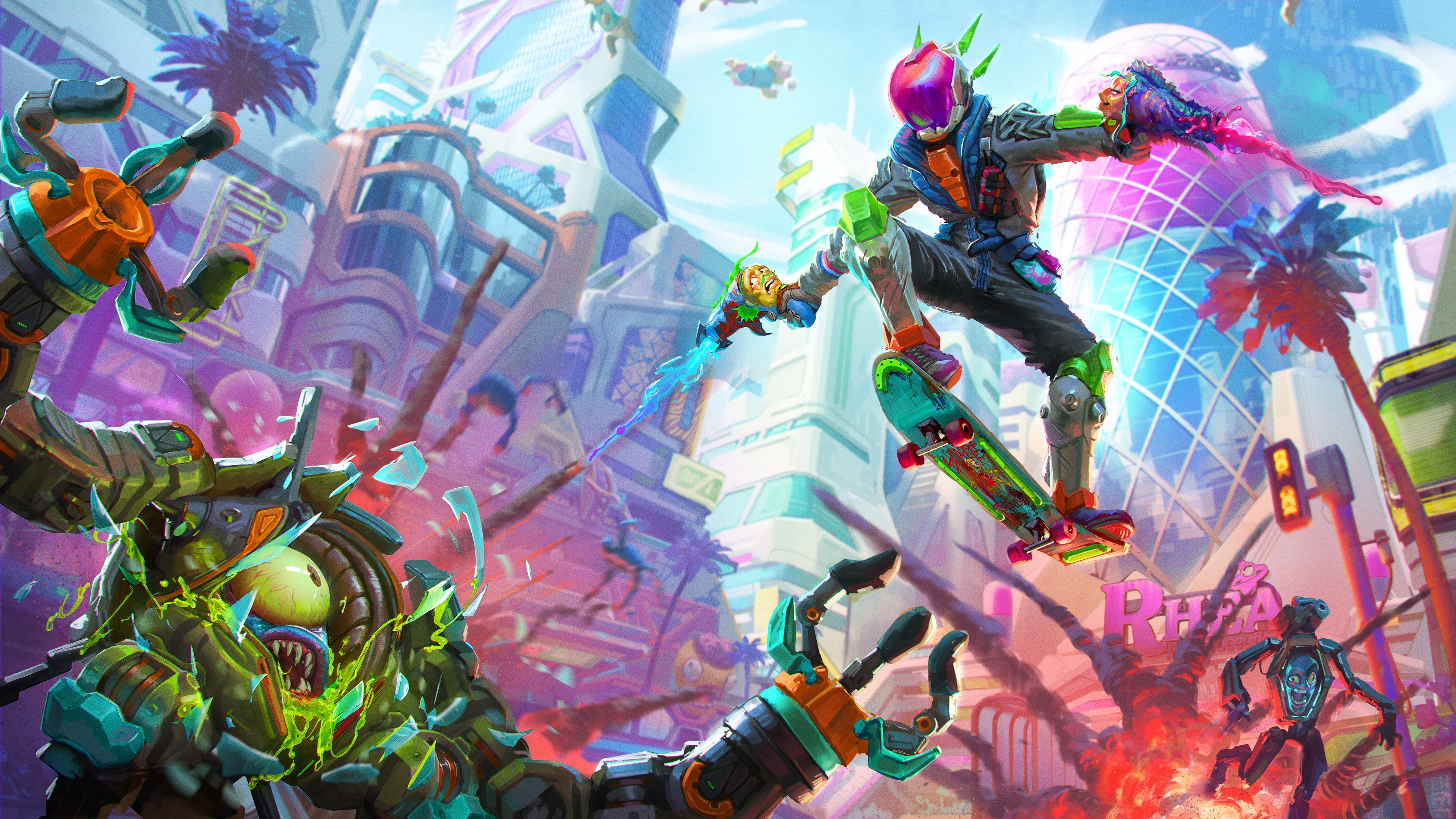
On the gameplay side, High on Life 2 is pitching fast, loud, and weird in the best possible way. We blast enemies with an arsenal of alien weapons that bring personality along with firepower, so fights aren’t just about damage numbers, they’re about chaos, timing, and jokes flying at the same speed as bullets. Movement leans hard into a new skateboard, which turns escapes and chases into a rolling, grinding, kickflipping rhythm. We also run into an eccentric cast of strange characters who treat us like a local celebrity, whether we asked for that attention or not. The adventure promises big set pieces too, from an enormous convention to eerie medieval woods and even a mission inside the belly of a sea beast. If we plan ahead for storage space and the initial download, the Switch 2 version looks like a loud, kinetic ride built to keep our hands busy and our brain laughing.
High on Life 2 lands on Nintendo Switch 2?
High on Life 2 is set for Nintendo Switch 2, and the headline facts are already doing most of the talking. We’ve got a clearly stated date for the platform: April 20. We’ve got a price point that sits right in the expected new-release range at about $60. And we’ve got box art in circulation, which usually means the physical side of the rollout is more than a vague promise. If you’ve been waiting to see whether the sequel would land on Switch 2 at all, this is the part where we stop guessing and start planning. The better question now is not “is it coming,” but “what exactly are we buying, and what do we need ready on day one?” Because this version is tied to a Game-Key Card, and that changes the day-one routine. Instead of popping in a cart and instantly playing, we’re looking at a download step, storage planning, and a little bit of patience before the first firefight starts.
Release date, price, and what the physical version really is
The Switch 2 version is lined up for April 20, and the physical edition is priced at roughly $59.99, often rounded to $60 depending on how a retailer displays it. That part is straightforward. The part that trips people up is the phrase “physical edition,” because we tend to picture a cartridge loaded with the game. Here, the physical item is a Game-Key Card. We still get a box, we still get something we can hold, and we still get a card we insert into the console. But we do not get the full game data living on that card. If you’re the type who loves lending games to friends, buying used, or just lining cases up on a shelf like trophies, the good news is that a Game-Key Card still behaves like a physical object with physical ownership vibes. The practical twist is that the real bulk of the game is going to live on our storage once it’s downloaded, so “physical” comes with a digital-sized footprint.
Game-Key Card explained: what you download, what you keep, what you need
A Game-Key Card is basically the key that unlocks the full download. We insert it into the Switch 2, the system prompts us with instructions, and we download the complete game via the internet. That means two things matter immediately: connection and space. If our Wi-Fi is moody, or if our storage is already packed with other big games, we’ll feel that pain fast. The second thing to understand is what happens after installation. Once the game is downloaded, we can play it like a normal physical game, but we still need the Game-Key Card inserted to launch and keep playing. So the card is not a one-time code we toss away. It’s the “key” we keep using, which also means lending or reselling stays on the table in a way that feels more like classic physical gaming. The packaging commonly calls this out with wording along the lines of “full game download via internet required,” which is a polite way of saying: plan your storage before you plan your weekend.
Internet and storage: the two things we should check before launch day
If we want a smooth first night, we check two basics early: whether we have a stable internet connection for the initial download, and whether we have enough free space on the console or a microSD Express card. This is the part where a lot of people get surprised, because a Game-Key Card does not magically save space. We’re still installing the full game locally, so the storage impact is closer to a digital purchase than a traditional cartridge. We also want to think about timing. If release day downloads are slow, it might be smarter to install at an off-peak hour so we’re not staring at a progress bar while our friends are already quoting alien gun one-liners in group chat. And yes, it’s worth cleaning house: old clips, unused demos, and games we haven’t touched since last summer can quietly eat up the space we need. It’s not glamorous, but it’s the difference between “play tonight” and “play after an unexpected storage cleanup session.”
What the Game-Key Card changes for collectors and second-hand buyers
If we collect physical games, the Game-Key Card format lands in a weird middle ground. We still get a case and a shelf presence, which scratches that collector itch. We also get something we can lend, trade, or resell, because the card remains the required key to play. That’s a big difference compared to a one-time download code. The trade-off is preservation vibes. A traditional cartridge feels self-contained, like a little time capsule. A Game-Key Card depends on downloading the game, so our long-term access is tied to the ability to obtain the software data at least once. Practically, for most players, that’s fine, especially in the early years of a platform’s life. Emotionally, it can still feel like buying a fancy keychain instead of the whole car. The best way to look at it is simple: it keeps physical flexibility, but it behaves like a digital install in our storage and setup routine.
Combat energy: charismatic alien firepower and hyperactive fights
High on Life 2 is selling combat as fast, loud, and personality-driven. We’re not just picking up guns, we’re carrying alien firepower that feels like a cast member. That matters because it changes the texture of a fight. In a normal shooter, weapons are tools. Here, weapons are tools that talk back, hype us up, insult the enemy, and generally act like they’re trying to steal the scene. The promise is “high-octane hyperactive combat,” which is a fancy way of saying we should expect constant motion, quick target switching, and an arsenal that rewards experimentation. We’re likely bouncing between weapons based on situation, not loyalty. Some enemies might demand crowd control, others might punish sloppy reload timing, and others might just exist to be launched into comedic chaos. If the first game taught us anything, it’s that the action is the vehicle, and the tone is the fuel. High on Life 2 looks ready to floor it.
Weapons with personality: why the arsenal is more than damage numbers
Charismatic alien weapons aren’t just a gag, they’re a pacing tool. When the weapon reacts to what’s happening, the moment-to-moment loop feels more alive. We shoot, we move, the weapon banters, the environment responds, and suddenly a standard hallway fight feels like a little scene in a chaotic space comedy. That also means the arsenal can shape how we learn mechanics. A weapon that calls out a tactic or complains when we miss a trick can nudge us to play smarter without a sterile tutorial box yelling at us. It’s also a clever way to make switching weapons feel exciting instead of annoying. If each weapon feels like a different personality and a different rhythm, swapping becomes part of the fun instead of a chore. So when the sequel promises “an arsenal of charismatic alien firepower,” it’s basically promising that our loadout will be entertainment, not just equipment.
Movement makeover: the skateboard changes how we survive
The new skateboard is a big deal because movement is the secret sauce of any shooter that wants to feel modern and energetic. High on Life 2 calls out kickflips, grinding, and using the board to power our escape. That suggests we’re not walking politely from arena to arena. We’re improvising routes, turning combat spaces into skate lines, and using speed as a weapon. A skateboard also changes how we read danger. When we can build momentum, we’re less likely to bunker down behind a box for ten minutes. We’ll probably kite enemies, zip through gaps, and turn verticality and rails into survival tools. And let’s be honest, there’s a psychological trick here too: when movement feels stylish, we take more risks. We go for the jump. We try the grind. We attempt the ridiculous stunt because it looks cool, and the game is clearly begging us to play that way. It’s chaos with a rhythm, like turning a firefight into a messy dance number.
Combat plus skating: how speed can become strategy
Fast movement does more than make us feel cool, it can change the entire difficulty curve. If enemies are aggressive, speed becomes our shield. If arenas are dense, speed becomes our way to reposition without taking a dozen hits. The skateboard idea also hints at flow: enter a fight with momentum, pick off targets while moving, and exit with style instead of limping away. We can imagine sequences where grinding a rail lines us up for a perfect angle, or a kickflip burst gets us out of a corner before an alien cop turns us into confetti. Even outside combat, skating can make traversal fun instead of functional. It’s the difference between “walk to the next objective” and “race there while showing off.” If this lands well, the board will be the thing we miss in other shooters, like trying to run in a dream after you’ve gotten used to flying.
The cast: bizarre lifeforms, big personalities, and constant heckling
High on Life 2 is leaning hard into its oddball character energy, and that’s not just decoration, it’s the identity. We’re promised a crew of bizarre, subversive lifeforms who treat us like we’re “hot as hell,” which tells us the humor is still going to be direct, ridiculous, and occasionally uncomfortable in a way that’s clearly intentional. This series doesn’t do subtle. It does loud personalities, strange motivations, and dialogue that makes you laugh and then immediately question your sense of humor. The cast also matters for pacing. When characters keep things moving with chatter and conflict, the game can transition between action beats without feeling empty. It’s like traveling with a chaotic friend who won’t stop talking, except now that friend is an alien and you’re holding them in your hands as a weapon. If you like comedy in your shooters, this is the heartbeat. If you prefer silence and serious grit, this is where you decide whether the vibe matches your taste.
Humor as a mechanic: why tone changes how we play
Comedy doesn’t just sit on top of the gameplay, it can reshape how we experience failure and pressure. If we wipe in a fight and the game responds with a joke instead of a grim death screen mood, we’re more likely to jump right back in. Humor can make experimentation feel safe, like the game is giving us permission to mess around. It can also turn story beats into momentum. Instead of long, serious cutscenes that slow everything down, we might get fast character moments that keep us moving, laughing, and curious. That said, humor is personal. What feels hilarious to one player can feel like noise to another. The good news is that the series is consistent about what it is. High on Life 2 isn’t trying to be everyone’s favorite flavor. It’s trying to be itself, loudly, and that clarity helps us know what we’re signing up for.
Set pieces and locations: convention chaos, medieval woods, and sea beast mayhem
The sequel is teasing a variety of locations that sound like they exist purely to keep our eyes wide and our brain slightly confused. We’re going to cause trouble at what’s described as the galaxy’s biggest convention, which screams crowds, spectacle, and the kind of messy encounters where anything can become a problem. We’re also heading into mysterious woods on a medieval planet, which hints at a tonal shift toward eerie exploration and maybe a bit of fantasy flavor mixed into the sci-fi weirdness. And then there’s the big one: cutting and slashing our way through the belly of a sea beast. That’s not a normal Tuesday in space. That’s a set piece designed to be remembered, the kind of level you bring up years later like, “Remember when we fought our way through that living nightmare?” The variety is important because it suggests the sequel wants to avoid feeling like a single biome stretched too far. It wants moments that feel like stories, not just stages.
The convention: why a crowded, chaotic setting fits this series
A massive intergalactic convention is basically a playground for absurd world-building. It’s a place where the game can throw every kind of creature, brand parody, loud announcement, and awkward interaction at us without needing to justify it. Conventions are naturally chaotic, even in real life. Add aliens, criminal nonsense, and a shooter’s pacing, and it becomes a perfect excuse for spectacle missions, surprise fights, and weird side encounters. It also lets the game poke fun at pop culture, fandom, consumer hype, and all the silly rituals people do when they love something too much. We might run into rival exhibitors, security that takes their job way too seriously, and a million distractions that make us forget we were supposed to be saving anything at all. If done right, this location can feel like a living joke that we get to play inside.
The medieval woods: when sci-fi takes a detour into fantasy vibes
Mysterious medieval woods on another planet is a fun premise because it lets the sequel shift tone without abandoning the core identity. We can go from neon chaos to fog, stone ruins, and creatures that look like they wandered out of a fantasy storybook. That contrast can make both sides stronger. The sci-fi parts feel more futuristic when we’ve just been creeping through something ancient and earthy. The medieval sections feel stranger when we remember we’re still in a universe with space travel and talking guns. This kind of location also opens the door for different enemy types and different movement challenges. Dense woods can make sightlines tighter, ambushes more common, and traversal more vertical. It’s a different flavor of tension, and it can keep the game from becoming a single-note sprint.
The sea beast interior: gross, glorious, and probably unforgettable
Fighting through the inside of a sea beast is the kind of set piece that only makes sense in a series like this, which is exactly why it works. It’s visceral and weird. It’s also a chance for environmental storytelling that’s more physical than verbal. The lighting can be organic, the surfaces can move, and the whole level can feel alive in a way that makes us slightly uncomfortable. That discomfort is a feature, not a bug. When the game pushes us into a place that feels hostile just by existing, every fight becomes more intense. It also creates a natural forward drive, because nobody wants to hang out inside a giant creature any longer than necessary. It’s the perfect motivation: get in, do the job, get out, and maybe take a shower for the soul afterward.
Story angle: taking a swing at Big Pharma in a sci-fi way
High on Life 2 positions the adventure as a cosmic mission aimed at taking down “Big Pharma,” and that phrase tells us a lot about the tone. We’re likely getting satire, exaggerated villains, and a story that uses sci-fi absurdity to poke at real-world themes without pretending it’s a serious documentary. The first game already leaned into big, ridiculous antagonists and warped corporate vibes, so this feels like the sequel doubling down on that lane. The fun part is how this theme can tie locations together. A galaxy-wide convention can be corporate theater. Medieval woods can hide exploitation under a fantasy mask. A sea beast mission can be the grotesque, literal representation of a system that consumes everything. Even if the story stays comedic and over-the-top, having a clear target can give the chaos a backbone. It’s like throwing a dart at a villain board and then turning that villain into a cartoon monster we get to chase across planets.
Quick checklist before we buy the Switch 2 Game-Key Card edition
Before we hit preorder or grab the box on launch week, we should run a quick reality check. Do we have enough free space on our Switch 2 or microSD Express card to install a full-sized modern game? Do we have an internet connection that can handle a chunky download without drama? Are we okay with the idea that the physical item is a key, not the complete data on a cartridge? If the answer to those is yes, we’re in good shape. If the answer is “maybe,” we can still make it work, but we should prepare instead of being surprised. It’s also smart to think about household sharing. If multiple people use one console, the card will need to be available when someone wants to play. Finally, we should consider our own taste: do we enjoy loud humor, fast movement, and chaotic sci-fi action? If that’s our thing, this is probably going to land like a sugar rush with a jetpack.
Switch 2 experience: controls, performance expectations, and practical comfort
When we talk about how this might feel on Switch 2, we should keep expectations grounded and focused on what matters to us moment to moment. High on Life 2 is a shooter with fast movement, so responsiveness is king. We want aiming that feels precise, camera control that doesn’t fight us, and performance that stays steady when effects and enemies stack up. The Switch 2 is built to handle modern games better than the original Switch, but the real experience depends on the port and the settings choices made for the platform. The good news is that a Game-Key Card edition usually means we’re downloading a full build to storage, which can make patching and updates straightforward as the game evolves. Practical comfort matters too. A fast shooter plus skate-style movement can be intense in handheld mode if the camera is constantly whipping around. That’s not a problem, it’s just a lifestyle choice. If we’re sensitive to motion-heavy games, we might prefer docked play on a larger screen with a controller setup that feels stable.
Buying checklist: who this is for, who should pause, and what to prepare
This Switch 2 edition makes the most sense for players who want High on Life 2 in their physical library, like the shelf presence, and still appreciate the flexibility of a card that can be inserted and used like a standard physical item after installation. It’s also a fit for anyone who values day-one access without hunting rare cartridges, because the game data is downloaded and updated like a digital install. On the flip side, if we buy physical specifically to avoid downloads, this format is going to annoy us. If our internet is unreliable, it’s going to test our patience. And if our storage is already bursting at the seams, this is the moment to either add capacity or do a cleanup. The best approach is to treat this as a digital-sized game with a physical key. Once we accept that, the rest is easy: prep storage, plan the download, and then enjoy the chaos. And if we’re still undecided, we can wait for post-launch impressions focused on Switch 2 feel, because comfort and responsiveness matter more than any bullet list on a box.
Conclusion
High on Life 2 coming to Nintendo Switch 2 on April 20 makes the decision feel refreshingly concrete: we know the date, we know the price range, and we know the physical format is a Game-Key Card. That last part is the one that deserves a little planning. We’ll need an internet connection for the full download, and we’ll need enough free space on our console or microSD Express card to install the game like a digital release. After that, the card becomes the key we keep using whenever we want to play, which keeps that physical ownership rhythm alive even though the data lives on our storage. If the sequel delivers on its pitch, we’re in for loud, hyperactive shooter action powered by alien weapons with personality, plus a skateboard that turns movement into a constant adrenaline loop. Add in bizarre characters, a convention-sized spectacle, eerie medieval woods, and the wonderfully unhinged promise of battling through a sea beast’s insides, and it sounds like the kind of sci-fi mess we either crave or avoid on purpose. If we’re ready for the humor and we’re prepared for the download, the Switch 2 edition looks like a solid way to ride the chaos.
FAQs
- When does High on Life 2 release on Nintendo Switch 2?
- The Switch 2 version is set to release on April 20, 2026.
- How much does the Switch 2 physical edition cost?
- The listed price is about $59.99, often shown as $60 depending on the retailer.
- What is a Game-Key Card and what does it mean for installation?
- A Game-Key Card does not contain the full game data. We insert it and download the full game via the internet to system storage or a microSD Express card.
- Do we still need the Game-Key Card after the game is downloaded?
- Yes. After installation, the Game-Key Card acts as the key and needs to be inserted to play.
- What gameplay changes should we expect in High on Life 2?
- We can expect fast combat with alien weapons that have big personalities, plus a new skateboard for kickflips, grinding, and speedy escapes during fights and traversal.
Sources
- High on Life 2 – Nintendo Switch 2, Amazon, January 12, 2026
- High On Life 2 Nintendo Switch 2 Edition Revealed – Where To Preorder Now, GameSpot, January 13, 2026
- High On Life 2 coming to Switch 2 on April 20, Gematsu, January 13, 2026
- Nintendo Switch 2 Game-Key Card Overview, Nintendo Support, April 2025
- About Game-Key Cards, Nintendo, 2025