














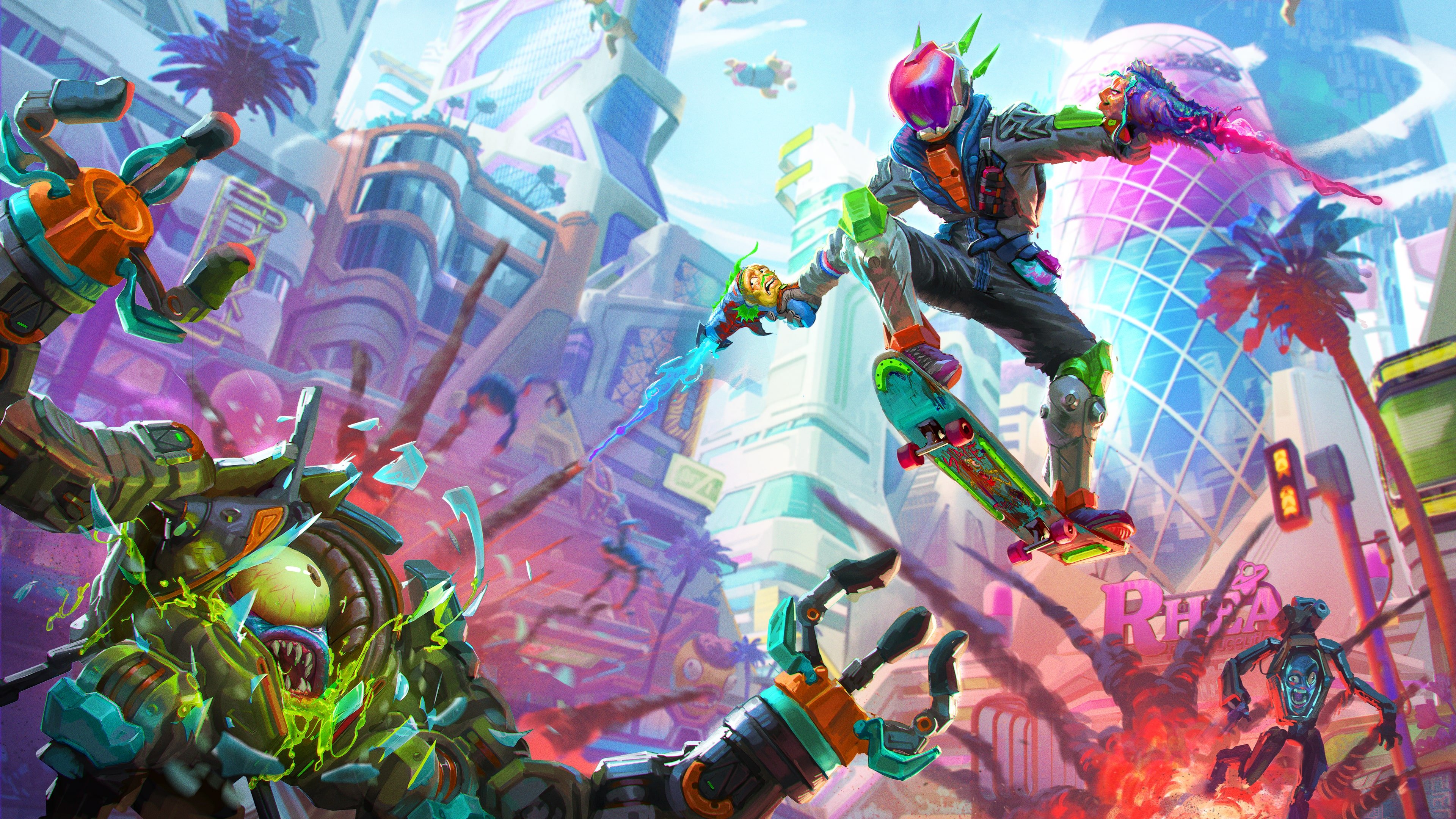
Summary:
High on Life 2 has not been officially announced for Nintendo Switch 2, but multiple reports say European retailers have already put up listings that point to exactly that version. The interesting part is not the existence of a single page on a single shop, because anyone can make a placeholder. The interesting part is that different stores are being cited with similar details: a Nintendo Switch 2 version, Clear River Games listed as the publisher for the retail release, and the format described as a Game-Key Card. That combination matters because it affects how you would buy and play it. A Game-Key Card is not the “full game on the card” style of physical release people grew up with. It is closer to a physical key that triggers a download, and then the card still needs to be inserted to launch the game.
At the same time, High on Life already has a Nintendo Switch 2 Edition page on Nintendo’s site, including a separate upgrade pack listing. So if you are curious about the sequel, it is a good moment to see whether the first game’s humor and pacing land for you, and to get your Switch 2 storage and habits in order. The key is to stay grounded: treat retailer listings as a signal worth watching, not a promise, and wait for confirmation from the developer or Nintendo channels before spending money you cannot easily get back.
What we know from the European High on Life 2 listings
Right now, the most solid thing we can say is that listings have been reported and echoed across multiple gaming news sites, and those reports cite several European retailers. The listings themselves are being framed as “unannounced” because there has not been a public Nintendo Switch 2 reveal for High on Life 2 from Squanch Games or Nintendo. Still, the repeated pattern is what makes people pay attention. When multiple shops show the same basics, like a Switch 2 platform tag, a named publisher for retail distribution, and the same physical format, it starts to look less like one random placeholder and more like something that may have been entered early. The smart way to treat this is like seeing footprints in fresh snow. It suggests someone walked by, but it is not the person standing in front of you, waving hello.

Which details line up across multiple stores
Across the reported retailer pages, a few details keep popping up in the same combination: a Nintendo Switch 2 version, Clear River Games listed as the publisher for that version’s physical release, and a Game-Key Card format. Some reports also point to a February 13, 2026 date showing up on the listings, which lines up with the wider release date that has been discussed for other platforms. That alignment is why the rumor has legs. If a listing said “sometime 2027” or used a made-up publisher name, it would be easier to shrug off. Instead, what we are seeing is a set of details that look like they were pulled from a real distribution plan. Even then, listings can be created in anticipation of future announcements, and sometimes those plans change. So we take the pattern seriously, but we do not treat it like a receipt.
What we still do not have confirmed
We still do not have an official Nintendo Switch 2 announcement for High on Life 2, and that is the line that matters most. Without it, we cannot say whether the listing is a true port, whether the Switch 2 version ships the same day as other platforms, or what performance targets are planned. We also do not have confirmed details on pricing, exact download size, language support, or whether any Switch 2 specific features are included. Retail listings also do not confirm who handled the porting work, which can be the difference between “surprisingly great” and “why does aiming feel like pushing a shopping cart with a wobbly wheel.” Until the developer or publisher speaks, the honest stance is simple: we have a credible-looking signal, but not a verified product announcement.
Why Clear River Games being listed matters
Clear River Games showing up in these reports is not a random trivia nugget. In practice, a listed publisher on a retailer page can point to who is handling distribution, manufacturing decisions, and regional retail relationships. That can shape everything from which countries get stock first to how quickly pre-orders appear in mainstream stores. It also matters because “publisher” on a listing is usually not a decorative field. Retail systems use it for cataloging, internal ordering, and supplier connections. So when multiple pages reportedly point to the same name, it can mean the distribution side has already been mapped out, even if the marketing side has not started talking. Think of it like seeing stagehands setting up a concert before the band tweets the tour dates.
What a listed publisher can tell us in Europe
In Europe, a retail publisher listing can hint at the shape of the release more than people expect. If a publisher is positioned to handle a physical version, that suggests someone is planning packaging, SKU management, and logistics, which are not things you usually spin up for a wild guess. It does not guarantee the project is locked, but it can imply the idea has moved beyond a napkin sketch. It can also affect how quickly a listing spreads across store networks, because some retailers pull data from shared catalogs. That is one reason rumors like this can appear “everywhere” at once. The practical takeaway is that a publisher name can raise the credibility of a listing, but it still does not replace an official confirmation from the teams actually making and shipping the game.
How to read the publisher line on a retailer page
When you see a publisher field on a retailer page, treat it like a clue, not a verdict. The best sign is consistency across unrelated shops, especially if their pages look like they were created independently, not copied from one template. Another good sign is when the publisher name makes sense for the region and format, because European distribution often involves specific partners. A weak sign is when the publisher field is blank, says “TBA,” or uses a placeholder like “Nintendo.” Also watch for messy mismatches, like one store listing a publisher while another lists the developer as the publisher in a way that feels automated. If you want a quick rule: the publisher line adds weight when it matches across multiple listings, but it cannot confirm the project exists on its own.
What a Switch 2 Game-Key Card release means
The words “Game-Key Card” can trigger an instant reaction, and it is usually not calm. The reason is simple: it sits in the middle ground between physical and digital. You get a box and a card, but you still need to download the game data. That changes how you plan your storage, your internet use, and even your expectations about “owning” the game. If the High on Life 2 listing is accurate and it really is a Game-Key Card, then the purchase decision is not just “Do we want the sequel?” It becomes “Do we want the sequel in a format that demands storage and an initial download?” For some players, that is fine. For others, it is a dealbreaker. Either way, it is better to know what you are signing up for before your excitement does the shopping for you.
What you actually get when you buy one
With a Game-Key Card release, you are typically buying a physical card that acts as the key to download the full game to your console. The game data is not fully stored on the card like a traditional cartridge. After the download, you still generally need the card inserted to start the game, which keeps the “physical ownership” feeling in play, even though the heavy lifting is digital. This can be convenient if you like collecting boxes, lending games, or reselling later, but you still need to treat it like a digital install in terms of storage. It is like buying a fancy key for an apartment. The key is real and useful, but the apartment itself is not inside your pocket.
The trade-offs: storage, download, and sharing
The upside is that a Game-Key Card can behave more like a normal physical product than a one-time download code. You can keep it on a shelf, share it, and it still feels like a “thing.” The downside is the practical friction. You need enough free space for the full install, and you need an internet connection to get it onto your console in the first place. If your home network is slow or your storage is already packed with giant games, the experience can feel like trying to squeeze a sofa through a doorway that was never meant for it. The format also changes travel habits. If you take your Switch 2 on the go, you can play offline after installing, but you still have to carry the card and keep your storage tidy.
A quick storage reality check before you commit
If you are considering any Game-Key Card release, the best move is to do a storage check before you buy, not after the box is on your desk staring at you. Look at your internal storage, check what is installed, and be honest about what you actually play weekly versus what you keep “just in case.” If you rely on expandable storage, make sure you are set up in a way that fits how you download games, because big installs can turn your console into a closet that needs reorganizing. Also remember that free space is not just about the final install size. Downloads can require extra overhead during installation. So if you want day-one play without drama, treat storage prep like charging your controller before a long session. It is not exciting, but it prevents the worst timing imaginable.
Catching up with High on Life on Switch 2
Before we even talk about the sequel, the first game has a clear presence on Nintendo’s site as a Nintendo Switch 2 Edition, and that matters because it establishes a platform precedent. It tells us the game is already being positioned with Switch 2 specific features and a separate upgrade pack listing. If you missed High on Life the first time, this is the practical moment to see whether the humor hits for you, because the style is not subtle. It is loud, weird, and often intentionally annoying in the way a friend’s terrible joke becomes funny because they commit to it. If that sounds like your kind of chaos, catching up now also means you are not rushing through the original right before the sequel, like cramming for an exam you signed up for voluntarily.
What the Nintendo Switch 2 Edition highlights
Nintendo’s Switch 2 Edition page for High on Life lists features such as support for Joy-Con 2 mouse controls, improved VFX quality, upgraded texture quality, higher frame rate, and enhanced resolution. Those are the kinds of upgrades that usually show up in moment-to-moment feel, not just in screenshots. Higher frame rate and cleaner textures are the difference between a game feeling snappy versus feeling like it is dragging its feet in heavy boots. The presence of an “Upgradepack” listing also suggests a defined upgrade path rather than a vague “maybe later” situation. What we should not do is assume pricing or upgrade terms without confirmation, because upgrade packs can vary. What we can do is treat the Switch 2 Edition page as proof that the series is already being supported on the platform.
Simple things we can test to feel the upgrade
If you want to judge the Switch 2 Edition experience in a grounded way, focus on a few repeatable tests. First, camera movement and aiming are the fastest way to feel performance changes, because stutter and latency show up immediately. Second, walk through a busier area or a fight with multiple effects on screen and notice whether the action stays readable. Third, pay attention to texture clarity on common surfaces, because upgraded textures are only meaningful if they reduce the muddy look during normal play. Finally, try any control features that are specifically called out, like mouse-style input, because platform-specific controls can change whether a shooter feels natural or fussy. These tests are quick, and they give you a real sense of whether catching up now feels fun or feels like homework.
High on Life 2 timing and why the date keeps showing up
Multiple reports about the Switch 2 listings mention February 13, 2026 as the release date shown on retailer pages. That date matters because it suggests the listings are not random guesses. When a date matches the broader public release window being discussed for other platforms, it can indicate the retailer data was created with a real schedule in mind. At the same time, we should stay careful: dates can be placeholders, and retailers sometimes pick a date that lines up with known releases even when a platform version is not confirmed yet. The smarter way to read the date is to treat it like a magnet. If the same date keeps appearing across different retailers and reports, it is pulling attention for a reason. But the magnet is not the metal itself. We still need the official confirmation to treat it as locked.
Why February 13, 2026 looks plausible and still unofficial
The reason February 13, 2026 keeps coming up is that it fits the wider release timing already associated with High on Life 2 in public reporting, and it is a clean, specific date that retailers commonly use when they have an internal date on file. If you see multiple European stores reportedly using that same date for a Switch 2 listing, it can feel like a strong sign that a Switch 2 version exists in planning. The catch is that plausibility is not proof. Retail systems can populate fields automatically, and some stores build pages early to capture search traffic and pre-order interest. So we can say the date is consistent with what is being reported elsewhere, and we can say the repetition is notable. What we cannot do is treat that date as confirmed for Switch 2 until the developer or publisher says it out loud.
What to watch for next without getting dragged by rumors
If you have ever been burned by a pre-order that turned into a refund email, you already know the feeling. It is like planning a party and then realizing the venue never existed. The fix is to watch for confirmation in the right places, not the loudest places. Retail listings are a signal, but they are not the finish line. The finish line is an official announcement that names Nintendo Switch 2 directly, ideally with a trailer, a store page, or a press release. Until then, the healthiest mindset is “interested, but not invested.” That way, you can keep the excitement without letting it spend your money. And if you are already a fan of the first game, catching up is still valuable, because it is enjoyable on its own, not just homework for a sequel.
Signals that actually count as confirmation
Real confirmation usually looks boring in the best way. It shows up as an official announcement from the developer, a verified publisher statement, or a Nintendo store page that clearly lists Nintendo Switch 2 as a platform for High on Life 2. Another strong signal is when multiple official channels share the same message, like a trailer uploaded by the developer and echoed by platform partners. You might also see ratings board entries or storefront pages go live, but those can still be tricky without context. The main point is this: confirmation comes from the people responsible for shipping the game, not the people responsible for noticing listings. If you want to avoid whiplash, follow the official channels and treat everything else like background noise until it becomes official.
Red flags that scream placeholder
Some red flags are easy to spot once you know what to look for. If a listing has missing key details like format, publisher, or even a proper product description, it may be a shell page. If the price is wildly out of line compared to regional norms, that can be another hint it was auto-generated. Also watch for pages that contradict themselves, like showing a Switch 2 platform tag but using assets from a different platform’s listing. Another classic placeholder smell is when the date is set to the last day of a month or year, which is a common default. None of these red flags prove a listing is fake, but they do tell you not to act like it is final. In other words, do not treat a placeholder like it is a promise carved into stone.
How we can prepare if we want to play on day one
If you are excited about the idea of High on Life 2 landing on Switch 2, preparation is less about obsessing over rumors and more about making day-one play easy. That means storage readiness, knowing your buying preferences, and making sure your account setup is smooth. If the rumored Game-Key Card format is accurate, you will want to be ready for a download right away. If you prefer digital, you will want to keep an eye out for an official eShop listing. Either way, there is a practical benefit to catching up with the first game now: it tells you whether the humor and pacing fit your taste, and it keeps you from buying the sequel purely on hype. Hype is fun, but it is also famously bad at reading return policies.
Account and storage housekeeping that saves headaches later
Small housekeeping steps make a big difference when a new release hits. First, check your available space and clear out games you have not touched in months. Second, make sure your system software is up to date, because new formats and features can rely on newer firmware. Third, decide whether you are a “physical box on the shelf” person or a “digital library forever” person, because that affects how you shop when multiple editions appear. Fourth, if you share your console with family, make sure everyone knows how game access works, especially if a physical key style format requires the card inserted. These are simple steps, but they prevent the day-one situation where you are excited, the download is ready, and then you realize you are missing 18GB and your internet is having a slow day.
A quick pre-order and download checklist
If you are the type who likes to be ready without obsessing, this checklist keeps it clean. Make sure you have enough free space for a full modern shooter install, not just “a little extra.” Confirm your preferred retailer has clear cancellation terms before you place any order tied to an unconfirmed platform version. Keep your payment method and account login details current so you are not locked out at the worst time. If it is a Game-Key Card, plan for the initial download window when your internet is least busy, because nothing ruins the vibe like watching a progress bar crawl. Finally, set your expectations: do not assume performance targets, special features, or even day-and-date release until it is officially announced. Being prepared should feel like laying out your gear before a trip, not like pacing by the door for a package that might not ship yet.
Shopping tips for European listings
If you are seeing High on Life 2 Switch 2 listings in Europe, it is tempting to lock in a pre-order “just in case.” The safer move is to shop like you are holding a fragile box. You can pick it up, you can inspect it, but you do not throw it in the cart without checking the label. European retailers vary a lot in how they handle pre-order payments, cancellations, and release-date changes. Some take payment immediately, others do not. Some are great with refunds, others turn it into a slow email chain that feels like arguing with a vending machine. If you decide to place an order based on a listing, make sure you are doing it with a store you trust and a policy you understand, because the platform version is not officially confirmed yet.
How to compare editions and avoid surprise fees
When listings appear early, they can be messy. One store might list a standard edition, another might list something with a slightly different title that could be a regional SKU. Compare the basics: platform, format, publisher, and whether it is clearly labeled as a Game-Key Card. Also watch shipping costs and cross-border VAT handling, especially if you are ordering from a store outside your country. If you see wildly different prices, do not assume you found a deal. It may be a placeholder price that will change, or it may be a listing error. The goal is to avoid the trap where you celebrate a bargain and then get a “price update” notice later. If you want peace of mind, prioritize clarity and policy over chasing the lowest number on a page.
The boring return policy detail that can save you
Return policies are the unglamorous seatbelt of buying games. You only care when something goes wrong, and then you care a lot. Before you pre-order anything tied to an unconfirmed platform listing, read the store’s rules on cancellations and refunds for pre-orders. Check whether they charge immediately, and whether they refund to the original payment method. Also check how they handle “opened” products, because physical formats can have stricter rules. If the listing is for a Game-Key Card, remember that the key value is tied to the card experience, and stores may treat that differently than a standard cartridge. A few minutes of policy reading can save you from weeks of frustration later. It is the difference between “no stress” and “why is this taking ten emails.”
What this situation says about third-party support on Switch 2
Even without an official Switch 2 announcement for High on Life 2, the bigger picture is clear: third-party releases are treating Switch 2 as a serious target, and formats like Game-Key Cards are part of how publishers bring larger releases to retail. High on Life already having a Switch 2 Edition page is a strong platform signal on its own, because it shows the original is being supported with Switch 2 specific features and a defined upgrade pack listing. The reported retail listings for the sequel, if they turn out to be accurate, would fit that pattern of “port the first, support it on the new system, then bring the sequel.” For players, the practical takeaway is not to assume every sequel is coming, but to recognize that when a series already has a Switch 2 footprint, a follow-up becomes more believable. Believable is still not confirmed, but it is not random either.
Conclusion
High on Life 2 showing up in reported European Switch 2 listings is the kind of leak-adjacent signal that is worth watching, especially because the details being repeated are specific: Clear River Games, a Game-Key Card format, and a February 13, 2026 date appearing on multiple retailer pages in reporting. Still, none of that replaces an official announcement, and the smartest approach is to treat the listings as a hint, not a promise. The good news is that you do not have to sit on your hands while you wait. High on Life already has a Nintendo Switch 2 Edition page with listed feature upgrades and an upgrade pack entry, which makes catching up on the original a practical move if you are curious about the sequel’s humor and style. If you decide to shop early, do it carefully: check policies, expect changes, and avoid paying extra for uncertainty. When official confirmation arrives, you will be ready without feeling like you gambled your wallet on a rumor.
FAQs
- Is High on Life 2 officially confirmed for Nintendo Switch 2?
- No. Reports cite European retailer listings, but there has not been an official Nintendo Switch 2 announcement for High on Life 2 from the developer or Nintendo channels.
- What do the reported European listings say about the release format?
- Multiple reports describe the Switch 2 retail release as a Game-Key Card, which typically means the game is downloaded to the console and the card is used to start the game.
- Why does Clear River Games being listed matter?
- A listed publisher can indicate who is handling the physical distribution plan in Europe. It adds credibility when the same detail appears across multiple reported listings, but it still is not official confirmation.
- Can we catch up with the first High on Life on Switch 2 right now?
- Nintendo has a Nintendo Switch 2 Edition page for High on Life that lists Switch 2 specific features and an upgrade pack entry, making it a practical way to see if the series clicks for you.
- Should we pre-order based on retailer listings alone?
- If you do, do it cautiously. Use retailers with clear cancellation terms, avoid paying extra for uncertainty, and wait for official confirmation before treating any date or format as final.
Sources
- High on Life 2 for Nintendo Switch 2 has leaked on several European online stores, My Nintendo News, December 27, 2025
- RUMOR: High on Life 2 listed for Switch 2 on various European online stores, GoNintendo, December 27, 2025
- High on Life 2 Switch 2 Listings Appear Online, TwistedVoxel, December 27, 2025
- High On Life: Nintendo Switch 2 Edition, Nintendo, September 3, 2025
- You can borrow and resell Nintendo’s Switch 2 game-key cards, The Verge, April 7, 2025