














Summary:
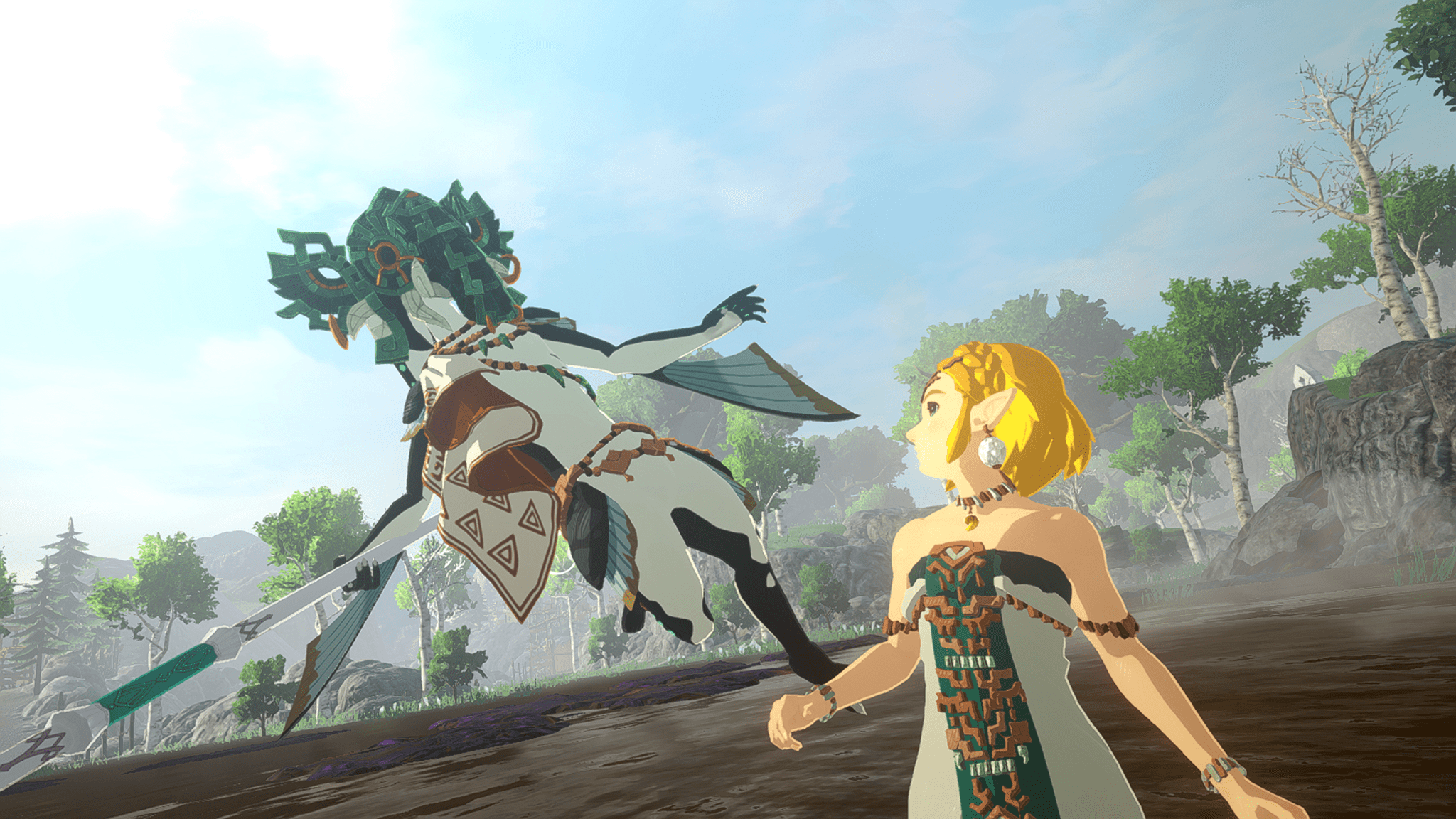
Koei Tecmo has confirmed that Hyrule Warriors: Age of Imprisonment has passed one million copies sold worldwide, and that single milestone quietly carries a lot of weight. We are not just talking about a nice round number to celebrate on social media. We are talking about a Switch 2 exclusive hitting a global sales mark that signals real momentum, especially when it lands in an official financial update rather than a vague “doing well” statement. Koei Tecmo’s Q3 materials also put the result in the middle of something even more interesting – a snapshot of the company’s long-running portfolio, where decades of series-building show up as lifetime totals.
Those totals read like a history lesson for action and strategy fans. Dynasty Warriors sits at over 24 million units, Nobunaga’s Ambition is over 11 million, Romance of the Three Kingdoms is over 9.5 million, and Samurai Warriors is over 8.5 million. Team NINJA’s modern run is right there too, with Nioh over 8 million units and Ninja Gaiden over 7.5 million units. Gust’s Atelier series is over 8 million units, with the “Secret” sub-series (Atelier Ryza) passing over 2 million units. Then we get the one line that makes people blink twice – Wo Long: Fallen Dynasty is listed as over 5 million users, which is a different measurement than units and deserves to be read carefully, not compared sloppily.
Put it all together and we are looking at a company that thrives on long-tail franchises, reinvention, and cross-generational loyalty – and a new Hyrule Warriors entry that is already proving it belongs in that conversation.
Hyrule Warriors: Age of Imprisonment – One million milestone
One million copies sold worldwide is the kind of milestone that looks simple on paper, but it carries a very specific kind of confidence when it comes straight from a financial results package. It’s not a rumor, not a retailer guess, and not a “trust us, it’s popular” vibe – it’s a number Koei Tecmo was willing to put in an official document. For Age of Imprisonment, that matters because it’s a crossover-style action game tied to a massive brand, but still living in its own lane. Spin-offs can be weird like that: everyone recognizes the name, yet the audience still has to choose it on purpose. Hitting one million tells us that plenty of people did choose it, and they did it across regions, not just in one hot market. If you’ve ever watched a game’s early buzz fade after launch week, you know how rare it is to see a clean milestone that suggests sustained movement, not just a brief flash.
What Koei Tecmo actually reported in its Q3 materials
Koei Tecmo’s Q3 materials explicitly flag Hyrule Warriors: Age of Imprisonment as surpassing one million worldwide, and that wording is doing important work. “Worldwide” is the key, because it confirms the figure isn’t a regional slice or a selective milestone. In the same update, Koei Tecmo also refreshes lifetime performance for several of its biggest series, which helps us place this new result in the company’s broader identity. When a publisher bundles a new milestone next to long-running franchise totals, it’s basically saying, “This is part of our core story, not a side note.” That framing is useful because it hints at internal expectations: Koei Tecmo clearly sees the Warriors ecosystem – including licensed projects – as a meaningful pillar, not just a one-off partnership. If you’re a player wondering whether a game will be supported, remembered, and treated as a success internally, this is the kind of signal you want to see.
Units vs users – why one series is measured differently
Here’s where we slow down and read the fine print like a grown-up, even if our inner gamer just wants to shout “numbers go up!” Most series in the update are reported as lifetime sales in units, but Wo Long: Fallen Dynasty is listed as over 5 million users. That difference is not cosmetic – it changes what the number means. “Units” generally points to copies sold or shipped, depending on how the company defines it in that context, while “users” often ties to unique players or accounts, sometimes influenced by subscription access or broader participation metrics. So if you line up Wo Long’s “users” next to another franchise’s “units” like they’re the same thing, you’re basically comparing apples to… a fruit salad that includes apples and also a spoon. It can still be valuable, but only if we respect what is actually being measured. The good news is that the report makes the distinction visible, which gives us permission to be precise instead of sloppy.
How to read lifetime series totals without mixing metrics
The safest way to read these totals is to treat them as different types of milestones, each telling its own story. Lifetime unit totals show how a franchise performs as a product line over time – the classic “how many copies moved” scoreboard. A user total is more about reach and engagement – how many people touched the experience, which can be especially relevant for games that might be played through different access models. That’s why the best takeaway is not “this series beat that series,” but “this series achieved this kind of scale.” For players, the practical value is clarity: we can celebrate Wo Long’s reach while also recognizing it is not directly the same category as, say, Dynasty Warriors’ cumulative unit sales. In other words, we can enjoy the win without turning the numbers into a bar fight outside a tavern. Everyone leaves happier that way, and we also stay accurate.
Age of Imprisonment’s launch window – timing, platform, and momentum
Age of Imprisonment launched globally on Nintendo Switch 2 on November 6, 2025, and that timing matters more than it gets credit for. Launch windows are like catching a train – you can have a great destination, but if you miss the timing, you’re sprinting down the platform while the doors close. Releasing in early November puts a game in prime position for the holiday stretch, gift purchases, and that “I want something meaty to play” season when people are more willing to commit to a big action title. The Switch 2 exclusivity angle also shapes the story: it concentrates the audience to one platform, which can limit raw volume, but it can also sharpen the message. There’s no confusion about where to play it if you want the newest version – it’s right there on Switch 2. When that setup still produces a worldwide million, it suggests the game didn’t just ride a week of hype – it found a steady stream of players willing to jump in and stay.
Why one million is a bigger deal than it sounds on a newer platform
One million can sound “normal” in an era where blockbuster releases casually toss around multi-million headlines, but context changes everything. A newer platform typically has a smaller install base than a long-established one, which means every sales milestone is earned with fewer potential customers in the pool. Think of it like selling out a theater: packing 1,000 seats is impressive, but packing 1,000 seats when the venue only holds 1,200 is a different level of success than doing it in a stadium that holds 50,000. That’s the rough vibe here. A Switch 2 exclusive hitting a global million shows strong conversion – people didn’t just know the game existed, they decided it was worth their time and money. It also reinforces something long-time Warriors fans already understand: these games thrive on momentum and word of mouth. Once people start telling their friends “it feels great” or “co-op is a blast,” the sales curve can keep moving long after launch week chatter cools down.
The Koei Tecmo scoreboard – updated lifetime series totals
Koei Tecmo’s franchise totals are basically a family photo album for action and strategy players. The numbers remind us that this company doesn’t survive on one breakout hit – it survives on series that keep showing up, adapting, and pulling in new fans across generations. Dynasty Warriors is listed at over 24 million units, Nobunaga’s Ambition at over 11 million, Romance of the Three Kingdoms at over 9.5 million, and Samurai Warriors at over 8.5 million. Nioh is over 8 million units, Atelier is over 8 million units, and Ninja Gaiden is over 7.5 million units. Wo Long: Fallen Dynasty is listed as over 5 million users, which we already covered as a different metric. Seeing all of these together is the point: it frames Age of Imprisonment’s one million as part of a bigger pattern where Koei Tecmo builds durable brands, not disposable one-shots.
Omega Force pillars – Dynasty Warriors and Samurai Warriors
If Koei Tecmo had a “home base” for pure Warriors identity, Omega Force is it. Dynasty Warriors being over 24 million units is not just a flex – it’s proof of a formula that has survived shifting hardware generations and changing player tastes. Samurai Warriors at over 8.5 million units shows the same staying power with a different flavor, leaning into a distinct historical setting and cast appeal. What makes these totals interesting next to Age of Imprisonment is the implied ecosystem effect. Licensed Warriors games often borrow the battlefield rhythm and spectacle that Omega Force has refined for years. So when Age of Imprisonment hits one million, it isn’t a random spike – it’s a result that sits on top of decades of mechanical craftsmanship and audience conditioning. It’s like a band that can headline festivals because it spent years learning how to own a stage.
Kou Shibusawa’s strategy legacy – Nobunaga’s Ambition and Romance
Koei Tecmo’s identity isn’t only about mowing down armies – it’s also about strategy fans who love spreadsheets, ambition, and the sweet chaos of historical “what if” scenarios. Nobunaga’s Ambition at over 11 million units and Romance of the Three Kingdoms at over 9.5 million units underline just how long these series have been part of gaming culture. They’re not chasing trends – they’re sustaining a tradition. That matters when we look at the portfolio as a whole, because it shows Koei Tecmo can balance high-action spectacle with slower, decision-driven experiences. For players, this is the reassuring part: a company that can keep strategy franchises alive for this long usually understands long-term support, iterative refinement, and how to serve niche-but-loyal audiences. It’s also a reminder that Koei Tecmo’s “numbers” success isn’t a single genre – it’s a whole menu.
Team NINJA’s modern hits – Nioh, Ninja Gaiden, and Wo Long
Team NINJA’s trio of milestones reads like a modern action resume stamped with “approved by people who like pain.” Nioh sits at over 8 million units, Ninja Gaiden is over 7.5 million units, and Wo Long: Fallen Dynasty is over 5 million users. Together, those figures signal that Koei Tecmo isn’t only living on legacy Warriors DNA – it also has a modern action identity that competes in a very crowded space. The Wo Long “users” label is especially telling because it frames the game’s footprint as reach, not just purchases, which can reflect how players discover and engage with it. For fans, these numbers are a useful compass: they suggest Koei Tecmo’s action portfolio is broad enough to support different tastes – from fast, technical combat to big, chaotic battlefield power fantasies. That variety is why the company can pivot between a Warriors title and something more precision-driven without feeling like it’s changing its whole personality.
Gust’s steady magic – Atelier, including the Ryza boost
Atelier being over 8 million units is a reminder that cozy, character-driven RPG energy can be just as durable as high-intensity action. It’s also not floating as a vague total – the update calls out the “Secret” series (Atelier Ryza) as over 2 million units, which helps explain a modern lift inside the broader franchise. This is the kind of detail that makes the portfolio story feel real: not every sub-series performs the same, and Koei Tecmo is clearly aware of which arcs moved the needle. For players, the big takeaway is that Koei Tecmo’s “success” isn’t one-dimensional. The company can sell intense action, historical strategy, and lighter RPG experiences under the same umbrella. That kind of balance matters because it can stabilize the business – and when a business is stable, it can afford to take swings, fund partnerships, and keep supporting games after launch without panicking at the first sign of turbulence.
What the portfolio numbers say about Koei Tecmo’s identity
The clearest story hiding in these totals is that Koei Tecmo is a franchise builder first and foremost. The company’s biggest names are not single-release miracles – they’re long-running brands that stack results over time. That’s why Age of Imprisonment’s one million matters: it shows that newer entries, including licensed projects, can still earn a meaningful place inside the wider lineup. It also suggests Koei Tecmo’s partnerships can produce outcomes that are more than a marketing beat. When a company reports a milestone in an official set of materials, it’s treating it as something that reflects business health, not just fan excitement. If you’re a player, this is the part where you can feel optimistic without drifting into guesswork. A publisher that is willing to highlight a Warriors milestone alongside legacy franchise totals is basically telling us it sees ongoing value in this lane – and that usually translates into continued attention, continued releases, and continued experimentation within the same family of games.
What this means for players – expectations, support, and the next milestones
So what do we do with all this, beyond nodding and saying “neat”? First, one million worldwide is a strong early signal that Age of Imprisonment has traction, and traction is what keeps a game visible in the months after launch. Second, the lifetime franchise totals help set expectations for what “success” looks like inside Koei Tecmo – not just for one title, but for entire series ecosystems. If you’re deciding whether to jump in now or wait, it’s fair to expect the game to remain part of Koei Tecmo’s conversation, not vanish into the void. If you’re already playing, the milestone is a quiet win for the community – more players often means more enthusiasm, more shared strategies, and a longer tail of attention. And if you’re the kind of person who loves tracking milestones, here’s the fun part: one million is rarely the finish line. It’s the point where a game stops feeling like a newcomer and starts feeling like it has a real seat at the table.
Conclusion
Koei Tecmo confirming over one million copies sold worldwide for Hyrule Warriors: Age of Imprisonment is a milestone with real substance behind it. It lands in official financial materials, it arrives alongside refreshed lifetime totals for Koei Tecmo’s biggest series, and it reinforces the idea that Warriors-style games – including major licensed entries – remain a meaningful part of the company’s DNA. The updated franchise scoreboard also adds texture: Dynasty Warriors over 24 million, Nobunaga’s Ambition over 11 million, Romance over 9.5 million, Samurai Warriors over 8.5 million, Nioh and Atelier over 8 million, Ninja Gaiden over 7.5 million, and Wo Long framed as over 5 million users. Read together, these numbers paint a picture of a publisher that wins through longevity and variety. For players, the message is simple – Age of Imprisonment isn’t just “out now,” it’s already proving it can stand with Koei Tecmo’s long-running heavyweights.
FAQs
- What exactly was confirmed about Age of Imprisonment’s sales?
- Koei Tecmo’s Q3 materials flag Hyrule Warriors: Age of Imprisonment as surpassing one million copies sold worldwide, making it an official milestone reported in the company’s financial documentation.
- When did Hyrule Warriors: Age of Imprisonment launch on Switch 2?
- The game launched globally on November 6, 2025 for Nintendo Switch 2, which places its first major sales milestone within the early part of its lifecycle.
- Why does Wo Long: Fallen Dynasty say “users” instead of “units”?
- In the same update where other franchises are listed with lifetime units, Wo Long: Fallen Dynasty is listed as over 5 million users, which indicates a different measurement and shouldn’t be compared one-to-one with unit totals.
- What are the updated lifetime totals Koei Tecmo highlighted?
- Key figures include Dynasty Warriors over 24 million units, Nobunaga’s Ambition over 11 million units, Romance of the Three Kingdoms over 9.5 million units, Samurai Warriors over 8.5 million units, Nioh over 8 million units, Atelier over 8 million units, and Ninja Gaiden over 7.5 million units.
- What does this milestone mean for players who are on the fence?
- A reported worldwide million suggests strong early momentum, and its placement alongside Koei Tecmo’s major franchise totals signals the game is being treated as a meaningful success inside the company’s broader portfolio.
Sources
- FY2025 3rd Quarter Data Appendix, KOEI TECMO HOLDINGS, January 26, 2026
- Financial Results for the Q3 of the Fiscal Year Ending March 2026, KOEI TECMO HOLDINGS, January 26, 2026
- Hyrule Warriors: Age of Imprisonment has sold over 1 million copies worldwide, RPG Site, January 26, 2026
- Hyrule Warriors: Age Of Imprisonment Surpasses 1 Million Copies Sold, Nintendo Life, January 26, 2026
- Hyrule Warriors: Age of Imprisonment gets November 2025 release date, GamesRadar+, September 12, 2025