














Summary:
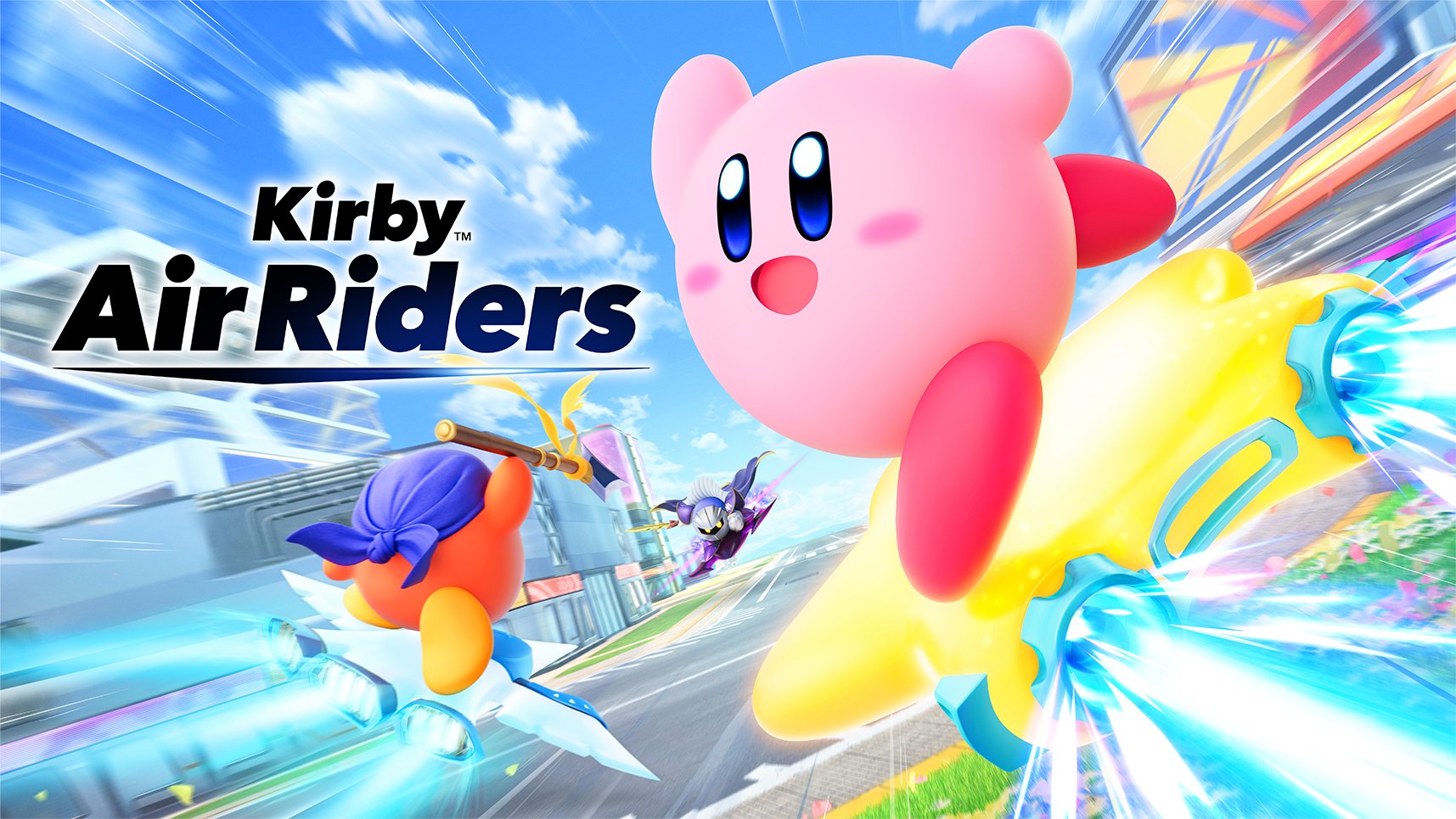
Kirby Air Riders launched on Nintendo Switch 2 as a big, confident statement: this is the full meal, not the starter plate. Now Masahiro Sakurai has doubled down on that idea in a way that immediately resets expectations. He has said the game does not have a production setup for DLC, and he has also explained that the development team will be disbanding in the near future. In plain terms, we are not looking at a long conveyor belt of new tracks, new modes, or seasonal drops. Instead, we are looking at a shorter runway where the focus is on polishing balance, fixing issues, and leaving the game in a state that still feels fair and fun years from now.
That goal matters more than it might seem at first. Racing games live and die on tiny details: how risky shortcuts feel, whether one machine dominates, how stable online matches are, and whether the “best” strategy is exciting or just annoying. Sakurai’s message signals that the priority is a stable foundation rather than constant expansion. The recent Ver. 1.2.0 update underlines that approach with practical improvements, including online-related changes and stability work. From here, the smart mindset is to treat Kirby Air Riders like a finished playground that might get one more sweep of the broom, not a construction site that will keep adding new wings. If you want freshness, we can still find it through community challenges, custom rule sets, and the kind of friendly rivalry that keeps a great racer alive long after the patch notes stop.
The Kirby Air Riders announcement that sets expectations
When a creator like Masahiro Sakurai draws a hard line, it tends to land with a thud you can feel in your controller grip. His message about Kirby Air Riders is exactly that kind of line: no DLC pipeline, a team that will soon split up, and a clear intention to leave the game balanced for the long haul. That is not a “maybe later” answer, and it is not a vague corporate shrug. It is a practical statement about how the project is structured behind the scenes, and it tells us how we should think about the game going forward. If you were imagining a steady drip of new extras, this is the moment to trade that expectation for something else: a complete racer that gets tuned, then preserved.
What Sakurai said on X
Sakurai’s wording is the part that makes this feel real. He referenced what was already discussed in Air Riders Direct 2 and explained that Kirby Air Riders does not have a production setup for DLC or anything like it. He also said the development team will be disbanding in the near future, which naturally limits how long adjustments can continue. The interesting detail is the motivation behind it: the goal is a balance that can be enjoyed without issues even years from now. That framing is less about “walking away” and more about “finishing properly.” He even suggested there may be room to tweak things one more time, but after that, the ask is simple: enjoy the completed balance like a definitive version, not a live service that keeps reinventing itself.
Why the game was never built for DLC
“No production setup for DLC” is a very specific kind of statement, and it matters because it is not just a preference, it is infrastructure. Building DLC smoothly usually means planning for it early: pipelines for new assets, testing schedules that assume future drops, staffing that stays in place, and a roadmap that avoids painting the design into a corner. If a game is not built with that scaffolding, bolting it on later is like trying to add a second floor to a house that was only engineered for one. Sure, you might be able to do it, but it is expensive, messy, and it can warp the original design. Kirby Air Riders, by Sakurai’s own description, is meant to be “all in” at launch, with post-launch time used for adjustments, not expansions.
A team that disbands does not mean the game disappears
Let’s address the dramatic-sounding part: “the team will be disbanding.” That can sound like the lights are turning off and the doors are being locked. In reality, it often means something more normal, especially for tightly scoped projects. People roll on, studios reassign staff, contractors rotate out, and creative leads move to new work. The game does not vanish from your console, and it does not suddenly become unplayable. What changes is the flow of official changes. Instead of an open-ended future, we get a final stretch of polish and then a stable endpoint. For players, that can actually be comforting. You learn the rules, the rules stop shifting under your feet, and your muscle memory stays valuable.
How game teams are assembled for a single release
Many games are made by teams that are purposely temporary in shape, even if the people involved are not “temporary” in their careers. A project ramps up, specialists join for their slice of the work, and the group peaks around launch. After release, staffing can shrink because the work changes. You do not need the same number of artists making new environments if you are focusing on bug fixes and balance, and you do not need the same level of production coordination if you are not building new modes. If Kirby Air Riders was planned as a complete release, the team structure likely reflected that from day one. So when Sakurai says the team will be disbanding, it fits the idea that the game is heading toward a finished, preserved state rather than an endlessly expanding one.
Why balance work has a natural endpoint
Balance is a bit like seasoning soup. You taste, you adjust, you taste again, and eventually you stop because one more pinch of salt could ruin the whole pot. Racing games are especially sensitive because small changes can ripple everywhere. A tweak to speed, handling, health, or collision behavior can turn a risky strategy into a dominant one, or it can erase a skill gap that players actually enjoy. Sakurai’s comment about aiming for a balance that still works years from now suggests a careful final pass, not a constant tug-of-war. Once that balance is set, the smartest move is often to leave it alone, because stability becomes a feature. Players can practice, compete, and build community norms without fearing that the next update will rewrite the meta overnight.
The difference between patches and DLC
Patches are maintenance and tuning, while DLC is expansion. A patch might fix bugs, improve online stability, or adjust balance values. DLC usually adds new “stuff” that changes what the game contains: new tracks, modes, characters, or big feature additions. Sakurai’s message does not mean patches instantly stop, and it does not mean the existing game is incomplete. It means the plan is to refine what is already there, then stop. That distinction matters because some players hear “no DLC” and worry they are being denied missing pieces. The opposite framing fits better here: the pieces were meant to be in the box from the start, and the remaining work is about making sure they fit together neatly and stay that way.
What the latest update tells us about the plan
One of the easiest ways to understand a studio’s priorities is to look at what gets patched. Kirby Air Riders’ recent update history reinforces the idea that this is about refinement, stability, and long-term playability. The Ver. 1.2.0 update, released on December 11, 2025, is not framed like a new season or a content drop. It reads like a practical set of improvements and fixes that help the game run better, play fairer, and behave more reliably online. That is exactly what you do when your goal is to leave the game standing strong after the team moves on. It is not flashy, but it is the kind of boring-good work that keeps a game enjoyable long after the hype cycle fades.
Highlights from Ver. 1.2.0
Ver. 1.2.0 includes a mix of quality-of-life improvements, online adjustments, and stability work. For example, it adds options that make online play smoother and more flexible, and it includes improvements to communication stability during online play. It also introduces features like scanning amiibo in the paddock to race with figure players, which is a very “Nintendo” kind of bonus that still fits the idea of rounding out the existing package rather than expanding it with paid extras. Beyond that, the update contains balance adjustments to riders and machines and a long list of bug fixes. The overall vibe is clear: smooth the rough edges, reduce frustration, and keep matches feeling fair. If you want a game to hold up years from now, this is the kind of patch you ship.
What might still be adjusted next
Sakurai suggested there may be room for one more tweak, and the update notes themselves hint at continued maintenance in a limited way. The Nintendo support notes list certain known issues that were confirmed but not fixed in Ver. 1.2.0, with mention that they are planned to be fixed in a future update. That lines up with the idea that we might see at least one more smaller patch aimed at squashing remaining bugs and tightening the bolts. The key is to keep expectations realistic: we are talking about final polish, not new modes or a surprise track pack. Think of it like a last inspection before handing the keys over to players permanently. Once those final fixes land, the game’s balance and behavior should remain steady, which is exactly what Sakurai says he is aiming for.
How to enjoy Air Riders years from now
There is a special kind of joy in games that stop changing. It is like returning to a favorite board game where the rules are the rules, and the fun comes from getting better, not from waiting for the next expansion. Kirby Air Riders, if it truly settles into a final balance state, can become that kind of comfort game. You can step away for months, come back, and everything still makes sense. Your skills still translate. Your favorite strategies still exist. And if you play with friends, you all share the same stable expectations. That stability is not “less,” it is simply a different promise: we get a game that feels finished, then we get to keep it.
Getting comfortable with a fixed balance
A fixed balance can feel scary if you are used to constant patches. What if something is slightly too strong? What if a particular strategy annoys you? The upside is that players adapt, and communities tend to self-correct through knowledge, counterplay, and agreed-upon norms. A stable meta also makes improvement more satisfying because your practice does not get invalidated by a sudden patch. You can learn a machine’s quirks, master a route, refine your timing, and trust that the game will not pull the rug out next week. It is the difference between training for a sport with consistent rules versus training for a sport where the field keeps changing shape. With Kirby Air Riders, Sakurai is basically saying: we are trying to lock the field in place so you can play on it for years.
Keeping online play smooth when updates slow down
The biggest worry when updates slow down is online health. Not just server-side support, but the everyday experience: matchmaking, stability, and whether weird edge-case bugs become permanent. Ver. 1.2.0 already targets online stability, and that is a strong sign that the team is trying to reduce the kind of issues that age badly. On the player side, the best habit is simple: keep your game updated, keep your system storage healthy, and treat long online sessions like a road trip with planned breaks. If you notice odd behavior, a restart can still be the cheapest “fix” in the world. And if the community stays active, online play tends to stay enjoyable even without constant official changes. The goal is not perfection forever, it is “reliable enough” that you can jump in years later and still have a good time.
If you crave new surprises, make your own
No DLC does not mean no novelty. It just means the novelty will not come in the form of official paid packs. If anything, a stable game can be the perfect canvas for player-made fun because the rules are consistent and everyone can agree on what counts. Think about classic party games. They survive because people keep inventing twists, dares, and house rules, not because the publisher sends out monthly updates. Kirby Air Riders has the ingredients for that kind of life: competitive energy, chaotic moments, and the kind of systems that naturally generate stories. If you and your friends want the “new season” feeling, you can create it yourselves with themed nights, challenges, and silly constraints that force you to play differently.
House rules that refresh City Trial nights
House rules are the easiest way to make the same map feel brand new. You can run “low power” nights where everyone agrees to avoid certain upgrades, or “chaos” nights where you must swap machines at set intervals. You can do role-based play, where one person plays aggressively, another focuses on survival, and another plays like a speedrunner chasing a personal best. Want something simple? Pick a single machine type and force everyone to commit, then see who adapts best. The magic is that these rules turn routine matches into mini stories. Suddenly, a bad start is not just bad luck, it is a funny obstacle you have to climb over. And because the official balance is stable, your house rules stay stable too, which makes them easier to repeat and refine over time.
Community challenges, leaderboards, and replay culture
When official updates slow down, community energy becomes the fuel. Time Attack rivalries, weekly challenge prompts, and replay-sharing can keep a racer alive for ages. Replays are especially powerful because they teach and entertain at the same time. You watch someone do something clever, you laugh, you steal the idea, and suddenly you are better at the game than you were yesterday. If Kirby Air Riders maintains healthy tools for sharing and spectating, that culture can carry it. The fun part is that communities tend to create their own “events” even if the game is not pushing them. A stable game makes those events easier to organize because everyone is on the same version and the same balance. In a weird way, less official motion can create more player-led momentum.
The bigger takeaway for Sakurai fans
Zooming out, this whole situation feels very “Sakurai.” He is known for putting an intense amount of care into how games feel, and he often speaks about finishing things properly rather than stretching them forever. Saying “no DLC” is not just a business decision, it is a creative stance: the work is meant to be delivered as a whole. For fans, the bittersweet part is hearing that the team will disband, because it reminds us that games are made by people with careers, schedules, and limited time. The encouraging part is that his stated goal is to leave Kirby Air Riders in a state that holds up well. That is a promise of durability, not a promise of endless additions.
Why a clean ending can be a gift
A clean ending means the game gets to be itself without being stretched into something it was never meant to be. It also protects the design. DLC can be great, but it can also introduce power creep, uneven matchmaking, and the awkward feeling that the “real” version of the game only exists after multiple purchases. By aiming for a definitive balance, Sakurai is protecting the idea that you can buy Kirby Air Riders once, learn it, and keep enjoying it later without feeling left behind. There is also something emotionally satisfying about a creator saying, “We finished this.” It is like a chef sending out a dish and trusting the recipe rather than endlessly tinkering. For players, that trust can feel refreshing in a world where everything wants to be a forever-project.
What to watch for after the team moves on
The practical thing to watch is simple: whether one more small update lands to address remaining known issues, and then whether the game settles into its final state. After that, the story becomes less about patch notes and more about the community that forms around the finished game. If you care about Sakurai’s next steps, this moment also signals a transition. The team disbands, people move to other projects, and Sakurai’s focus shifts as well. That does not guarantee any specific next title, but it does confirm that Kirby Air Riders is not designed to be a multi-year DLC machine. The best approach is to treat the game you have now as the game you will still be playing later, and to build your fun around mastery, friends, and player-made traditions.
Conclusion
Kirby Air Riders is being positioned as a complete racer that gets tuned, polished, and then preserved. Sakurai has been clear that there is no production setup for DLC, and he has also said the development team will be disbanding in the near future, which naturally limits how long adjustments can continue. The recent Ver. 1.2.0 update shows the kind of work that fits this plan: stability improvements, practical features, and balance tuning aimed at long-term playability. If we want the best experience, the mindset shift is simple: stop waiting for expansions and start treating the current version like a game we can master. And if we ever feel the itch for something “new,” we can create it ourselves through challenges, house rules, and community competition that keeps the same great playground feeling fresh.
FAQs
- Will Kirby Air Riders get DLC later if fans ask for it?
- Sakurai has said the game does not have a production setup for DLC, so there is no sign of planned add-ons. The messaging points to final tuning rather than future expansions.
- Does the team disbanding mean online will shut down?
- Disbanding describes the development team structure, not an immediate online shutdown. It mainly signals fewer future patches, while the game itself remains playable as supported.
- How many more updates should we expect?
- Sakurai suggested there may be room for one more small tweak, and official notes also mention some issues planned for a future update. Beyond that, expectations should stay focused on final fixes, not new additions.
- What changed in Version 1.2.0?
- Ver. 1.2.0 added features like amiibo scanning in the paddock, options related to online play, improved communication stability online, balance adjustments, and many bug fixes.
- How can we keep the game feeling fresh without DLC?
- House rules, weekly challenges, replay-sharing, and community tournaments can keep matches exciting. A stable balance also makes skill growth and friendly rivalries more rewarding over time.
Sources
- Kirby Air Riders development team will disband soon, says Masahiro Sakurai. Aiming for “definitive balance” after one more update, AUTOMATON WEST, December 12, 2025
- Kirby Air Riders team will disband after one final patch, says director Masahiro Sakurai, and you’re on your own after that: “Please enjoy the balance of the game as a definitive version”, GamesRadar+, December 12, 2025
- How to Update Kirby Air Riders, Nintendo Support, December 11, 2025
- Kirby Air Riders Won’t Have DLC, Sakurai Confirms, GameSpot, October 23, 2025
- Nintendo confirms Kirby Air Riders is out in November, and it’s only $70, leaving no question which Switch 2 racer is better, GamesRadar+, August 19, 2025