














Summary:
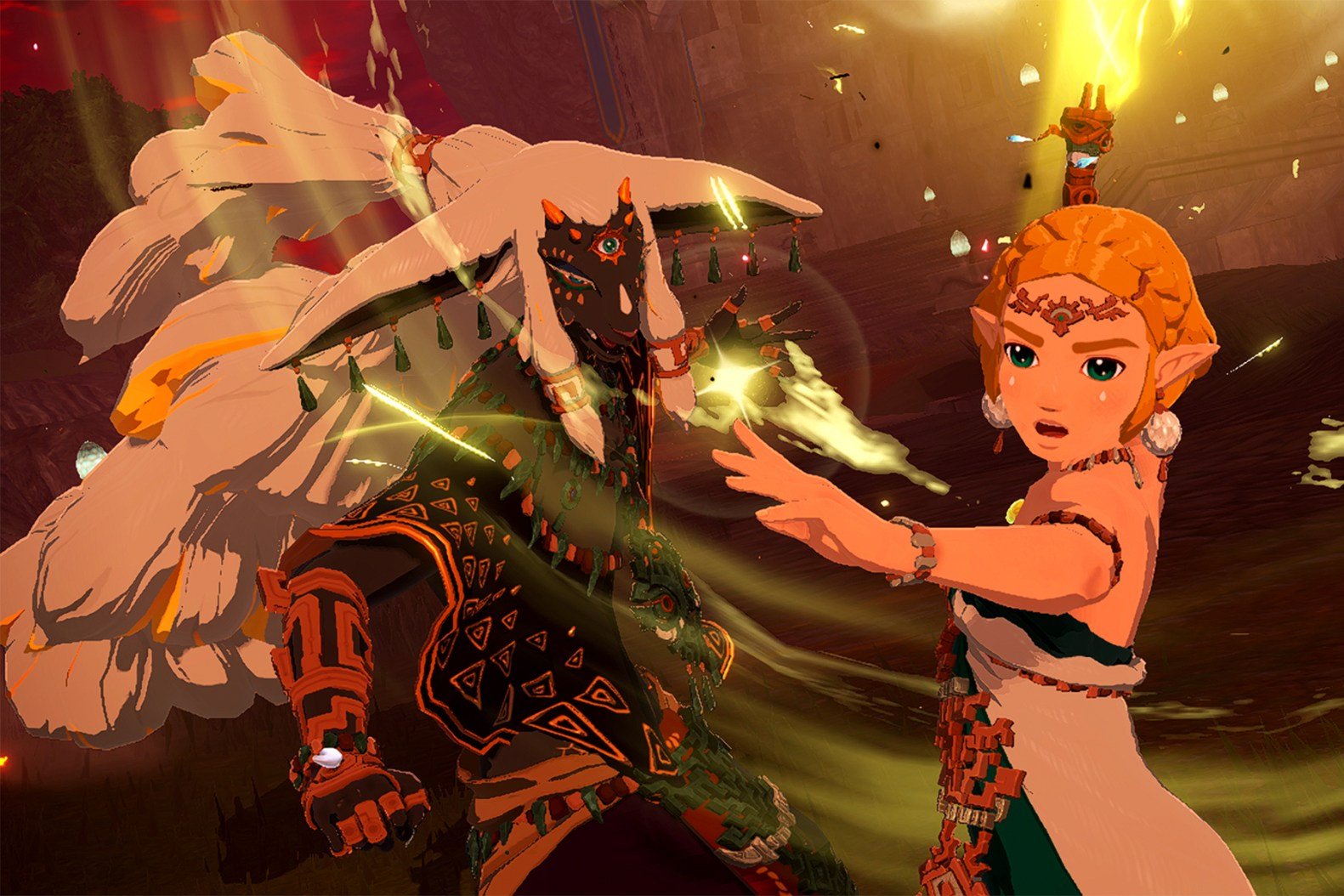
Sometimes a project begins with a formal meeting and a neat slide deck. Other times it starts with someone finishing a game on a weekend, turning to a colleague, and saying the professional version of “we have to do this.” That’s the vibe we get from the recent comments shared by Hyrule Warriors: Age of Imprisonment producers Yosuke Hayashi and Ryota Matsushita, alongside Nintendo’s Eiji Aonuma. The key reveal is simple but spicy: this time, Koei Tecmo approached Nintendo with the idea, rather than Nintendo leading the charge. Hayashi describes playing The Legend of Zelda: Tears of the Kingdom right after launch and feeling like the game was practically nudging them toward the Imprisoning War as the next Warriors setting. Matsushita then adds the perfect twist, saying he had already been assembling a plan, like he’d been quietly stacking dominoes before anyone yelled “go.” On Nintendo’s side, Aonuma frames the timing like a deliberate pause. He explains that during Tears of the Kingdom’s development, director Hidemaro Fujibayashi detailed what the Imprisoning War was, and once that work was done, Fujibayashi floated the idea of asking Koei Tecmo again. Aonuma’s response was to wait and let Koei Tecmo make the first move, and according to him, they did almost immediately. Put together, it’s a clean little origin story about creative momentum, good timing, and two teams that clearly speak the same language when it comes to turning Zelda history into action.
Nintendo and Koei Tecmo talk about how Hyrule Warriors: Age of Imprisonment
The headline detail is the kind that reshapes how we talk about these collaborations: Hayashi and Matsushita have said Koei Tecmo approached Nintendo with the concept for Hyrule Warriors: Age of Imprisonment, rather than Nintendo initiating the request. That matters because it hints at confidence, not just capability. It’s one thing to be trusted to build a spin-off when the brand owner asks. It’s another thing to walk up to Nintendo with a pitch and say, in effect, “We’ve got the right story moment, we’ve got the right genre fit, and we want to build it.” If you’ve ever tried to pitch anything to anyone, you know the hardest part is not the idea, it’s proving you can execute without losing the soul of what people love. Here, the soul is Zelda, and the execution is Musou-style chaos. We can almost picture the balancing act: big lore, big battles, and the promise that it all clicks together without feeling like a costume party.
The Tears of the Kingdom weekend that sparked the pitch
Hayashi’s quote lands because it sounds like a real human reaction, not a rehearsed PR line. He says he played Tears of the Kingdom the weekend immediately after release, and that experience made him feel like the game was sending a message along the lines of “make a Warriors game set in the time of the Imprisoning War.” That’s a bold way to describe inspiration, but it’s also relatable. We’ve all had that moment where a game’s setting or backstory feels so rich that it’s practically begging for another format. Then he describes the next step: he spoke to Matsushita, said “let’s make it,” and they drew up a plan. The pace is the tell here. No long period of “maybe someday.” It’s more like spotting a door that’s already cracked open and deciding to push it before it swings shut.
Why the Imprisoning War fits a Warriors game so well
If we’re thinking about what makes a Warriors game sing, the Imprisoning War is basically a neon sign pointing at the genre. Warriors thrives on scale, on desperate defenses, on pushing through swarms while the story frames the battle as bigger than any one person. The Imprisoning War, as referenced through Tears of the Kingdom’s lore, is exactly that kind of historical pressure cooker. It’s the sort of conflict that invites set pieces, shifting fronts, and missions that feel like “hold the line” one moment and “break through” the next. It also gives a natural excuse for a broad roster, because wars pull in leaders, fighters, and allies from every corner of the world. When the theme is imprisonment and sealing away a monumental threat, the stakes are baked in. We don’t have to invent urgency. The setting does the heavy lifting, and the gameplay gets to ride that wave.
The “message” quote, and what it actually tells us
When Hayashi says Tears of the Kingdom felt like it was “sending a message,” we should read it as creative clarity, not literal instruction. Nobody is claiming the cartridge whispered business plans into Koei Tecmo’s ear. The useful part is what the phrase implies: the Imprisoning War stood out to him as an era with enough identity to anchor a full experience, not just a few flashback scenes or a couple of lore paragraphs. That’s the difference between “cool trivia” and “this can carry a full arc.” It also suggests something else that’s easy to miss. If a producer feels that strongly, they’re probably seeing practical game design hooks too, not only story hooks. Think enemy factions, battlefield locations, and a clean sense of escalation. When inspiration arrives with structure attached, that’s when teams move fast, because the path forward isn’t foggy anymore.
Matsushita was already building a plan
Matsushita’s response is the kind that makes the whole story feel even more believable. He says he had actually been putting a plan together before Hayashi spoke to him, laughing as he admits it. That’s not just a fun anecdote, it’s a clue about alignment. When two leads independently start circling the same idea, it usually means the source material is overflowing with usable threads. Matsushita describes the “seeds” of a Warriors game as being scattered all over the place. That wording matters, because it frames Tears of the Kingdom as more than a single spark. It’s more like a field of dry grass. One person notices the smoke, the other already has matches in their pocket, and suddenly the only real question is how to control the fire so it lights the right things without burning down the house.
Nintendo’s side of the timing
On Nintendo’s end, Aonuma’s comments add a layer that’s easy to overlook if we only focus on who called who first. He points out that during Tears of the Kingdom’s development, Fujibayashi established in detail what the Imprisoning War was. That’s a big deal because it means Nintendo wasn’t improvising this era after the fact. The internal work was already done, at least conceptually, which makes collaboration far smoother. If you want another team to tell a story in your universe, you need the universe to have firm ground. Otherwise, everyone is building on sand and arguing about which version of the sand is canon. Aonuma’s framing suggests Nintendo had a clear understanding of the era’s shape, and that clarity made it easier to evaluate a pitch quickly when it arrived.
Fujibayashi mapped the Imprisoning War during development
Fujibayashi’s role here is less about a single quote and more about what Aonuma says he did: he established the Imprisoning War in detail during Tears of the Kingdom’s development. That kind of groundwork is like laying plumbing before you renovate a kitchen. It’s not glamorous, but if it’s done right, everything else works without weird leaks. When a historical event is defined clearly, it gives collaborators guardrails: what happened, who mattered, what the emotional tone is, and what can or cannot be bent. For a Warriors-style game, that’s crucial, because gameplay loves exaggeration, but Zelda lore fans love coherence. Having the era mapped out means we can get big action without losing the sense that the story belongs in the same world. It’s the difference between “inspired by” and “actually connected.”
Aonuma’s “let’s wait” moment
Aonuma’s quote is the punchline that also doubles as a strategy lesson. He says that after Tears of the Kingdom was finished, Fujibayashi said, “Maybe we could ask Koei Tecmo this time too?” and Aonuma responded with “No, let’s wait to hear from Koei Tecmo first,” laughing as he tells it. Then comes the kicker: he says it was almost immediately after that when Koei Tecmo contacted them. It’s a tidy sequence, and it paints Aonuma as someone who understands the rhythm of partnerships. Sometimes, letting the other side step forward first is a way to confirm enthusiasm. It answers the question, “Do they want this as much as we do?” without anyone having to say it out loud. And in this case, the answer seems to have arrived quickly.
Why waiting can be a strategy, not hesitation
Waiting gets misread as indecision all the time, especially online where everyone wants instant movement. But in a collaboration like this, waiting can be a polite pressure test. If Nintendo reaches out first, it can feel like a request. If Koei Tecmo reaches out first, it feels like a proposal powered by genuine excitement. That difference affects everything that follows: how bold the team feels, how invested they are in solving hard problems, and how willing they are to push for ideas that are slightly risky but potentially brilliant. Aonuma’s choice also protects Nintendo’s creative bandwidth. If Koei Tecmo is already itching to build something, Nintendo can respond from a position of clarity instead of obligation. It’s less “please help us” and more “show us what you’ve got.”
What a Warriors proposal needs to land at Nintendo
A pitch isn’t just “this would be cool,” especially when we’re talking about Zelda. A workable proposal needs a clear theme, a clear scope, and a clear plan for how the game will respect the world it’s borrowing. Hayashi says they drew up a plan right after that initial spark, and that’s the part we should underline mentally. Nintendo doesn’t green-light vibes. Nintendo green-lights structure. A Warriors spin-off has to answer practical questions fast: what era, what cast, what progression loop, what signature mechanics, and what story beats justify the battles. The Imprisoning War gives a strong starting point, but the proposal still has to translate that into missions that feel purposeful, not repetitive. If we’re imagining the internal discussion, we’re imagining a meeting where the team can point to a map and say, “Here’s where we fight, here’s why it matters, and here’s how it escalates.”
From cool idea to workable project
Turning an idea into a project is where many dreams quietly fall apart. The leap from “we should do this” to “we can build this” is full of traps: feature creep, unclear tone, and that dreaded moment where nobody can explain what the player actually does minute to minute. A pitch that works likely anchors itself in a handful of pillars. One pillar is narrative purpose: battles that match story beats rather than random skirmishes. Another is character identity: movesets and playstyles that feel like the characters, not just reskins with different hair. And the third is pacing: knowing when to throw a thousand enemies at you and when to narrow the focus for a duel, a defense, or a dramatic push. When Matsushita says the “seeds” were scattered everywhere, it suggests they already had those pillars in mind, not just a timeline date and a catchy name.
Scope, tone, and the Zelda guardrails
Zelda has a tone that’s surprisingly hard to fake. It can be heroic without being stiff, emotional without being melodramatic, and mysterious without turning into pure confusion. A Warriors game, meanwhile, loves exaggerated power and spectacle. So the guardrails matter. Scope is one guardrail: deciding what part of the war we cover, and what we leave implied. Tone is another: making sure the spectacle doesn’t become slapstick when the story needs weight. And then there’s lore consistency, which is the big one. Fans will forgive plenty if the game feels honest about what it is, but they’ll side-eye anything that feels careless with key events. The best collaborations usually feel like both sides are protecting something. Koei Tecmo protects the combat fantasy and the mission flow. Nintendo protects the identity, the history, and the emotional stakes. When those protections overlap, we get a game that feels like it belongs.
Turning an era into something playable
The Imprisoning War is history inside the Zelda universe, and history is often told in broad strokes. Games don’t get to live in broad strokes. Games live in specific moments: a gate that has to hold, a retreat that turns into a rescue, a battlefield that collapses into chaos when a commander falls. That’s why this setting is both exciting and demanding. We’re not just reenacting a legend, we’re building the connective tissue that makes the legend feel lived in. The fun part is that Warriors design is naturally good at this. It’s built for shifting objectives and dramatic turns. The challenge is making sure those objectives feel like they’re part of a coherent war, not a checklist. If the pitch landed, it likely landed because the team could point to the Imprisoning War and say, “This isn’t just lore. This is a playable structure.”
How we translate legend into missions, maps, and momentum
Here’s where the magic trick happens. A legend gives us the headline, but the game needs scenes. The game needs friction. It needs reasons for you to be in one place instead of another, and reasons for the battle to change while you’re in it. That usually means building a campaign flow that feels like momentum: early victories that teach you the rules, mid-game complications that force new tactics, and late-game desperation that makes every objective feel like it matters. It also means variety, because even the best combat loop gets tired if the context never shifts. Think fortress defenses, escort missions that don’t feel annoying, multi-front battles where choices matter, and spotlight moments that let key characters breathe. If we do this right, the Imprisoning War stops being a distant myth and starts feeling like a series of hard decisions, each one leaving a mark.
What this origin story suggests about future collaborations
The biggest takeaway is not “who called first” as gossip. The real takeaway is that both sides were already thinking along similar lines. Hayashi felt the pull after playing Tears of the Kingdom. Matsushita was already drafting a proposal. Fujibayashi had detailed the Imprisoning War during development. Aonuma chose to wait, and Koei Tecmo reached out almost immediately. That’s alignment from multiple angles, and alignment is what makes collaborations feel smooth to players. It also sets a precedent: if Koei Tecmo can identify a strong Zelda-adjacent setting and bring Nintendo a solid plan, that door is clearly open. Not for anything and everything, but for ideas that respect the universe and come with real execution behind them. When partnerships work like that, we get more than a one-off. We get a pattern.
Signals we can watch without reading tea leaves
It’s tempting to turn every interview quote into a prediction machine, but we don’t need to do that to stay grounded. The more useful signals are the simple ones: do both teams talk about the work with genuine enthusiasm, and do they describe concrete planning rather than vague excitement? Here, we get specifics: a weekend playthrough, a plan being drafted, internal lore being defined, and a deliberate choice to wait for the call. Those are practical details, not mystery bait. If future collaborations happen, we’d expect the same kind of pattern to show up again: clear alignment on a setting, clear internal groundwork on Nintendo’s side, and a proposal that feels like it understands Zelda rather than borrowing its costumes. If we see that combination, we can be confident something meaningful is happening, even before anyone starts yelling about release calendars.
Conclusion
What makes this story stick is how human it feels. Hayashi plays Tears of the Kingdom right after launch and feels the Imprisoning War practically begging for a Warriors treatment. Matsushita laughs and admits he was already sketching the plan anyway. On Nintendo’s side, Fujibayashi had already defined the era in detail, and Aonuma chose a surprisingly clever approach: wait and see if Koei Tecmo reaches out first. Then they do. There’s no need to inflate it beyond that. We’re looking at a collaboration that started because the setting felt right, the timing lined up, and both sides had momentum. If you’ve ever watched two creative teams click, you’ll recognize the pattern immediately. The door opens when inspiration shows up with a blueprint, and in this case, that blueprint seems to have been sitting on the table the moment the conversation started.
FAQs
- Who approached who about Hyrule Warriors: Age of Imprisonment?
- The producers have described this instance as Koei Tecmo approaching Nintendo with an idea, rather than Nintendo initiating the request.
- What sparked Yosuke Hayashi’s interest in the Imprisoning War setting?
- He said playing Tears of the Kingdom right after release made him feel the game was nudging them toward an Imprisoning War Warriors concept, which then led to an early plan.
- Was Ryota Matsushita involved from the start?
- Yes. He has said he was already putting a plan together before Hayashi spoke to him, and he described the “seeds” of a Warriors idea as being present throughout the experience.
- What did Eiji Aonuma say about Nintendo’s timing on this collaboration?
- He explained that Fujibayashi had detailed what the Imprisoning War was during Tears of the Kingdom’s development, and that Aonuma preferred to wait for Koei Tecmo to reach out first.
- Why does the Imprisoning War fit the Warriors format?
- Large-scale conflict, clear stakes, and an era built around major battles are a natural match for Musou-style gameplay, where shifting objectives and big set pieces are the point.
Sources
- Nintendo and Koei Tecmo explain how Hyrule Warriors: Age of Imprisonment came to be, Nintendo Everything, January 4, 2026
- Both Nintendo and Koei Tecmo wanted to make Hyrule Warriors: Age of Imprisonment before any official talks took place, GoNintendo, January 4, 2026
- Nintendo and Koei Tecmo talk about how Hyrule Warriors: Age of Imprisonment came to be, My Nintendo News, January 4, 2026