














Summary:
Legacy of Kain Defiance Remastered is here for Nintendo Switch and Nintendo Switch 2, with a recent release onTuesday, March 31, 2026. That timing matters because it places one of gaming’s most recognizable dark fantasy names directly in front of a modern Nintendo audience at a moment when interest in legacy series, remasters, and story-driven action experiences remains strong. This is not merely about another familiar title returning to circulation. It is about a release built around a conflict that still has real dramatic power, with Kain and Raziel continuing to stand as two of the most memorable figures in the genre. Their tension, their history, and the world around them give this release a sense of personality that many newer fantasy releases struggle to match.
The appeal also goes beyond character recognition. Legacy of Kain has long been associated with a mood that feels heavy, eerie, tragic, and unmistakably gothic. The environments are not just places to move through. They feel like echoes of collapse, old power, and spiritual unrest. That atmosphere is one of the strongest reasons this release still has value today. On Nintendo Switch and Nintendo Switch 2, that value becomes even more interesting because it gives both returning fans and curious newcomers a more flexible way to experience a title tied so closely to gaming history. Rather than feeling trapped in the past, the release has a chance to feel newly relevant. It speaks to nostalgia, yes, but it also speaks to players who want a darker, more distinctive action experience with sharper identity and more narrative gravity than many modern releases provide.
That is what makes this release worth attention. It revives a major saga, restores visibility to a world with real character, and reminds players that dark fantasy works best when it has more than surface style. It needs voice, tension, myth, and consequence. Legacy of Kain Defiance Remastered arrives with all of that hanging over it like a storm cloud, and for many players, that is exactly the attraction.
The return of Legacy of Kain Defiance Remastered on Nintendo platforms
Legacy of Kain Defiance Remastered arriving on Nintendo Switch and Nintendo Switch 2 feels like the kind of release that immediately grabs attention for more than one reason. On the surface, the headline is easy enough to understand. A well-known dark fantasy action experience came to Nintendo hardware on Tuesday, March 31, 2026. Yet the real interest sits a little deeper than the release date itself. This is a series with history, identity, and a tone that does not blur into the background. In a space crowded with bright, fast, highly polished releases that often chase broad appeal, Legacy of Kain still carries the mood of a candlelit ruin and a whispered threat in a cathedral corridor. It has edge. It has drama. It has that rare sense that every stone in the world remembers something terrible. That is why its return matters. For Nintendo players, this is not simply a port landing on new systems. It is the arrival of a saga with a very specific voice, one that stands apart because it is willing to be strange, bleak, theatrical, and emotionally heavy all at once. The fact that it is launching on both Nintendo Switch and Nintendo Switch 2 also gives it a wider entry point. Returning players can revisit a name they already respect, while newer players can finally see why the Legacy of Kain name still sparks interest years after its original era. The release date has now been reaffirmed through recent reporting tied to official social posts, which gives the conversation a firm footing rather than rumor-driven uncertainty.
That kind of certainty helps because anticipation works differently when a series carries this much legacy. People do not just want to know whether it exists. They want to know whether it is really close, whether they can finally plan to play it, and whether this old name is about to matter again in a real, tangible way. With March 31 now established for Switch and Switch 2, the answer is yes. There is also something fitting about this release landing on Nintendo systems right now. Nintendo audiences are not locked into one kind of experience, no matter how often outside perceptions simplify them. There is room here for dark mythology, grim tension, and a more dramatic style of action storytelling. In that sense, Legacy of Kain Defiance Remastered does not feel out of place. It feels like a powerful contrast piece, the shadow in the stained-glass window, the storm rolling in while everything else is still trying to sparkle. That is a useful position to occupy. It gives the release immediate character. It also gives search interest a strong foundation, because people are not just searching for a game. They are searching for a return, a date, a platform, a memory, and a reason to care again. This release provides all of those at once.

Why this release matters right now
Timing can make an older name feel newly alive, and that is exactly what is happening here. Legacy of Kain Defiance Remastered is arriving at a moment when players are more receptive than ever to classic series returning with renewed visibility. Not every older property gets this kind of opportunity. Some names fade into trivia, remembered fondly but rarely mentioned. Legacy of Kain has not gone that way. It still lingers in conversations about powerful voice work, ambitious dark fantasy storytelling, and character-driven conflict that feels like more than an excuse for combat. That matters now because gaming audiences are often looking for releases that do not feel mass-produced or emotionally flat. They want personality. They want texture. They want something with a scar across its face and a story in its voice. Legacy of Kain answers that desire better than many titles with far bigger current marketing pushes. Its release on Nintendo Switch and Nintendo Switch 2 also puts it in a stronger discovery position than it might have had otherwise. Portable platforms create curiosity. They invite impulse interest. They let a long-respected name step back into the spotlight and say, quite confidently, that it still has something to offer.
The date also sharpens the urgency. Tuesday, March 31, 2026 is not some vague horizon. It is a fixed moment, and fixed moments turn passive awareness into active attention. Once a date becomes real, readers begin looking for platform details, story context, franchise background, and reasons to revisit what made the name special in the first place. That is where the value of strong content grows. We are no longer speaking into a fog of speculation. We are speaking into a release window that is already open. That makes every part of the conversation more relevant. It also helps that the game is being framed around its legendary conflict and haunting environments, because those are not throwaway talking points. They are the essence of what makes Legacy of Kain resonate. Strip away the title and the remastered label, and what remains is still a world of tragedy, force, and myth. That core has not lost its appeal. If anything, the current market may make it easier to appreciate because distinct tone has become more valuable, not less. Right now, that matters.
A dark fantasy saga that still carries weight
Some fantasy worlds impress through sheer scale. Others stay alive because of mood, memory, and emotional damage that never quite heals. Legacy of Kain belongs in the second category. Its strength has never been about looking safe or broadly agreeable. It thrives because it feels cursed in the best possible way. The world has presence. The characters speak like they are carrying centuries of bitterness and purpose. The mythology feels dense without becoming hollow. Even people who have not played it recently often remember the sensation it leaves behind, and that is important. Not every series gets remembered for atmosphere and tension with this kind of consistency. Many games are enjoyed in the moment and then evaporate like fog under sunlight. Legacy of Kain tends to do the opposite. It hangs around. It stains memory. It invites people back because there is something unresolved in its tone, something that makes you feel like the world is still brooding even after you put the controller down.
That is why the saga still carries weight now. It is not merely old. It is distinct. Distinction is precious. In dark fantasy especially, there is always a risk of sliding into generic gloom, where everything is grim, serious, and technically dramatic but somehow emotionally empty. Legacy of Kain never really works that way. Its darkness has shape. Its tragedy has voices. Its conflicts feel personal, ideological, and mythic all at once. That combination gives the remastered release a stronger foundation than simple nostalgia could provide on its own. Returning fans may come for memory, but they stay for identity. Newer players may come because the name keeps resurfacing, but they stay because the world has teeth. It knows how to be eerie without becoming ridiculous, grand without becoming stiff, and emotional without becoming syrupy. That balancing act is difficult. It is part of what has kept the name alive. On Nintendo Switch and Nintendo Switch 2, that same weight now gets another chance to settle over players who are ready for a fantasy world that does not smile politely before inviting them inside.
Kain and Raziel remain the beating heart of the conflict
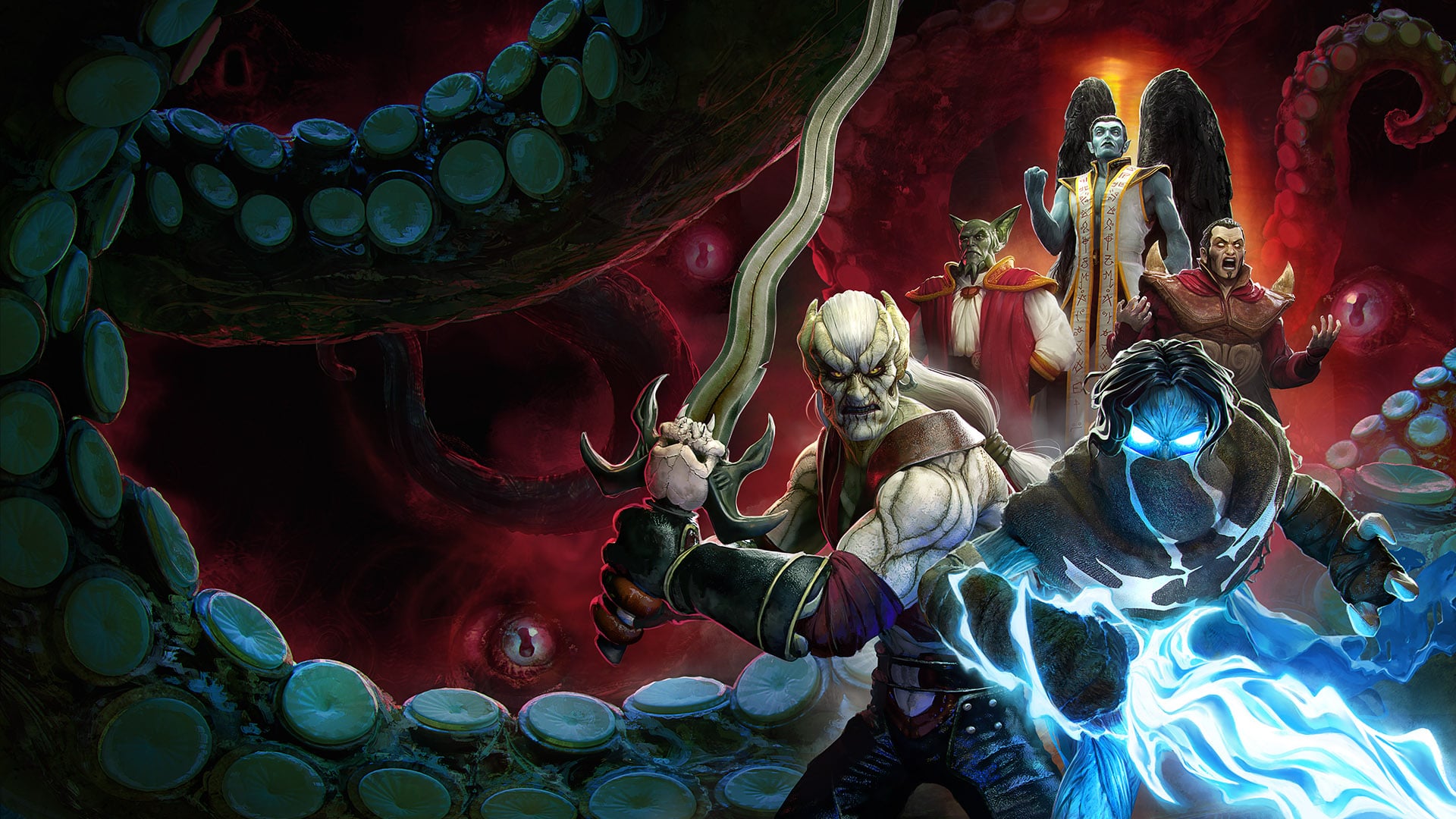
At the center of Legacy of Kain Defiance Remastered sits the reason the series still has such lasting pull: Kain and Raziel. Plenty of games talk about conflict. Far fewer build their entire emotional identity around two figures whose relationship feels as fractured, layered, and magnetically doomed as this one. These are not rivals in the easy sense. They are not merely opposite poles placed on a board so combat has a narrative excuse. Their connection has history in it. Wounds in it. Pride in it. Fate in it. That makes their shared presence feel heavier than standard hero-versus-antihero dynamics. It feels like watching two storms collide over the same ruined kingdom. Every scene, every confrontation, every shift in perspective draws power from that central tension. That is why any renewed attention around this release naturally circles back to them. You cannot really talk about Defiance without talking about the weight Kain and Raziel bring with them. They are the emotional architecture of the experience. The corridors, ruins, enemies, and mechanics all matter, but those things gain meaning because of the pair standing at the center of everything.
There is also a reason their names continue to surface whenever older dark fantasy series are discussed. They are memorable because they are not softened into bland accessibility. Each has presence. Each carries a worldview. Each helps define the tone of the saga. That alone gives the remastered release a powerful edge in search interest and reader engagement. People do not just remember gameplay loops. They remember characters who sound like destiny has been gnawing at them for centuries. They remember lines, power, conflict, and the uneasy fascination of watching two damaged forces circle each other in a world already full of ruin. On Nintendo platforms, that dynamic may also feel fresh to players who know the reputation but have never properly stepped into the saga. For them, Kain and Raziel are not just returning icons. They are new discoveries with old shadows behind them, and that is a compelling doorway into the release.
Why their rivalry still feels unique
What makes the rivalry between Kain and Raziel last is not just intensity. Lots of games can produce intensity. A boss scream, a betrayal, a cutscene with clenched fists and dramatic thunder, those are easy tricks. What is harder is building a rivalry that feels philosophical as well as personal. That is where Legacy of Kain earns its reputation. Kain and Raziel do not clash simply because the story needs movement. They clash because each embodies different pressures, histories, and understandings of power, choice, and consequence. Their tension has texture. It is not clean. It is not fully stable. It shifts, bends, sharpens, and sometimes feels like it could become something else entirely before snapping back into conflict. That unpredictability gives the rivalry life. It makes their relationship feel less like a static feud and more like a living wound that keeps reopening in new ways. Readers and players respond to that because it feels richer than the usual binary roles. No one is just there to make the other look good. Both matter too much for that.
It also helps that the rivalry is wrapped in a world that supports its scale. Kain and Raziel are not arguing in a vacuum. They exist in a setting full of decay, myth, haunted architecture, and a sense that history itself has become hostile. That kind of environment acts like a choir behind the main voices. Every ruined space, every eerie chamber, every echo of ancient collapse reinforces the idea that this conflict belongs to something larger than individual anger. The result is a rivalry that feels almost operatic, but never hollow. It is dramatic, yes, yet it stays grounded in character. That is rare. It is one of the clearest reasons this release remains worth discussing today. New players often crave memorable character dynamics, while older fans want to revisit relationships that still feel sharp. Kain and Raziel offer both. They are not relics being dusted off. They are still potent, still unsettling, and still one of the strongest arguments for why Legacy of Kain has not drifted quietly into the attic of gaming history.
Two perspectives that deepen the experience
One of the strongest things about Defiance is how much its dual-character structure enriches the world. Seeing events through more than one perspective makes the saga feel larger, but it also makes it more intimate. That sounds contradictory at first, though it works beautifully here. When players shift between Kain and Raziel, they are not just swapping faces. They are stepping into different emotional weather systems. Each character brings a different energy to the same broader struggle. That contrast allows the world to reveal itself in layers. A moment that feels imposing through one lens may feel tragic through the other. A location can seem like a battleground, a tomb, a memory, or a warning depending on who is moving through it. That kind of perspective play is valuable because it prevents the story from flattening into one-note drama. It becomes more textured. It starts breathing. It invites the player to feel the conflict from opposing angles rather than simply being told who matters and why.
This approach also increases the sense of investment. When a story asks players to inhabit multiple major figures, it becomes harder to reduce the whole experience to a single emotional track. There is room for tension, sympathy, anger, and reflection to overlap. That overlap is part of what gives Legacy of Kain its staying power. It does not treat its central figures like cardboard cutouts arranged around a plot machine. It lets them shape the tone and the meaning of what unfolds. For a remastered release, that matters enormously. Strong dual perspective design ages better than many older trends because it is rooted in storytelling depth rather than temporary novelty. On Nintendo Switch and Nintendo Switch 2, where players may discover the series for the first time or revisit it in a different rhythm through portable play, this layered structure becomes even more valuable. It gives the release substance. It gives readers a reason to care about more than nostalgia. Most of all, it gives the conflict a fuller heartbeat.
Haunting environments are a major part of the appeal
Legacy of Kain Defiance Remastered does not rely only on its characters to leave an impression. The environments do a remarkable amount of narrative work on their own. That is one of the quiet strengths that helps the release stand apart. In many games, settings are functional. They are places where action happens, little more than decorated hallways with a mood filter laid on top. Here, the environments feel like they are carrying scars. They suggest collapse, corruption, memory, and the passage of power from one age to another. There is a haunted quality to them that goes beyond visual darkness. They do not just look eerie. They feel burdened. That is a critical difference. When people talk about the appeal of Legacy of Kain, they are often really talking about how the world makes them feel, even if they phrase it in broader terms. The architecture, the atmosphere, the sense of age and disturbance, all of it helps build a tone that is thick enough to step into. It is less like strolling through a level and more like entering a cathedral built from grief and prophecy.
That matters a great deal for this release because haunting environments are one of the official selling points being highlighted around the Nintendo launch window. That emphasis makes sense. A world like this is not background decoration. It is part of the emotional engine. It tells players that this saga is not interested in clean heroism or simple spectacle. It wants dread, myth, ruin, and beauty that has already started to decay at the edges. On portable platforms, that kind of environmental identity can be even more striking because it gives every short session a distinct flavor. You are not just checking in with a game for fifteen minutes. You are stepping back into a place that feels cursed, ceremonial, and alive with old consequences. That is a powerful draw. It also gives the release a strong search and content angle, because readers looking into the game often want more than bare release facts. They want to know what kind of world they are entering. Legacy of Kain answers that with a whisper, a shadow, and a room that looks like it remembers too much.
Atmosphere that shapes every moment
Atmosphere is one of those terms people often use too casually, but here it deserves precision. In Legacy of Kain, atmosphere is not simply aesthetic seasoning. It actively shapes how the experience is felt from moment to moment. The darkness is not empty style. The world’s decay is not decorative. The weight in the air changes how the story lands, how the characters feel, and how each encounter carries emotional charge. That is why the environments remain such a talking point even years later. They are not passive scenery. They create pressure. They establish that the world is unstable, old, and deeply marked by violence, power, and memory. When atmosphere functions that well, it becomes inseparable from the identity of the release. Take it away, and the same events would not hit with the same force. Keep it intact, and suddenly even a corridor can feel like it is leaning over your shoulder, listening.
This is one reason the remastered launch deserves attention beyond simple nostalgia. Players today still respond strongly to games with real mood, especially when that mood feels hand-built rather than algorithmically assembled. Legacy of Kain has the advantage of having a world that seems authored with conviction. It knows the kind of emotional weather it wants to create. It is not trying to be everything to everyone. Instead, it invites the player into a consistent, brooding, often unsettling space and trusts that identity to do the work. That trust pays off. It is what turns the setting into something memorable rather than disposable. On Nintendo Switch and Switch 2, where many players bounce between different genres and tones in the same week, a release with this much atmospheric weight can stand out sharply. It feels like striking a match in a stone chamber and realizing the darkness around you has been awake the whole time.
Why gothic world design still stands out
Gothic design has a strange advantage in gaming when it is done well. It can communicate age, beauty, menace, religion, death, and grandeur all in one image. That is a lot of work for a style to carry, and many games only capture part of it. Legacy of Kain tends to feel stronger because its world design does not stop at surface-level gloom. It uses gothic sensibilities to build meaning. Arches, ruins, shadows, monumental spaces, and decayed structures all contribute to the sense that this world has known old systems of power and has not survived them cleanly. There is majesty in it, but it is wounded majesty. There is ritual in it, but it often feels corrupted. That blend is compelling because it gives the world moral texture without needing to explain every inch of itself. Players feel the weight before they define it. That is good world design. It trusts mood to carry part of the story.
For a release in 2026, that still has real power. Modern visuals can be dazzling, but they are not always memorable. Plenty of high-budget worlds look expensive and vanish from memory the moment the credits roll. Gothic design with real intention tends to linger. It creates visual memory. It creates emotional echo. It makes players feel like they have visited somewhere that does not easily let them go. That is one of the reasons Legacy of Kain still attracts attention. Its world is not generic fantasy dressed in darker colors. It has a mood architecture, a deliberate identity, and a visual language that tells the player they are inside something ancient and dangerous. On Nintendo hardware, that kind of distinct world-building is a valuable asset. It gives the release a clear silhouette in a crowded landscape. Readers searching for the game are not just searching for release confirmation. They are searching for that feeling again, or for the first chance to understand why so many people still talk about it with a kind of reverent chill.
Why Nintendo Switch and Switch 2 are a strong fit
There is a practical reason this release feels so notable on Nintendo hardware, and it goes beyond novelty. Nintendo Switch and Nintendo Switch 2 are strong fits for a saga like Legacy of Kain because they combine reach, flexibility, and curiosity. These are platforms where players often move easily between genres, tones, and generations of games. A release does not need to match one house style to find an audience. Instead, it needs identity, and Legacy of Kain has identity in abundance. That alone makes the fit stronger than some might assume at first glance. There is also something appealing about bringing a dark, theatrical, myth-heavy action experience to hardware that can handle both quick sessions and longer immersion. Some worlds work best when they can be revisited in bursts. A haunted fantasy setting, a major character conflict, and a story full of tension can all gain fresh rhythm when players have more freedom over how and where they engage with them. That can make the saga feel less locked to its era and more adaptable than people expect.
The release also benefits from landing on both Nintendo Switch and Nintendo Switch 2 rather than being confined to only one of them. That broader platform reach matters because it lowers the barrier to entry while still giving the release a sense of momentum. It does not feel trapped behind a single hardware threshold. It feels available, visible, and positioned to meet interest wherever it already exists. Crystal Dynamics’ March 2026 FAQ lists both Nintendo Switch 1 and Nintendo Switch 2 among the supported platforms, reinforcing that broad availability. For search visibility and reader interest, that is a meaningful advantage. Existing Switch owners can look toward the release without feeling excluded, while Switch 2 owners can view it as part of the early wave of software attracting attention to the newer system. In both cases, the result is the same: Legacy of Kain gains a stronger platform story, and the Nintendo audience gains access to a release with real atmosphere and historical weight.
Portable play changes the feel of the journey
Portable play does more than change where a game is played. It changes the emotional rhythm of how a game is absorbed. That is especially relevant for something like Legacy of Kain Defiance Remastered. A saga with such a strong sense of mood and character tension can benefit from being experienced in both long, focused sessions and shorter returns. There is value in sinking into the world for hours, but there is also value in revisiting its atmosphere in smaller slices, like opening a heavy old book and reading one charged chapter before stepping away. Portable play makes that possible. It lets the world become part of a player’s day in a more flexible way. Instead of being reserved for one specific setup or one specific time, it can linger around the edges of routine, inviting quick re-entry into its haunted spaces and dramatic conflict.
That flexibility can make older material feel more immediate. A release with strong mood often benefits from repeated contact because atmosphere works through accumulation. A line, a room, a confrontation, a piece of music, all of it builds over time. Portable access supports that process beautifully. It lets players maintain a relationship with the world rather than scheduling one. That may sound like a small difference, but in practice it can shape how memorable the experience feels. For returning fans, it offers a new way to inhabit a familiar saga. For newer players, it lowers the friction of entry. They do not have to commit to one giant ceremonial start. They can step in, feel the world, and let it hook them naturally. On Nintendo Switch and Switch 2, that is a real advantage. It turns a respected dark fantasy name into something tactile and accessible without draining away any of its mood. The world remains grim, weighty, and dramatic. It just becomes easier to carry in your hands.
A legacy release meets new hardware interest
There is something strategically strong about an established series appearing during a period of heightened interest around newer hardware. Nintendo Switch 2 naturally draws attention, and attention tends to pull other releases into its orbit. That does not mean every game near new hardware excitement benefits equally. The ones that gain the most are often those with a clear identity and a reason to stand out. Legacy of Kain Defiance Remastered has both. It is not just another recognizable name drifting through the schedule. It has a very specific tonal signature, a long-standing reputation, and a character conflict strong enough to be its own headline. When a release like that appears alongside new hardware energy, it can feel more relevant than its age might suggest. Suddenly it is not only about the past. It becomes part of the present conversation.
This is especially useful because people exploring newer systems often look for variety. They want headline exclusives, of course, but they also want notable returning names, genre contrast, and games that add depth to the library. Legacy of Kain serves that role well. It brings dark fantasy gravity into a space that benefits from tonal range. It reminds players that fresh hardware attention does not have to be fed only by brand-new properties. Sometimes a strong legacy release can be just as interesting, especially when it arrives with a firm date and clear platform confirmation. That confirmation now points to March 31, 2026 for Switch and Switch 2. In practical terms, that makes the release easier to position, easier to search for, and easier for readers to understand. It is not floating in uncertainty. It is stepping into a moment when Nintendo interest is already elevated, and it has enough personality to make that moment count.
What makes this release worth watching closely
Not every remastered release deserves the same level of attention. Some feel routine. Some are perfectly acceptable but never become more than a brief scheduling note. Legacy of Kain Defiance Remastered has a stronger case for attention because it sits at the intersection of legacy, tone, character identity, and platform relevance. The name alone carries weight, but the real reason to watch it closely is the shape of its appeal. It is not trying to win people over with one single hook. It has several, and they reinforce each other. There is the confirmed arrival on Nintendo Switch and Nintendo Switch 2. There is the ongoing pull of Kain and Raziel as central figures. There is the atmosphere of haunted environments. There is the dark fantasy identity that still feels more distinctive than many contemporary offerings. Put those together and the release starts to look less like a simple remaster mention and more like a meaningful re-entry for a series with unfinished cultural momentum.
That unfinished momentum is the key. Legacy of Kain has long existed in a curious space where it is respected enough to be remembered, referenced enough to stay visible, and distinctive enough to keep attracting curiosity, yet still absent enough that every notable return feels charged. That charge is what gives the release its energy. It invites older fans to revisit something they associate with dramatic storytelling and heavy atmosphere, while also inviting newer players to finally engage with a name that has hovered around them like a rumor with excellent voice acting. When a release can do both, it becomes worth watching because it has the potential to do more than sell on recognition. It can restore conversation. It can rebuild momentum. It can remind people that a strong identity ages far better than trend-chasing design ever does. Legacy of Kain has that kind of identity, and that is why this launch deserves more than a passing glance.
Nostalgia is only part of the story
Nostalgia is useful, but it is not enough on its own. People may click because they remember a name, but they stay because the name still means something. That distinction matters for Legacy of Kain Defiance Remastered. Yes, nostalgia is part of the draw. Of course it is. Players who have history with the series are going to feel that pull immediately. Yet reducing the release to nostalgia alone would miss the point. What keeps Legacy of Kain relevant is that the qualities people remember are not shallow. They are rooted in mood, dialogue, conflict, world design, and tone. Those are durable strengths. They are not just emotional souvenirs. They are actual reasons the saga continues to stand out. When a series is remembered for identity rather than mere exposure, nostalgia becomes a doorway rather than the whole house.
That is important for the Nintendo launch because it broadens the audience naturally. Older players are not the only ones who can connect with this release. Newer players who have no personal memory of the original era can still respond to what made the series powerful in the first place. A striking conflict. A heavy world. Characters who feel carved from fate and grievance. A dark fantasy atmosphere that does not blur into generic gloom. Those things do not require prior attachment to matter. They simply require presentation and access, and the Switch and Switch 2 release provides both. This is why the game is worth discussing in present terms rather than only historical ones. Nostalgia may start the conversation, but atmosphere, character, and story carry it forward. In that sense, the release is not just a reunion with the past. It is another chance for the series to prove that what made it memorable was never trapped in the past to begin with.
Newer players have a rare chance to jump in
For people who have heard the Legacy of Kain name for years without actually playing it, this release represents a valuable opening. That matters more than it might seem. Some older series become famous in a frustrating way. Everyone talks about them. Everyone references them. Yet the actual path to playing them feels awkward, limited, or easy to postpone. When a release arrives on current Nintendo platforms with a confirmed date and clear visibility, that friction starts to disappear. Suddenly the question shifts from “What is this old name people keep mentioning?” to “Should I finally see what the fuss is about?” That is a much healthier place for a series to be. It turns reputation into opportunity. It gives curiosity somewhere concrete to go.
This is especially meaningful because Legacy of Kain is not one of those names that survives purely on brand nostalgia. It survives because people keep treating it like it matters. That kind of lasting cultural respect creates pressure. Newer players want to understand why it matters. They want context. They want entry points. A Nintendo Switch and Switch 2 launch is exactly the kind of accessible moment that can convert that curiosity into real engagement. The portability helps. The renewed visibility helps. The release date helps. Most of all, the content itself helps, because the saga offers a mood and a dramatic identity that still feel different from what many players are used to seeing. There is a certain thrill in stepping into a world that already has myth hanging around it like old incense in cold stone. For newer players, that thrill is part discovery, part initiation. They are not just trying another fantasy action release. They are walking into a name with history, shadow, and a strange amount of gravity still attached to it.
Why Legacy of Kain still stands apart in dark fantasy gaming
Dark fantasy is a crowded field in theory, but in practice truly distinctive dark fantasy is rarer than it looks. Many releases can borrow the visual language of darkness. They can use ruins, monsters, solemn dialogue, and stormy skies. That is the easy part. The harder part is building a world and a cast that feel as though darkness has shaped them from the inside out. Legacy of Kain has long done that better than most. Its tone is not cosmetic. Its tragedy is not decorative. Its world feels morally bruised, spiritually unstable, and emotionally charged in a way that gives the whole experience personality. That is one of the main reasons the name still stands apart. It does not simply wear dark fantasy like a costume. It inhabits it. The characters sound like they belong to the world’s weight. The environments feel touched by old consequences. The central conflict carries the kind of theatrical, philosophical tension that turns genre style into something more memorable and human.
That distinction matters in 2026 because genre identity has become increasingly important. Players are surrounded by choice. When a release wants attention, it needs more than competence. It needs a face, a voice, a reason to be remembered. Legacy of Kain already has those things. Its return on Nintendo Switch and Nintendo Switch 2 shines a new light on them, but the qualities themselves are not new. They have been part of the series’ appeal all along. That is why the release has enough weight to generate real discussion rather than a polite nod. People can sense when a world still has bite. They can sense when a title carries deeper texture than its surface premise suggests. Legacy of Kain does. That is why it still occupies a special place in dark fantasy gaming, and why a fresh release window is enough to bring it roaring, or perhaps brooding, back into view.
Storytelling with teeth, tragedy, and tension
There is a reason players often speak about Legacy of Kain in terms that go beyond mechanics. The storytelling leaves marks. It has teeth. It bites into themes of fate, power, betrayal, and identity with enough conviction that the saga feels emotionally heavier than many action-focused experiences. That kind of storytelling is difficult to fake. It requires more than sharp lines or dramatic lore. It requires a sense that the characters are truly entangled in the ideas the world keeps raising. Legacy of Kain manages that. The tragedy does not feel stapled on for prestige. It feels baked into the bones of the series. The tension works the same way. It is not only in the clashes or the major revelations. It is present in the very way the world seems to breathe around its central figures, as if the setting itself is aware that something broken and monumental is still unfolding.
For a remastered release, this is a major strength. Technical polish may help a release gain attention, but storytelling is what helps it keep value over time. When readers search for the game, many of them are really searching for confirmation that the thing they remember as special still sounds special. Others are searching for signs that the reputation is deserved. In both cases, strong narrative identity is essential. Legacy of Kain provides it. The tragedy gives the saga dignity. The tension gives it movement. The sharpness of the characters gives it staying power. That is not a bad trio to build a release around. On Nintendo platforms, where a game with a darker personality can instantly stand out through contrast alone, this kind of storytelling becomes even more important. It gives the release gravity. It tells players that the world they are entering is not just stylish. It is wounded, deliberate, and still ready to speak in a voice that cuts through the room.
The value of a saga that dares to be strange
One of the best things about Legacy of Kain is that it has never felt too eager to sand down its edges. It dares to be strange, and that strangeness is part of its value. There is real power in a saga that refuses to flatten itself into the safest possible shape. The world is unusual. The tone is theatrical without becoming silly. The mythology feels dense, not because it wants to confuse, but because it trusts players to lean in. The characters are intense in ways that feel earned rather than calculated. All of that creates a release with stronger identity than many bigger, smoother, more market-tested experiences. In a landscape where so much content is polished into neutrality, a saga that still feels a little dangerous, a little haunted, and a little gloriously odd becomes very appealing.
That appeal is also practical from a reader and search perspective. People are drawn to things that seem to possess their own gravity. They want releases that stand for something. Legacy of Kain stands for a kind of dark fantasy storytelling that is willing to be poetic, severe, mythic, and emotionally thorny. That is not the easiest route to broad comfort, but it is often the route to lasting respect. The Nintendo Switch and Switch 2 launch gives that strange old pulse another chance to be felt by a wide audience. It invites returning fans to re-enter a saga that still feels unlike much else, and it invites new players to discover why distinctiveness can matter more than trend alignment. There is enormous value in that. A strange saga with conviction can outlast safer competitors because memory clings to it. Legacy of Kain has always had that kind of grip, and this release is a reminder that the grip never truly loosened.
Final thoughts on the release
Legacy of Kain Defiance Remastered has the ingredients of a release that can resonate far beyond a simple date announcement. It brings back a major dark fantasy name, it does so on Nintendo Switch and Nintendo Switch 2, and it arrives with the central strengths that made the saga matter in the first place still firmly attached. The confirmed launch timing of Tuesday, March 31, 2026 gives the release immediate relevance, while the broader platform support listed by Crystal Dynamics underlines that this is a meaningful cross-platform return rather than a passing curiosity. What really gives it lasting value, though, is not the schedule. It is the identity. Kain and Raziel still provide one of dark fantasy gaming’s most compelling central conflicts. The environments still promise a mood heavy enough to leave residue. The saga still stands apart because it is willing to be tragic, stylized, mythic, and strange without diluting itself into something forgettable. That combination is rare. It is also exactly why this Nintendo release deserves close attention from both long-time fans and players who have only heard the name in reverent tones over the years.
There is a satisfying sense of alignment here. A legacy series with real atmosphere is returning at a time when players are hungry for identity. A dark fantasy world with texture is coming to platforms that make discovery easier. A long-respected conflict is about to be placed in front of a fresh audience that may finally understand why the name still carries so much weight. That is not just good timing. It is the kind of timing that can make an old legend feel alive again. Legacy of Kain Defiance Remastered has every chance to do exactly that.
Conclusion
Legacy of Kain Defiance Remastered looks well positioned to make a strong impression on Nintendo Switch and Nintendo Switch 2 when it arrives on Tuesday, March 31, 2026. The release matters because it is built on more than nostalgia. It carries a memorable conflict, a haunting world, and a dark fantasy identity that still feels distinct. Kain and Raziel remain the emotional core, the gothic environments continue to shape the mood, and the Nintendo launch gives both returning fans and newer players a timely reason to pay attention. When a saga still has this much atmosphere and character, it does not need to rely on name recognition alone. It simply needs the right moment to step back into view, and that moment has now arrived.
FAQs
- When does Legacy of Kain Defiance Remastered launch on Nintendo Switch and Nintendo Switch 2?
It is set to launch on Tuesday, March 31, 2026, based on recent official and secondary reporting. - Is Legacy of Kain Defiance Remastered coming to both Nintendo Switch and Nintendo Switch 2?
Yes. The game has been listed for both Nintendo Switch 1 and Nintendo Switch 2. - What makes Legacy of Kain Defiance Remastered stand out?
Its strongest hooks are the conflict between Kain and Raziel, its dark fantasy tone, and its haunting environments, all of which give the release a very distinct identity. - Is this release mainly for long-time fans?
No. Returning fans will recognize the saga immediately, but newer players also have a strong entry point because the release is arriving on current Nintendo platforms with renewed visibility. - Why are people still interested in Legacy of Kain today?
The series still stands out for its mood, world design, dramatic character tension, and a style of dark fantasy storytelling that feels memorable rather than generic.
Sources
- Crystal Dynamics — Legacy of Kain Defiance Remastered and Ascendance FAQ and Edition Breakdown
https://www.crystaldynamics.com/blog/2026/03/02/legacy-of-kain-defiance-remastered-and-ascendance-faq-and-edition-breakdown/ - Crystal Dynamics — Legacy of Kain: Defiance Remastered
https://www.crystaldynamics.com/projects/legacy-of-kain-defiance-remastered/ - Nintendo Life — Legacy Of Kain: Defiance Remastered Switch Versions Hit With Last-Minute Delay
https://www.nintendolife.com/news/2026/02/legacy-of-kain-defiance-remastered-switch-versions-hit-with-last-minute-delay - My Nintendo News — Legacy of Kain Defiance Remastered out next week on Nintendo Switch 1 & 2
https://mynintendonews.com/2026/03/26/legacy-of-kain-defiance-remastered-out-next-week-on-nintendo-switch-1-2/ - Nintendo Everything — Legacy of Kain: Defiance Remastered announced for Nintendo Switch 2, Switch
https://nintendoeverything.com/legacy-of-kain-defiance-remastered-announced-for-nintendo-switch-2-switch/