














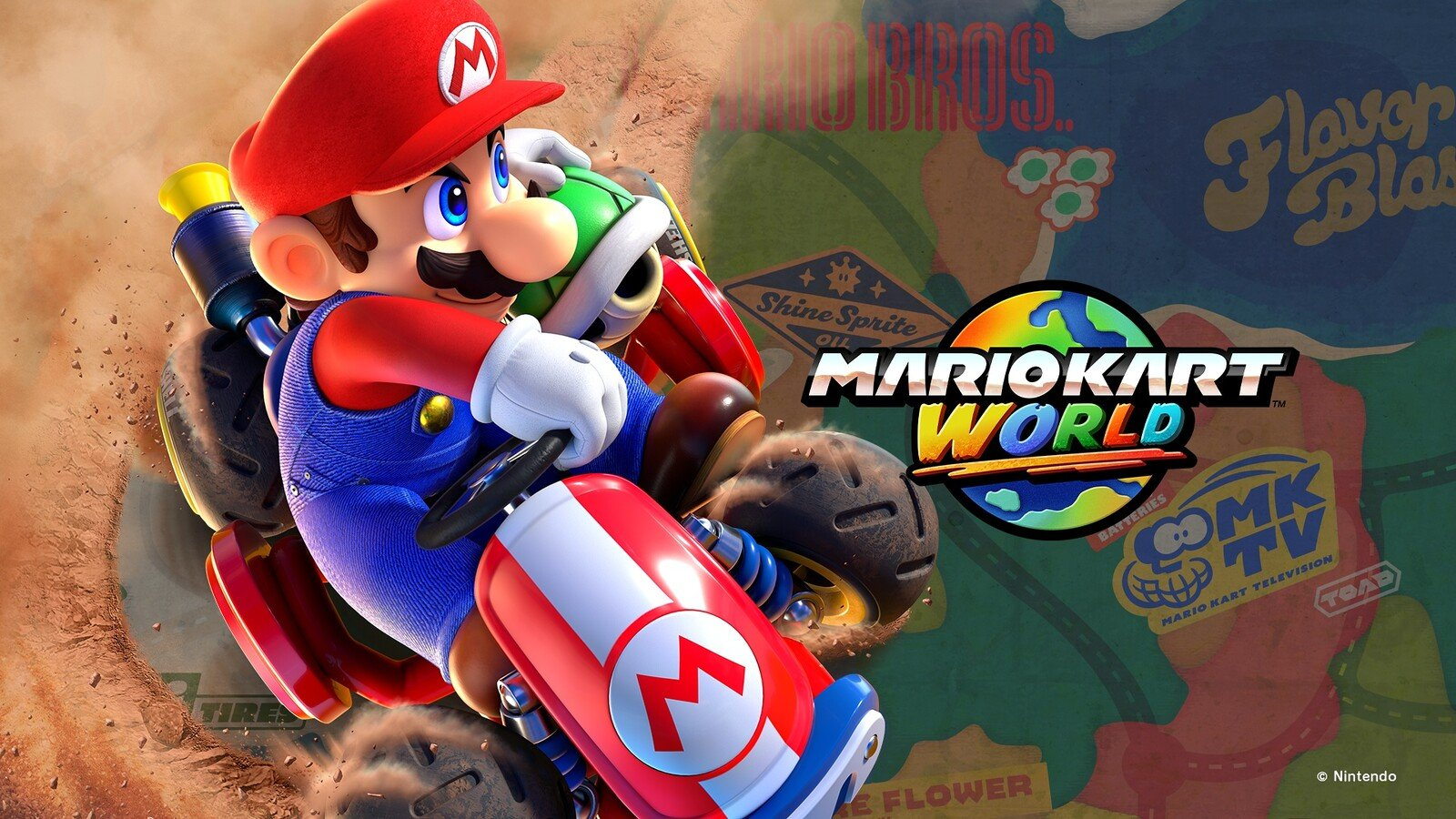
Summary:
Mario Kart World hitting the 2.5 million mark in Japan is the kind of milestone that doesn’t just look good in a headline, it changes the tone of the whole conversation around a platform. Famitsu’s retail tracking places the game at 2,573,736 physical copies sold in Japan as of the week ending December 21, 2025, which means the number didn’t crawl there over years of slow burn. It got there fast, in roughly 29 weeks from its June 5, 2025 launch window, and that pace is why people keep comparing it to the biggest Mario Kart runs the country has ever seen. The fun part is that the story is bigger than one racer. We’re also watching the Nintendo Switch 2 build momentum in the most traditional “buy it at the store” market on the planet, where weekly charts still steer real spending.
What makes this even more interesting is how many forces stack in Mario Kart World’s favor at once. It’s the kind of game that works as a first purchase, a family gift, a party staple, and a comfort play when you’ve got twenty minutes to spare. It also benefits from the reality that bundles and pack-in style buying can rocket totals upward, especially when a new system lands right before major shopping periods. We walk through what Famitsu’s number actually represents, why physical sales still carry weight in Japan, how Switch 2 hardware demand feeds the software cycle, and what “best-selling game of 2025” means when people are mixing retail charts with digital storefront talk. By the end, you’ll have a clean picture of why this milestone matters, and what we should keep an eye on next.
The Mario Kart World milestone that turned heads in Japan
When a game clears 2.5 million physical copies in one country, that’s not a small win, that’s a victory lap with confetti cannons. Mario Kart World has now pushed past that line in Japan, and the number matters because it’s rooted in weekly retail tracking rather than vibes or guesswork. We’re talking about people walking into stores, grabbing a box, and adding another tick to the total. That’s the kind of purchase behavior that’s harder to fake and easier to compare over time. It also helps explain why this milestone feels louder than a typical “sold a lot” update. Japan still treats physical charts like a scoreboard, and Mario Kart World is sitting there in bold letters at the top, week after week, like it brought its own podium.
The Famitsu number everyone is quoting
The cleanest way to say it is this: Famitsu’s sales tracking places Mario Kart World at 2,573,736 physical copies sold in Japan as of the week ending December 21, 2025. That’s not a rounded estimate someone tossed into a social post, it’s the kind of lifetime figure that gets updated alongside weekly movement, so you can see the climb in real time. We can also anchor the timeline without doing mental gymnastics. The game’s listed release date is June 5, 2025, and the week that includes December 15 to December 21 puts us right around the 29-week mark. That’s why the “29 weeks” line keeps showing up, because it’s basically the distance between launch day and the latest reporting week, measured in weekly steps like a race track made of calendars.
The week that pushed it past the line
Milestones like this rarely happen in silence. In the December 15 to December 21 reporting week, Mario Kart World didn’t just inch forward, it added another chunky weekly block and kept its grip on first place. That matters because it shows the sales engine is still running hot rather than coasting on launch fumes. You can think of it like a bonfire that keeps getting fed fresh wood instead of slowly dying down to embers. A strong week this late in the year points to predictable seasonal buying, yes, but it also hints at something deeper: the game is still the default “safe choice” when someone buys a Switch 2, especially if they want something everyone in the house can play without a learning curve. That kind of reliability is priceless in retail.
Why “physical” still matters for this story
It’s tempting to shrug and say, “Sure, but everyone buys digital now,” and in some places that’s basically true. Japan is different. Physical retail remains culturally sticky there, partly because shopping districts, electronics chains, and gift-giving habits still reward the box on the shelf. Physical charts also capture a specific kind of momentum: the kind you can see each week as families shop, friends recommend, and stores restock. And even if you personally never buy cartridges, physical tracking gives us a consistent yardstick across years, which is crucial when people start comparing Mario Kart World to older entries. In other words, physical data is the ruler on the desk. Digital can be huge too, but it’s often harder to measure publicly with the same week-by-week clarity.
Why Mario Kart World keeps pulling people in
Mario Kart is already a comfort food series, but Mario Kart World added a twist that feels like it was designed to keep the plate full. The “open world kart racer” angle changes what it means to boot the game up. Instead of always starting with a strict menu to pick a cup and race in a straight line of events, the broader structure makes the game feel like a playground with ramps, shortcuts, and surprises baked in. That’s a big deal for repeat play, because repetition stops feeling like repetition when your route, your goals, and your little side decisions keep shifting. We’re not only chasing trophies anymore. We’re chasing moments, stories, and that goofy “one more run” itch that somehow turns into an hour.
The open world hook without the homework
Open world games can sometimes feel like a second job wearing a fun hat. Mario Kart World dodges that trap by keeping the point simple: drive, explore, race, laugh, repeat. The world design can make quick sessions feel meaningful because you can stumble into something interesting in minutes, even if you don’t have time for a full tournament. That’s a sneaky sales advantage, because it widens the audience. Players who usually avoid sprawling games still get the “big world” feeling, while players who love discovery get reasons to roam. It’s like giving everyone the same amusement park ticket, then letting them choose between the roller coaster, the snack stand, or the weird haunted house nobody admits they love.
A racer built for quick wins and long sessions
Mario Kart’s best trick has always been flexibility. Ten minutes? You can knock out a race or two. Two hours? You can turn the living room into a tournament arena. Mario Kart World leans into that strength by making both play styles feel natural, not forced. The controls stay approachable, but the mastery ceiling stays high enough that skilled players have something to chase. That balance is a big part of why sales keep ticking upward long after launch. People don’t just buy it, try it, and move on. They keep it installed, keep it ready, and keep coming back when friends visit or when they want something familiar after a long day. It’s the gaming equivalent of having a go-to playlist that never gets old.
The party factor that never goes out of style
There’s a reason Mario Kart becomes the default suggestion the moment someone says, “What should we play?” It works across ages, skill levels, and moods, and it’s still fun even when you’re losing because the chaos is half the point. Mario Kart World benefits from that baked-in social magic, and social magic sells hardware. If you’re buying a new console and you want one game that won’t embarrass you in front of guests, this is the one. You can hand a controller to a friend who hasn’t played in years and still get laughs within the first lap. That’s not a minor feature, that’s a buying trigger. People don’t only purchase for themselves, they purchase for future moments, and Mario Kart is basically a machine that manufactures those moments on demand.
Switch 2 momentum and the “one more reason to buy” effect
Big software numbers don’t happen in a vacuum. They ride on hardware momentum, and Switch 2 has had plenty of that in Japan. When a new system is selling strongly, people naturally want a “starter” game, something that feels like it justifies the purchase and shows off the experience right away. Mario Kart World fits that role like a glove. It’s instantly playable, visually appealing, and socially useful, which makes it an easy “yes” at checkout. The result is a feedback loop that’s almost unfair: strong hardware sales feed strong software sales, which then makes the hardware even more attractive because everyone wants to join the party. It’s the kind of loop other platforms dream about.
Hardware timing, holidays, and a perfect partner game
Timing is everything, and the calendar did Mario Kart World a favor. A June launch gives enough runway to build word of mouth, then the late-year shopping season hits like a turbo boost. Famitsu’s reporting for mid-December shows Switch 2 hardware moving in large weekly chunks, which means more new owners looking for their first must-have. And when a game keeps topping charts late in the year, it signals that demand isn’t only coming from early adopters. It’s reaching the “normal people” phase, the buyers who waited, watched, and finally jumped in when availability and gifting season lined up. If you’ve ever seen a crowded electronics store and felt your wallet start sweating, you know exactly how these weeks can snowball.
How bundles and family buying patterns move totals
We also have to be honest about how families shop. Bundles can turn a “maybe later” game into an automatic purchase, because it feels like you’re getting a deal and skipping the hassle of deciding. That matters in Japan, where buying a console for a kid, a sibling, or even yourself can come with a strong desire to make the purchase feel complete right away. When Mario Kart World is positioned as the obvious first pick, bundles amplify that effect and pull more copies into the physical total. And here’s the thing: even if some of those copies are bundle-driven, they still become players. They still become households that might buy DLC later, invite friends, and keep the game alive culturally. A bundle sale isn’t a fake sale, it’s a shortcut to adoption.
The real-world meaning of a high attach rate
Attach rate talk can sound like spreadsheet chatter, but it translates into something very human: “Most people buying this console also want this game.” That’s what makes Mario Kart World feel like the Switch 2’s flagship in Japan. A high attach rate means the game becomes a shared reference point. Friends assume you have it. Streamers assume their audience knows it. Stores stock it like it’s bread. That kind of ubiquity is powerful because it lowers friction for the next buyer. Nobody wants to feel like they picked the oddball option when buying a new system, and Mario Kart World is the opposite of oddball. It’s the social baseline, and once a game becomes the baseline, sales can keep compounding in a way that looks almost effortless from the outside.
The “best-selling game of 2025” claim, explained carefully
When people say Mario Kart World is the best-selling game in Japan of 2025, the key is understanding what dataset they’re pointing at. In physical retail tracking, the game’s total sits at a level that puts it at the top of 2025 sales tables that compile yearly retail performance. That’s a strong statement, but it’s also a specific one. It’s about boxed sales tracked through the year, not necessarily every download across every storefront. The nuance doesn’t weaken the achievement, it clarifies it. If anything, it makes the story more impressive, because dominating physical retail in Japan is like winning a marathon on a course everyone respects. You don’t luck your way into it.
What it means in physical retail terms
In plain language, “best-selling” here is about how many physical copies moved through Japanese stores during 2025, as tracked and compiled from weekly reports. Mario Kart World’s 2,573,736 physical total places it at the top of 2025 physical sales rankings that aggregate those weekly numbers. That’s why you’ll see it listed above other major releases on yearly tables, because it didn’t just have one strong month, it kept selling across the calendar. This is the kind of performance that turns a release into a fixture. It becomes one of those games stores keep stacked near the counter because they know it’s going to move. And once retail treats you like a fixture, you stay in the conversation even when new releases try to steal the spotlight.
Physical vs digital: why both can be true at once
It’s also totally possible for Mario Kart World to be a physical monster and still be part of a bigger digital story that’s harder to measure publicly. Some players buy downloads because they hate swapping cartridges. Others buy physical because they like collecting, gifting, or trading later. In Japan, both behaviors exist, but physical has extra cultural weight, and Famitsu’s weekly visibility keeps it front and center. So when someone asks, “Is it really the best-selling game?” the best answer is, “In Japan’s tracked physical retail data for 2025, yes, it’s right at the top.” That’s already an enormous win. Digital adds another layer, but physical alone is enough to explain why the game feels unavoidable.
What to watch as the year closes and 2026 begins
Even with a milestone this big, the story doesn’t freeze in place. The last weeks of the year can still reshuffle yearly rankings for other titles, and early 2026 can bring new competition, price changes, or fresh bundles that shift buying patterns. For Mario Kart World, the big watch item is whether the weekly pace stays elevated after the holiday surge settles. If it keeps posting strong weeks into January and February, that signals a long runway rather than a seasonal spike. We should also watch how Nintendo supports the game, because updates, events, and ongoing community chatter can keep a racer feeling fresh long after the first million copies. The funny part is that the finish line keeps moving, and Mario Kart World looks like it brought extra fuel.
What this milestone sets up next
A milestone like 2.5 million physical copies is both a celebration and a launchpad. It suggests Mario Kart World is moving from “hot new release” into “platform pillar,” the kind of game that defines what owning the system feels like. That shift matters because platform pillars create stability. They keep people engaged between big releases, they make the console easier to recommend, and they give Nintendo a reliable anchor for events, promotions, and future announcements. For players, it usually means a healthier online population, more friends to race, and more reasons to keep jumping back in. For Nintendo, it means the Switch 2 has a headline success story that isn’t just about hardware units, but about an ecosystem that people actually use.
The long tail: updates, events, and staying power
Mario Kart games are famous for the long tail. They sell, and then they keep selling, because the game becomes the default option in the genre on that system. Mario Kart World is now set up to follow that pattern, and the size of the current physical base in Japan makes it even more likely. A large base keeps matchmaking lively, keeps community clips circulating, and keeps casual players feeling like they’re part of something bigger than their own console. It’s like a neighborhood park: the more people who show up regularly, the more inviting it feels to everyone else. If Nintendo keeps feeding the game with reasons to return, even small ones, the sales story can keep growing in the background while everyone argues about whatever the newest release is.
What other publishers learn from this run
There’s a lesson here that isn’t limited to kart racers. A system seller isn’t always the most complicated game, the most cinematic game, or the most “prestige” game. Sometimes it’s the one that makes people smile in the first five minutes and then keeps being useful for years. That’s what Mario Kart World is doing in Japan right now. Other publishers watching Switch 2 will see a clear signal: simple onboarding plus social payoff can beat flashiness when it comes to sustained retail movement. And if you’re planning your own Switch 2 release, you now have to ask yourself a slightly terrifying question: “Am I launching into a world where everyone already has their default game?” Because that’s what a platform pillar creates, and it raises the bar for everything else.
Why Japan’s market is a special kind of proving ground
Japan is a fascinating place to watch sales because it blends modern habits with old-school retail traditions. Weekly charts still have cultural pull, physical stores still matter, and franchises with broad family appeal can dominate in a way that feels almost cinematic. That’s why Mario Kart World crossing 2.5 million physical copies there is such a loud signal. It’s not just success, it’s success in a market that rewards consistency and familiarity, while still being tough enough that not every big release automatically wins. If you can dominate Japan’s weekly retail conversation for months, you’ve proven you’re more than a launch fad. You’ve proven you’re a habit. And habits are where the real staying power lives.
Conclusion
Mario Kart World passing 2.5 million physical copies in Japan is one of those milestones that tells a full story all by itself. Famitsu’s tracking puts the game at 2,573,736 physical copies as of the week ending December 21, 2025, and the timeline from its June 5, 2025 release places that climb at roughly 29 weeks. That combination of scale and speed explains why the game is being framed as a record-setting run for the series in Japan, and why it’s also treated as the Switch 2’s defining hit in the country. The bigger takeaway is that this isn’t only about one racer doing well. It’s about a platform finding its “everyone buys this” moment early, and then riding that wave into the kind of momentum that can shape an entire year of buying behavior.
FAQs
- What exactly is the 2.5 million milestone measuring?
- It refers to physical retail sales in Japan tracked through Famitsu reporting, with Mario Kart World at 2,573,736 physical copies as of the week ending December 21, 2025.
- How do we get “about 29 weeks” since launch?
- Mario Kart World’s listed release date is June 5, 2025, and the reported total is tied to the week ending December 21, 2025, which is roughly 29 weeks later when measured by weekly reporting periods.
- Does this include copies sold through Switch 2 bundles?
- Yes, the physical retail totals discussed alongside this milestone are commonly described as including bundle-related sales where applicable, since a copy sold through a bundle is still a retail copy counted in physical tracking.
- Is it accurate to call it Japan’s best-selling game of 2025?
- In physical retail tracking and yearly tables that compile those physical numbers, Mario Kart World’s 2025 physical total places it at the top of the list.
- Why does physical sales data still matter so much in Japan?
- Japan’s retail market still places strong cultural and commercial weight on boxed sales and weekly charts, and Famitsu’s physical tracking provides a consistent public yardstick for comparing performance over time.
Sources
- 〖ソフト&ハード週間販売数〗『マリオカート ワールド』が18度目の首位獲得! Switch2本体は22万台超えの好セールスを記録〖12/15~12/21〗, Famitsu, December 25, 2025
- Famitsu Sales: 12/15/25 – 12/21/25 [Update], Gematsu, December 25, 2025
- ゲーム売上定点観測 2025年ソフト売上ランキング, ゲーム売上定点観測, December 27, 2025
- Mario Kart World is Japan’s fastest-selling Mario Kart game…and it’s not even close, GoNintendo, December 26, 2025
- Nintendo Switch 2 smashes record as company’s fastest-selling console, Reuters, June 11, 2025