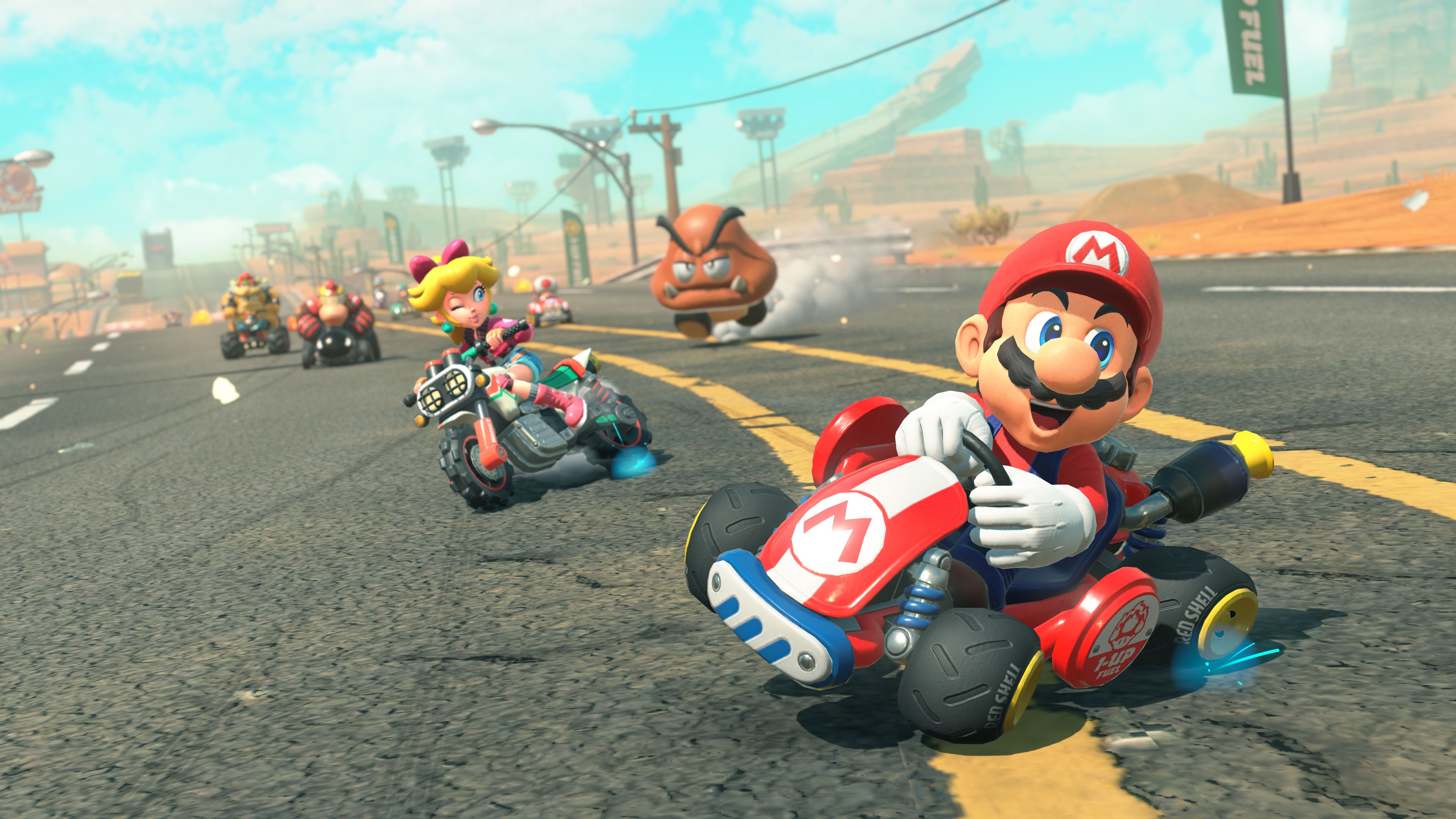
Summary:
Mario Kart World ditches cross-series cameos in favor of a roster drawn entirely from the Super Mario universe. Producer Kosuke Yabuki believes the decision safeguards brand identity, streamlines balance, and still leaves players spoiled for choice thanks to costumes and character variants. This piece explores the thinking behind the move, revisits the series’ history with guest racers, gauges community sentiment, and considers what the future—especially DLC—might hold. Along the way we unpack how design constraints, marketing priorities, and player expectations intersect, revealing why an all-Mario lineup may be the most sensible path for the franchise right now.
The Philosophy Behind an All-Mario Roster
Nintendo has long treated Mario Kart as a joyful playground where mechanics and mascot meet at full speed. With Mario Kart World, the development team doubled down on that ethos by limiting the roster to characters born within the Mushroom Kingdom and its nearby galaxies. At first glance, the choice might seem restrictive—especially to players who fell in love with Link’s Master Cycle or Isabelle’s cheery wave in Mario Kart 8 Deluxe. Yet the philosophy is simple: focus creates freedom. By narrowing the thematic scope, designers can concentrate on course variety, kart physics, and cosmetic flair without negotiating the tonal clash that sometimes arises when, say, an ink-splattered squid overtakes the King of Koopas on Rainbow Road. It’s a bit like hosting a dinner party with a single cuisine; fewer ingredients, but each one can shine.
Yabuki’s Vision: Protecting Franchise Identity
Kosuke Yabuki, the soft-spoken producer who has shepherded the series since Mario Kart 7, likens the roster to a cast in a stage play. If every actor hails from the same world, the performance feels cohesive, even when costumes change between acts. During his chat with French daily Ouest-France, Yabuki admitted the team “inevitably wonders how players will perceive this cast,” yet he remains convinced that a Mario-only lineup honors three decades of history while leaving “something for everyone.” In practice, that means Baby Mario racing alongside Pauline, or a tuxedoed Bowser sliding past a Tanooki-suit Wario. Familiar faces in new outfits feel fresh without diluting the brand. Protecting that identity is more than nostalgia; it’s a strategic anchor in a crowded market where brand recognition equals staying power.
A Brief History of Guest Racers in Mario Kart
Guest appearances are hardly foreign to the franchise. Mario Kart Wii flirted with them via the Mii Channel; Mario Kart 8 Deluxe opened the floodgates with Link, Villager, and the Inklings. Those cameos were electrifying, yet they also introduced balancing headaches: non-Mario characters often arrived with signature vehicles or voice packs that required extra tuning. Over time, the novelty wore thin, and critics argued that the roster had become a patchwork quilt held together by nostalgia rather than design. When Smash Bros. already offers a maximalist cross-franchise celebration, duplicating that “everybody’s here” energy in Mario Kart risks redundancy. By pulling back, Mario Kart World differentiates itself, much as a craft brewery might abandon seasonal one-offs to perfect its flagship lager.
Why Mario Kart World Takes a Different Road
Several forces steered the developers toward an all-Mario road map. First, hardware constraints dissolved with Switch 2’s power, meaning the game could push higher poly models and richer particle effects. The extra headroom was spent on costumes, animated facial expressions, and new kart body types rather than on licensing or modeling characters from unrelated franchises. Second, a unified roster simplifies marketing: box art, commercials, and eShop thumbnails can lean hard on Mario imagery, creating instant brand clarity in a cluttered digital storefront. Third, the choice supports competitive balance; when every racer springs from the same universe, stat classes—light, medium, heavy—can be tuned around a shared silhouette language, making differences intuitive at a glance.
Player Reactions: Cheers, Groans, and Memes
The fanbase’s initial response painted a mosaic of delight and disappointment. One camp applauds the purity: forums fill with posts praising Nintendo for “going back to basics” and giving minor NPCs like Cow and Dolphin a moment in the limelight. Another camp laments the absence of cross-series favorites, spearheading hashtags such as #LetLinkRideAgain. Memes spread quickly—King Boo wearing a wig labelled “Zelda in disguise,” for instance—yet even critics admit the roster feels large. With 48 base racers and more than 120 costumes, variety percolates in subtler ways. The debate underscores a truth of modern gaming discourse: you can’t please every kart on the track, but sparking conversation keeps engines revved.
Balancing Gameplay Around a Diverse Mario Cast
Designing karts is equal parts science and slapstick. Each character fits into one of three weight classes, influencing acceleration, top speed, and drift radius. By sticking with Mario characters, the art team can exaggerate silhouettes—think Chunky Kong-sized Morton versus feather-light Monty Mole—without venturing outside the Mario aesthetic. That uniform art direction helps players read opponents at 200 cc when split-second decisions matter. It also streamlines competitive balance patches; stat tweaks ripple across a cohesive ecosystem instead of juggling disparate IP constraints.
Weight Classes and Kart Performance
Lightweights accelerate like popcorn kernels in hot oil but flutter in the wind; heavyweights barrel through off-road patches yet struggle on tight hairpins. Medium racers remain the peanut-butter middle. With every racer drawn from the same franchise, developers can align weight class identities with established character lore—Bowser Jr. will always be mischievously nimble, whereas Bowser is a rolling fortress. That narrative-mechanical harmony bolsters immersion.
Hidden Stats and Competitive Play
Under the hood lies a matrix of micro-stats—mini-turbo duration, water handling, anti-gravity grip. Competitive players parse these numbers in spreadsheets thicker than a Toad’s cookbook. An all-Mario roster means fewer outliers and easier balancing passes; each patch can tweak classes rather than individual cameo characters with contractual voice-line limitations. In the long run, that stability fosters a healthier esports scene.
Costumes, Variants, and the Illusion of Limitless Choice
If guest characters provide breadth, costumes provide depth. Mario Kart World introduces a wardrobe system where racers unlock attire through Grand Prix milestones and seasonal challenges. Picture Firefighter Luigi spraying sparks in a volcanic track, or Vacation Peach sporting a sun hat that flaps in real-time wind physics. These outfits don’t alter stats but they do feed collect-a-thon instincts once satisfied by new character slots. In effect, Nintendo swapped breadth for cosmetic depth, a trade-off that suits a live-service cadence where weekly challenges entice players to return. It’s lipstick on a Koopa, sure, but it works.
Potential DLC: Expansions Without Crossovers
Nintendo has remained coy about DLC plans, yet data miners spotted unused character IDs such as “Foreman Spike” and “Wart,” hinting at deeper cuts within the Mario lore. The strategy mirrors how Super Mario Odyssey mined decades-old enemies for surprise cameos. Expect future waves to double down on in-universe novelty—perhaps a King Bob-omb drifting on a jewel-encrusted mine cart. Could Nintendo eventually bend and invite Kirby? It’s possible, but all signals suggest the team will explore every Mushroom Kingdom nook before unlocking the multiverse garage.
How Mario Kart World Compares to Crossover Rivals
Crashes and power-ups aside, Mario Kart’s fiercest rival today is Sega’s Sonic Racing: CrossWorlds, a title unabashedly stuffed with crossover cameos—from SpongeBob to the Teenage Mutant Ninja Turtles via paid DLC. The contrast is stark: Sega courts external IP for shock value, while Nintendo leans on internal depth for brand cohesion. Comparisons resemble two restaurants: one offers a global buffet, the other a meticulously curated regional menu. Both have merit, but diners know which flavor profile to expect. By clarifying its identity, Mario Kart World avoids comparison fatigue and lets design innovations—like open-world hubs and real-time weather—claim the spotlight.
Community Wishlist: Which Mario Faces Still Deserve a Seat?
Even within the Mario universe, omissions spark petitions. Fans clamour for Professor E. Gadd, Dixie Kong, and the Birdo–Yoshi offspring from Paper Mario: The Thousand-Year Door. Some plead for Hammer Bro, citing his cameo as an item in earlier titles. Others dream of a triple-deck Bowser Jr. mech suit skin. Nintendo’s silence fuels speculation, but Yabuki’s past comment that “there are so many costumes that there’s sure to be something for everyone” hints DLC might favor wardrobe over wholly new racers. Still, hope springs eternal on social media threads that tally character votes like an election night ticker.
Accessibility, Branding, and Long-Term Strategy
An all-Mario lineup dovetails with Nintendo’s broader accessibility push. Newcomers recognize characters instantly from Super Mario Bros. Wonder or the recent animated film. Parents feel safe handing controllers to kids familiar with these faces. Meanwhile, brand managers ensure every screenshot screams “Mario” without a legal department vetting cross-license agreements. It’s a long-term strategy riding parallel to the company’s push for a cohesive cinematic universe and theme-park expansions at Super Nintendo World. Consistency across media turns each game release into a node in a wider ecosystem, reinforcing recognition like mushrooms reinforcing a speed burst.
Mario Kart World’s roster decision isn’t simply about who gets behind the wheel; it’s a thesis on focus in an age of content sprawl. By looking inward, Nintendo reaffirms what makes the series tick: tight controls, exuberant tracks, and the ever-charming cast that first taught players how to drift. Guest racers may yet return, but for now the gates are closed, the parade is all-Mario, and the track ahead looks surprisingly wide-open.
Conclusion
Stripping away crossover flash might seem risky, yet Mario Kart World proves that depth can outshine breadth when vision stays clear. By centering on Mario’s universe, the developers crafted a roster that feels both familiar and novel, ensuring recognizable faces anchor newcomers while costume creativity delights veterans. The approach safeguards brand integrity, streamlines balance, and leaves plenty of pavement for future updates. Whether DLC brings forgotten Koopa cousins or fresh kart skins, one thing is certain: the Mushroom Kingdom still has miles of track left to explore.
FAQs
- Why did Nintendo remove non-Mario characters after Mario Kart 8 Deluxe?
- The team felt focusing on the Mario universe created a more cohesive experience and allowed deeper customization through costumes rather than external cameos.
- Are crossover racers gone for good?
- Nintendo hasn’t ruled them out, but current interviews suggest the priority is exploring every corner of Mario lore first.
- How many playable characters are in Mario Kart World at launch?
- Forty-eight unique racers span all weight classes, each with multiple costumes unlocked through gameplay.
- Will DLC add new racers or just costumes?
- Datamining hints at new racers from deep-cut Mario titles, though Nintendo may prioritize costume packs to maintain roster cohesion.
- Does the roster choice affect competitive balance?
- Yes, a Mario-only lineup simplifies stat tuning, making balance patches faster and more consistent across all weight classes.
Sources
- Nintendo on why non-Mario characters weren’t included in Mario Kart World, My Nintendo News, June 22, 2025
- Mario Kart World dev comments on why non-Mario characters aren’t included, Nintendo Everything, June 21, 2025
- Nintendo explains why Zelda, Animal Crossing & Splatoon aren’t represented in Mario Kart World, GoNintendo, June 22, 2025
- Why Mario Kart World Doesn’t Include Characters from Other Series, Explains Producer Kosuke Yabuki, eTeknix, June 22, 2025