














Summary:
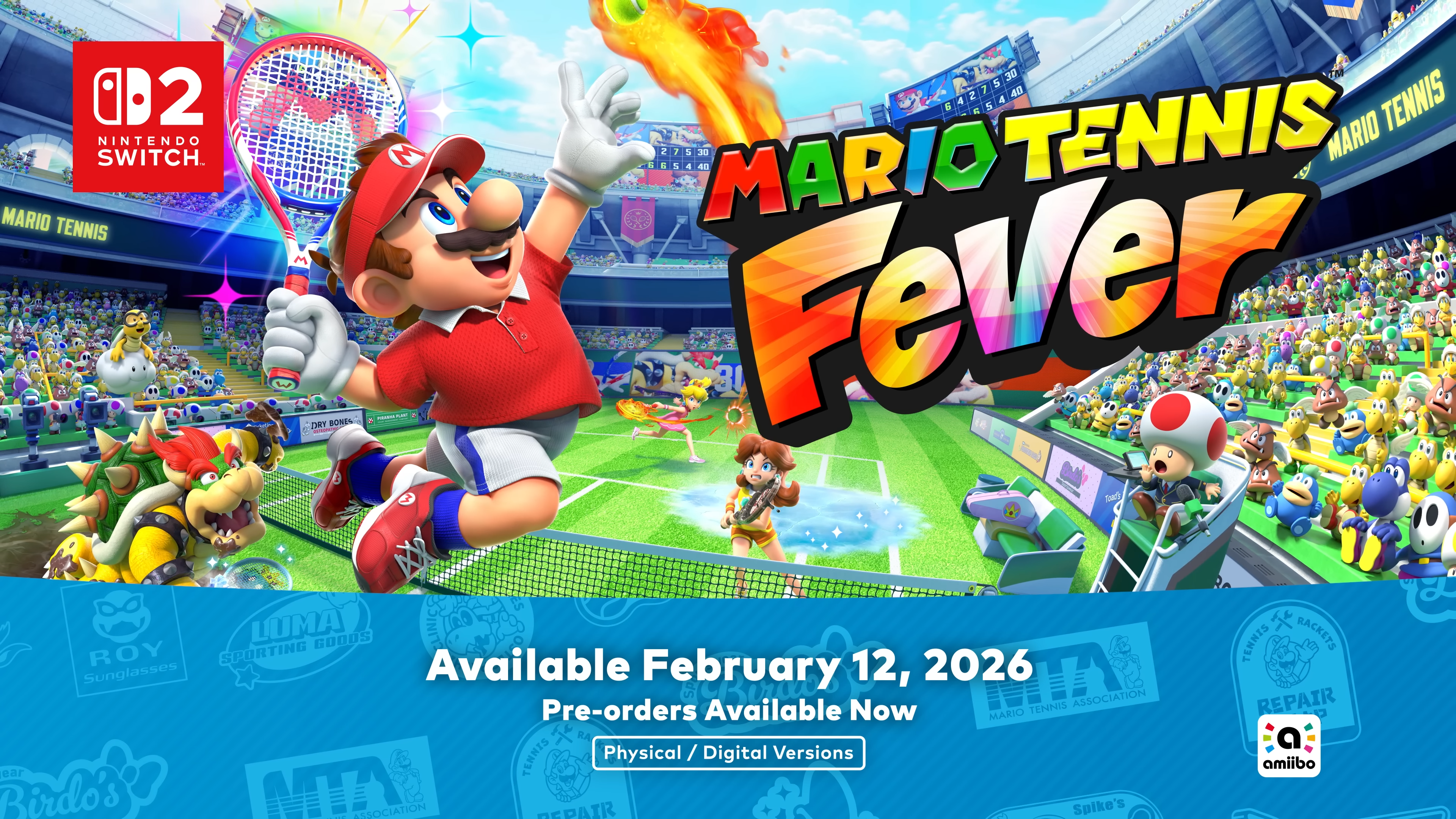
Nintendo’s overview trailer for Mario Tennis Fever doesn’t just flash a logo and run away. It lays out what we’re actually getting when the game launches on February 12, 2026, exclusively on Nintendo Switch 2. The headline is easy to repeat at a party: 38 playable characters at launch, which is the biggest starting roster the series has had. The more interesting part is what that roster is doing inside matches, because Mario Tennis Fever is built around a new layer called Fever Rackets. We pick one of 30 rackets, each with a special effect, and then we build a Fever Gauge to unleash a Fever Shot that can tilt a rally in seconds. If that sounds like pure chaos, Nintendo also makes it clear that fundamentals still matter, with familiar shots like topspin, slices, and lobs still being part of the toolkit.
The trailer also frames variety as the whole point. We’ve got returning and new modes aimed at different moods, from Tournament play with Talking Flower commentary to the challenge-focused Trial Towers. If we want weird rules and party energy, Mix It Up mode is the playground, with examples like Ring Shot and Forest Court Match. For the Super Mario Bros. Wonder crowd, Wonder Court Match adds Wonder effects that can flip expectations mid-point. Multiplayer is a major focus too, with local and online options, including Online Room for custom sessions and Ranked Matches for players who want to sweat a little. There’s even Swing Mode for motion-controlled play using Joy-Con 2, plus an Adventure mode that gives us a story-driven way to learn and sharpen techniques. In short, the trailer sells a tennis game that still respects timing and placement, but keeps tossing fresh variables onto the court so every match feels like a new dare.
Mario Tennis Fever overview trailer: the big takeaways
Nintendo’s overview trailer for Mario Tennis Fever is basically a tour guide waving a flag and shouting, “Yep, everything’s over here.” The confirmed launch date is February 12, 2026, and Nintendo is positioning it as a Nintendo Switch 2 exclusive. The trailer also locks in two numbers that shape expectations right away: 38 playable characters at launch and 30 Fever Rackets you can equip, each with a distinct ability. That combination matters because it hints at a match-to-match identity that goes beyond picking your favorite character and calling it a day. We’re choosing a character and a racket effect, then trying to steer rallies toward moments where that effect can swing the point. On top of that, Nintendo highlights a range of modes that sound designed for different vibes, including Trial Towers, Mix It Up, Wonder Court Match, Tournament, and both casual and competitive online play. If you like motion controls, Swing Mode is also in the spotlight, which is Nintendo’s way of saying, “Yes, you can play this with a wrist flick and a grin.”
Classic tennis fundamentals still matter
With all the fever chaos on display, Nintendo still makes a point of grounding Mario Tennis Fever in familiar tennis actions. That’s reassuring, because a good sports game needs a solid floor before it starts building a fun ceiling. The trailer calls out tried-and-true techniques like topspin, slices, and lobs, which tells us placement and timing won’t be optional, even if the court occasionally looks like it’s auditioning for a cartoon fireworks show. We can treat Fever Rackets like seasoning, not the entire meal. In practical terms, that means we still want to read positioning, push opponents wide, and set up the point the old-fashioned way. If we ignore fundamentals and only hunt for flashy moments, we’ll probably hand out free points like we’re running a charity event. The best matches in games like this usually come from that tension between steady execution and the temptation to do something wild.
Shot selection: topspin, slices, and lobs
Shot variety is the language we use to talk to our opponent, and Mario Tennis Fever keeps that vocabulary intact. Topspin is the pressure tool, the shot that says, “Move your feet, because I’m not letting you breathe.” Slices are the annoying little speed bumps that force awkward timing, and lobs are the classic escape hatch when someone crowds the net or tries to bully the point. Nintendo highlighting these specifically is a clue that match control still starts with choices, not just reactions. It also suggests we’ll still be rewarded for mixing pace, height, and placement instead of mindlessly hammering the same response. Think of it like cooking pasta: the sauce matters, sure, but if the pasta’s overcooked, nobody’s clapping. When we’re building rallies to charge the Fever Gauge, smart shot selection is how we keep the rally alive on our terms, not on theirs.
Fever Rackets and the Fever Gauge
Fever Rackets are the big new toy, and Nintendo frames them as a way to reshape how momentum works in Mario Tennis Fever. We equip one of 30 rackets, each tied to an effect that can disrupt footing, change visibility, or otherwise make the rally feel like it’s been nudged off its normal rails. The key limiter is the Fever Gauge, because we’re not firing off special effects every swing. We’re earning them by playing, building meter, and then choosing the moment to cash it in. That creates a decision loop that’s easy to understand but hard to master: do we pop fever the second it’s available, or do we wait until we’ve set up the point so the effect actually matters? The trailer also suggests the answer depends on the racket we’re using, because some effects sound like they reward planning more than panic. If we like games where timing a power moment feels like calling a play, this system is built to scratch that itch.
Fever Shot offense and the send-back defense
Nintendo highlights a spicy twist that keeps Fever Shots from being a one-way bully mechanic: if we’re on the receiving end, we can try to send the shot back before it hits the court. That single detail changes the emotional tone of a match, because it turns a “brace for impact” moment into a “steal the momentum” opportunity. Offensively, a Fever Shot is the punchline to a rally we’ve been setting up, the moment we try to force an error or create an opening. Defensively, the send-back idea means we can stay engaged instead of feeling helpless, but it also raises the skill ceiling. If we mistime the return, we eat the effect. If we nail it, we flip the script and make the other player deal with their own chaos. It’s a bit like catching someone’s prank mid-air and tossing it right back, except the prank is a tennis ball that wants to ruin your day.
Racket effects that reshape the court
Nintendo doesn’t keep the Fever Rackets vague. The official breakdown includes examples like an Ice Racket that turns parts of the court into a slippery frozen surface, a Mini Mushroom Racket that shrinks the opponent, and a Shadow Racket that creates a duplicate and messes with perception. These examples matter because they show different categories of disruption: movement control, character state changes, and visual trickery. That variety suggests we’re not just choosing “stronger” or “weaker” options, but choosing the kind of problem we want to create. Some effects feel like they reward positioning and forcing bad footwork, while others look like they reward baiting a misread. If we’re playing doubles, effects that alter movement or visibility could also create messy coordination moments, which is either hilarious or tragic, depending on how competitive your friend group gets. The important takeaway is that Fever Rackets are not just cosmetic, they’re match-shaping tools with real consequences for spacing and decision-making.
Practical tips for using fever without gifting points
When fever is available, it’s tempting to smash the button like it owes us money, but the trailer’s mechanics hint that smarter use will win more matches. First, we want to trigger fever when the opponent is already stretched, because an effect lands harder when they’re scrambling. Second, we want to keep our own recovery in mind, since a flashy shot that leaves us out of position is basically a gift-wrapped counterattack. Third, we should watch for patterns in how opponents react to fever, because some players panic early and others try to time the send-back every single time. That tells us whether to vary our timing or to bait their attempt. Fourth, in modes with extra rule twists, we should treat fever as one tool among many, not the only win condition. The best mental model is simple: fever is a lever, and levers work best when we’ve already lined up the weight we want to move.
Modes built for chaos and competition
Nintendo’s trailer doesn’t present Mario Tennis Fever as a single-mode experience where we grind the same ladder forever. It sells variety, and it does it with specific names and examples that make the package feel intentionally diverse. We get new and returning modes aimed at everyone from first-timers to players who want to optimize strategies and sharpen execution. That matters because the Fever system could feel overwhelming if there wasn’t a way to learn it in smaller bites. Modes like Trial Towers signal structured challenges, while Mix It Up screams party rules and unpredictable scoring. Then there’s Tournament mode, which returns with a new flavor detail: play-by-play commentary from a Talking Flower. It’s a small touch, but it tells us Nintendo wants matches to feel like an event, not just a scoreboard. The mode mix also gives us a reason to keep switching things up, which is often the difference between a game we play for a weekend and one we keep installed.
Trial Towers mode and skill-building challenges
Trial Towers is framed as a series of challenges where we climb our way to the top, which is Nintendo’s way of offering structured practice without calling it homework. In sports games, this kind of mode is where we learn timing windows, defensive options, and how to recover after aggressive shots, all while chasing clear goals. It’s also a natural place to experiment with different Fever Rackets, because a challenge format can expose strengths and weaknesses faster than a casual match. If one racket effect keeps getting us punished, Trial Towers is where we find out before we embarrass ourselves online. The trailer language suggests this is meant to be approachable, but still satisfying for players who enjoy mastery. Think of it as a gym routine for your tennis brain: not glamorous, but it makes everything else feel smoother when the pressure hits.
Mix It Up mode, Ring Shot, and Forest Court Match
Mix It Up mode is where Mario Tennis Fever leans into “what if tennis had the rules written by a gremlin with a whistle.” Nintendo calls out unconventional rules, including Ring Shot, where we score by hitting balls through rings with precision, and Forest Court Match, where we can expand the court by feeding Piranha Plants tennis balls. Those examples tell us two things: scoring can become skill-challenge based, and the environment itself can change how we plan points. That’s a big deal because it shifts focus from pure rally dominance to mini-objectives inside the match. In a mode like Ring Shot, raw power might matter less than control, and that can flip who has the advantage. Forest Court Match sounds like it rewards awareness and opportunism, because expanding space changes angles and coverage. If your group likes laughing, trash talk, and “how did that even happen” moments, this mode looks built to deliver exactly that.
Wonder Court Match and Wonder effects
Wonder Court Match is Nintendo’s bridge between Mario Tennis Fever and the chaos-loving energy of Super Mario Bros. Wonder. The trailer points to Wonder effects that can keep us guessing, which is a polite way of saying the court might decide it has its own personality. The key here is expectation management: Wonder effects are designed to introduce surprise, so the best way to play is to stay flexible. We’ll likely need to adapt mid-rally, change positioning, and accept that perfect plans can get derailed by a sudden twist. That sounds frustrating if we’re only chasing pure competitive consistency, but it sounds amazing if we treat it like a party mode that still rewards quick thinking. It’s the same reason people love unpredictable mini-games: they create stories we retell later. The important part is that Nintendo is clearly separating “standard tennis skill” satisfaction from “Wonder-driven chaos” satisfaction, and letting us pick the mood we want.
Multiplayer on Switch 2: local, online, and shared sessions
Multiplayer is presented as a pillar, not an afterthought, and Nintendo calls out multiple ways to play. We can go local, we can go online, and we can also use GameShare functionality so that if one person has the game on Nintendo Switch 2, up to three nearby players can join in using Nintendo Switch 2 or even Nintendo Switch systems during the shared session. That’s a big accessibility win for group play, because it lowers the friction of “everyone needs a copy” for casual hangouts. Nintendo also highlights both casual and competitive online options, which usually signals matchmaking variety and different rule settings depending on the mode. If we’ve ever had that experience where one friend is a ranked monster and another friend is just here for vibes, having both lanes matters. Multiplayer sports games live or die on how easy it is to get a fun match going, and the trailer is clearly trying to reassure us that the options are there.
Online Room and Ranked Matches
Nintendo specifically names Online Room as a casual play mode with customizable rules, and Ranked Matches as the competitive path where we battle players around the world. That split is smart because it sets expectations before we even queue up. Online Room is where we can test rackets, mess with settings, and play “first to whatever feels right” without sweating every point. Ranked Matches is where consistency matters, and where learning the Fever Shot send-back timing can become the difference between climbing and stalling. The key to enjoying both is knowing what mood we’re in before we hit the button. If we jump into ranked while tired, we’re basically asking to get cooked and then pretend we’re fine about it. If we stay in casual forever, we might miss the fun of sharpening skills against unpredictable opponents. The trailer’s message is simple: both experiences exist, and we get to choose how spicy we want the night to be.
Roster size at launch: 38 playable characters
Nintendo confirms 38 playable characters at launch, and it frames that number as the biggest in the series’ history. That’s not just a brag, it’s a promise of variety from day one. The official reveal also calls out specific debuts, including Goomba, Nabbit, Piranha Plant, Baby Wario, and Baby Waluigi, which is Nintendo saying, “Yes, we’re going to get weird with it.” A larger roster is fun on its own, but it becomes more meaningful when paired with 30 Fever Rackets, because it suggests a lot of potential combinations and playstyles. Even if character differences are subtle, players will still gravitate toward favorites based on animations, reach, and feel, and then tailor the racket effect to match their approach. Roster size also helps multiplayer longevity, because people like switching it up without feeling like they’ve seen everything after three sessions. If you’re the type who picks a main and refuses to apologize for it, you’ll still enjoy the roster. If you’re the type who changes character every match like you’re flipping TV channels, you’ll enjoy it even more.
Swing Mode and Joy-Con 2 motion play
Swing Mode is Nintendo’s nod to players who want tennis to feel physical, not just strategic, and it’s explicitly tied to gently swinging the Joy-Con 2 controller. That word “gently” is doing a lot of work, and it’s probably good advice for living room safety. Motion modes can be a party favorite because they turn spectators into participants, even if their timing is chaotic and their form is questionable. They also change what feels satisfying, because a clean motion swing can feel like a mini victory even before the point ends. At the same time, motion play tends to be more about fun and feel than razor precision, so it’s best approached with the right expectations. If we want serious competition, we’ll probably lean toward standard controls. If we want laughs, a bit of drama, and someone inevitably saying “I swear I hit that,” Swing Mode looks like the perfect setup.
Adventure mode: a story reason to practice
Nintendo includes Adventure mode as a way to practice techniques and learn new ones, and it wraps that learning in a story hook. In this single-player campaign, mysterious monsters turn Mario, Luigi, Princess Peach, Wario, and Waluigi into babies, and they have to re-master their tennis skills and overcome challenges to return to normal. It’s silly in the best Mario way, and it also gives us a structured space to build fundamentals without the pressure of online matches. Story-driven modes in sports games often do two jobs at once: they entertain and they teach. If Trial Towers is the gym routine, Adventure mode is the training montage with jokes. It also helps players who prefer solo play feel like they’re getting a full experience, not just a menu of multiplayer options. If we’ve ever bounced off a sports game because we didn’t know what to do beyond “play match,” this mode is Nintendo’s answer to that exact problem.
Release date and what’s confirmed for launch day
Mario Tennis Fever launches February 12, 2026, exclusively on Nintendo Switch 2, and Nintendo has already shared several launch-day specifics. The official news post confirms 38 playable characters, 30 Fever Rackets, and multiple modes including Trial Towers, Mix It Up, Wonder Court Match, Tournament, and online play options like Online Room and Ranked Matches. It also confirms Swing Mode with Joy-Con 2 motion controls and GameShare support for nearby sessions where one Switch 2 owner can share the experience with up to three additional players using Switch 2 or Switch systems during that session. On Nintendo’s US site, the game is listed with a regular price of $69.99 and is labeled for pre-order. That’s the kind of detail that helps set expectations early, especially for players planning launch-week group nights. The big practical takeaway is simple: the date is locked, the feature set is clearly outlined, and Nintendo is confident enough to talk specifics rather than keep everything behind a vague teaser curtain.
Conclusion
Mario Tennis Fever is shaping up to be the kind of sports game that respects the basics but refuses to stay predictable for long. The overview trailer makes it clear that we’re still playing tennis with familiar shots and rally strategy, yet we’re also juggling a new layer with Fever Rackets, a Fever Gauge, and Fever Shots that can be turned back on an opponent if we react fast enough. The mode lineup looks built for different moods, from structured challenges in Trial Towers to rule-bending chaos in Mix It Up and surprise-driven Wonder Court matches. Add in 38 playable characters at launch, online options split between casual rooms and ranked play, and motion-based Swing Mode, and it’s easy to see Nintendo’s goal: give us a game that can be competitive on Tuesday and ridiculous on Saturday. With a confirmed release date of February 12, 2026 on Switch 2, we don’t have to wait long to find out which mode becomes your group’s obsession and which Fever Racket becomes the one everyone complains about.
FAQs
- When does Mario Tennis Fever launch?
- It launches February 12, 2026, and Nintendo is promoting it as a Nintendo Switch 2 exclusive release.
- How many playable characters are confirmed at launch?
- Nintendo has confirmed 38 playable characters at launch, which it describes as the biggest roster in series history.
- What are Fever Rackets and how many are there?
- Fever Rackets are new equipable rackets with unique abilities, and Nintendo has confirmed there are 30 of them.
- What multiplayer options are confirmed?
- Nintendo has confirmed local and online multiplayer, including Online Room and Ranked Matches, plus GameShare support for nearby shared sessions.
- Is there a single-player mode?
- Yes. Nintendo has confirmed an Adventure mode where characters are turned into babies and must re-master tennis skills to return to normal.
Sources
- Get ready for tennis with a twist in the new Mario Tennis Fever overview trailer, Nintendo, January 8, 2026
- New Mario Tennis Fever Trailer Highlights The Biggest Roster Of Playable Characters In Series History, Game Informer, January 8, 2026
- Mario Tennis Fever – Official Gameplay Overview Trailer, GameSpot, January 8, 2026
- Mario Tennis Fever Will Feature the Most Playable Characters in Series History, “Most Jam-Packed Mario Tennis Yet”, Wccftech, January 8, 2026
- Mario Tennis On Switch 2 Has 38 Playable Characters – “The Most In Series History”, Nintendo Life, January 2026