














Summary:
Nintendo’s opening cinematic for Mario Tennis Fever is the kind of intro that doesn’t just say “here’s the game”, it says “get in, we’re doing this at full speed.” It lands right before launch week on Nintendo Switch 2, and that timing matters because an opening movie is basically a handshake. It’s the first thing a lot of people will watch, whether they’re already sold or they’re still hovering over the buy button like it’s a red shell waiting to ruin their day. The cinematic leans into what makes Mario sports games click: familiar faces, rival energy, and that playful tension where you’re smiling one second and yelling “no way” the next.
We see Mario framed as the anchor, but the real fun is how quickly the spotlight swings across friends and foes. That little shift tells us the roster energy is a big part of the pitch, not an afterthought. The animation style is slick and expressive, with movement that feels snappy and athletic without losing the cartoon charm. It’s not trying to be grim or overly serious, it’s trying to make you feel like the court is a stage and every character thinks they’re the headline act. With Mario Tennis Fever launching on Thursday, the opening movie is Nintendo’s way of setting expectations: fast matches, loud personalities, and the sort of chaos that makes “one more game” turn into “why is it midnight.”
Mario Tennis Fever arrives at the perfect moment
Launch week on new hardware is like moving into a new house: everything smells fresh, you’re still figuring out where the light switches are, and you want something fun on the table immediately. Mario Tennis Fever dropping on Nintendo Switch 2 this week fits that mood, because sports games are easy to pick up even when you’re still learning a system’s little quirks. You don’t need a massive lore recap or a five-hour tutorial to enjoy a match. You pick a character, you swing, you laugh when Bowser does something absurd, and suddenly everyone in the room has an opinion about whether timing or power matters more. That kind of instant readability is a superpower at launch, especially when people are hungry for something that feels built for the moment rather than dragged in from yesterday.

The opening cinematic as a promise, not a spoiler
An opening cinematic can do two things: it can explain, or it can vibe. The one for Mario Tennis Fever goes for vibe in the best way. It’s not trying to dump a checklist on your head, it’s trying to sell a feeling: speed, personality, and the playful rivalry that’s basically Mario’s whole social circle. The pacing is tight, the shots are bold, and the animation gives every character a little “of course they’d do that” moment. That matters because a sports game lives or dies on momentum. If the intro feels sleepy, the whole idea of jumping into match after match feels like work. If the intro feels like fireworks, you’re already thinking about who you want to play first and who you want to humble in doubles.
Mario versus the roster: friendly rivals, real stakes
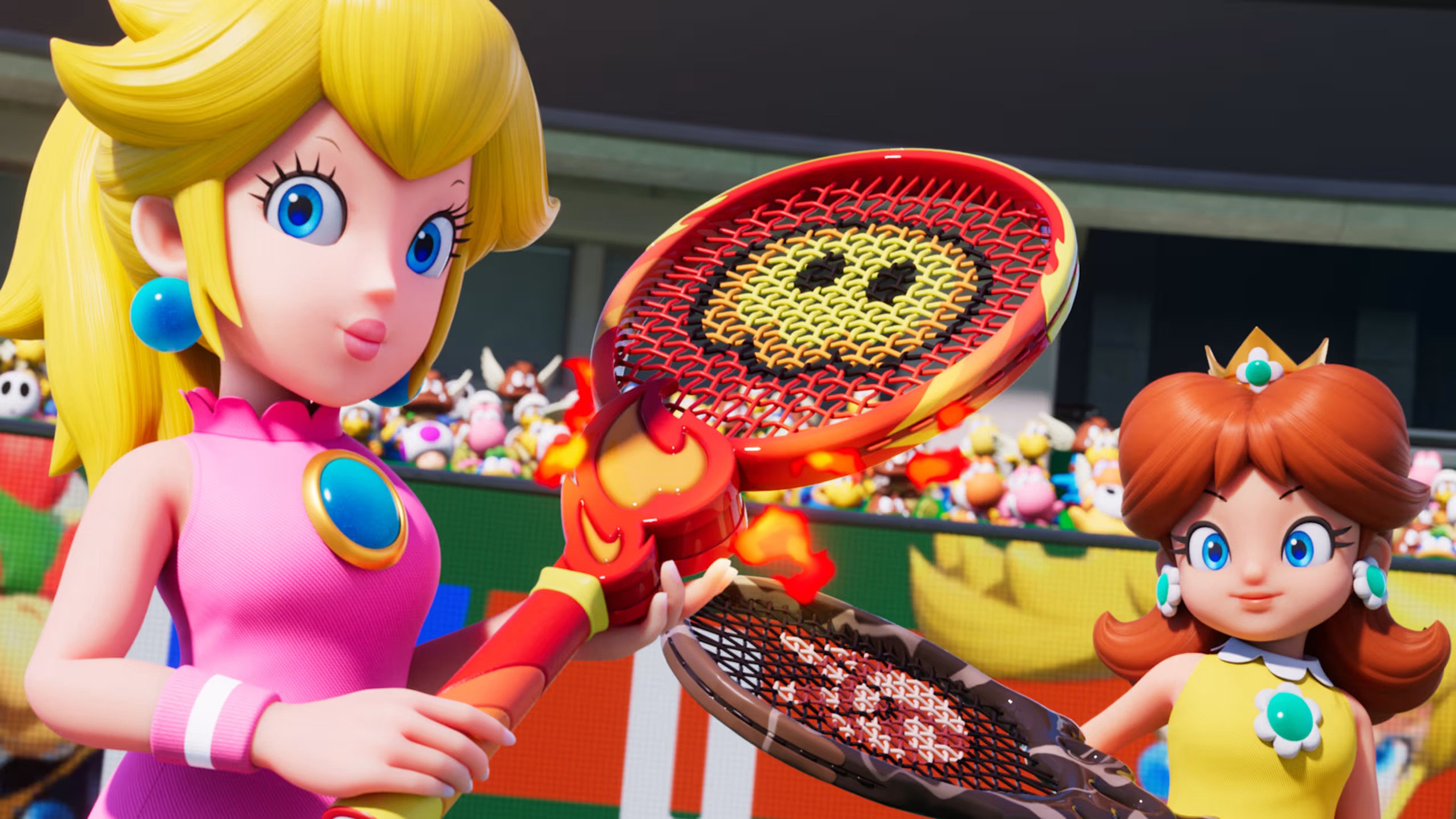
Mario is the face, sure, but the opening movie makes it clear he’s not alone on the court. We’re seeing him positioned against a mix of friends and classic troublemakers, and that contrast is where Mario sports games shine. You get the friendly competition energy with characters like Peach and Daisy, then you get that “this is personal” vibe the moment Bowser shows up and acts like winning a tennis match is the same thing as conquering a kingdom. It’s a smart way to remind us that the roster isn’t just cosmetic. Different characters bring different attitudes, animations, and that hard-to-measure thing called presence. And presence matters when you’re playing a game designed to create stories like “I was up 5-0 and then Waluigi happened.”
Why Bowser always feels like the final boss, even in sports
Bowser has a talent for turning any friendly activity into a dramatic event, like he’s allergic to casual fun. That’s why he works so well in an opening cinematic: he instantly raises the temperature. Even when the “stakes” are just points on a scoreboard, Bowser makes it look like the court is a battleground and the trophy is the only thing keeping the universe together. The cinematic uses that energy to create contrast with Mario’s more grounded hero vibe. It’s like watching a laid-back athlete get challenged by someone who treats every serve like a declaration of war. And honestly, that’s half the charm, because it mirrors how matches feel when a heavy hitter starts landing shots and everyone suddenly sits up straight.
Peach, Daisy, and the rhythm of doubles play
When Peach and Daisy show up in the mix, the cinematic shifts into a different kind of confidence: coordinated, quick, and a little bit smug in the way that says “we’ve done this before.” Doubles is where Mario tennis can feel like controlled chaos. You’re reading angles, you’re watching both opponents, and you’re trying not to swing at the same ball as your partner like two people reaching for the same last slice of pizza. The opening movie leans into that “team rhythm” energy, which is a subtle but useful reminder that the fun isn’t only in 1v1. It’s also in those moments where you and a friend accidentally pull off a perfect sequence and immediately act like it was totally planned, obviously, definitely, no questions.
What the cinematic says about animation and tone
Mario Tennis Fever’s opening movie looks polished in a way that feels intentional, not accidental. The animation is expressive, the character poses are readable even in fast cuts, and the camera choices make the court feel bigger than it is. That matters because sports games can sometimes feel “samey” if the presentation doesn’t bring personality. Here, the cinematic treats tennis like a stage show, with characters performing as much as they’re competing. It’s playful without being sloppy, energetic without being confusing. The tone lands in that sweet spot where kids can enjoy the bright visuals and adults can enjoy the little character beats that feel like inside jokes. It’s not trying to convince us tennis is serious business. It’s trying to convince us tennis is fun business, and we should clock in immediately.
Camera work, timing, and the Nintendo sense of comedy
The camera in the opening movie does a lot of the storytelling. Quick cuts highlight reactions, wider shots sell speed and spacing, and close-ups make certain moments feel like punchlines. Nintendo-style comedy often lives in timing: a tiny pause before a character realizes they messed up, a split-second expression that tells you exactly what they’re thinking, or a dramatic wind-up that ends in something unexpectedly silly. The cinematic uses those beats to keep the mood light, even when the action ramps up. It’s the difference between “look at this cool sports game” and “look at these characters being themselves while playing a sports game.” And if you’ve ever picked Wario just because you like the chaos he brings, you already know why that matters.
Small details that sell speed and impact
Speed in animation is tricky because you can’t just move things faster and hope it looks good. You need weight, anticipation, and follow-through, the stuff that makes a hit feel like it actually connected. The opening movie leans on those little details: the body language before a swing, the exaggerated motion that makes a racket strike feel satisfying, and the way characters react when a shot gets past them. Even if we’re only watching a cinematic, those details act like a promise about how the game wants to feel in your hands. You want your inputs to look sharp, not mushy. You want hits to feel like hits, not like tapping a balloon. The cinematic sells that sensation through visuals alone, which is exactly what a strong intro should do.
Sound, crowd noise, and that split-second silence
Even without getting overly technical, it’s obvious the audio side of a sports intro matters. Crowd noise gives scale, character voice lines give personality, and those crisp impact sounds give rhythm to the action. One of the best tricks in sports presentation is the tiny moment of silence right before a big hit, because it makes the payoff feel louder. The opening movie plays with that kind of tension and release, which helps the whole thing feel punchy rather than flat. It also helps you imagine the match atmosphere: not just a quiet court, but an event. And when a game is launching on a big week, that “event” feeling is exactly what you want, because it turns a casual watch into a “fine, I’m playing a match right now” moment.
How Fever rackets and Fever shots change the match flow
Mario Tennis Fever isn’t only leaning on familiar faces, it’s also leaning on its signature hook: Fever rackets and a Fever shot style mechanic that adds a layer of strategy without turning the game into a spreadsheet. The simple idea is delicious: you get a charged moment, you unleash something flashy, and the racket you picked helps shape how that flash plays out. That’s good design because it gives players a reason to experiment. It also creates stories. You don’t just remember that you won, you remember that you won because your racket effect flipped the rally at the worst possible time for your opponent. The opening cinematic can’t explain every rule, but it can tease the vibe: explosive moments, momentum swings, and the feeling that matches can turn on a dime.
Mix and match loadouts without making it feel like homework
Loadouts can be fun, or they can feel like you’re filling out paperwork before you’re allowed to have joy. Mario Tennis Fever looks like it’s aiming for the fun version. With a big set of rackets and a chunky roster, the goal is to make experimentation feel playful. You try a combination because it sounds cool, not because a meta chart told you to. That’s important for a Mario sports game because the audience is mixed. Some people will chase optimal setups, sure, but plenty of players just want to pick Luigi and cause problems in the friend group. A good system supports both. The opening movie’s job is to make that system feel exciting, like swapping rackets is like swapping gadgets in a cartoon: each one changes the flavor, and you want to see what happens.
Risk, reward, and the meter you actually notice
A meter mechanic only works if you notice it, care about it, and feel the tension of when to use it. If it’s always full, it’s boring. If it’s never full, it’s frustrating. The Fever concept suggests that sweet middle ground where you build toward a moment, then decide whether to cash it in now or hold it for later. That decision is where the drama lives, especially in close matches. It’s like saving the last boost in a racing game: you know you’ll need it, but you also know the perfect moment might never come unless you create it. When a Mario sports game gets that loop right, it becomes a conversation starter. People start calling out meter levels, bluffing, baiting shots, and laughing when someone panics and fires it off into a bad angle anyway.
Modes that keep the court busy all week
One of the best things a launch-week sports game can do is give you reasons to keep returning even when you only have ten minutes. Mario Tennis Fever is positioned to do that through a mix of modes that hit different moods. Sometimes you want a clean tournament run. Sometimes you want ridiculous rules because your group thrives on chaos. Sometimes you want solo challenges because your friends are offline and you still want that “just one more” feeling. A strong mode lineup turns the game into a snack shelf: you pick what you’re craving right now. The opening cinematic doesn’t list modes like a menu board, but it sets the expectation that the game is not a one-trick rally. It’s a full party, and different rooms have different music.
Tournament and special rules for party chaos
Tournament play is where bragging rights are born, but special rules are where friendships go to get lightly roasted. Mario sports games work because they support both moods. The “serious” players can chase clean wins, while everyone else can embrace the weirdness and still feel competitive. Wonder-style rule twists and wilder effects, when used well, turn matches into highlight reels. You remember the absurd point, not just the final score. That’s also how you keep mixed-skill groups engaged. A newer player might not outplay a veteran in pure timing, but a chaotic rule set can create openings and surprise swings. It’s like playing cards with a goofy house rule: it’s still skill, but the table stays lively, and everyone feels like they have a chance to pull off something legendary.
Trial towers and bite-sized challenges for solo sessions
When you’re playing solo, the magic trick is making progress feel real even in short sessions. Challenge towers and targeted trials are perfect for that, because they give you clear goals without demanding a massive time commitment. You can jump in, complete a few tasks, and leave feeling like you actually did something, not like you wandered around a menu. That matters on a Switch-style system because handheld play thrives on “micro wins.” Ten minutes on the couch, fifteen minutes before bed, a quick run while something’s cooking. A good challenge mode turns those moments into steady improvement. And if the game’s Fever mechanics reward smart choices, those trials become a practice ground where you learn timing and risk without the pressure of online opponents who play like they’re defending a championship belt.
Online play and Nintendo Switch Online features
Sports games live longer when online play feels stable, social, and worth returning to. Mario Tennis Fever supports online features tied to Nintendo Switch Online, and that’s the gateway to the mode that never really ends: “one more match against someone new.” The best online experiences in this genre keep matchmaking quick, make rematches easy, and give players a reason to rotate characters and rackets rather than locking into one habit forever. Online also changes the emotional texture of the game. Playing a friend is fun, but playing a stranger adds that spicy uncertainty. You don’t know their style. You don’t know if they’re aggressive, defensive, unpredictable, or just here to be chaotic. That unpredictability is part of the appeal, and it’s why launch week online can feel like a festival: everyone’s learning, everyone’s experimenting, and every match has surprise energy.
Local sharing and quick sessions with friends nearby
Not every great session needs a full online setup. Sometimes the best matches happen when someone is sitting right next to you and you can hear them react in real time. Mario Tennis Fever supports local play options that make it easier to get a group going without turning setup into a chore. That matters because the Switch identity has always been about social convenience: pull it out, hand someone a controller, start playing. A tennis match is perfect for that because it’s clear, fast, and naturally competitive. You can run a mini bracket, swap partners, and keep the vibe moving. And when the opening cinematic is fresh in everyone’s mind, it becomes a shared reference point, like a hype video before the game starts. You watch it, you pick sides, and suddenly the living room feels like a stadium.
Why launch week matters on Switch 2
A launch-week release is more than a date on a calendar. It’s a first impression moment, and first impressions are sticky. Mario Tennis Fever arriving now means it’s part of the early identity of Nintendo Switch 2, the same way certain games become forever linked with a system era. Sports games are especially good at this because they act like social glue. They’re the game you boot up when someone visits. They’re the game you play while you’re still deciding what your “big” single-player adventure will be. They’re the game that turns a new console into a shared object rather than a solo gadget. The opening cinematic adds to that identity-building. It’s a statement that Nintendo wants this to feel like a premiere, not a side dish. And when the release lands on Thursday, that’s basically permission to treat the weekend like a tournament season.
Tips for enjoying the opening cinematic without overthinking it
It’s tempting to freeze-frame an opening movie like it’s a secret code, but sometimes the best move is to let it do what it’s meant to do: get you excited. Watch it once just to absorb the energy. Let the animation and music do their job. Then watch it again and focus on character beats: who looks confident, who looks petty, who looks like they’re about to start a rivalry over a single point. That second watch is where the fun details pop, the little expressions and comedic timing choices that make Mario’s world feel alive. And if you’re planning to play on launch day, treat the cinematic like a pre-match ritual. It sets the mood, it reminds you who you want to main, and it gives you a tiny burst of adrenaline before you step onto the court and immediately get humbled by someone who has already mastered the Fever timing.
Conclusion
Mario Tennis Fever’s opening cinematic lands at exactly the right time, right before the Switch 2 release week rush, and it does what a strong intro should do: it makes the court feel like an event. The animation is sharp, the character energy is loud, and the pacing suggests matches that swing between skill, chaos, and those clutch moments where a meter fill can change everything. With the game launching on Thursday, the opening movie works like a spark. It reminds us why Mario sports games stick around: the roster chemistry, the rival vibes, and the way even a simple rally can turn into a story you’ll retell later. If you want a launch-week pick that’s easy to share, easy to jump into, and built for “again, again, again,” this cinematic is Nintendo’s way of saying we’re about to have a very busy weekend.
FAQs
- When does Mario Tennis Fever launch on Nintendo Switch 2?
- Mario Tennis Fever launches on February 12, 2026, which is a Thursday during its release week on Nintendo Switch 2.
- What is the opening cinematic, and why did Nintendo release it now?
- The opening cinematic is the game’s intro movie, and releasing it right before launch is a hype move that shows off animation, tone, and the roster energy.
- Is Mario Tennis Fever focused only on multiplayer?
- No. It is built for multiplayer fun, but it also includes solo-friendly options like challenge-style play, so you can enjoy quick sessions even when friends are offline.
- What are Fever rackets and Fever shots?
- They are signature mechanics that add explosive momentum moments to matches, encouraging experimentation with different racket and character pairings.
- Does Mario Tennis Fever support Nintendo Switch Online features?
- Yes. It supports online features tied to Nintendo Switch Online, giving you ways to play beyond local matches and keep the competition going.
Sources
- Mario Tennis Fever’s Opening Movie Is As Cinematic As They Come, Nintendo Life, February 9, 2026
- Mario Tennis Fever opening movie released, Nintendo Everything, February 9, 2026
- Watch the Mario Tennis Fever Opening Cinematic ahead of its Switch 2 release this week, 9to5Toys, February 9, 2026
- Mario Tennis Fever opening cinematic, My Nintendo News, February 9, 2026
- Mario Tennis Fever – Overzichtstrailer (Nintendo Switch 2), YouTube, February 2026