














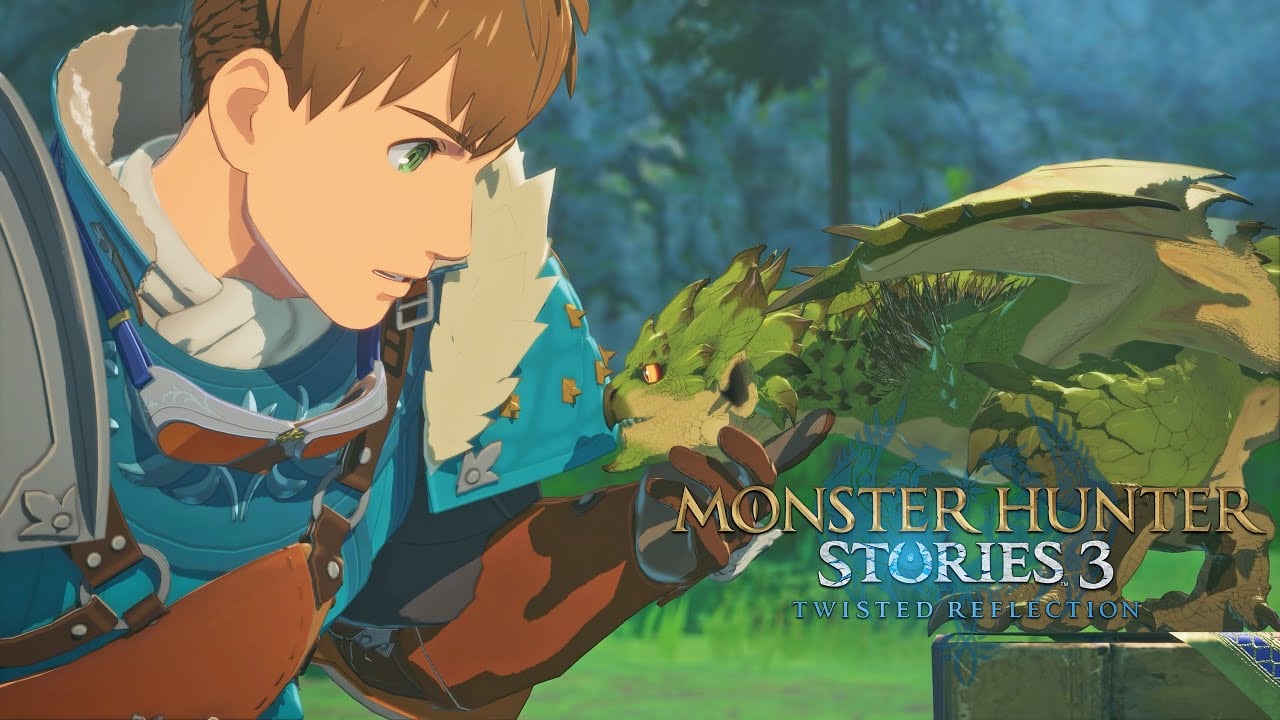
Summary:
Monster Hunter Stories 3: Twisted Reflection just made one thing crystal clear: we are not only raising Monsties, we are looking after the world they come from. The latest trailer, shared during the Monster Hunter Showcase in December 2025, puts a spotlight on a new mechanic called Habitat Restoration. The idea is simple in a way that feels oddly emotional for a monster RPG: after hatching a monster, we can release it into the wild so it can rebuild its species and help repopulate an area. That one choice feeds into a bigger loop where our actions shape the region’s Ecosystem Rank, making eggs easier to find and sometimes more rewarding to hatch.
The trailer also frames our role as captain of the Rangers, a group focused on protecting endangered species and keeping fragile habitats from collapsing. The Crystal Encroachment is the big looming threat, while invasive monsters act like bullies that shove native species out of their own homes. Instead of defeating these invaders outright, we sometimes aim to force them to retreat back to their dens, then sneak in while they sleep, snatch endangered eggs, and escape before things go sideways. It is tense, it is messy, and it sounds like the kind of plan you only agree to because the alternative is letting whole species vanish. Add Dual-Element monsters, where the region’s element influences skills and appearance, and we have a setup that turns “raising monsters” into a relationship with an ecosystem, not just a battle roster. Monster Hunter Stories 3: Twisted Reflection launches March 13, 2026 for Switch 2.
Trailer takeaways: Habitat Restoration in one minute
The new trailer doesn’t waste time pretending this is business as usual. The headline is Habitat Restoration, and it flips a familiar question on its head. Instead of asking, “Which monster do we keep for ourselves?”, we are also asking, “Which monster do we send home?” After we hatch a monster, we can release it into the wild so it can settle, thrive, and rebuild its species in that area. That is the core promise: our choices are meant to visibly affect the environment, not just our party screen. The trailer ties this directly to progression, because releasing monsters boosts an area’s Ecosystem Rank, which in turn changes how eggs appear and what kind of Monsties can hatch. In other words, the world is not a static backdrop. It is more like a garden, and we are holding the watering can, whether we like responsibility or not.


Meet the Ranger Corps and the job we signed up for
Twisted Reflection puts us in charge, literally, by making the protagonist the captain of the Rangers. That matters because it frames the tone of everything we do. We are not just a wandering Rider who stumbles into nests for loot and luck. We are leading a group with a mission: discover endangered species’ eggs, protect them, and restore environments that are being pushed to the brink. That Ranger angle gives the story a practical backbone. When the trailer talks about duties, it is not just flavor text, it is the reason we take risks like entering enemy territory or dealing with monsters we cannot defeat normally. If Monster Hunter Stories has always been about friendship with monsters, this entry is also about stewardship. The Rangers feel like the people who show up when the forest is on fire, except the “fire” can have claws, venom, and a personal grudge.
Crystal Encroachment and why ecosystems are collapsing
The Crystal Encroachment is positioned as the slow, creeping disaster that makes everything else worse. It threatens the ecosystem itself, which means the danger is not limited to one villain or one monster species. When habitats destabilize, small changes snowball fast: food chains break, territories shift, and creatures that once had room to breathe suddenly get squeezed into corners. The trailer uses this threat to explain why the Rangers are so focused on eggs and repopulation. If the world is losing balance, then protecting the next generation becomes the most direct way to fight back. It is also a smart storytelling hook because it turns environmental collapse into something we can feel through gameplay. Instead of an abstract “bad thing,” it becomes the reason we are making hard calls, like rescuing eggs under pressure or investing time into rebuilding a region rather than sprinting to the next boss fight.
Endangered eggs: why the search matters
Egg hunting has always been part of the series’ DNA, but Twisted Reflection gives it sharper stakes. We are not only collecting eggs to hatch the best partner, we are also securing endangered species’ eggs to protect and restore the natural environment. The trailer makes it clear that Rathalos are not the only ones in trouble, which is a big deal in a world where a single iconic monster can sometimes hog the spotlight. The egg itself becomes a symbol of what the Rangers are trying to prevent: extinction, collapse, and the loss of entire ecosystems. It also makes the act of finding an egg feel like an actual rescue, not a shopping trip. If you have ever felt oddly guilty grabbing eggs while an angry monster screams behind you, congratulations, Twisted Reflection just turned that guilt into the point.
Invasive monsters and stolen territory
Invasive monsters are the other half of the ecosystem crisis, and they sound like trouble with a capital “T.” The trailer describes them as incredibly strong threats that can push out other monsters and take over territory. That is important because it means the danger is not only coming from the Crystal Encroachment. Even without it, invasive monsters would still be reshaping the map by force. They also create a natural reason for conflict that is not simply “monster bad, go fight.” If an invasive monster takes over a habitat, it can endanger everything living there, and it can even block access to eggs that need saving. This sets up a different kind of tension: we are dealing with power we cannot always brute-force, and we are doing it because the world is running out of breathing room.
How dens become high-risk rescue zones
Dens in invasive monster territory are basically the worst kind of treasure chest: valuable, dangerous, and guarded by something that can flatten us if we get cocky. The trailer notes that these dens can contain endangered species’ eggs, which turns the location into a rescue site, not a loot cave. We are not walking in to grab something shiny and leave. We are going in because leaving the egg there means it could be lost, destroyed, or never hatched at all. That shifts how we read the environment. The den is no longer a simple dungeon. It is a place where timing matters, where the monster’s behavior matters, and where we may have to accept that “winning” looks like escaping alive with an egg, not standing over a defeated enemy.
What makes an invasive monster different in battle
The trailer is blunt about it: invasive monsters cannot be beaten using normal battle tactics. That one line is doing heavy lifting, because it signals a different ruleset. Instead of treating combat as a straightforward path to victory, we are being pushed to think tactically, watch patterns, and aim for a retreat rather than a takedown. It makes the invasive monster feel more like a force of nature than a standard encounter. The point is not to prove we are stronger. The point is to survive long enough to manipulate the situation. If typical battles are chess, invasive monster fights sound more like trying to carry groceries through a storm: you are not defeating the weather, you are just trying to get home without dropping the eggs. Literally.
Retreat battles: pushing a threat back without finishing it
Retreat battles are the trailer’s most exciting “wait, what?” twist because they reshape the goal of a fight. The Rangers find an invasive monster, want to rescue an endangered egg, and then decide not to slay the monster. Instead, we try to drive it back to its den. That is a different kind of challenge because it asks us to control the flow of battle rather than simply deal damage until the screen says “Victory.” The trailer frames this as a deliberate strategy: invasive monsters are too strong for normal tactics, so we adapt. This also creates a clean bridge into the stealth sequence that follows, because once the monster retreats, the real heist begins. It is a great setup for tension because we are choosing to leave a threat alive, then walking into its home anyway. Bold plan. Questionable sanity. Very Monster Hunter.
Den infiltration: stealth, timing, and the sprint out
Once the invasive monster is back in its den, Twisted Reflection shifts from turn-based tactics into a stealth-and-panic scenario. The trailer describes sneaking into the den while the monster is sleeping, grabbing the endangered egg, and running for it. That sequence is basically a classic Monster Hunter moment turned into a defined system: the hush, the careful steps, the “please don’t wake up,” and then the mad dash when everything goes wrong. The big difference is that the goal is explicitly tied to conservation and restoration. We are not stealing for profit. We are rescuing for survival. That adds weight, but it also adds pressure, because the game is telling us this is one of the Rangers’ important duties. So, no pressure, captain. Just the future of multiple species riding on whether we can tiptoe.
Raising Monsties with a Ranger mindset
The trailer frames monster raising as part of a wider cycle where we protect monsters, preserve their ecosystem, and roleplay as a Ranger in a way that feels grounded in the world’s problems. That is not just a cute label for the protagonist. It is a promise that raising Monsties connects to the environment, not only to combat stats. We still form bonds and build a team, and that relationship is still the heart of the Stories formula, but Twisted Reflection seems to want that bond to feel earned through care, not only through battles won. The trailer even highlights forming a new and exciting relationship with the Monsties we raise, which suggests a focus on companionship that goes beyond min-maxing. If past entries were about friendship, this one also feels like being a caretaker. It is like adopting a pet and then realizing you also need to learn how the whole neighborhood works.
Habitat Restoration: releasing hatched monsters to rebuild species
Habitat Restoration is the big new lever that connects our actions to the world. After hatching a monster, we can release it into the wild, letting it put down roots and rebuild the species. The Rangers call this practice Habitat Restoration, and the trailer makes it sound like an active choice, not a throwaway menu option. That matters because it turns “letting go” into progression. Instead of hoarding every hatchling like a dragon with a gene collection, we are encouraged to send monsters back into the ecosystem so the species can recover. It also makes the world feel less extractive. We take an egg, we hatch it safely, and then we return life to the region. That loop has a satisfying logic to it, and it also creates a reason to revisit areas and keep investing in them over time.
Restored populations, new eggs, and special unlocks
The trailer outlines a clear payoff: when a monster population has been restored, their eggs can be found and hatched into Monstie partners. That means Habitat Restoration is not only a moral choice, it is a practical one. We restore a species, and the world starts giving back in a way that supports our party-building goals. The trailer also notes that Habitat Restoration can be performed with more than just endangered species, which suggests the system is meant to be broad, not limited to a few scripted moments. On top of that, there are special monsters that can only be obtained through Habitat Restoration. That is the kind of line that makes completionists sit up straight and quietly whisper, “Well, there goes my free time.” It also reinforces the idea that the rarest rewards come from nurturing the ecosystem, not just winning fights.
Ecosystem Rank: the progress meter that changes everything
Ecosystem Rank is the system that turns Habitat Restoration from a feel-good feature into a full progression engine. The trailer explains that hatching and releasing monsters affects an area’s Ecosystem Rank. As the rank rises, eggs become easier to obtain, and Monsties can hatch with special skills or genes. That is a strong incentive because it links world-building to party power in a clean, understandable way. If you want better eggs, you have to put effort into the region, not just grind battles. It also suggests each area can have its own “health” or “recovery” arc, which makes exploration more meaningful. Instead of moving on the second we clear a quest, we might stick around because the region is improving and new opportunities keep opening. It is like watching a town rebuild in an RPG, except the town is a whole ecosystem and the citizens have wings and fangs.
Genes, skills, and rarer partners at higher ranks
Once Ecosystem Rank becomes part of the loop, the implications for team-building get really interesting. The trailer points out that higher rank makes eggs easier to obtain and increases the chance of special skills or genes on the Monsties we hatch. That means the game is nudging us toward long-term planning: we can chase quick wins, or we can invest in restoration and earn stronger partners over time. It also adds variety to the hunt, because “finding an egg” is no longer the whole story. The conditions behind that egg matter. The state of the region matters. Even the kinds of monsters available can change, since the trailer calls out special monsters obtainable only through Habitat Restoration. If you like the feeling of building a perfect team, Ecosystem Rank sounds like the system that makes that pursuit feel connected to the world, not just to RNG.
Dual-Element monsters: when a region changes what hatches
Dual-Element monsters are the flashy, visual proof that the environment is shaping the creatures inside it. The trailer explains that raising Ecosystem Rank can allow us to find monsters imbued with that area’s element. Monsters influenced by the area are called Dual-Element monsters, and the example is a great one: a monster that is normally thunder element might be influenced by a fire-element area, causing it to be born with fire skills and even fire appearances. That is a neat concept because it turns geography into identity. Where an egg comes from changes what it becomes, not only what moves it learns. It also adds a collector’s thrill that feels more grounded than random palette swaps. If the land is fiery, the monster looks like it belongs there. And if you are the kind of person who likes matching aesthetics to builds, this system sounds like it was made to ruin your sleep schedule in the best way.
Release date, platforms, and what to watch next
Monster Hunter Stories 3: Twisted Reflection launches March 13, 2026 for Switch 2, and the December 2025 Showcase framing makes the timing feel deliberate. Capcom used the same presentation to share more about both Twisted Reflection and Monster Hunter Wilds, which helps place Stories 3 as a major part of the wider Monster Hunter calendar, not a side note. The new trailer’s focus on Habitat Restoration, invasive monsters, retreat battles, Ecosystem Rank, and Dual-Element monsters gives us a clear sense of the gameplay loop: rescue eggs under threat, raise monsters thoughtfully, release them to rebuild the world, and earn stronger partners as the region recovers. If you want the next thing to keep an eye on, it is how broad Habitat Restoration really is in practice, and how many surprises are tied to Ecosystem Rank. Because once a system starts promising “special monsters only found this way,” we all know what that means. We are going to try it “just once,” and suddenly it is 2 a.m.
Conclusion
Twisted Reflection is shaping up to be the Stories entry where the world pushes back in a way we can actually influence. Habitat Restoration is not just a new feature with a nice name, it is a statement about what kind of Rider we are playing: someone who returns life to the land instead of only taking from it. Pair that with invasive monsters that change the goal of battle, retreat fights that demand strategy over brute force, and den raids that turn egg recovery into a stealth sprint, and we get a loop that feels tense, purposeful, and surprisingly heartfelt. Add Ecosystem Rank and Dual-Element monsters, and the systems start stacking into something that can keep us invested in each region long after we first arrive. March 13, 2026 cannot come soon enough, and if the trailer is a taste of the final rhythm, we should probably clear our calendars now.
FAQs
- What is Habitat Restoration in Monster Hunter Stories 3: Twisted Reflection?
- After hatching a monster, we can release it into the wild so it can rebuild its species and help repopulate the region, which also ties into progression systems like Ecosystem Rank.
- What are invasive monsters and why are they dangerous?
- They are extremely strong monsters that can threaten other monsters and take over territory, sometimes occupying dens that contain endangered species’ eggs we need to rescue.
- How do retreat battles work?
- Instead of defeating an invasive monster outright, we aim to force it to retreat back to its den using tactical play, setting up an egg rescue attempt while it is resting.
- What does Ecosystem Rank do?
- Releasing hatched monsters into the wild can raise an area’s Ecosystem Rank, making eggs easier to obtain and increasing the chance that Monsties hatch with special skills or genes.
- What are Dual-Element monsters?
- They are monsters influenced by the element of the region where they are hatched, which can give them different elemental skills than usual and even change their appearance.
Sources
- New Monster Hunter Wilds Update 4 and Monster Hunter Stories 3 details, PlayStation.Blog, December 11, 2025
- Monster Hunter Stories 3: Twisted Reflection ‘Habitat Restoration’ trailer, details, and screenshots, Gematsu, December 11, 2025
- Monster Hunter Stories 3: Twisted Reflection gets a new Habitat Restoration Trailer, RPG Site, December 11, 2025
- New Habitat Restoration trailer for Monster Hunter Stories 3: Twisted Reflection, Nintendo Everything, December 11, 2025
- Monster Hunter Wilds’ next big update and turn-based spin-off RPG Monster Hunter Stories 3 get a dedicated showcase set for next week, GamesRadar+, December 5, 2025
- Monster Hunter Stories 3 Involves Endangered Species, Habitat Restoration, Siliconera, December 11, 2025