














Summary:
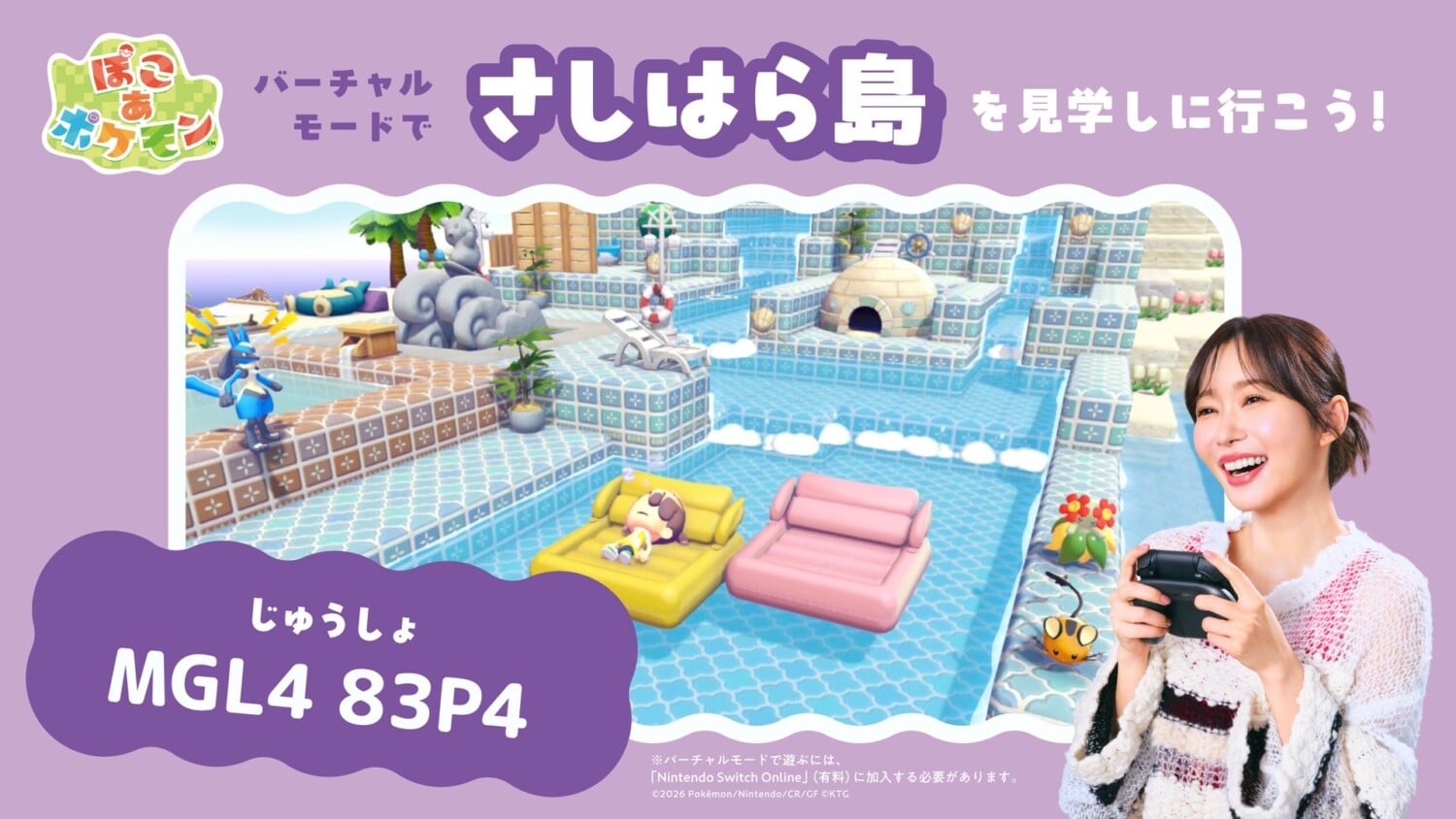
The Pokémon Company has opened up another official Cloud Island in Pokémon Pokopia, giving players a fresh destination to check out in a game that thrives on atmosphere, discovery, and little surprises that make the world feel alive. This new island is tied to the stars of the Japanese commercials for the game, which gives it a fun promotional twist without making it feel like a throwaway gimmick. Instead, it feels like one more reason to log back in, put on the Mysterious Goggles, and see what is waiting in the sky.
Getting there is fairly simple once you know the route. Players need to progress far enough to unlock the PC Shop, buy the Mysterious Goggles with in-game coins, complete the tutorial, and then enter the code MGL4 83P4 while using the goggles. After that, the island becomes accessible and can be explored freely. That sequence is important because Cloud Island access in Pokémon Pokopia is not something you can jump into right from the opening stretch of the game. There is a small bit of setup involved, and that setup gives the feature more weight.
What makes this release especially appealing is how neatly it fits the tone of Pokémon Pokopia. The game is built around routine, creativity, and curiosity, so a new official island does not need fireworks to matter. Sometimes a fresh place to wander through is enough. For players who enjoy seeing how themed spaces are put together, or who simply like checking in on every official event the game receives, this new destination is an easy draw. It also gives returning players a straightforward excuse to hop back in, even if only for a relaxed session spent exploring the clouds.
A fresh official Cloud Island adds another reason to revisit Pokémon Pokopia
Pokémon Pokopia has leaned into calm, creative play from the beginning, so the arrival of another official Cloud Island feels like a natural extension of what makes the game click. Rather than pushing a loud event full of pressure or limited-time chaos, this update gives players a new place to visit at their own pace. That slower rhythm fits Pokopia beautifully. You are not being rushed through a checklist. You are being invited to wander. That difference matters, because it keeps the feature aligned with the game’s identity instead of turning it into something noisy and out of place. For players who enjoy collecting, decorating, and soaking up the personality of each space, a new official island is the kind of addition that can quietly brighten the whole experience.
It also helps that this is not just any island dropped into the rotation. The Pokémon Company has positioned it as an official destination linked to the game’s Japanese commercials, which gives it a little extra sparkle. It feels curated. It feels intentional. That can make a surprising difference in a game built on mood. Even players who only planned to stop in for a few minutes may end up lingering longer than expected, moving from one corner to another just to see how everything has been arranged. That is the magic of these kinds of spaces. They can look small on paper, but once you step inside, they often feel like a postcard you can walk around in.
Why this particular island stands out from a normal player-made visit
Player-made islands are already a big part of the charm in Pokémon Pokopia, but official islands carry a slightly different energy. They are not just places to browse. They are part of the wider conversation around the game. When an official island goes live, it tends to attract attention because players want to see how The Pokémon Company is using the space, what theme it is leaning into, and whether the design feels playful, polished, or a little surprising. It is like being invited into a showcase home where every detail was placed with purpose. You are not only visiting. You are also taking notes, getting inspired, and spotting ideas you might want to echo in your own world.
This new release also comes with a bit of built-in personality thanks to its link with the stars of the Japanese commercials. That gives the island more identity than a generic promotional drop would have had. Instead of feeling like a random code tossed out into the world, it feels connected to the broader presentation of Pokémon Pokopia. For players, that makes the island more memorable. It becomes a place with context, not just coordinates. In games like this, context can do a lot of heavy lifting. A destination becomes more interesting when it feels attached to a face, a campaign, or a recognizable moment surrounding the game.
The commercial connection gives the island a playful hook
There is something undeniably fun about the idea that the stars of the Japanese commercials are helping shape these official spaces. It gives the whole feature a slightly theatrical touch, like stepping onto a set after the cameras have stopped rolling. You can almost imagine the island as an extension of the game’s marketing personality, translated into a place you can actually explore. That is a smarter move than it might seem at first. Promotional tie-ins can sometimes feel stiff, but this one fits the format naturally because Pokémon Pokopia is already about environment, mood, and self-expression.
For players, that means the island is more than a code to type in and forget. It becomes a themed destination with a bit of story around it. Even a small layer of framing can change how a visit feels. Instead of asking, “What is this for?” players can simply enjoy the fact that it exists as a playful extension of the Pokopia world. Sometimes that kind of charm is worth more than a bigger feature with less soul. A small addition that feels warm and deliberate can stick in memory far longer than something louder that burns out after a day.
Official events like this help Pokopia feel active without changing its pace
One of the trickiest things in a slower life-style game is keeping players engaged without disrupting the mood that made them fall in love with it in the first place. Pokémon Pokopia seems to understand that balancing act well. Instead of shaking the table, it keeps sliding in little reasons to return. A new official Cloud Island is a perfect example. It adds activity without adding pressure. There is no sense that you need to sprint through menus, chase a leaderboard, or clear a giant stack of tasks before the fun disappears. You can simply log in and go.
That kind of design respects the player’s time. It also respects the tone of the world. Pokopia is strongest when it feels inviting, not demanding. Small online additions like this keep the game from going still, but they do so with a light touch. That is important. If the game suddenly acted like a carnival barker shouting through a megaphone, it would lose part of its charm. Instead, it quietly opens another door in the clouds and lets curiosity do the rest. That is a much nicer way to keep a world alive.
What players need before entering the new island code
Accessing this new official Cloud Island is straightforward, but it is not immediate. There are a few requirements standing between a new save file and that trip into the clouds. Players first need to progress until the PC Shop becomes available, then they need to buy the Mysterious Goggles with in-game coins, finish the relevant tutorial steps, and only then use the code MGL4 83P4 when prompted. None of that is especially difficult, but it does mean the feature is built for players who have spent at least a little time settling into Pokopia’s systems. Think of it less like a front door and more like a side gate you earn the key for after learning the basics.
That progression requirement is actually a good thing. It helps the feature land better because players arrive with more context. By the time you are unlocking the PC Shop and browsing items, you already understand the game’s flow and the value of exploring special spaces. The island is not dumped in your lap before the game has taught you why it matters. Instead, it becomes a reward for settling in. That creates a smoother experience overall, and it makes the visit feel earned rather than random.
The PC Shop is the gateway players need to unlock first
The PC Shop is the first meaningful checkpoint in the process because it is where players can buy the Mysterious Goggles. Until that shop is available, the new island code is basically a pretty key without a lock to open. This makes progression important in a very practical way. Players who have just started the game may see excitement around the new island and want to rush there instantly, but Pokémon Pokopia asks for a bit of patience first. That design choice reinforces the game’s steady rhythm. You build your way forward rather than skipping to the flashy part in five seconds flat.
There is also a nice bit of structure in that requirement. It nudges players to engage with the core loop before branching out into external or community-facing features. In other words, the game wants you to get your feet under you before sending you into the clouds. That is probably for the best. Visiting an official island is more enjoyable once you already understand the value of items, the feel of progression, and the charm of a well-made space. Without that context, the visit would still work, but it would not hit with the same warmth.
Mysterious Goggles are the real ticket to Cloud Island access
Once the PC Shop is unlocked, the Mysterious Goggles become the centerpiece of the whole process. They are not just another item gathering dust in your inventory. They are the bridge between your usual routine on the ground and the more whimsical idea of island-hopping in the sky. That is a neat bit of flavor, honestly. Instead of using a plain menu option with all the romance of a tax form, Pokémon Pokopia turns the act of visiting special islands into something a little more magical. Put on the goggles, enter the code, and off you go. Much better.
Mechanically, they matter because without them, the code cannot do anything for you. Symbolically, they matter because they reinforce the game’s imagination-first approach. Pokopia does not just tell you to connect to another location. It dresses the action up in a small fantasy. Those touches are part of why cozy games can feel so sticky. They turn ordinary actions into memorable rituals. Before long, even typing in a code feels less like administration and more like opening a portal.
The final access step is simple once the setup is done
After the shop is unlocked, the goggles are purchased, and the tutorial has been cleared, the final step is pleasingly easy. Players just need to wear the Mysterious Goggles and enter the code MGL4 83P4 when prompted. That is it. No maze of menus. No strange workaround. No hunting through layers of unclear options while muttering at the screen. The path becomes refreshingly direct once the prerequisite steps are complete, and that simplicity is important because it makes the whole feature feel welcoming instead of fussy.
That balance between setup and ease works well. The game asks enough of you to make the feature feel integrated, but not so much that the process becomes annoying. For returning players especially, this means the new island is the kind of addition that can be enjoyed almost immediately. You log back in, dust off your routine, type in the code, and start exploring. Sometimes that is exactly what a game like this needs. Not a giant overhaul, just a fresh reason to smile and wander around for a while.
How code MGL4 83P4 fits into the broader appeal of Cloud Islands
The code MGL4 83P4 is more than a string of letters and numbers. In practical terms, it is the direct route to the newest official Cloud Island. In a broader sense, it represents one of the most charming parts of Pokémon Pokopia’s design philosophy. Codes like this turn discovery into a shared event. One player sees the announcement, another passes it along, and suddenly a whole wave of people are heading to the same themed location to see what is waiting there. It creates a low-pressure sense of community. Not everyone is building the same thing, but everyone can still visit the same skybound destination and compare impressions.
That social spark matters because it gives players something easy to talk about. A new code is instantly useful. It is actionable. You do not just read about it and move on. You can go try it. That interactivity gives updates like this more staying power than a simple screenshot reveal or text-only announcement. The moment players see the code, they can imagine the next step. That makes the feature feel alive in a way static news rarely does. It invites participation, and participation is where these quieter games often shine brightest.
Exploring the island is likely to be the real reward for many players
For some players, the code itself is the headline. For others, the real appeal starts only after arrival. Official islands tend to attract attention because people want to see the layout, the mood, and the little decorative choices that make a space feel intentional. In a game built around shaping places into something personal and inviting, those details are the whole point. The joy is not just reaching the island. The joy is wandering through it, noticing how it is put together, and maybe feeling that quiet little itch to head home and try something new in your own space.
That is why even modest official releases can matter so much in games like this. They become inspiration boards you can stroll through. You do not need a giant quest attached to them for them to feel worthwhile. Sometimes it is enough that a space exists and has character. If the island has a pleasant theme, clever arrangement, or a mood that clicks with players, it can end up feeling more memorable than a larger feature that tries too hard. Small places can leave big impressions. Cozy games know that better than anyone.
Returning players get an easy reason to jump back in
Not every player needs a huge patch or dramatic feature update to reinstall a routine. Sometimes all it takes is a small official nudge. This Cloud Island release does exactly that. It gives returning players a simple hook with almost no friction attached once they have already unlocked the necessary tools. That matters because re-entry is often where games lose people. If coming back feels like work, players drift away. If coming back feels like opening a familiar front door and spotting a new path nearby, they are much more likely to step inside.
That is especially true for a game like Pokémon Pokopia, where the appeal is less about conquering a mountain and more about enjoying the walk. A new official island can be the perfect “why not?” moment. Why not check in? Why not type the code? Why not spend a little while exploring and see whether the visit sparks a fresh burst of creativity? These are small questions, but they are powerful ones. They make returning feel natural instead of forced, and that kind of gentle momentum is often what keeps a game’s community warm and steady.
Small official touches can strengthen a game’s identity over time
When games keep showing up with thoughtful little additions, they build trust. Players start to feel that the world is being cared for, even when updates are not massive. That can do a lot for long-term affection. Pokémon Pokopia does not need every release to redefine the experience. It just needs enough well-placed touches to keep the world feeling active, charming, and worth checking in on. A new official Cloud Island is a good example of that philosophy in motion. It is not trying to overpower the game. It is simply adding another lovely corner to it.
Over time, those corners add up. A code here, a themed island there, a small event that makes people smile and swap impressions online. None of it needs to be gigantic to matter. In fact, the lighter approach may suit Pokopia better. The game feels strongest when it remembers what it is: a place to settle into, not a machine built to exhaust you. This new official island fits that identity neatly. It gives players a reason to look up at the clouds again, and in a game like this, that is often more than enough.
Conclusion
The new official Pokémon Pokopia Cloud Island is a simple addition, but it lands well because it plays to the game’s strengths. It gives players a fresh space to explore, ties neatly into the Japanese commercial stars, and offers a relaxed reason to return without piling on pressure. The process is clear once the core requirements are in place: unlock the PC Shop, buy the Mysterious Goggles, complete the tutorial, and enter MGL4 83P4. From there, the rest is pure curiosity. For players who enjoy the softer side of Pokémon Pokopia, this kind of official drop is exactly the sort of thing that keeps the game feeling warm, active, and worth revisiting.
FAQs
- What is the code for the new official Pokémon Pokopia Cloud Island?
- The code is MGL4 83P4, which players can enter after equipping the Mysterious Goggles.
- Do players need to unlock anything before visiting the island?
- Yes. Players need to progress far enough to unlock the PC Shop, purchase the Mysterious Goggles, and complete the related tutorial steps first.
- Where do players get the Mysterious Goggles in Pokémon Pokopia?
- The Mysterious Goggles can be purchased from the PC Shop using in-game coins once that feature has been unlocked.
- Why is this Cloud Island getting extra attention?
- This island is official and was created by stars connected to the Pokémon Pokopia Japanese commercials, which gives it a stronger identity than a standard player-made location.
- What makes this update appealing for returning players?
- It offers a quick, low-pressure reason to jump back into Pokémon Pokopia, explore a new themed destination, and enjoy something fresh without needing a major system overhaul.
Sources
- Pokémon Pokopia, Launching on March 5, 2026, is Available for Preorder Now, Pokémon.com, November 11, 2025
- Cloud Islands – Pokémon Pokopia, Serebii.netMarch 21, 2026
- March 2026 – Serebii.net News, Serebii.net, March 19, 2026
- New Pokemon Pokopia Official Cloud Island Available To Visit, NintendoSoup, March 20, 2026
- How to visit the Pokémon Pokopia developer island, Video Games Chronicle, March 9, 2026