














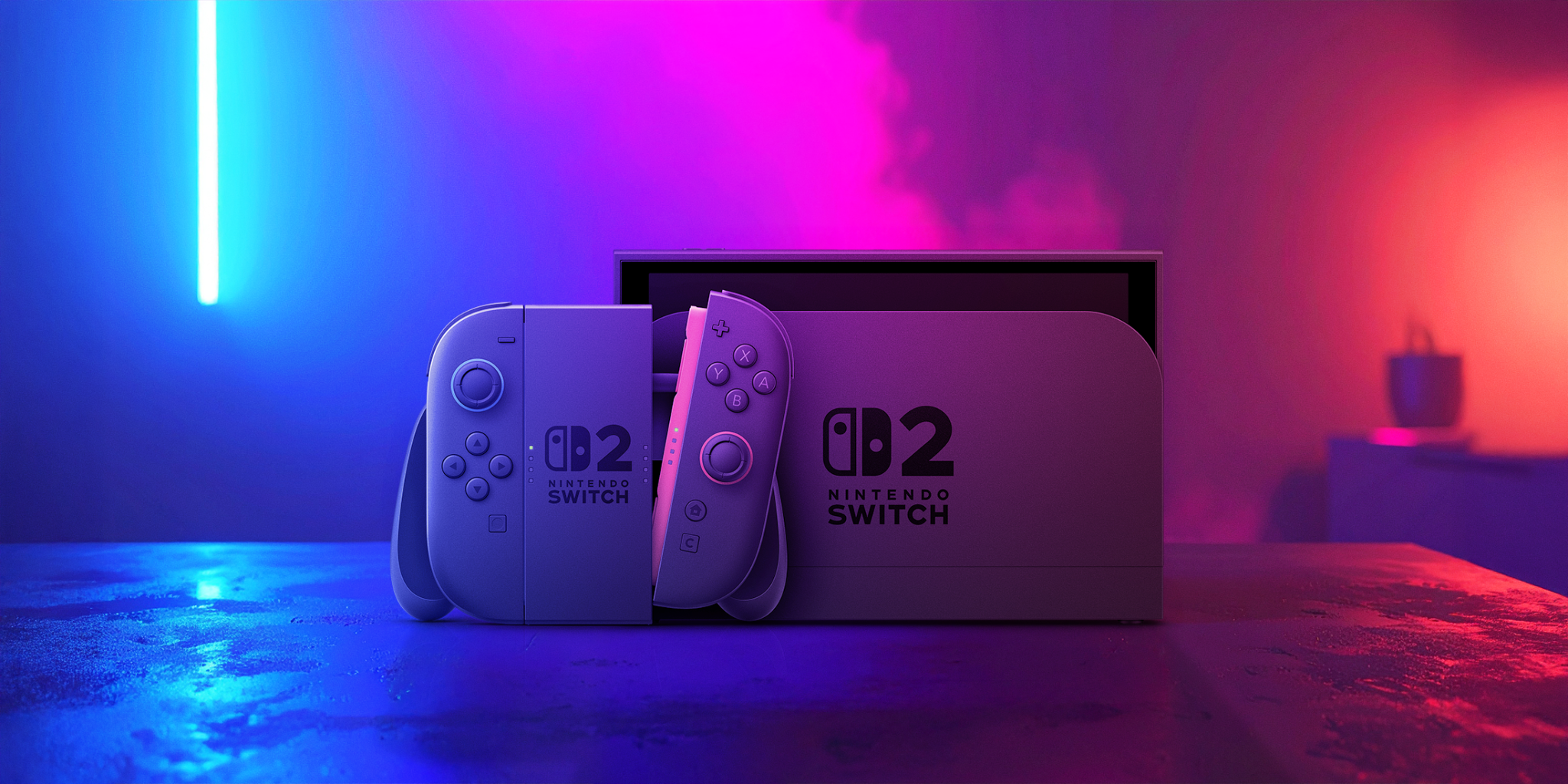
Summary:
Nintendo has released Version 22.1.0 for Nintendo Switch 2 and the original Nintendo Switch family, and the official notes are about as short as patch notes can possibly be without becoming a shrug. Both platforms received the same line from Nintendo, stating that the update delivers general system stability improvements to enhance the user experience. On paper, that sounds routine, maybe even a little dull. In practice, though, this kind of firmware still matters because system software is the quiet machinery that keeps everything running smoothly behind the scenes. It affects how a console wakes from sleep, how menus respond, how software launches, and how reliably the system handles day to day use.
What makes this release easier to read positively is the timing. The previous major firmware already gave Nintendo Switch 2 owners something far more visible with the addition of Handheld Mode Boost, a feature that allows compatible Nintendo Switch software to run as if the system were in TV mode while playing in handheld or tabletop mode. Against that backdrop, Version 22.1.0 comes across less like a disappointment and more like housekeeping after a more meaningful change. It is the kind of update that may not generate fireworks, but it can still improve consistency, clean up rough edges, and help the broader platform feel more settled.
For players, the takeaway is simple. There are no splashy new menu options here and no dramatic new feature list to scan through, but that does not make the firmware unimportant. Instead, it reinforces Nintendo’s usual pattern of pairing larger platform changes with quieter follow-up updates designed to stabilize the experience. That makes Version 22.1.0 a small release with a practical role, and for both Switch 2 and the original Switch, that is still worth paying attention to.
Nintendo Switch 2 and the original Switch family have both moved to firmware 22.1.0
Nintendo has now pushed Version 22.1.0 to Nintendo Switch 2 and the original Nintendo Switch family, which immediately gives this release a broader relevance than a platform-specific patch. When both systems receive the same firmware number and the same one-line explanation, the update feels unified by design rather than tailored to a single hardware problem. That matters because it suggests Nintendo is maintaining consistency across generations while the company continues to support newer and older players at the same time. For anyone who owns one of these systems, or maybe both because Nintendo hardware has a habit of multiplying in living rooms like curious little mushrooms, the message is clear. This is the current firmware, and it is meant to be installed across the ecosystem. Even without a long list of features, version alignment like this helps keep the platform steady, standardized, and easier for Nintendo to support over time.
The official patch notes are brief, but they still tell an important story
The patch notes for Version 22.1.0 are extremely short, promising only general system stability improvements to enhance the user’s experience. That kind of wording is familiar to anyone who has followed console firmware for years. It is the classic line that reveals very little while quietly hinting that something useful has been adjusted under the hood. These notes do not spell out whether Nintendo refined system responsiveness, reduced minor bugs, improved background processes, or tightened up compatibility behavior. What they do tell us is that the company saw enough reason to issue a public update across both Switch lines. In other words, this was not random housekeeping with no purpose at all. Nintendo may not be throwing open the curtains here, but the release still signals active maintenance, and that alone matters when the platform is expected to handle daily use, software compatibility, account functions, and a growing mix of old and new features.
Version 22.1.0 focuses on stability rather than flashy new features
Not every firmware update is meant to feel exciting. Some releases are built to add visible tools, menu changes, or new ways to use the system. Others are more like the backstage crew in a theater production. You do not clap for them because you barely see them, yet the show falls apart without them. Version 22.1.0 lands firmly in that second category. There is no newly announced front-facing function tied to this firmware, no dramatic interface redesign, and no headline feature that changes how people talk about the console overnight. Still, stability work is often where a lot of real value lives. When players power on their systems, download software, jump between menus, resume suspended sessions, or connect accessories, they expect everything to work without friction. That expectation sounds simple until it fails. A quiet update aimed at preventing those rough edges may be less glamorous, but it serves the everyday experience in a very direct way.
Why stability updates matter more than they first appear
It is easy to look at a stability patch and think there is nothing worth discussing, but that usually happens because the best stability improvements are invisible after installation. If a console menu feels slightly smoother, if an odd minor hiccup no longer appears, or if sleep and wake behavior becomes more reliable, the player does not always notice the fix itself. They just notice that the machine feels better behaved. That is the trick of good maintenance. It removes irritation before irritation becomes the story. For Switch 2 in particular, where expectations are naturally higher because of its newer hardware and broader spotlight, these follow-up refinements matter a lot. For the original Switch family, which continues to serve a huge installed base, they matter just as much because long-term support keeps the platform dependable. Stability updates are rarely the release that steals the spotlight, but they are often the reason the spotlight does not flicker.
The shared patch notes across Switch 2 and Switch say something about Nintendo’s approach
One of the more interesting details here is not what Nintendo wrote, but how uniformly it wrote it. Both Switch 2 and the original Switch family received the same basic explanation for the update, which points to a support strategy built around consistency. Nintendo appears to want both platforms moving forward together where possible, even if the hardware capabilities are not identical. That makes sense. A shared firmware language reduces confusion, keeps messaging simple, and reinforces the idea that the broader Switch ecosystem is still being actively maintained rather than split into isolated tracks. It also helps frame Switch 2 not as a total break from what came before, but as a continuation with expanded capabilities. That continuity matters to players migrating from one system to the next. It tells them that Nintendo is still thinking in terms of an ongoing family of devices, not simply replacing one machine and forgetting the other the moment a new box hits store shelves.
The previous major update gave Switch 2 a more noticeable boost
Part of the reason Version 22.1.0 feels easier to accept as a low-key release is that the earlier major firmware did more of the flashy lifting. Nintendo had already rolled out a meaningful change for Switch 2 with Handheld Mode Boost, which gave players something more concrete to latch onto than a generic stability line. That earlier update stood out because it affected how compatible Nintendo Switch software could run on Switch 2 in handheld or tabletop play. In other words, players had just received a more visible reminder that firmware can actively shape how the system behaves in real play scenarios. Seen from that angle, Version 22.1.0 looks less like an underwhelming step and more like the natural follow-up. Big platform changes often need quieter maintenance afterward. Once you add something more visible, the next sensible move is to make sure the surrounding experience stays polished, reliable, and well-behaved instead of wobbling like a table with one short leg.
Handheld Mode Boost remains the real conversation point behind recent firmware changes
Handheld Mode Boost is still the most interesting recent software feature attached to Switch 2 because it directly affects how compatible Nintendo Switch software can behave in portable play. Nintendo describes it as allowing compatible Switch software to run as if the console were being played in TV mode while used in handheld or tabletop mode. That is a meaningful detail because it turns firmware from a background maintenance topic into something players can connect to actual use cases. People understand what it means to hope for better behavior, stronger performance characteristics, or a more favorable play setup when using older software on newer hardware. Even when Version 22.1.0 itself does not add another visible feature on top of that, the previous change still shapes how this release is perceived. It gives the new stability patch context. Instead of asking, “Why is this so minor?” the more reasonable question becomes, “Is this part of Nintendo settling things down after the bigger adjustment?” That is a much stronger place for a routine update to be.
Version 22.1.0 feels like a maintenance step after a larger platform update
That broader context is what makes Version 22.1.0 feel sensible rather than disappointing. Firmware tends to move in rhythms. One release introduces something players can easily point to, while the next sands down the edges, improves consistency, and makes sure the system keeps behaving itself. This update fits that second role well. It does not need to reinvent the dashboard or deliver another headline feature to be useful. In many cases, the most responsible thing a platform holder can do after a larger change is to settle the software stack and keep everything dependable. It is a bit like tuning a guitar after replacing a string. The replacement is the obvious event, but the tuning is what makes the instrument worth playing afterward. Version 22.1.0 reads exactly like that kind of tune-up, and for players who care more about reliability than fireworks, that is not bad news at all.
What Switch 2 owners should realistically expect after installing the update
Switch 2 owners should go into Version 22.1.0 with grounded expectations. This is not an update that announces a major new mode, a visible interface overhaul, or a long slate of added functionality. What they should expect instead is the possibility of a smoother, more settled overall experience. That could mean nothing dramatic jumps out after installation, and honestly, that is often the point. A well-behaved console does not call attention to itself every five minutes. It simply lets software launch, menus move, settings respond, and everyday use feel consistent. For early or active adopters of new hardware, those quiet refinements are valuable because the first year of a system’s life usually involves this exact kind of software housekeeping. Nintendo is clearly still shaping the platform environment around Switch 2, and this release reinforces that process. It may not be the kind of update you show off to a friend, but it is the kind you want there when you sit down to play and nothing gets in your way.
What original Nintendo Switch owners should take from the same firmware release
For owners of the original Nintendo Switch family, the biggest takeaway is continued support. Even with Switch 2 now sharing the stage, Nintendo is still updating the older hardware line, and that matters because it keeps the platform relevant, reliable, and less likely to feel abandoned. A shared Version 22.1.0 release sends a reassuring signal that the installed base on older systems still matters. That should not be underestimated. Millions of players remain on original Switch hardware, and many of them simply want the system to stay stable, predictable, and easy to use. They are not necessarily hunting for giant new features every month. They want a console that works when they pick it up after a long day, whether that means launching a favorite game, browsing the eShop, or managing downloads without odd hiccups. In that sense, the value of this update is practical. It tells original Switch owners that maintenance is still happening, and that kind of support goes a long way.
Why this update still matters even when the notes say almost nothing
The temptation with a one-line firmware note is to shrug and move on, but that can miss the bigger picture. Platform health is not built only through major announcements. It is built through steady maintenance, small refinements, and a willingness to keep both current and previous hardware functioning properly. Version 22.1.0 may not provide a long bullet list to dissect, yet its existence still tells us something useful about Nintendo’s priorities right now. The company is maintaining both Switch 2 and the original Switch line, continuing the pattern of visible feature additions followed by quieter stabilization. That is a healthy rhythm for a living platform. It may not inspire dramatic reactions, but it does support trust. Players want to feel that their hardware is being looked after, not just marketed. This update helps reinforce that feeling. Quiet software work is still real work, and even when it arrives with almost no fanfare, it can still make the platform better where it counts.
Conclusion
Version 22.1.0 is not the kind of Nintendo Switch update that grabs headlines because of flashy features, but it still plays a useful role for both Switch 2 and the original Switch family. Nintendo’s official notes point only to general system stability improvements, and while that sounds modest, it fits neatly into the pattern of a platform being actively maintained after a more notable prior update. For Switch 2, that earlier context includes Handheld Mode Boost, which already gave players a more visible software change to talk about. For both hardware lines, this latest release looks like a practical follow-up meant to keep the experience smooth and dependable. It may be quiet, but quiet is often exactly what you want from firmware when the goal is to make the system feel more polished every time you use it.
FAQs
- What does Nintendo Switch Version 22.1.0 do?
- According to Nintendo’s official notes, Version 22.1.0 delivers general system stability improvements to enhance the user experience on both Nintendo Switch 2 and the original Nintendo Switch family.
- Is Version 22.1.0 available for both Switch 2 and the original Switch?
- Yes. Nintendo published Version 22.1.0 for Nintendo Switch 2 and for the original Nintendo Switch family, with matching patch note wording for both platforms.
- Does this update add any major new features?
- No major new front-facing feature is listed in the official notes for Version 22.1.0. The release is framed as a stability-focused firmware update rather than a feature-heavy one.
- Why are stability updates still important?
- Stability updates help keep system software reliable in everyday use. Even when changes are not obvious, they can improve consistency in menus, software behavior, and overall console responsiveness.
- What recent feature made the previous Switch 2 update more noticeable?
- The earlier major Switch 2 update added Handheld Mode Boost, which Nintendo says allows compatible Nintendo Switch software to run as if the console were being played in TV mode while used in handheld or tabletop mode.
Sources
- System Update Information for Nintendo Switch 2, Nintendo Support, April 6, 2026
- Nintendo Switch System Update Information, Nintendo Support, April 6, 2026
- System Update History for Nintendo Switch 2, Nintendo Support, March 17, 2026
- How to Use Handheld Mode Boost on Nintendo Switch 2, Nintendo Support, March 17, 2026