














Summary:
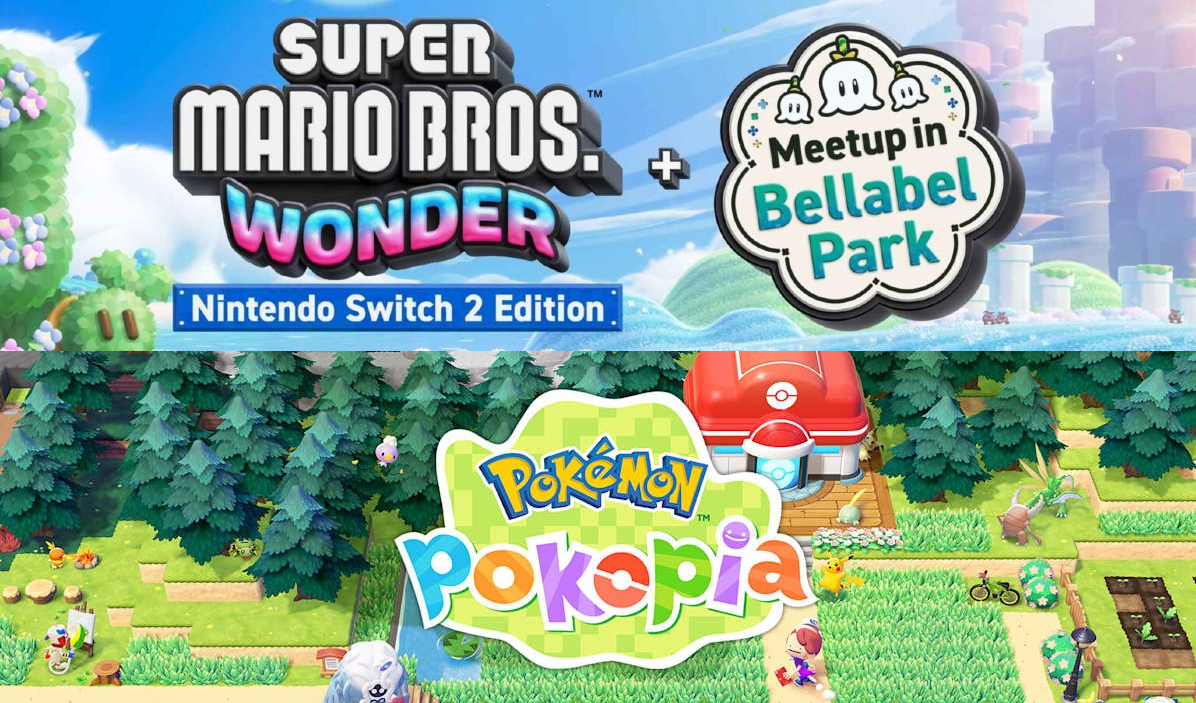
We recently got a rare kind of Nintendo showcase that doesn’t hide behind quick cuts and dramatic music. The latest Nintendo Treehouse: Live wrapped up with hands-on gameplay for two Nintendo Switch 2 releases that land weeks apart, and the contrast between them is the whole point. On one side, we have Super Mario Bros. Wonder – Nintendo Switch 2 Edition + Meetup in Bellabel Park, which takes a familiar platforming adventure and bolts on a new social-style area meant for group play. On the other, we have Pokémon Pokopia, a cozy life-sim spin-off developed by Koei Tecmo that leans into building, routine, and hanging out with Pokémon friends at your own pace.
If you missed the livestream, Nintendo didn’t leave you scrambling for reuploads. The gameplay segments were uploaded separately, which makes it easier to rewatch the exact part you care about, compare details with friends, or just pause on the tiny moments trailers always skip. We’re talking about the stuff you only catch when a game is actually being played: how the menus flow, how quickly you can jump into an activity, how readable the UI feels, and whether the experience looks smooth when things get busy. The release dates are locked in too: Pokémon Pokopia launches exclusively for Nintendo Switch 2 on March 5, 2026, and Mario Wonder’s Switch 2 Edition plus Bellabel Park follows on March 26, 2026. Two games, two moods, one message: Switch 2 isn’t only about bigger games – it’s also about how we play together, and how easy Nintendo wants that togetherness to be.
Nintendo Treehouse is over – footage for Pokémon Pokopia and Mario Wonder DLC
We’ve all watched presentations that feel like they’re sprinting past the details, like a tour bus driver who refuses to slow down even when the view is incredible. Treehouse is the opposite vibe, and that’s exactly why this February 2026 edition hit differently. Instead of asking you to imagine how these games feel, Nintendo put gameplay on the screen and let it breathe. That matters when we’re talking about Nintendo Switch 2 releases, because the real questions aren’t just “What is the premise?” but “How does it play minute to minute?” and “Does the flow look smooth when the screen gets crowded?” Seeing extended footage also helps separate marketing language from practical reality. You notice pacing. You notice whether multiplayer looks like joyful chaos or confusing chaos. You notice whether a cozy life-sim looks genuinely relaxing or secretly full of chores wearing a cute hat. Treehouse isn’t about the loudest reveal. It’s about the quiet proof.
The big dates to circle in March 2026
Timing is doing a lot of work here, and Nintendo made it easy to pin down what’s next. Pokémon Pokopia launches exclusively for Nintendo Switch 2 on March 5, 2026, putting it right at the start of the month when people are hungry for something fresh to settle into. Then Super Mario Bros. Wonder – Nintendo Switch 2 Edition + Meetup in Bellabel Park arrives on March 26, 2026, which is close enough to feel connected, but far enough apart that each game gets its own oxygen. That spacing also shapes expectations. We’re not looking at two similar releases competing for the same weekend. We’re looking at a cozy, routine-friendly game first, followed by a high-energy multiplayer-friendly Mario release later. It’s like planning a month where we start with comfy evenings and end with a loud weekend party. Different needs, different moods, same calendar.
What “Switch 2 Edition” really signals for Mario Wonder
The phrase “Nintendo Switch 2 Edition” isn’t just a label, it’s Nintendo planting a flag that says: this is not a tiny patch and a wink. For Super Mario Bros. Wonder, the Switch 2 Edition framing tells us we’re getting a version that’s meant to feel expanded and tuned for the newer system, rather than simply copied over. Nintendo’s own description points to upgraded performance and multiple additions that widen the experience beyond the original adventure. That kind of wording matters because it sets expectations for returning players. We’re not only replaying familiar levels and calling it a day. We’re stepping into something that’s supposed to feel roomier, more social, and more packed with reasons to gather friends. The name also puts the new area, Bellabel Park, front and center. If you remember the original as a great platformer that didn’t always feel like a party hub, this edition is trying to answer that exact gap.

Bellabel Park, explained like we’re planning a meetup
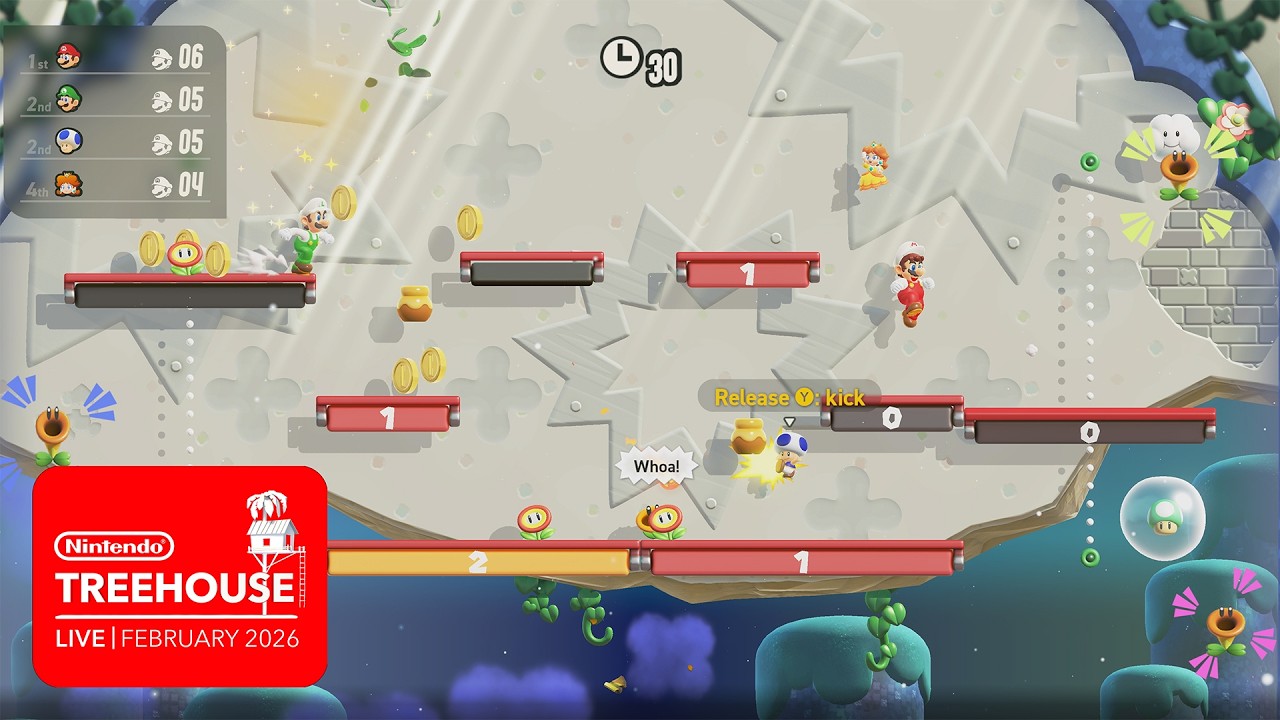
Bellabel Park is being positioned as the new heart of the experience, and it helps to think of it like a festival ground attached to the main adventure. Nintendo describes it as a whole new area to explore, and the Treehouse framing makes it clear this is where the “meetup” part stops being a tagline and starts being the point. Instead of only loading into stages and moving on, Bellabel Park is meant to be a place we return to, poke around, and use as a launchpad for activities. The vibe is important here. A park isn’t just a menu. A park implies movement, choices, and the feeling that something is always happening in the background. If the original game was a great road trip, Bellabel Park is the roadside attraction that convinces you to pull over and stay longer than planned.
A closer look at multiplayer vibes and the attraction-style setup
The multiplayer angle looks like the headline feature because it’s where the Switch 2 Edition can justify itself fastest. Nintendo highlights a “fresh power-up,” new characters, and the broader adventure, but the park’s attraction-style layout is the part that screams “bring people over.” From what Nintendo has outlined, Bellabel Park includes a dedicated space built around multiplayer fun, with a mix of cooperative and competitive activities. That blend is key. Pure co-op can be wholesome, but it can also turn into one person carrying the team while everyone else panics. Pure competitive play can be hilarious, but it can also turn into grudges that last longer than the session. Mixing both keeps the energy unpredictable in a good way. It’s the difference between a polite board game night and a night where someone flips the table in slow motion, then laughs because it was honestly deserved.
Why the park concept fits Mario’s “play together” DNA
Mario has always been at its best when it feels like a shared toy box. You don’t just watch someone else play – you pass the controller, you shout advice that is half helpful and half nonsense, and you celebrate victories that look small on paper but feel huge in the moment. Bellabel Park fits that tradition because it’s a space designed around the idea that we’re not only chasing an ending, we’re also chasing moments. A park gives structure to spontaneity. It’s a place where we can say, “One more round,” and actually mean it. It also helps that Nintendo has been leaning harder into features that make group play easier to start, easier to share, and less dependent on everyone owning the exact same thing. If Switch 2 is trying to be the console that turns hanging out into a feature, a park-themed hub is a very on-brand way to do it.
The upgrade pack question – who needs what
Whenever Nintendo announces an expanded edition, the first practical question shows up almost instantly: “Do we have to buy everything again?” Nintendo’s messaging makes the structure clearer. If you already own the original Super Mario Bros. Wonder for Nintendo Switch, there’s an upgrade pack option that grants access to the additional Switch 2 Edition features, rather than forcing a full repurchase. That’s the kind of detail that changes how people plan their March. It also changes the tone of the conversation around the release. Instead of feeling like a hard reset, it feels like a path forward. The fine print still matters, though, because editions, systems, and access can get messy fast if we don’t slow down. The simplest way to think about it is: the Switch 2 Edition extras are designed for Nintendo Switch 2, and the upgrade path exists to bridge owners of the original game into that expanded version on the newer hardware.
Where performance and “feel” become the real selling points
“Upgraded performance” can sound like a bland bullet point until you remember what it affects in real play. It’s not just about looking sharper in screenshots. It’s about responsiveness, readability, and whether busy scenes stay smooth when four players are bouncing around like popcorn in a microwave. For a game that’s leaning harder into social play, performance is part of the fun. A party game that stutters is like a joke that arrives two seconds late – the timing is gone, and everyone feels it. Nintendo tying performance upgrades to this edition is a quiet promise that the Switch 2 version aims to feel more stable and more confident when things get hectic. Even if we’re not obsessing over numbers, we still notice when a game looks like it’s keeping up with the chaos we’re throwing at it.
Pokémon Pokopia’s premise – Ditto, town-building, and cozy pacing
Pokémon Pokopia is a tonal swerve in the best way, and the premise is immediately the kind of weird that Pokémon fans tend to love. Nintendo describes us playing as a Ditto that has transformed to look like a human, and that detail alone sets the mood: playful, a little odd, and full of potential for charm. The goal isn’t to become a champion or save the world. The goal is to carve out a life, befriend Pokémon, and build a town alongside Professor Tangrowth. That’s a different flavor of satisfaction. Instead of “beat the boss,” it’s “place the fence just right,” “finish a small project,” and “make the place feel like home.” Cozy games live or die on rhythm, and Treehouse footage helps because we can actually see how calm the pacing looks when someone is simply doing the daily loop.
Building a town that feels lived in, not just decorated
Town-building is everywhere these days, so Pokopia needs more than cute visuals to stand out. What makes the concept interesting is the framing around community. Nintendo talks about building a town for everyone to live in, not just customizing a personal space and calling it progress. That “everyone” language matters, because it hints that Pokémon and players are meant to feel like residents, not props. The best cozy games make a town feel like a place with routine – the kind of place where you can picture what happens when you’re not holding the controller. If Pokopia nails that, it won’t feel like an endless craft checklist. It’ll feel like a gentle world we actually want to return to, even when we only have an hour and we’re tired and the last thing we want is a game that demands “just one more grind.”
How multiplayer changes the cozy formula
Cozy games can be intensely personal experiences, so multiplayer has to be handled with care. If it’s too intrusive, it breaks the calm. If it’s too limited, it feels pointless. Nintendo’s description suggests Pokopia is aiming for the sweet spot where we can invite others to visit and hang out together, rather than turning the whole game into a chaotic co-op sprint. That distinction is everything. Visiting implies relaxed collaboration, showing off what we built, sharing a moment, and then going back to our own pace. It’s like having friends over for coffee rather than signing up for a competitive tournament. If the systems let us cooperate without turning the experience into a race, that’s where Pokopia can carve out a unique identity among life-sims that sometimes forget the “life” part and focus only on “systems.”
GameShare and the “come hang out” mentality
Nintendo’s mention of inviting visitors who don’t have the game, including through GameShare, is a very specific kind of convenience that fits a cozy hangout game perfectly. The easiest multiplayer sessions are the ones that don’t start with a shopping trip. When inviting a friend feels frictionless, people actually do it. That matters for Pokopia because the fantasy is social comfort, not logistical planning. If one person can initiate the session and others can join for the hangout without ownership becoming a barrier, the game is more likely to become part of real routines. It also makes the game easier to share with family members who might be curious but not ready to commit. Cozy games thrive on word of mouth and gentle curiosity. Anything that makes “try it with me” effortless is a big deal.
What Nintendo’s separate uploads change for rewatching and sharing
There’s a practical win here that’s easy to overlook until you try to find a specific moment later. Nintendo uploading the gameplay segments separately means we don’t have to scrub through an entire stream just to rewatch a single mechanic or confirm a detail we thought we saw. That’s helpful for everyone, whether you’re the type who pauses footage to catch UI hints or you’re just trying to show a friend the exact vibe of a game in thirty seconds. Separate uploads also reduce the chances of misinformation spreading, because people can point directly to the official footage rather than relying on clipped reposts with messy edits. It’s a cleaner way to keep conversations grounded in what was actually shown. In a world where game chatter can turn into a telephone game in a single afternoon, having the official segments easy to find is like having a map in a city where every street looks the same.
The takeaway – two very different games, one very clear strategy
When we put both games side by side, the pattern becomes obvious. Nintendo is using Switch 2 to push two ideas at once: richer social play in familiar worlds, and softer, more inviting games that broaden the audience without feeling like watered-down side projects. Mario Wonder’s Switch 2 Edition plus Bellabel Park is about turning a great platformer into a better group experience, with a hub concept that encourages repeat sessions with friends. Pokémon Pokopia is about cozy creativity, community building, and making multiplayer feel like a visit rather than an obligation. The release dates reinforce that this isn’t a one-off spotlight. March 2026 is being shaped as a month where we can settle into one game, then ramp up into another. Different energy, same message: Switch 2 isn’t only about what we play, it’s about how easy it is to play together, whether “together” means couch chaos or a calm visit to a friend’s little town.
Conclusion
Treehouse worked here because it showed the proof, not just the promise. We saw how Nintendo wants Mario Wonder’s Switch 2 Edition to feel broader and more social through Bellabel Park, and we saw how Pokémon Pokopia is leaning into cozy life-sim comfort with a premise that’s charmingly strange in the most Pokémon way. The dates are clear, the footage is easy to rewatch, and the strategy feels consistent: make multiplayer easier to start, make games easier to share, and give March 2026 two distinct reasons to pick up the controller. If you’re choosing between the two, it might come down to one simple question: are we craving a lively meetup, or a quiet place to build and breathe?
FAQs
- When does Pokémon Pokopia release on Nintendo Switch 2?
- Pokémon Pokopia launches exclusively for Nintendo Switch 2 on March 5, 2026, and Nintendo has already shared extended gameplay footage from Treehouse to show how the cozy loop plays.
- When does Super Mario Bros. Wonder – Nintendo Switch 2 Edition + Meetup in Bellabel Park release?
- The Switch 2 Edition of Super Mario Bros. Wonder, including Meetup in Bellabel Park, releases on March 26, 2026, a few weeks after Pokopia.
- Do we need to rebuy Mario Wonder to get the Switch 2 Edition extras?
- If we already own the original Super Mario Bros. Wonder on Nintendo Switch, Nintendo has described an upgrade pack option that unlocks the additional Switch 2 Edition features on Nintendo Switch 2.
- What is Bellabel Park supposed to be?
- Bellabel Park is presented as a new area designed to expand the experience, with a strong focus on multiplayer-friendly activities and a hub-like space that supports the “meetup” idea.
- Why did Nintendo upload the gameplay segments separately after the livestream?
- Separate uploads make it easier to rewatch specific sections, share official footage without relying on reuploads, and double-check details that are easier to catch in longer gameplay than in trailers.
Sources
- Catch new gameplay footage of two upcoming Nintendo Switch 2 games!, Nintendo, February 24, 2026
- Super Mario Bros. Wonder + Meetup In Bellabel Park does the impossible by finally giving Nintendo Switch 2 mouse mode a reason to live, TechRadar, February 5, 2026
- Nintendo to share new gameplay footage of two titles at its latest Nintendo Treehouse: Live presentation tomorrow, Gaming Age, February 23, 2026
- Pokémon Pokopia and Mario Wonder DLC gameplay from Nintendo Treehouse, My Nintendo News, February 24, 2026
- Nintendo Treehouse: Live | February 2026, Nintendo, February 2026