














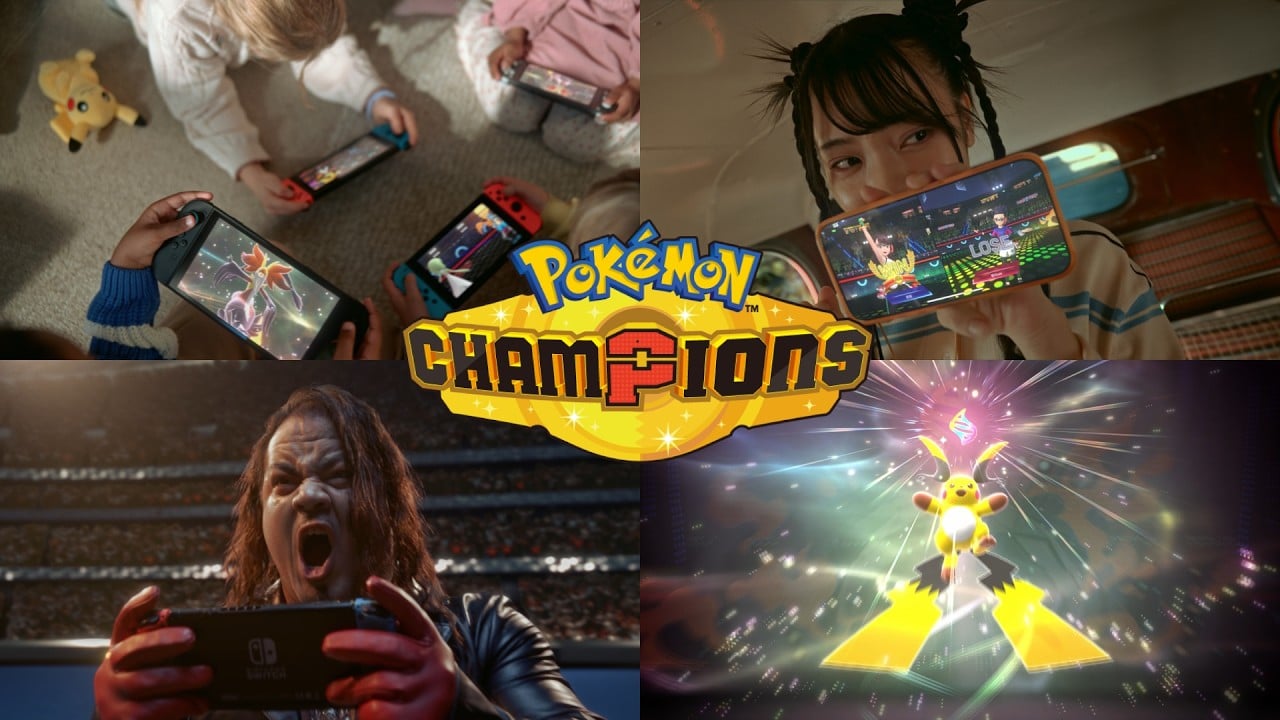
Summary:
Pokémon Champions is shaping up to be the “let’s battle right now” game for people who care most about matchups, mind games, and that tiny moment where you predict the opponent’s switch and feel like a genius. The big news is timing: The Pokémon Company has now put a clear window on the Nintendo Switch launch, with Pokémon Champions arriving in April 2026, while the iOS and Android versions are scheduled for later in 2026. That staggered rollout matters because it hints at where the first wave of competitive play will happen, and it gives everyone a simple planning point: April is when teams, rulesets, and early meta discussions start to solidify on Switch, then the mobile crowd joins once those versions land.
We also know who’s building it. Pokémon Champions is being developed by The Pokémon Works, a newer internal studio tied to The Pokémon Company, and the messaging around the game keeps circling one core idea: battles, battles, battles. The recent trailer shown during the February 2026 Pokémon Presents doesn’t try to distract with a big overworld adventure. Instead, it points us toward a multiplayer-focused experience that supports familiar battle mechanics, and it leans into features that help competitive play stay organized, like ranked battles and private battles. There’s also Pokémon HOME integration on the table, with specific rules around bringing eligible Pokémon in as visitors, plus extra incentives connected to Pokémon Legends: Z-A. Put it all together and the picture is pretty clear: April isn’t just a release window, it’s the starting whistle for a new kind of Pokémon battling routine.
Pokémon Champions is coming soon
Pokémon Champions is a multiplayer-focused Pokémon battle game built around the part of the series that never really gets old: outsmarting another trainer in a turn-based fight. Instead of asking us to trek across a new region and collect badges, we’re being pointed straight at the arena. That doesn’t mean it’s “simple” in the boring way. If anything, a battle-first setup tends to make things feel sharper, because every menu choice and every rule exists to support one question: can you build a better plan than the person on the other side? The recent messaging also frames Champions as a place where familiar mechanics like types, Abilities, and moves still matter, which is a nice way of saying the basics you already know are still the language we’ll be speaking. If you’ve ever watched a close match and felt your shoulders tense up on a single prediction, you already get the appeal. Champions looks like it wants to bottle that feeling and serve it quickly, without the usual “walk here, talk to this person, go back” rhythm. It’s Pokémon battles as the main meal, not the side dish.

Release window and platforms: what we can actually lock in
The release timing is finally concrete enough to plan around. Pokémon Champions launches on Nintendo Switch in April 2026, and the iOS and Android versions are scheduled for later in 2026. That’s not a vague “sometime next year” shrug, it’s a real window that tells us when the first communities will start testing teams, arguing about what’s strong, and figuring out the early do’s and don’ts. It also matters for anyone who plays across devices, because it sets expectations: Switch is the first stop, and mobile joins afterward. If you’re the kind of player who loves being there when everything is fresh, April is the month where the first ranked ladders and early strategies should feel the most chaotic and fun. If you’re more of a “let the dust settle” trainer, the later mobile launch might land after some of those early questions already have answers. Either way, the schedule gives us a rare gift in gaming news: clarity without needing guesswork.
Why Switch comes first and mobile follows later
When a game targets Switch, iOS, and Android, a staggered launch can be as practical as it is strategic. Switch gives The Pokémon Company a consistent hardware baseline and a familiar environment for online play, which helps when the core feature is competitive battles that need to feel fair and responsive. Mobile adds a different set of realities, like device performance ranges, OS updates, and the way players jump in for shorter sessions. Launching on Switch first can also concentrate the early competitive scene, so the first wave of balance conversations and community standards forms in one place before the audience expands. For players, the takeaway is simple: April on Switch is likely where the first “this works, that doesn’t” conversations will get loud. Then mobile arrives later in 2026, and that second wave could bring a new surge of players, a fresh burst of team experimentation, and more matchmaking variety. Think of it like opening night first, then the wider tour afterward.
The Pokémon Works: the team behind the battles
Pokémon Champions is being developed by The Pokémon Works, a studio connected to The Pokémon Company that has been positioned to handle projects like this. That studio detail matters because it tells us Champions isn’t being treated as a tiny side project that just wandered into existence. Competitive battling games live or die by polish in the unglamorous areas: matchmaking stability, clean UI, readable battle information, and rules that don’t produce weird edge cases every other match. A dedicated developer also suggests a longer-term mindset, where updates, event support, and feature tuning can happen without the game feeling like it’s stuck in a corner waiting for attention. If you’ve played older battle-focused spin-offs, you know the vibe: when they’re good, they become comfort food for competitive players. When they’re neglected, they feel like a cool idea left on a shelf. The Pokémon Works being attached to this project gives Champions a better shot at being the “place we keep coming back to” rather than the “thing we tried once.”
Battle-first design: what that changes for how we play
A battle-first game changes your mindset immediately. In a mainline title, you might spend an hour exploring, catching, and story-progressing before you even care about your next serious match. In Champions, the battle is the point, so the loop has to respect your time. That usually means faster access to matches, clearer options for rulesets, and features that support repeated play without friction. It also puts more pressure on the game to feel fair. When there’s no giant overworld adventure to distract you, a clunky menu or unclear information becomes impossible to ignore, like a pebble in your shoe on a long walk. The upside is that it can make every session feel more “alive,” because you’re doing the thing you showed up for right away. If you’re the kind of trainer who loves testing a new idea, losing a few matches, tweaking one move, and immediately trying again, battle-first design is basically a playground with the lights left on late. That’s the energy Champions seems to be chasing.
Free-to-start and versions: what that phrase signals
One detail that keeps popping up in reporting is that Pokémon Champions is described as “free-to-start.” That wording is important because it usually means the entry point is easy, but the full experience may be split across versions or optional purchases. We’re not locked into specifics beyond what’s been publicly described, but the phrase alone changes expectations: more players can jump in early, which can make matchmaking healthier and the competitive scene more active. It can also mean the game is designed to support a long lifespan, because “free-to-start” titles often plan for ongoing engagement instead of a one-and-done finish line. For players, the healthiest approach is to treat it like walking into a new battle stadium with open doors. You can step in, test the vibe, and see if the core battling feels good before deciding how deep you want to go. If Champions nails the feel of battles and makes it painless to get into matches, that model can be a huge win for everyone who just wants more opponents and fewer barriers.
Pokémon HOME integration: bringing Pokémon in as visitors
Pokémon HOME integration is one of the most practical ideas Champions is bringing to the table, because it connects this battle-focused game to the wider ecosystem. The public details emphasize that eligible Pokémon can be brought into Champions from Pokémon HOME as visitors, as long as they appear in Champions. That “appear in Champions” line is doing a lot of work, because it sets a clear boundary: not everything you’ve ever collected automatically walks through the front door. There are also clear limits on what moves are allowed, and how training changes carry back and forth. This kind of integration is a big deal for competitive play because it respects your history. If you’ve raised certain Pokémon across other games and you love how they fit your style, HOME support can help you keep that connection instead of starting from scratch. The key is that it’s structured, not chaotic. Champions isn’t promising a wild west transfer system, it’s offering a controlled way to bring certain partners along for the fight.
What can transfer, and what stays behind
The rules around transfer matter more than people think, because they shape the entire early meta. The details shared publicly explain that only Pokémon that appear in Pokémon Champions can visit from Pokémon HOME, and that Pokémon obtained in Champions can’t be sent back to Pokémon HOME. That creates a one-way feeling in one direction and a guarded gate in the other, which is a sensible way to protect the broader ecosystem from unexpected interactions. It also means your “visitor” Pokémon are guests with house rules. If a visiting Pokémon knows moves that can’t be used in Champions, it has to learn new moves through training. That might sound like a small footnote, but it’s actually huge for competitive play, because movesets are often the whole identity of a strategy. In other words, you’re not just importing a creature, you’re importing potential, then shaping it to fit Champions’ rules. If you love tinkering, this will feel like customizing a race car to match a specific track’s regulations.
Training rules and move restrictions you’ll want to remember
The training setup described publicly is a careful compromise between flexibility and control. Visiting Pokémon can be trained in Champions to learn moves that are allowed there, and those training results can persist when the Pokémon returns to Pokémon HOME and then comes back to Champions later, as long as it doesn’t return in a different form. That’s a neat quality-of-life touch because it suggests your effort isn’t wasted every time you move between apps. At the same time, it keeps the focus on Champions being its own rule-driven space. You’re not meant to bulldoze the system with a moveset that doesn’t fit the game’s allowed pool. The practical takeaway is to treat training like packing for a trip. You can bring your favorite outfit, but if the venue has a dress code, you’re changing before you go in. If Champions makes that process smooth, it will remove a lot of friction that usually scares newer competitive players away. If it’s clunky, everyone will feel it quickly, because battle-first games give you nowhere to hide.
Multiplayer focus: ranked battles and private battles
Pokémon Champions is being framed around battling other players, and the public messaging highlights both ranked battles and private battles. That’s the best of both worlds: ranked gives you that sweaty, thrilling “every choice matters” ladder climb, while private battles let friends settle debates without the pressure of points. Ranked play also tends to shape the entire conversation around a game. It’s where strategies get tested under stress, where common team cores emerge, and where the community starts to agree on what feels strong. Private battles, on the other hand, are where you experiment without fear. Want to try a goofy team that looks like it was built at 2 a.m. with too much confidence? Private matches are where you do that, laugh when it fails, and still learn something. If Champions wants to be a central home for battling, these two modes are the backbone. They’re the treadmill and the playground, and both matter if we want a scene that stays active.
Getting into a steady competitive routine
Competitive Pokémon is often less about a single “perfect team” and more about building a routine that keeps you improving. Champions looks positioned to support that, simply because it’s built around battles first. A healthy routine is a mix of ranked sessions for real feedback and private battles for controlled testing. You play ranked when you want honest results, then you hop into private matches when you want to isolate one question, like “does this move choice actually help?” The trick is to keep your expectations sane. Early metas are messy. You’ll run into weird teams, unexpected tech, and players who seem to know your next move before you do. That’s normal. It’s like joining a pick-up basketball game where half the players are experimenting and the other half have been practicing their shots all week. The fun part is that you can improve fast when the game makes it easy to play “just one more match.” If Champions nails fast rematches, clear info, and stable online play, the routine becomes addictive in the best way.
Mega Evolution hooks and Legends: Z-A rewards
Mega Evolution is clearly being used as a hype engine for Champions, and not just in a “look, shiny power-up” way. Public reporting and shared details point to specific bonuses and rewards tied to early adoption and Pokémon HOME transfers, including a Dragonite with its Mega Stone for early download, and Mega Stone-related incentives connected to Pokémon Legends: Z-A via Pokémon HOME. That’s a very Pokémon way to encourage ecosystem play: participate across games, get rewarded, and keep your collection feeling connected. It also signals that Champions wants to lean into battle spectacle, because Mega Evolution is inherently dramatic. It changes tempo, it changes threat levels, and it forces sharper decision-making. Even if you’re not a Mega Evolution superfan, you can’t deny it makes matches feel like they have turning points. The best-case scenario is that Champions uses Mega Evolution as a strategic layer, not just a fireworks button. If it’s balanced well, it adds tension. If it’s too strong, it becomes predictable. Either way, it’s one of the clearest “battle flavor” choices we can already see.
What the latest trailer shows, and what it avoids promising
The newest Pokémon Champions trailer, shown during the February 2026 Pokémon Presents, leans hard into battle footage and the idea of Champions as a focused battling experience. That’s telling, because trailers are basically a game’s handshake. This one doesn’t try to charm us with a huge exploration fantasy. It says, “Here’s the arena, here’s the vibe, let’s fight.” It also reinforces the release timing: April 2026 on Switch, and mobile later in 2026. What it avoids promising is just as important. We don’t get a giant checklist of every feature under the sun, and we don’t get a flood of specifics that could change later. That restraint can be a good sign, because it keeps expectations grounded. The trailer’s job here seems to be clarity, not overload. For anyone who loves competitive play, the message is simple: get ready for a new place to battle, with familiar mechanics, modern presentation, and a schedule you can actually put on a calendar.
Setting expectations for April: how to plan your first week
April releases are exciting, but the first week is always the real test. Servers get stressed, matchmaking gets chaotic, and players try every strategy under the sun like they’re tossing ingredients into a blender just to see what happens. Planning your first week with Champions is mostly about mindset. If you want to climb ranked immediately, focus on consistency: pick a team concept you understand, play enough matches to spot patterns, and resist the urge to rebuild everything after every loss. If you want to learn the system, start with private battles and controlled experiments, then step into ranked when you feel comfortable reading matchups quickly. Also, keep Pokémon HOME integration in mind if you already have eligible Pokémon you want to use, because the visitor rules and move restrictions mean you’ll want a little setup time before you feel “ready.” The best part of launch week is the energy. Everyone is learning, everyone is adapting, and every match feels like a new story. Treat it like opening night at a stadium: loud, messy, and unforgettable.
Staying ready for updates without getting swept up in rumors
Once a competitive game launches, the information machine goes into overdrive. People will claim they found hidden features, secret balance changes, or “confirmed” plans that aren’t actually confirmed. The smartest way to stay ready is boring, and boring is good. Anchor yourself to what’s official: the April 2026 Switch window, mobile later in 2026, The Pokémon Works as the developer, ranked and private battles as highlighted modes, and Pokémon HOME integration with clear boundaries. Then treat everything else as noise until it’s backed up by official channels or reliable reporting. That doesn’t mean you can’t have fun with speculation, but it does mean you shouldn’t build expectations on it. Competitive communities thrive when players share real results, not wishful thinking. So if you want to stay ahead, focus on what you can control: learn matchups, refine your teams, and keep notes on what you’re seeing in battles. Rumors are like cotton candy. They’re fun for a second, then they disappear. Solid practice actually feeds you.
Conclusion
Pokémon Champions now has the kind of release clarity that makes planning easy: Nintendo Switch in April 2026, with iOS and Android later in 2026. The tone around the game is equally clear. This is built for battling first, with The Pokémon Works developing a multiplayer-focused experience that leans on familiar mechanics and modern competitive structure. Pokémon HOME integration adds a meaningful bridge to the wider series, but it comes with firm rules that keep Champions’ battle space controlled. Ranked and private battles set the foundation for both serious competition and friendly experimentation, while Mega Evolution incentives hint at the spectacle and strategy Champions wants to bring to the forefront. April is when the first real stories start, not just in trailers, but in matches where you and everyone else figure out what actually works when the clock is ticking and the opponent is thinking too.
FAQs
- When does Pokémon Champions launch on Nintendo Switch?
- Pokémon Champions is scheduled to launch on Nintendo Switch in April 2026, based on the release window shared during the February 2026 Pokémon Presents and subsequent reporting.
- Are the iOS and Android versions launching at the same time as Switch?
- No. The mobile versions are planned for later in 2026, after the Switch launch window in April 2026.
- Who is developing Pokémon Champions?
- The game is being developed by The Pokémon Works, a studio associated with The Pokémon Company that has been named in official and industry reporting about Champions.
- How does Pokémon HOME integration work in Pokémon Champions?
- Public details describe bringing eligible Pokémon into Champions from Pokémon HOME as visitors, with limits based on which Pokémon appear in Champions and with rules around moves that can’t be used.
- What kinds of battles are confirmed so far?
- Reporting and shared descriptions highlight competitive options like ranked battles and private battles, reinforcing that Champions is designed around multiplayer matchups.
Sources
- Pokémon Presents 27.2.2026, YouTube, February 27, 2026
- Pokémon Champions Launches On Switch This April, Mobile Later This Year, Game Informer, February 27, 2026
- Pokemon Champions launches in April for Switch, later in 2026 for iOS and Android, Gematsu, February 27, 2026
- Pokémon Champions Brings The Fight To Switch This April, Nintendo Life, February 27, 2026
- Pokémon Champions Arrives in 2026!, YouTube, February 27, 2026