














Summary:
Pokemon Champions finally feels like more than an interesting idea on paper. After its full reveal, the game looks positioned to offer something many players have wanted for years: a dedicated Pokemon battle experience that trims away some of the friction and puts team building, strategy, and personal style front and center. That alone makes it worth paying attention to, but the more interesting part is the way it seems built for the long haul rather than a quick burst of launch excitement. With customization options, a free-to-start structure, and a stated plan to keep the game going far into the future, Pokemon Champions appears to be aiming for a lasting place in the wider series instead of a short side project.
That ambition is exciting, but it also raises the stakes. A long-term battle platform only works if the basics feel strong from the start. Players need customization that feels fun instead of fiddly, battles that are quick to jump into without losing tactical depth, and a reward loop that encourages experimentation rather than irritation. The game has a real chance to become a dependable home for competitive play, especially with its April 8 launch on Nintendo Switch and Nintendo Switch 2. If the opening version feels polished and rewarding, Pokemon Champions could grow into one of those rare Pokemon releases that keeps pulling players back in for months and years. If it stumbles, the promise of a bright future becomes much harder to sell. Right now, though, the early signs are encouraging.
Pokemon Champions finally feels real after its full reveal
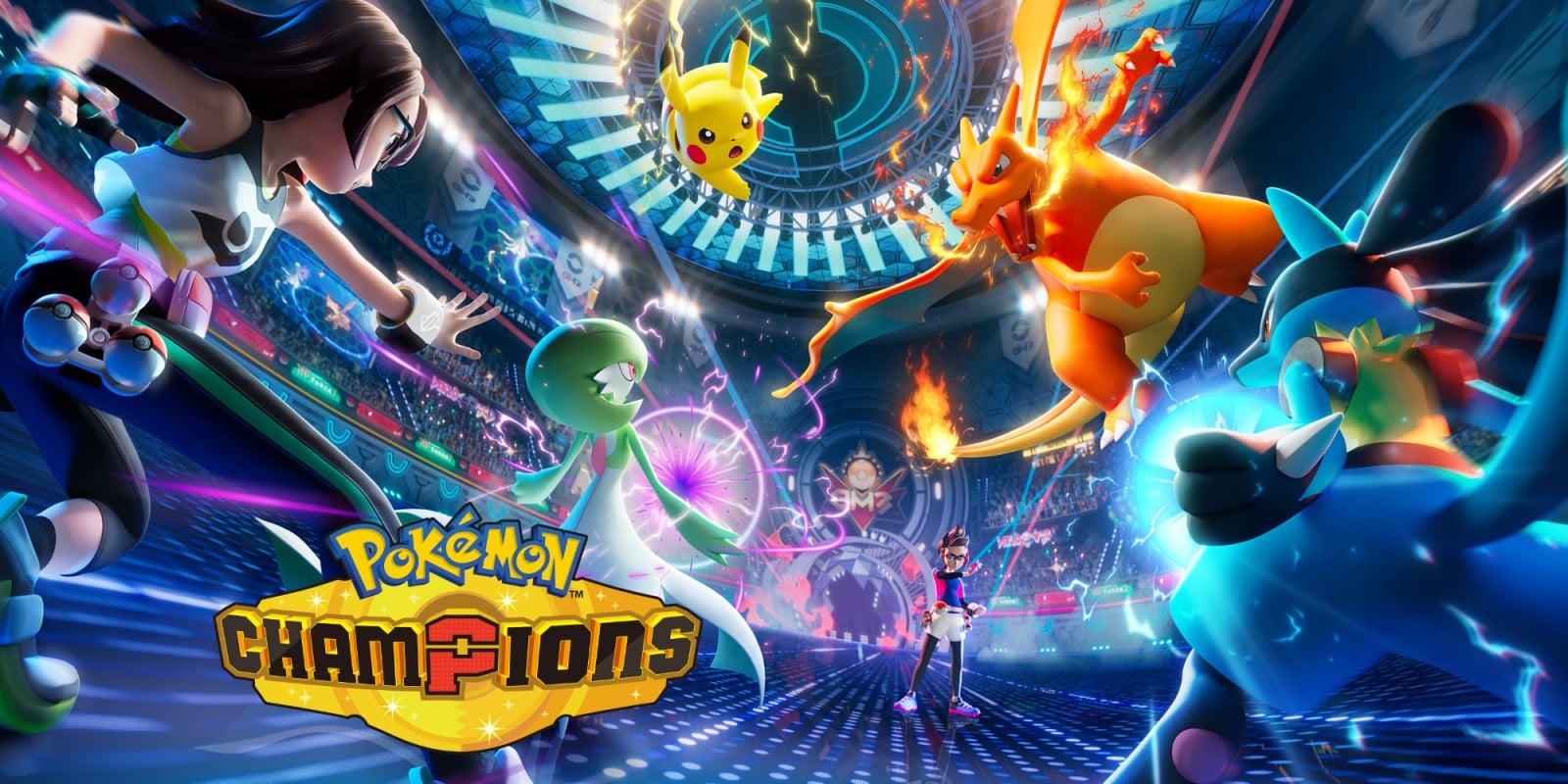
For a while, Pokemon Champions had the kind of presence that makes people curious but cautious. You could see the appeal right away, yet it still felt like something waiting for its true shape. Now that the full reveal has happened, the picture is much clearer. This is not simply a side experiment tossed into the Pokemon lineup to fill space between bigger releases. It looks like a focused attempt to create a battle-first experience that gives players room to shape teams, test ideas, and settle into a routine that feels rewarding over time. That shift matters. When a game moves from vague promise to visible identity, people stop asking what it might be and start asking whether they want to spend real time with it. Pokemon Champions finally seems to have crossed that line. It now looks like a release with a point of view, a purpose, and enough mechanical identity to stand on its own instead of living in the shadow of the main series.
Customization could become the biggest reason players stick around
One of the most appealing parts of the reveal is how much emphasis seems to be placed on customization. That can mean more than cosmetic flair, though style certainly helps. In a battle-focused Pokemon release, customization is the difference between simply using a team and feeling like you built something that reflects your habits, instincts, and personality. Players love that sense of ownership. It is why team building has always been one of the most addictive parts of the broader series. You tweak one move, then another, then rethink a role on your lineup, and suddenly an hour disappears. Pokemon Champions looks ready to lean into that energy instead of treating it like background homework. If the tools are smooth, the menus are readable, and the process feels inviting, players could end up spending a surprising amount of time tinkering. That is usually a very good sign, because when people enjoy shaping a team, they are far more likely to keep coming back to test it.
The free-to-start model creates both opportunity and risk
A free-to-start structure can be a clever doorway. It lowers the barrier to entry, makes curiosity easier to act on, and gives players fewer reasons to hesitate. That is especially useful for a battle-focused Pokemon release, since competitive play can feel intimidating to people who like the idea of it more than the preparation usually required to jump in. Letting players step through the front door without a heavy upfront price can widen the audience immediately. Still, this model is never automatically good news. It is a balancing act on a tightrope in a windstorm. If the game feels generous, clear, and respectful of the player’s time, the format can work beautifully. If it feels restrictive, pushy, or awkwardly monetized, goodwill can evaporate fast. Pokemon Champions will need to prove that its free-to-start approach is there to welcome people in, not nudge them into frustration. The difference between those two outcomes is enormous, and players tend to notice it almost instantly.
A long-term plan sounds exciting, but the opening weeks matter most
It is encouraging to hear that the team sees Pokemon Champions as something that could keep evolving for years. That kind of ambition suggests confidence, and confidence is usually better than hesitation. Still, the future does not begin in some abstract later chapter. It begins on day one, with the first matches, the first impression of the menus, the first reward loop, and the first moment a player asks, “Do I want to keep going?” That question is where long-term hopes either gather momentum or lose it. A game can promise years of support, shifting formats, and broad future plans, but if the launch version feels thin or clumsy, those promises start sounding like distant weather reports. Nice to hear, not helpful right now. Pokemon Champions needs the opening stretch to feel sturdy, generous, and fun. If it nails that early rhythm, the talk about staying power stops sounding like marketing optimism and starts sounding believable.
The April 8 launch gives Pokemon Champions immediate momentum
Timing matters more than people sometimes admit. A strong concept released at the wrong moment can drift, while a smart release window can give a game the push it needs to catch hold quickly. Pokemon Champions arriving on April 8 gives it a clear near-term target and keeps the momentum from the reveal moving forward instead of cooling off. That helps because excitement has a shelf life. When people see something promising, they want to know they will not be waiting forever to try it. The release timing also makes the game feel confident. It is not being teased into the far distance. It is stepping onto the stage and asking for attention now. That creates a stronger sense of presence, especially for a Pokemon release that wants to build routine and long-term player investment. A close launch date can turn curiosity into action much faster, and for a battle-first release, getting players into the system quickly is half the battle already won.
Nintendo Switch and Nintendo Switch 2 give the game a wider runway
Launching on both Nintendo Switch and Nintendo Switch 2 is a smart move because it gives Pokemon Champions access to a broad player base without forcing the audience into a hard split. That matters for a release built around battles, matchmaking, and long-term engagement. A battle ecosystem lives and dies on activity. Players need opponents, variety, movement, and a sense that the place is alive. Supporting both systems increases the odds of that happening. It also makes the game feel better positioned for transition. People moving to newer hardware can still stay connected to players who are not there yet, and that kind of overlap helps a game breathe instead of stumble during a generational shift. From a practical point of view, it also means more players can try it close to launch without feeling shut out. For a free-to-start Pokemon release aiming to become a durable fixture, wider availability is not just convenient. It is one of the smartest foundations it could ask for.
Competitive battling is moving closer to the center of the experience
Pokemon has always had a competitive side, but for many players it has sat slightly off to the side like a well-lit room at the end of a long hallway. You know it is there, and you know some people practically live in it, yet the path toward it has often felt more complicated than welcoming. Pokemon Champions looks like an attempt to bring that room much closer to the front door. That is a meaningful shift. A release built around battling has the chance to make strategy feel less like an advanced elective and more like the heart of the experience. If that transition is handled well, it could help newer players feel less intimidated while still giving experienced players plenty to sink their teeth into. That balance is not easy. Too simple, and veterans drift away. Too dense, and newcomers bounce off. The sweet spot is tricky, but when Pokemon finds it, the result can be electric. Champions looks like it wants to chase exactly that.
Team building needs to stay flexible, fast, and satisfying
The real magic of a battle-focused Pokemon release is not only in the battles themselves. It is in the invisible engine behind them: team building. That process needs to feel flexible enough for creativity, fast enough to avoid turning into a chore, and satisfying enough that every small adjustment feels meaningful. When players feel trapped by friction, experimentation dries up. When they can test ideas quickly, the whole experience becomes more alive. A strange set suddenly becomes worth trying. An underused Pokemon starts looking interesting. A defensive option you would normally ignore gets a shot because changing the team does not feel like moving furniture with your bare hands. Pokemon Champions seems aware of how important that loop is. If it delivers a system that respects the player’s time while still rewarding thoughtful planning, it could turn team crafting into one of its strongest hooks. That is where a battle platform often earns loyalty, not through spectacle alone, but through the quiet pleasure of building something that clicks.
Presentation, pace, and clarity could shape player trust early
Even in a strategy-heavy release, presentation matters. Battles can be mechanically strong, but if menus are clunky, information is buried, or the overall flow feels sticky, players begin to lose patience. Trust in a game often starts with small things. How quickly can you understand what is happening? How easy is it to make changes? Does the interface help you, or does it feel like it is gently arguing with you every step of the way? Pokemon Champions needs clarity as much as it needs charm. This is not only about making things look nice, though polished visuals certainly help. It is about helping players feel confident, informed, and in control. Good pacing matters too. If matches feel brisk and readable, players are more likely to queue again. If the rhythm is sluggish, even strong systems can feel heavier than they should. In a release that wants to live for a long time, these early points of trust are not decorative. They are structural.
Pokemon Champions has a real chance to become a lasting fixture
Right now, the most encouraging thing about Pokemon Champions is not that it looks flashy or that it carries a familiar brand name. It is that the concept actually makes sense. A battle-first Pokemon release with meaningful customization, broad platform support, and a long-term plan is the sort of idea that feels overdue in the best possible way. It fills a space that has been there for years. Of course, potential is not the same as success. The free-to-start setup needs to feel fair. The customization needs to feel substantial. The launch build needs to feel sturdy. Yet those are execution questions, not problems with the idea itself. The idea is strong. If the developers can match that strength in practice, Pokemon Champions could become one of those releases that quietly settles into people’s routines and refuses to leave. That kind of staying power is not built with noise alone. It comes from reliability, flexibility, and the feeling that there is always one more match worth playing.
The future talk feels bold because it sets a high bar immediately
When a producer talks about keeping a game going far into the future, it instantly raises expectations. That is both exciting and dangerous. On one hand, it tells players the release is being treated as a platform with room to grow rather than a disposable side stop. On the other hand, it invites scrutiny right away. People will listen to those words and then look closely at every system, every limitation, and every update rhythm to see whether the promise feels earned. That is why the long-term vision around Pokemon Champions stands out so much. It is not a shy statement. It is a bold one. Bold statements can work beautifully when the opening structure supports them. They can also backfire if players feel they are being asked to trust a future that has not yet proven itself. The encouraging part here is that the reveal suggests the team understands the scale of the opportunity. Now it has to prove it understands the responsibility that comes with it too.
Why this could click with both serious players and curious newcomers
The strongest releases in this space often succeed because they speak to two very different groups at once. First, you have the dedicated players who love squeezing every ounce of value from a team and reading a battle like a chessboard with elemental explosions. Then you have the curious crowd, the players who have always liked Pokemon battles but never wanted to climb a mountain of prep work just to feel competent. Pokemon Champions could appeal to both if it handles its systems carefully. Serious players need room for expression, strategy, and long-term mastery. Newcomers need clarity, speed, and a sense that they are welcome rather than tolerated. That is not an impossible mix. In fact, it is probably the ideal one. The reveal suggests Champions wants to be a bridge between those audiences instead of choosing one and ignoring the other. If that bridge is built well, this could become one of the most naturally replayable Pokemon releases in quite a while.
Conclusion
Pokemon Champions looks like it has the right ingredients to become something genuinely lasting. The full reveal gave the game more shape, more confidence, and more reason to believe it could carve out a dependable place in the Pokemon lineup. Its emphasis on customization, its battle-first identity, and its launch across Nintendo Switch and Nintendo Switch 2 all work in its favor. The long-term vision is exciting, but the real test will come from the launch version and how good it feels to build teams, enter battles, and keep experimenting. If those foundations are strong, Pokemon Champions could grow into a familiar home for competitive play and casual curiosity alike. That is a very promising place to be.
FAQs
- When does Pokemon Champions launch?
- Pokemon Champions launches on April 8, 2026 for Nintendo Switch and Nintendo Switch 2.
- Is Pokemon Champions a free-to-start game?
- Yes, Pokemon Champions is being released as a free-to-start game, which means players can jump in without a traditional full-price entry point.
- What makes Pokemon Champions stand out from other Pokemon releases?
- Its biggest difference is the focus on battling, team building, and customization rather than a traditional adventure structure. It looks designed to keep competitive play front and center.
- Why are players interested in the customization options?
- Customization gives players more control over how they shape teams and approach battles. That makes the experience feel more personal and encourages experimentation over time.
- Could Pokemon Champions last for years?
- It could, provided the launch version is strong and the update plan stays meaningful. The long-term vision sounds ambitious, but its success will depend on whether players enjoy the core loop from the start.
Sources
- Pokémon Champions Releases on Nintendo Switch and Nintendo Switch 2 on April 8, 2026, Pokemon.com, March 24, 2026
- Play! Pokémon Competitions Transition to Pokémon Champions on April and May 2026, Pokemon.com, March 24, 2026
- Pokemon Champions could run “forever” if the series does, producer says, even if that means cramming “10,000 Pokemon” into the PvP battler as part of the process, GamesRadar+, March 25, 2026
- Battle on, Trainers! You’ll be able to play Pokémon Champions soon, Nintendo, March 2026