Summary:
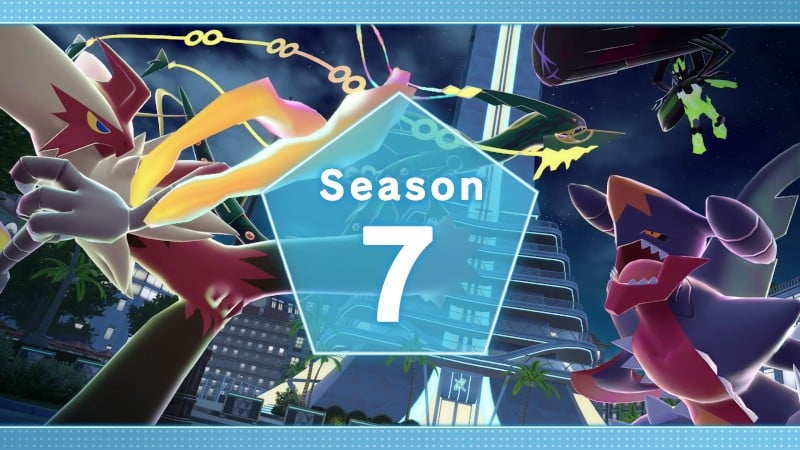
Season 7 of Ranked Battles in Pokémon Legends Z-A is a tight, two-week sprint, running from February 19, 2026 to March 12, 2026. That short window changes how we should think about the ladder. Instead of treating matches like endless grinding, we get better results by treating the season like a planned climb, where every session has a purpose. The headline reward is Blazikenite at Rank S, and because it is new to this season’s reward track, it is the one most players will build their goal around. But the reward list is deeper than that, with Greninjite, Delphoxite, Chesnaughtite, Baxcaliburite, Sceptililite, and Swampertite also tied to specific ranks. If we want to finish the season feeling good, we should decide early whether we are chasing one specific stone, multiple stones, or simply aiming for the Safari Ball bonus at Rank E and above.
Season 7 also adds a strategic wrinkle: we can bring one restricted Legendary Pokémon on the team. That sounds like a “free power button,” but it is really a team-shaping rule. One slot can cover weaknesses, force respect in team preview, and give us a reliable win condition, but it can also make our team predictable if we lean on it too hard. The most consistent approach is to build a sturdy core that wins normal games, then use the restricted Legendary as a pressure tool, not a crutch. With the right plan, we climb faster, tilt less, and end the season with the rewards we actually wanted.
Pokemon Legends Z-A – Season 7 dates and what changes this time
Season 7 is scheduled to run from February 19, 2026 until March 12, 2026, which makes it feel less like a marathon and more like a weekend trip where you still need to pack properly. When the window is this short, the biggest advantage is starting with a clear target rank and a simple plan to get there. The standout change is the reward track headliner: Blazikenite arrives as the new top-tier Mega Stone reward at Rank S, so the ladder has a very obvious “main prize.” On top of that, Season 7 includes a ruleset that allows one restricted Legendary Pokémon on your team, which affects how we build, how we scout in team preview, and how we play endgames. If you are the type who usually climbs slowly and steadily, this is the season where we should focus on consistency and avoid switching teams every few losses. Think of it like changing running shoes mid-race – it might feel exciting, but it rarely helps you finish faster.
How the rank ladder and reward timing work
Season rewards are tied to the rank we achieve during the season, so the ladder is not just a bragging-rights number – it is your checkout receipt. The important mindset shift is that we are not trying to “win forever,” we are trying to land on the right rank before the season ends. That means we should pay attention to when we play, how we handle losing streaks, and how quickly we can return to our best decision-making after a rough match. A useful habit is setting a session rule like “two losses in a row means a short break,” because tilt makes even great teams look terrible. Also, don’t treat your early matches like warm-up games that do not matter. Early wins help stabilize your climb and reduce the number of matches you need later, when the ladder is packed with players who are also sprinting for rewards.
The Mega Stone reward ladder for Season 7
Season 7’s reward ladder is straightforward, and that is good news because it lets us set a concrete goal without guesswork. The Mega Stones are awarded by reaching specific ranks: Greninjite at Rank Y, Delphoxite at Rank X, Chesnaughtite at Rank W, Baxcaliburite at Rank V, Sceptililite at Rank U, Swampertite at Rank T, and the new Blazikenite at Rank S. The way these ranks are spaced means we can decide how ambitious we want to be. If you are returning after a break, aiming for Rank E for the Safari Ball bonus can be a sensible baseline, then anything above that becomes a bonus prize. If you are chasing Blazikenite, we should plan the climb in stages, like checkpoints, so it never feels like one giant, stressful push.
Blazikenite at Rank S – why this one is the season’s focal point
Blazikenite being placed at Rank S is a clear message about intent: this is the stone we are supposed to chase if we want the premier reward. The trick is not just reaching Rank S, but reaching it with a team that stays stable under pressure. When players are one step away from their goal, they often start making weird decisions, like forcing risky plays because they want matches to end faster. Ironically, that usually slows the climb because it creates swingy losses. If we want Blazikenite, we should lean into reliable lines: safe openings, midgame positioning, and endgame win conditions we can actually execute even when we are tired. Imagine trying to carry a full cup of coffee across a room – the fastest way is not sprinting, it is walking steadily so you do not spill it everywhere.
Swampertite, Sceptililite, and the “mid-ladder” motivation boost
Ranks T and U are where a lot of players either lock in or drift off, because the ladder can start to feel repetitive. Swampertite at Rank T and Sceptililite at Rank U give us a nice psychological push, because we get meaningful rewards before the final stretch. That matters more than people admit. A reward at the right moment keeps you focused, and focus wins more matches than hype does. If your main goal is Blazikenite, treat these stones as confirmation that your team is working and your approach is solid. If your goal is collecting stones rather than reaching the top reward, these ranks can be “finish lines” on their own, and there is nothing wrong with that. Winning smart beats winning stressed.
Greninjite to Baxcaliburite – planning a step-by-step climb
The lower reward ranks in Season 7 still matter because they let us build momentum. Greninjite at Rank Y, Delphoxite at Rank X, Chesnaughtite at Rank W, and Baxcaliburite at Rank V form a clean staircase where each step can be its own mini-goal. If you are newer to the ladder, that staircase approach is your best friend because it turns one big objective into smaller, winnable chunks. The practical benefit is that we can evaluate our team after each step. Are we losing to the same archetype repeatedly? Are we making the same misplay in endgames? If yes, we tweak one or two slots, not the whole team. Big resets feel dramatic, but small fixes actually move the needle.
A simple “stability check” before we change anything
Before we swap moves, items, or party members, we should run a quick stability check: did we lose because of matchup, or because of decisions? If the matchup felt impossible three times in a row, that is a team issue and a small adjustment might help. If we lost because we rushed, ignored information, or overpredicted, that is not the team’s fault, that is just ladder brain. The reason this matters is that the ladder punishes impulsive changes. Every time we make big edits, we create a new learning curve, and learning curves cost wins. So the goal is boring on purpose: keep the team stable, keep the decisions clean, and let the rank points accumulate like savings in a bank account.
Building a team that survives the ladder, not just one match
A ladder team needs to win on bad days, not only on your best days. That means we want reliable answers, flexible roles, and at least one plan that does not depend on your opponent making mistakes. A useful way to think about it is building a small toolbox: we want something for fast pressure, something for bulky stalling, something for surprise tech, and something that closes games. If our team only does one thing well, the ladder will eventually expose it, especially once players recognize patterns. We also want to avoid “hero syndrome,” where one Pokémon is expected to do everything. When one piece carries too hard, we become predictable, and predictable teams get farmed. Spread the workload, and your climb feels smoother almost immediately.
The one restricted Legendary slot – smart ways to use it
Season 7 allows one restricted Legendary Pokémon on your team, and that rule is basically a single spicy ingredient that changes the flavor of the whole meal. The best use is not always “pick the strongest one and hope.” Instead, we should ask what our core struggles with and whether the restricted slot solves that problem cleanly. Sometimes the restricted Legendary is your win condition, but sometimes it is your safety net, the piece that keeps you from auto-losing certain matchups. The ladder also has a mind game element: a restricted Legendary can influence team preview, forcing opponents to play cautiously even when they should be aggressive. But there is a trap here too. If every game becomes “protect the Legendary at all costs,” we get predictable, and predictable play invites counters. Use the restricted slot as a tool, not as a personality.
Match pacing and consistency – how we climb without burning out
Most rank climbs fail because of burnout, not because of a lack of skill. When we play too many matches in one sitting, decision quality drops, and suddenly we are making moves that would make our past self yell at the screen. A better approach is pacing: short sessions with clear goals. For example, we might aim for “five focused matches” instead of “play until we win.” That keeps your brain sharp and your mood stable. Another trick is logging one sentence after a loss, like “lost because I ignored speed control,” because that turns frustration into a lesson. It is like putting a label on a messy drawer. The mess is still there, but now we know where to start cleaning.
Safari Balls at Rank E and above – why this bonus matters
Players who reach Rank E and above will receive Safari Balls at the end of the season, and that is a nice reward even if you are not chasing the top Mega Stone. Safari Balls have a special kind of vibe: they feel premium, they feel nostalgic, and they are the kind of item reward that actually makes you want to log back in when the season wraps. The key point is that Rank E is a realistic target for a lot of players, so it becomes a sensible “minimum goal” that still pays out. If you are returning to Ranked Battles after time away, aim for Rank E first, get the bonus locked in, then decide whether to push higher. That approach keeps the season fun, and fun is what keeps you playing well.
End-of-season checklist – don’t miss your rewards
When a season ends, the only thing worse than missing your target rank is missing your rewards because you forgot to do the simple steps. The safe approach is to treat the last 48 hours like a landing phase. We stop experimenting, we stick to what works, and we avoid late-night “one more match” decisions that can turn into a slide. Make sure you have played enough matches to be eligible for rewards, and do not assume your last-minute climb will be stress-free. Set a personal deadline a day early, so if something comes up, you are not scrambling. Also, once the season ends, check the Ranked Battles menu promptly so rewards can be claimed as intended. It is not glamorous, but neither is losing prizes to procrastination.
Common mistakes we can avoid in Season 7
The most common Season 7 mistake will be chasing Rank S with a brand-new team, because the Blazikenite hype makes people want to reinvent everything at once. The second mistake is overusing the restricted Legendary slot, turning every game into the same predictable script. Another classic error is playing while tilted, especially after a close loss, because that is when we start “reading minds” instead of using information on the screen. We also want to avoid constant ladder hopping between teams and strategies. Consistency builds muscle memory, and muscle memory wins matches when you are tired. Finally, don’t ignore the mid-ladder rewards. Those stones are part of the season’s value, and treating them as checkpoints can keep your motivation steady from start to finish.
Conclusion
Ranked Battle Season 7 in Pokémon Legends Z-A is a clean, time-boxed climb from February 19 to March 12, 2026, with a reward ladder that makes goal-setting easy. If we want the new Blazikenite at Rank S, the winning plan is stability: a team that holds up across many matchups, paced sessions that protect decision quality, and a calm approach to the final stretch. If we are more reward-focused than rank-focused, the staircase of Mega Stones lets us set realistic checkpoints like Rank V, U, or T, and still walk away happy. The Safari Ball bonus at Rank E and above is the perfect “minimum target” because it gives the season a payoff even for players who do not want to grind. Add in the one restricted Legendary slot, and Season 7 becomes a season where smart planning beats raw volume. In other words, we do not need to play nonstop – we just need to play with intent.
FAQs
- When does Ranked Battle Season 7 start and end in Pokémon Legends Z-A?
- Season 7 runs from February 19, 2026 to March 12, 2026, so it is a short season where planning your climb early can make a big difference.
- What Mega Stone is new in Season 7?
- Blazikenite is the new highlighted reward in Season 7, awarded for reaching Rank S.
- Which ranks award the other Mega Stones in Season 7?
- Greninjite is at Rank Y, Delphoxite at Rank X, Chesnaughtite at Rank W, Baxcaliburite at Rank V, Sceptililite at Rank U, and Swampertite at Rank T.
- What is the Safari Ball reward requirement this season?
- Players who reach Rank E and above receive Safari Balls at the end of Season 7, making Rank E a solid baseline goal if you want a reward without pushing for the top rank.
- How does the restricted Legendary rule affect team building?
- Season 7 allows one restricted Legendary Pokémon on your team, so the best approach is building a stable core first and using that restricted slot to cover weaknesses or create pressure, rather than relying on it for every win.
Sources
- Pokemon Legends Z-A Ranked Battle Season 7 Starts February 19th, 2026, NintendoSoup, February 12, 2026
- Pokémon Legends: Z-A Ranked Battle Season 7 Start Date And Mega Stone Rewards Revealed, Nintendo Life, February 12, 2026
- Z-A – Ranked Battles Season 7: Earn Blazikenite!, PocketMonsters.net, February 12, 2026
- Z-A Battle Club: Ranked Battles, Pokemon.com, December 9, 2025