














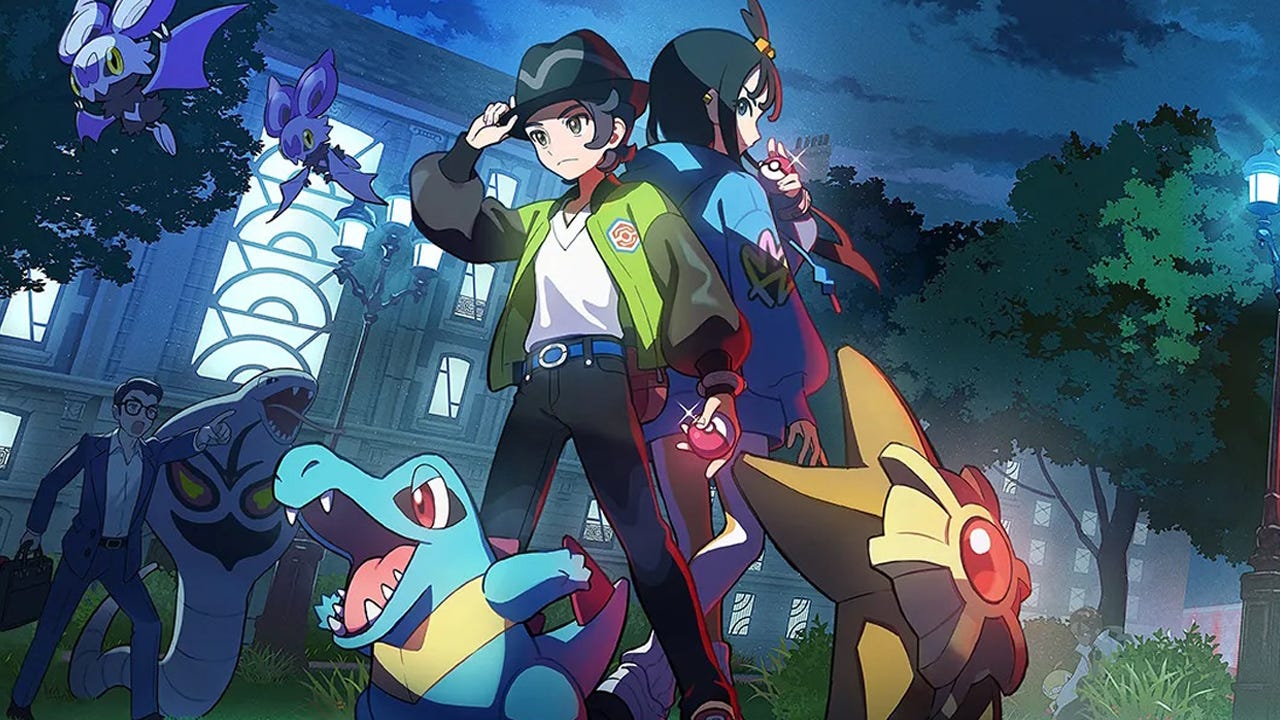
Summary:
Season 5 of Ranked Battles in Pokémon Legends: Z-A has a very clear headline reward: Sceptilite for anyone who reaches Rank S. If you’ve been waiting for a reason to jump back into the Z-A Battle Club, this is it, because Sceptilite is the Mega Stone that lets Sceptile Mega Evolve into Mega Sceptile. The timing matters too. Season 5 runs from Wednesday, January 7, 2026 at 10:00 p.m. PST through Wednesday, January 28, 2026 at 5:59 p.m. PST, which translates neatly for Amsterdam to Thursday, January 8, 2026 at 7:00 a.m. CET through Thursday, January 29, 2026 at 2:59 a.m. CET. That’s why you’ll sometimes see the date range written as January 7 to January 28, and other times as January 8 to January 29, depending on whose clock you’re using.
We also get the practical details that decide whether you’re cruising or struggling. Pokémon between Lv. 1 and Lv. 100 can be entered, but battles automatically set everyone to Lv. 50, so smart choices and clean execution matter more than grinding. Eligible Pokémon are limited to specific Pokédex ranges, teams can’t double up on the same Pokédex number, duplicate held items are not allowed, and the total time limit is only three minutes. In other words, this isn’t the place for long speeches and dramatic staring contests. It’s fast, messy, and fun in the way only a short timer can force. If you want Sceptilite, we should treat this season like a focused sprint: understand the rules, build a team that can actually function under pressure, and play enough matches to keep your momentum until you hit Rank S.
Pokemon Legends: Z‑A Ranked Battle Season 5 is here, and Sceptilite is the prize everyone wants
Season 5 Ranked Battles in Pokémon Legends: Z-A is the kind of season that instantly creates a single, shared goal: hit Rank S and walk away with Sceptilite. That matters because Sceptilite is not just another shiny trophy item you forget about in a menu somewhere. It’s the Mega Stone that enables Sceptile to Mega Evolve into Mega Sceptile, and that changes what Sceptile can do in battle and how opponents have to respect it. If you’ve ever felt that itch where your team is “good” but not quite scary, Mega Evolution is often the missing spice. We’re also working inside a seasonal structure where certain Mega Stones show up as rewards, which makes timing part of the challenge. This is one of those moments where showing up matters, even if you’re not the kind of player who lives in ranked ladders every week. Think of it like a limited-time pop-up restaurant: you don’t have to become a food critic, but you do want to eat the special while it’s on the menu.
Season 5 dates and times, with a clear Amsterdam-friendly conversion
Season windows sound simple until time zones start playing mind games, so let’s make it crystal clear. Season 5 runs from Wednesday, January 7, 2026 at 10:00 p.m. PST to Wednesday, January 28, 2026 at 5:59 p.m. PST. If you’re reading this in Amsterdam, that converts to Thursday, January 8, 2026 at 7:00 a.m. CET through Thursday, January 29, 2026 at 2:59 a.m. CET. That’s why you’ll see two different-looking date ranges floating around, and both are basically telling the same story. The season starts late on January 7 in Pacific Time, which is already the morning of January 8 in Central Europe. Same deal at the end: late afternoon January 28 PST is already after midnight in Amsterdam. If you want an easy rule, treat it as “January 8 to January 29” in Amsterdam time, and you won’t accidentally miss the starting gun.
How the Z-to-A ranking ladder works in practice
Ranked Battles Season 5 starts everyone at Rank Z, and from there you can climb all the way up to Rank A. That ladder sounds cute on paper, like the game is winking at its own title, but it has a real gameplay effect: you’re moving through a lot of rungs, and your opponents get sharper as you climb. Early ranks tend to be chaotic in a fun way, because players are experimenting, testing teams, and sometimes sprinting straight into obvious traps. Later ranks feel more like chess played on a treadmill. You don’t just need a decent team, you need a plan that still works when the other player knows the usual tricks. The good news is that the ladder gives you time to adapt. Every set of matches is feedback. If you keep losing in the same way, that’s not “bad luck,” that’s your team waving a little flag that says, “Please fix this one problem before you blame the universe.”
The Rank S reward: Sceptilite and what it unlocks
Season 5’s headline reward is tied to Rank S: reach it, and you earn Sceptilite. This Mega Stone is used to Mega Evolve Sceptile into Mega Sceptile, which is exactly why the season feels like a must-play for anyone who enjoys Mega Evolution options. There’s also an important practical detail here: Sceptilite is positioned as a reward you earn through Ranked Battles rather than something you casually pick up through normal gameplay. That turns Rank S into a clear finish line, not just a nice-to-have. If you’re already comfortable in ranked modes, this is straightforward: play, climb, claim. If you’re newer to Ranked Battles, don’t let the “Rank S” label scare you off. The ladder exists for a reason, and early-season matchmaking gives you room to learn. We’re not trying to win a fashion show here, we’re trying to win enough battles to unlock a specific item, and that’s a different kind of pressure.
Returning promotion rewards and why they still matter in Season 5
Sceptilite is the star, but Season 5 also brings back promotion rewards at other ranks, including Greninjite, Delphoxite, Chesnaughtite, and Baxcalibrite. Even if you’re laser-focused on Mega Sceptile, these returning Mega Stones matter because they widen your options and change what you’ll run into in matchmaking. Rewards like these also help explain why Ranked Battles can feel like a shifting ecosystem. When certain stones are easier to obtain, more players build around them, and suddenly the ladder has a “flavor” for the season. That doesn’t mean you need to chase every reward like you’re collecting stamps at an airport. It means we should be aware of what opponents might be building toward and what they might be testing. If you keep getting surprised by the same Mega Evolution or the same kind of team structure, it’s usually because the season is nudging lots of players in the same direction.
Entry requirements: eligible Pokémon pools and level rules
Season 5 comes with rules that shape the battlefield before the first move even happens. Pokémon between Lv. 1 and Lv. 100 are eligible to enter, and during battles all Pokémon are automatically set to Lv. 50. That level scaling is a quiet but huge deal, because it keeps the focus on team choices, synergy, and decision-making rather than raw grinding. Eligibility is also limited by Pokédex pools. Season 5 includes Lumiose Pokédex No. 001 to 227, and Hyperspace Pokédex No. 001 to 127 plus a small additional set listed in the official details shared by outlets covering the season rules. In plain language, you can’t just bring literally anything you’ve ever caught. The season is curated. That’s good for balance, and it’s also good for planning, because it narrows what you need to prepare for. If your favorite monster isn’t eligible, it’s annoying, sure, but it also means your opponents can’t ambush you with it either. Fair is fair, even when it’s mildly inconvenient.
Team restrictions: duplicates, held items, and what “fair” really means
Team-building restrictions are where Season 5 stops being a free-for-all and starts feeling like a real rule set. You can’t include more than one Pokémon with the same Pokédex number on your team, which cuts off duplicate stacking and forces variety. Held items are allowed, but duplicate held items are not allowed, which is a sneaky way of preventing teams from turning into six copies of the same strategy with the same tool. These rules push you toward balance, and they reward players who think in roles instead of just favorites. You want an opener that can pressure quickly, something that can punish overcommitment, and at least one option that can stabilize if things go sideways. The fastest way to feel miserable in a three-minute match is to bring a team that only works when everything goes perfectly. Ranked Battles do not care about your dreams. Ranked Battles care about what you can execute while the timer is yelling at you.
The three-minute format: why matches feel like sprinting uphill
Season 5 uses a three-minute total time limit, and that one number changes everything about how battles feel. Three minutes is not “let’s think about our feelings and contemplate the lore.” Three minutes is “make a decision, commit, and live with it.” The format rewards players who can identify win conditions early and start pushing toward them without hesitation. It also punishes overthinking, especially if you’re the type who likes to pause mentally after every exchange. If you’ve ever watched the clock and felt your brain go blank, congratulations, you’ve experienced the universal human condition. The trick is to design your team and your habits around the timer. You don’t want a plan that needs five perfect steps, because the clock will cut you off like a bouncer at a club. You want a plan that creates pressure quickly, forces reactions, and keeps your options simple under stress.
Small habits that win three-minute matches
In a short-timer format, wins often come from boring, repeatable habits rather than genius plays. That sounds less romantic, but it’s true, and it’s also great news because habits are learnable. Start by deciding your “default line” before you queue up: what’s your safest opener, what’s your most common follow-up, and what’s your emergency button when you fall behind. If you make those choices in advance, you save time during the match, and you stop burning seconds on panic. Next, pay attention to how often you switch plans mid-fight. Flexibility is good, but constant indecision is a time leak. Finally, get comfortable ending fights with a little mess. Three-minute matches rarely look pristine. If you’re always waiting for the perfect moment, you’ll run out of clock and wonder what happened. The perfect moment is often “now,” even if “now” feels a bit scary.
Quick pacing checklist you can use immediately
If you want something practical you can hold onto, here’s a pacing mindset that fits Season 5’s timer pressure. Enter the match already knowing your first action and your second action, so you’re not improvising under the clock. Keep your camera on the battle state, not just your own Pokémon, because the whole point is to anticipate what the other Trainer is about to do. Make choices that create a problem for your opponent every few seconds, even if the problem is small, because small problems stack into big mistakes. Also, don’t chase highlight moments. Consistent damage, consistent pressure, and consistent tempo wins more matches than trying to produce a clip-worthy miracle every time. If you can keep your decision cycle short and your plan clear, you’ll feel the timer working for you instead of against you.
Climbing to Rank S without tilting: a practical play plan
Rank S is a specific target, so we should treat the climb like a plan, not like an emotional roller coaster. First, decide how you’re going to measure progress. The simplest approach is match volume with focus: play in short sessions, stop when you’re tired, and review what keeps beating you. Second, build your team for consistency rather than surprise. Surprise works once, consistency works all season. Third, respect the meta without being enslaved by it. If you keep seeing the same threats, adjust your team to answer them, but don’t constantly rebuild everything after every loss. That’s how you end up with a Frankenstein team that has no identity. Lastly, remember what the reward actually requires: reaching Rank S. You don’t need to become the top player on the planet. You need to play well enough, long enough, to hit the milestone. That’s a different mental load, and it’s much easier to carry.
Building for Mega Sceptile, and building to beat it
Sceptilite being the season’s spotlight reward means two things at once. Some players are climbing because they want Mega Sceptile, and other players are climbing to prepare for the moment Mega Sceptile becomes more common. Both approaches are valid, and they should shape how we build. If you’re building with Sceptile in mind, aim for support that helps it do its job quickly, because the timer doesn’t reward slow setup. If you’re building to beat it, make sure you have at least one reliable answer that doesn’t require perfect predictions. A “reliable answer” is something that still functions when you’re under pressure and you’re half a second late. Think of it like carrying an umbrella: you don’t bring it because you love umbrellas, you bring it because being soaked is annoying. The point is to reduce the number of matchups where you feel helpless. When you remove helpless matchups, climbing becomes calmer, and calm climbing is the fastest climbing.
Claiming rewards and avoiding the most painful mistakes
Seasonal rewards are only fun if you actually receive them, and the most common way players miss out is simple: they assume the season ends later than it does, or they assume they’ve “done enough” without checking. The safest habit is to treat the season deadline in your own time zone as the real deadline and plan to finish your Rank S push before the final day. For Amsterdam, the season end is in the early hours of Thursday, January 29, 2026, which is a terrible time to realize you’re one win away while your eyes are closing. Another easy mistake is forgetting that rule sets can limit what you can register, so you queue up with an ineligible team and waste time reshuffling. Build your ranked team once, confirm it fits the eligibility rules, and then keep it stable while you climb. If you want to experiment, do it after you secure Rank S. We can be artists after we’ve paid rent.
Conclusion
Season 5 Ranked Battles in Pokémon Legends: Z-A is a clean, focused opportunity: reach Rank S, earn Sceptilite, and unlock Mega Sceptile. The season runs from January 7 to January 28, 2026 in Pacific Time, which lines up as January 8 to January 29, 2026 in Amsterdam, so timing is part of doing this right. The rules also make the season feel more like a disciplined competition than a casual brawl: level scaling to 50, curated Pokédex eligibility, no duplicate Pokédex numbers, no duplicate held items, and a three-minute timer that rewards decisiveness. If you want the reward, the best approach is simple and surprisingly human: prepare a stable team, learn the pace, play in focused sessions, and aim for consistency instead of drama. Hit Rank S, claim Sceptilite, and then enjoy the sweet feeling of having earned something that actually changes what your team can do.
FAQs
- When does Ranked Battles Season 5 start and end in Amsterdam time?
- Season 5 runs from Thursday, January 8, 2026 at 7:00 a.m. CET through Thursday, January 29, 2026 at 2:59 a.m. CET, based on the published PST schedule converted to Amsterdam time.
- What do we get for reaching Rank S in Season 5?
- Reaching Rank S earns Sceptilite, the Mega Stone used to Mega Evolve Sceptile into Mega Sceptile.
- Why do some sites list the season as January 7 to January 28, while others list January 8 to January 29?
- It’s a time zone difference. The official schedule is given in Pacific Time, and when converted to Central European Time, the start and end fall on the next calendar day in Amsterdam.
- Are Pokémon set to level 50 in Season 5 battles?
- Yes. Pokémon from Lv. 1 to Lv. 100 can be entered, but battles automatically set all participants to Lv. 50 during Ranked Battles.
- What are the key team rules we need to remember before queueing up?
- You can’t use more than one Pokémon with the same Pokédex number, held items are allowed but duplicate held items are not allowed, and matches run under a strict three-minute time limit.
Sources
- Take On Ranked Battles to Get Mega Stones, Pokémon Legends: Z-A (Official Site), December 9, 2025
- Pokemon Legends: Z-A Ranked Battles Season 5 incoming, rewards detailed including Sceptilite, Nintendo Everything, January 1, 2026
- Z-A – Ranked Battles Season 5: Earn Sceptilite!, PocketMonsters.net, January 1, 2026
- Ranked Battles Season 5 in Pokémon Legends Z-A!, DittoBase, January 1, 2026