














Summary:
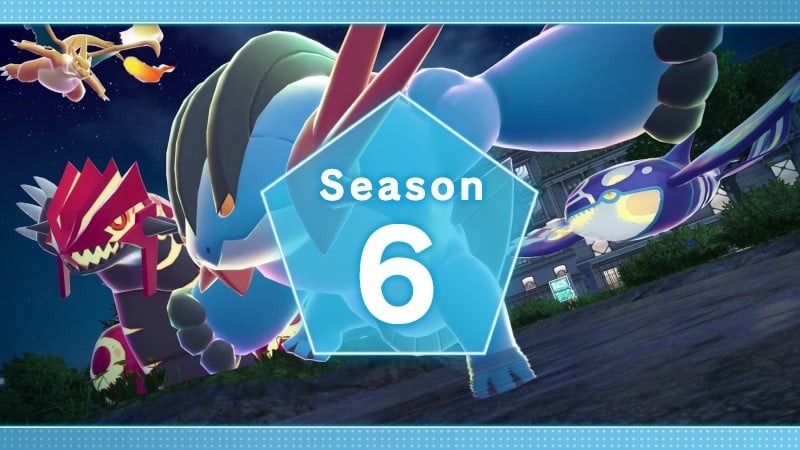
Season 6 of Ranked Battles in Pokémon Legends: Z-A is short, sharp, and built around one big prize: Swampertite at Rank S. The window runs from January 29, 2026, at 06:00 UTC to February 19, 2026, at 01:59 UTC, which means the ladder opens in the morning for most of Europe and closes early on February 19 if you’re watching the clock. That tight schedule changes how we should think about progress. We’re not strolling through tall grass here – we’re sprinting a few clean laps, making every match count, and grabbing rewards as we climb.
What makes this season extra tempting is the return of older Mega Stones as promotion rewards. If you missed earlier seasons, Season 6 gives another shot at Greninjite, Delphoxite, Chesnaughtite, Baxcalibrite, and Sceptilite at specific ranks, so the climb can feel like a greatest-hits playlist rather than a single-track grind. On top of that, Dream Balls are part of the promotion reward ladder at multiple points, so even mid-journey milestones can feel rewarding. The rules also shape team-building in a very specific way: only Pokémon within the eligible Lumiose and Hyperspace Pokédex ranges can enter, teams can’t double up on the same Pokédex number, and there’s a hard limit of one special Pokémon from a defined list. Put it all together and Season 6 becomes a focused challenge: build within the boundaries, pick your battles wisely, and aim for Rank S before the clock taps out.
Pokemon Legends Z-A Season 6 dates and the rhythm of the ladder
Season 6 is the kind of ladder window that doesn’t politely wait for anyone. The official schedule runs from January 29, 2026, at 06:00 UTC to February 19, 2026, at 01:59 UTC, so we’re working with a compact stretch that rewards consistency more than last-minute panic. If you’re in Europe, that UTC start lands in the morning, which is great because it feels like the seasoan kicks off with a fresh cup of coffee rather than a midnight alarm. The end time matters just as much, because “February 19” can still feel like “February 18” depending on where you live and when you queue up. The big takeaway is simple: we don’t have the luxury of waiting a week to warm up. A short season is like a limited-time menu – the best item disappears fast, and the only cure is ordering it while it’s still on the board.
The exact UTC window and why time zones matter
The cleanest way to stay sane is to anchor everything to UTC, because it removes the “wait, is it live yet” confusion. Season 6 begins Thursday, January 29, 2026, at 06:00 UTC and ends Thursday, February 19, 2026, at 01:59 UTC. That means the season opens early in the day for many European players, and it closes in the very early hours of February 19 in UTC terms. In practice, this is the difference between “I’ll push one more rank after dinner” and “why is the ladder closed when I finally had time.” Treat the end time like a train schedule, not a vague suggestion. If you want Rank S, the best approach is to aim for it before the final week, because real life loves showing up uninvited. It’s like trying to catch a bus that only comes once – showing up early feels boring right until you see someone sprinting for it down the street.
How Ranked Battles work in Pokémon Legends: Z-A
Ranked Battles in Pokémon Legends: Z-A are built to test decision-making under pressure, not just raw power. The format is an online, four-player fight where you earn points based on placement, and those points push you up the ladder from Rank Z toward Rank A. That structure changes how we should think about “winning.” Sometimes the smart play is survival and positioning, not chasing a flashy knockout that leaves you exposed. The ladder also comes with guardrails that reduce frustration: your rank will not decrease during the season, and when a new season starts your rank resets to Rank Z. In other words, the game wants you to participate without feeling punished for experimenting. That’s a nice change of pace for anyone who’s ever had a rough streak and felt like the ladder was kicking them down the stairs.
Ranks, promotions, and the reset back to Rank Z
The season’s ladder flow is designed to keep momentum going. You start at Rank Z, you earn points based on how you place, and you promote as you hit thresholds. The key comfort blanket is that your rank won’t drop during the season, so a bad match is a speed bump, not a cliff. Then, when Season 6 ends and the next season begins, everyone resets back to Rank Z again. That reset is important, because it keeps each season self-contained and prevents the ladder from turning into an exclusive club where only early grinders can compete. It also means every season is a new chance to chase rewards, including Mega Stones that cycle back in future seasons. If we treat the ladder like a staircase, Season 6 is telling us, “Keep climbing – we’re not removing steps behind you.” That mindset makes it easier to play boldly, learn faster, and stick with it long enough to grab the rewards that matter.
Battle format basics: four-player matches and level scaling
Season 6 matches follow a four-player format, and all eligible Pokémon are automatically set to level 50 during battles. That level scaling matters because it keeps the focus on strategy and synergy rather than who spent the most time power-leveling. There are also item rules that shape preparation: Pokémon can hold items, but duplicate held items are not allowed, so we can’t just copy-paste the same “best” option across the entire team. Add in the time limit of three minutes total, and the vibe becomes clear – this is fast, reactive, and punishes hesitation. Think of it like speed chess with claws and elemental beams. You don’t need to be reckless, but you do need to be decisive, because a three-minute match doesn’t leave room for long speeches about what you “almost” did. If your plan requires five minutes to set up, the clock is going to laugh and walk away.
Season 6 headline reward: Swampertite at Rank S
The main prize in Season 6 is Swampertite, awarded as a promotion reward when you reach Rank S. That single detail gives the whole season its identity, because it tells us exactly what the ladder is pointing toward. Rank S sits high enough to feel meaningful, but it’s still a clear target you can plan around if you play consistently. The season also frames Swampertite as something you can’t normally obtain during regular gameplay, which is why the ladder matters even for players who don’t usually chase competitive modes. In plain terms, Season 6 is handing out a limited-time key, and Rank S is the lock it fits. If you’ve ever watched a rare item pop up in a shop and felt your brain go, “Well, I guess we’re doing this now,” you already understand the energy.
What makes Swampertite feel like a milestone
Swampertite is more than a checkbox reward because it represents a clear “you showed up and climbed” moment. A Rank S target pushes us to actually engage with the format, learn the tempo of four-player battles, and adapt to the season’s eligibility rules rather than relying on whatever we used last month. It also sits alongside other meaningful rewards on the way up, so the journey doesn’t feel empty even before you hit Rank S. The season is basically a ladder-shaped arcade: every rung gives a ticket, and Rank S is the big plush behind the glass. The funny part is that the plush is real, and the only trick is putting in the matches. If you’re coming in fresh, the best mindset is to treat early matches as practice reps. You’re learning the rhythm of targeting, survival, and timing, and those lessons pay off directly when you’re pushing the higher ranks where one sloppy decision can flip your placement.
Returning Mega Stones in Season 6
Season 6 isn’t only about Swampertite. It also brings back Mega Stones from earlier seasons as promotion rewards, which is huge for anyone who missed the original windows. The returning stones listed for this season are Greninjite, Delphoxite, Chesnaughtite, Baxcalibrite, and Sceptilite. That lineup reads like a highlight reel, and it makes Season 6 feel welcoming instead of punishing. Missing a past season doesn’t have to mean permanent regret. The ladder becomes a second chance marketplace where effort replaces luck, and the ranks tell you exactly what you need to do. That clarity is refreshing. No riddles, no vague hints, no “maybe it drops” nonsense. It’s more like a punch card at your favorite café – show up, play the matches, and the rewards are there when you hit the mark.
Promotion Mega Stones from Rank Y through Rank U
The promotion rewards for Mega Stones are tied to specific ranks, and Season 6 lays them out cleanly. Greninjite is awarded at Rank Y, Delphoxite at Rank X, Chesnaughtite at Rank W, Baxcalibrite at Rank V, and Sceptilite at Rank U. Swampertite itself is at Rank S, which sits above those ranks, so the ladder builds naturally from returning stones into the season’s headline prize. This structure helps with planning because we can set mini-goals. Instead of staring at Rank S like it’s the top of a mountain in bad weather, we can break the climb into smaller milestones that still feel rewarding. It also means that even if Rank S is your ultimate goal, you’re picking up meaningful items along the way. That’s the best kind of progression – the kind where every step forward puts something real in your pocket, not just a pat on the back.
Dream Balls and other promotion rewards
Dream Balls are part of the Season 6 promotion reward ladder, but they don’t work as a single end-of-season handout. Instead, they appear at multiple ranks as you climb, which makes them feel like “nice, that helped” moments rather than one delayed payout. In Season 6, Dream Balls show up at Rank A, at Ranks B and C, at Ranks D and E, and also at Rank I and Rank M. That spread matters because it means Dream Balls aren’t only for the absolute top. Even a mid-ladder push can earn them as you rise. Beyond Dream Balls, the promotion ladder also includes items like Gold Bottle Caps, Exp. Candy, and Mega Shards at certain ranks, which reinforces the idea that the ladder is rewarding participation and progress. If Swampertite is the trophy, the promotion rewards are the fuel that keeps the engine running while you chase it.
Where Dream Balls show up on the climb
The Dream Ball placements are straightforward and tied to rank groups. Rank A awards Dream Ball times five, Ranks B and C award Dream Ball times three, and Ranks D and E award Dream Ball times two. Later, Rank I awards Dream Ball times one, and Rank M also awards Dream Ball times one. The reason this is useful is that it turns the climb into a series of checkpoints with tangible value. We don’t have to pretend every reward is life-changing, but we also shouldn’t ignore how helpful it feels to earn useful items while you’re still building momentum. These rewards also act like progress markers. If you’re tracking your climb, Dream Ball ranks become easy “I’m here now” signposts. And honestly, anything that makes the ladder feel less like a grind and more like a trail with clearly marked waypoints is a win. Nobody likes walking into the fog without a map.
Season rewards at the finish line
Promotion rewards are what you receive as you rise, but season rewards are what you receive based on where you end the season. Season 6 lists season rewards by rank range, and the top tier is Rank A with a bundle that includes Gold Bottle Caps, Bottle Caps, Seeds of Mastery, and a Big Nugget. Then there are grouped rewards for Rank B through Rank E, Rank F through Rank I, Rank J through Rank M, and Rank N through Rank R, with scaled bundles of caps, seeds, and nuggets. There’s also a baseline Nugget reward for Rank S and below. The practical message is that ending higher does matter, even after you’ve grabbed your promotion rewards, because the season-end bundle is tied to your final position. It’s like finishing a race where you get a medal for participating, but the better placement gets you a better prize bag at the exit.
What you receive based on your ending rank
The season-end bundles are structured to scale without becoming mysterious. Rank A receives Gold Bottle Cap times three, Bottle Cap times five, Seed of Mastery times three, and Big Nugget times one. Rank B through Rank E receives Gold Bottle Cap times two, Bottle Cap times three, Seed of Mastery times two, and Nugget times two. Rank F through Rank I receives Gold Bottle Cap times one, Bottle Cap times two, Seed of Mastery times one, and Nugget times two. Rank J through Rank M receives Bottle Cap times one, Seed of Mastery times one, and Nugget times two. Rank N through Rank R receives Seed of Mastery times one and Nugget times one. Finally, Rank S and below receives Nugget times one. The ladder also notes a few important rules: you can’t receive duplicates of Mega Stones you already have, Mega Stones from Ranked Battles don’t count toward the Mega Evolution Pokédex completion, and Mega Shards can be exchanged for certain Mega Stones later in the story. Those details matter because they set expectations and prevent “wait, why didn’t I get it” confusion.
Eligibility rules and the one-special-Pokémon slot
Season 6 isn’t a free-for-all. It has clear eligibility boundaries, and those boundaries shape team-building more than any single reward. Eligible Pokémon come from Lumiose Pokédex numbers 001 through 232 and Hyperspace Pokédex numbers 001 through 132. You also can’t use more than one Pokémon with the same Pokédex number, which blocks easy duplication strategies and pushes variety. Then there’s the season’s headline restriction: only one special Pokémon from a specific list may be included on your team. That rule is a big deal because it turns the “best legendary” question into a real choice rather than an automatic inclusion. When the game says “pick one,” it’s basically asking you to commit to a plan instead of stuffing your bag with every shiny tool you own.
Eligible Pokédex ranges and duplicate limits
The eligible ranges are explicit: Lumiose Pokédex 001-232 and Hyperspace Pokédex 001-132. If a Pokémon sits outside those ranges, it doesn’t enter, no matter how attached we are to it. The duplicate rule is equally clear: no more than one Pokémon with the same Pokédex number may be used. That’s a quiet but powerful rule because it stops “same base, different form” stacking if the number is shared. The result is a healthier mix of teams and fewer matches that feel like fighting the same lineup on repeat. It also nudges creativity. Instead of leaning on duplicates, we have to think in roles – who pressures early, who stabilizes mid-fight, who closes, who punishes greedy plays. Even if you’re not trying to be a ladder philosopher, building with these boundaries in mind makes matches feel more controllable. And control is everything in a fast four-player format where chaos loves to show up wearing clown shoes.
Special Pokémon list and the one-per-team limit
Season 6 allows only one of the following special Pokémon on your team: Xerneas, Yveltal, Zygarde, Mewtwo, Kyogre, Groudon, and Rayquaza. That list is specific, and the “only one” limit is non-negotiable. Practically, it means you can include a single high-impact centerpiece, but the rest of your team needs to carry real weight too. This is where smart planning beats hype. A special Pokémon can anchor a strategy, but it can’t do everything alone in a four-player match where attention shifts fast and mistakes get punished. The best way to treat the rule is like a single wild card in a deck. You pick it because it supports your overall plan, not because it’s flashy. If you choose first and plan later, you’ll end up trying to force a strategy that doesn’t fit, and the ladder will happily teach you that lesson the hard way.
Season 6 compared with Season 5
Season 5 and Season 6 sit back-to-back on the calendar, but the headline reward and the team-building vibe shift in a way that’s easy to feel. Season 5 ran from January 8 to January 29, 2026, and its featured promotion reward at Rank S was Sceptilite. Season 6 follows immediately with Swampertite at Rank S and a returning set of Mega Stones placed on the climb. The practical difference is motivation. If Season 5 pulled players toward Sceptilite, Season 6 pulls players toward Swampertite while also acting as a catch-up window for older stones. That makes Season 6 a better “jump in now” moment for anyone who skipped earlier seasons or came late to Ranked Battles. It’s less about feeling behind and more about having a clear runway to catch up.
What changed from Sceptilite season to Swampertite season
The simplest change is the featured Rank S Mega Stone: Season 5’s Rank S reward was Sceptilite, while Season 6’s Rank S reward is Swampertite. Season 5 also had its own rule framing around eligible Pokémon and bans, while Season 6’s rules highlight the one-special-Pokémon limit from a defined list and the eligible Pokédex ranges for this season. Another key difference is the emotional shape of the ladder. Season 6 leans hard into “returning Mega Stones are available again,” which makes the climb feel rewarding even before the Rank S finish line. If you missed Greninjite, Delphoxite, Chesnaughtite, Baxcalibrite, or Sceptilite earlier, Season 6 can feel like the game tossing you a rope instead of wagging a finger. That’s a healthy approach for a seasonal format. It keeps the ladder active, it keeps rewards circulating, and it makes participation feel worthwhile whether you’re a regular grinder or someone who only shows up when a specific Mega Stone has your name on it.
Practical prep: getting ready before January 29
Preparation for Season 6 doesn’t need to be dramatic, but it should be intentional. The season is short, matches are fast, and the rules are specific, so the best prep is focused on removing friction. First, confirm your team fits the eligible Pokédex ranges and follows the duplicate Pokédex number rule. Second, decide whether you’re using a special Pokémon, and if you are, pick exactly one from the allowed list and build the rest of the team to support it. Third, check your held items and make sure you’re not accidentally duplicating them across your lineup. Fourth, set a realistic schedule for matches early in the season, because waiting until the final days is how you end up bargaining with the clock at 1:30 in the morning. Season ladders are like gym memberships – the results come from showing up consistently, not from one heroic day where you swear you’ll fix everything at once.
A simple checklist for smoother matches
A good checklist keeps the season from turning into a scramble. Make sure your internet connection is stable, because disconnect chaos is the least fun kind of chaos. Verify you have the required online access setup, since Ranked Battles are an online feature. Double-check that your chosen Pokémon are within Lumiose 001-232 or Hyperspace 001-132, and confirm you’re not using two Pokémon with the same Pokédex number. Review held items and remove duplicates across the team. Decide your one special Pokémon choice, if you’re using one, and stick to it instead of swapping every two matches and wondering why nothing feels consistent. Finally, set a progress goal in chunks – aim first for the returning Mega Stone ranks you care about, then push toward Rank S for Swampertite. This keeps motivation high because you’re collecting real rewards as you climb, not just staring at a distant finish line and hoping willpower does the rest.
How to join Season 6 in-game
Joining Season 6 is straightforward once you know the menu path, and knowing it matters because it removes the last tiny excuse your brain will try to invent. You launch the game, press the X Button to open the main menu, select Link Play, and then select Ranked Battles. That’s it. Once you’re in, you’re stepping into the Z-A Battle Club ladder for the active season, and your matches will contribute to points, promotions, and rewards. The best part is that the season messaging is designed to welcome newer players too, because the reward ladder includes returning Mega Stones and practical training items. In other words, you don’t need to feel like you missed the “right” moment to start. Season 6 is a right moment. The only wrong moment is the one where you wait until the season is over and then wonder why the ladder is empty.
The menu path to the Z-A Battle Club ladder
Here’s the exact path again, because repeating the practical stuff is the difference between “I’ll do it later” and actually queuing up. Launch Pokémon Legends: Z-A, press X to open the main menu, choose Link Play, then choose Ranked Battles. Once you’re there, confirm your battle team is legal for Season 6, then queue into matches and start earning points toward promotions. The season notes also make it clear that Ranked Battles offer three reward types: battle rewards after each match, promotion rewards when you rise in rank, and season rewards based on your ending rank. That structure is useful because it means you’re not playing for a single payout. You’re stacking benefits as you go. If you’ve ever needed a little nudge to jump into competitive modes, this is it. The game is basically saying, “Show up, play, and we’ll keep handing you reasons to stay.”
Conclusion
Season 6 Ranked Battles in Pokémon Legends: Z-A are built around a clean promise: climb the ladder during a short window and earn rewards that matter, with Swampertite waiting at Rank S as the headline prize. The season runs from January 29, 2026, at 06:00 UTC to February 19, 2026, at 01:59 UTC, so timing matters, especially if you like leaving things to the last minute. The reward structure is generous in a practical way – returning Mega Stones like Greninjite, Delphoxite, Chesnaughtite, Baxcalibrite, and Sceptilite appear as promotion rewards at specific ranks, Dream Balls show up at multiple points on the climb, and season-end bundles scale based on where you finish. The rules keep teams grounded and thoughtful: only eligible Pokédex ranges can enter, duplicate Pokédex numbers are blocked, and you can include only one special Pokémon from the season’s defined list. If we treat Season 6 like a sprint with checkpoints rather than a marathon with vague milestones, the path becomes simple – queue early, climb steadily, collect rewards on the way up, and lock in Rank S before the clock runs out.
FAQs
- When does Ranked Battles Season 6 start and end?
- Season 6 runs from January 29, 2026, at 06:00 UTC to February 19, 2026, at 01:59 UTC.
- What rank do we need for Swampertite?
- Swampertite is a promotion reward for reaching Rank S during Season 6.
- Which returning Mega Stones can we earn in Season 6, and at what ranks?
- Greninjite at Rank Y, Delphoxite at Rank X, Chesnaughtite at Rank W, Baxcalibrite at Rank V, and Sceptilite at Rank U.
- Where do Dream Balls appear on the Season 6 reward ladder?
- Dream Balls appear as promotion rewards at Rank A, Ranks B and C, Ranks D and E, and also at Rank I and Rank M.
- How many special Pokémon can we include, and which ones are allowed?
- You may include only one of these special Pokémon on your team: Xerneas, Yveltal, Zygarde, Mewtwo, Kyogre, Groudon, or Rayquaza.
Sources
- Season 6 Coming Soon: Earn Swampertite!, Pokémon HOME News, January 2026
- Pokémon Legends: Z-A – Ranked Battles Season 6: Earn Swampertite!, PocketMonsters.Net, Jan 22, 2026
- Pokémon Legends: Z-A Ranked Battles Season 6 Starts Jan. 29th, 2026, GoNintendo, Jan 22, 2026
- Ranked Battles Season 5: Rules and Rewards, Game8, Jan 8, 2026
- Pokémon Legends Z-A Ranked Battle Season 6 Start Date And Rewards Revealed, Nintendo Life, Jan 23, 2026