














Summary:
Pokémon Winds and Waves has been revealed as the next mainline step for the series, and it’s heading to Nintendo Switch 2 in 2027. From the first trailer, the biggest vibe shift is the setting: wide, lush outdoor spaces stitched together by ocean, smaller islands that feel like they exist just to tempt you off the main path, and a sense that the world is meant to be crossed, not simply visited. If Pokémon Legends: Z-A gives off the energy of a focused experiment, Winds and Waves looks like the opposite kind of promise, a big playground built around the thrill of “what’s over there?” and “what happens if we take the longer route?”
What makes the reveal interesting is how much it suggests without locking anything down. The footage leans on scenery and movement, which usually means the developers want exploration to carry more weight than a straight line of objectives. Islands naturally create bite-sized adventures, because every cove, cliff, and inlet can hide a surprise, and the ocean acts like a flexible highway that invites detours. The Switch 2 angle also matters because players are going to watch performance and clarity closely, especially if the game wants long sightlines and dense environments. For now, the smartest way to approach Winds and Waves is simple: take the trailer seriously, take internet guesses lightly, and enjoy the fact that the series is aiming for a world that looks like it’s designed to make curiosity the main character.
Pokémon Winds and Waves feels like a fresh horizon
There’s a specific kind of excitement that hits when a new mainline Pokémon era is revealed, and Winds and Waves lands with that “fresh air through an open window” feeling. The announcement puts the release window in 2027 on Nintendo Switch 2, and the first impression is all about space: wide landscapes, open coastlines, and island silhouettes that practically dare you to head off-course. If you’ve ever played a Pokémon game and thought, “I wish the route itself felt like an adventure,” this reveal looks like it’s trying to answer that itch. The trailer doesn’t just show places, it sells the idea of getting lost on purpose, the good kind of lost where you find a hidden beach, a weird rock formation, or a rare encounter because you ignored the obvious path. That’s the magic the series is chasing here, and it’s a strong first hook.
Setting the stage: islands, big skies, and open water
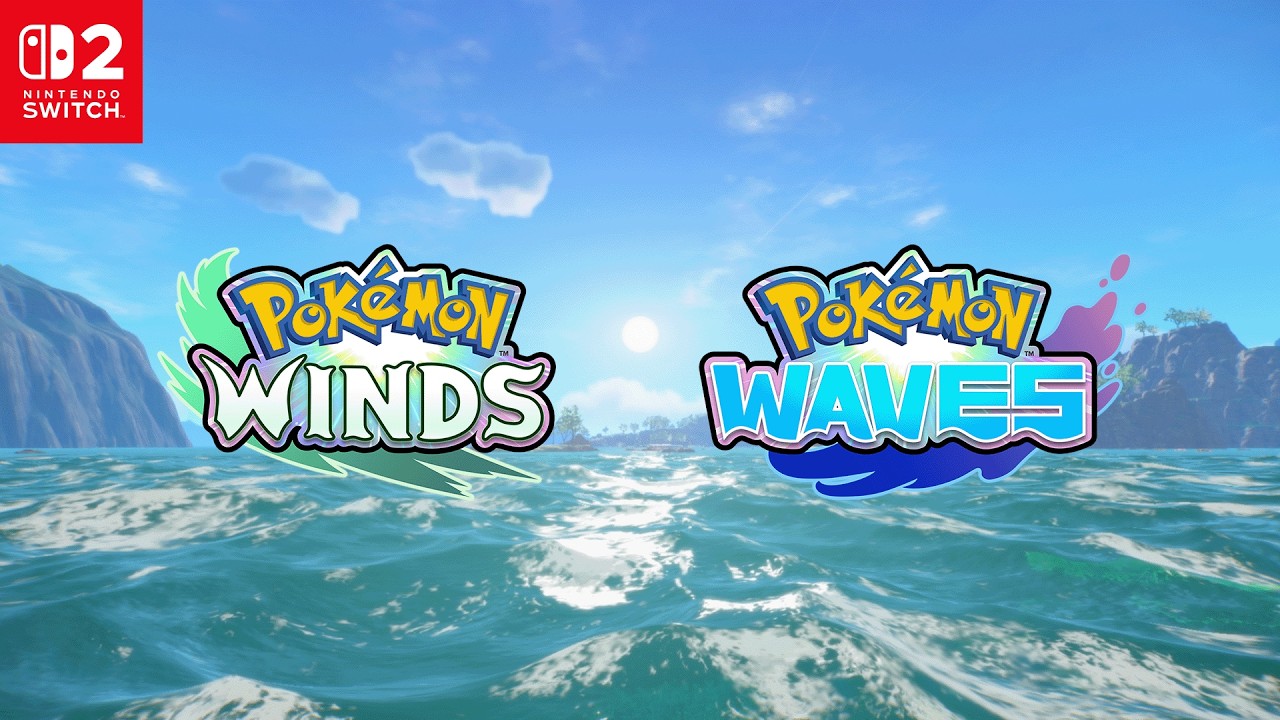
An island setting changes the whole rhythm of a Pokémon world, even before we talk about specific towns or story beats. Islands create natural boundaries, but they also create natural invitations: you can see the next landmass in the distance and immediately start plotting your route like a kid drawing treasure maps on a napkin. Open water makes the world feel breathable, because there’s always a horizon line pulling you forward, and it makes every shoreline feel like a doorway. The reveal trailer leans into lush outdoor spaces and scattered islands, which suggests a world designed around exploration rather than tight corridors. It also sets expectations for variety, because islands can shift climates quickly, moving from forest to volcanic terrain to calmer coastal pockets without feeling forced. If the world is a meal, islands are the sampler platter, and that’s a delicious way to keep curiosity alive.
How the island layout can change the way we explore
When a region is built from islands, exploration can become more personal and more modular at the same time. Instead of one long road that funnels everyone through the same checkpoints, islands can act like mini-adventures you tackle in your own order, which is a fancy way of saying we get more excuses to wander. You might land on a small island “just to look around” and then realize it’s full of vertical paths, hidden caves, or a single rare spawn that turns into your new obsession. The island format also makes backtracking feel less like a chore, because revisiting a place can be framed as a quick trip across the water, not a long march through the same grass you’ve already memorized. And if the game leans into that structure, it can give us exploration that feels like choosing your own weekend plans: beach day, mountain hike, or “let’s go see what’s making that spooky noise over there.”
Verticality, viewpoints, and why wind matters
Big outdoor spaces live or die on readability and landmarks, and islands give the developers a toolbox full of natural signposts: cliffs, ridgelines, tall trees, lighthouses, rock arches, and those “you can see it from anywhere” peaks. Wind is a clever theme here because it can be felt through movement, weather, and even sound design, turning a plain hillside into something you remember because the gusts are loud and the grass is bending like waves. Verticality matters because it changes how you plan, not just where you go. High viewpoints can become navigation rewards, the kind where you climb, look around, spot a distant shimmer, and immediately decide your next hour of playtime. If Winds and Waves uses wind to shape traversal, gliding, or environmental hazards, that theme won’t just be a name, it’ll be a mechanic you feel in your hands.
Little islands, big rewards
The best part of small islands is that they don’t need to be huge to matter. A tiny landmass can still host a rare Pokémon, a strange weather pocket, a short cave with a surprise at the end, or a mini-story moment that makes you grin. Think of them like those side streets in a new city where you stumble into the best bakery by accident, and suddenly the detour becomes the highlight. If the game is designed well, little islands can reward curiosity without wasting your time, giving you compact places that feel handcrafted rather than padded out. They also create a fun mental loop: “We’ll just check that one,” which turns into, “Okay, one more,” and suddenly it’s 2 a.m. and you’re still sailing around like you own the ocean. That’s the kind of gentle mischief a great open region can pull off.
Movement and traversal: when the journey is the point
In Pokémon games, movement is usually a means to an end, but the Winds and Waves reveal puts travel right at the center of the fantasy. When the world is made of islands, traversal becomes part of your identity as a player, because you’re not just walking routes, you’re choosing how to cross water, how to reach high ground, and how to approach new land. That means vehicles, ride mechanics, or traversal tools can’t be an afterthought, they have to feel good, because you’ll use them constantly. The dream scenario is that traveling feels like play, not like commuting, where you’re scanning the coastline for caves, timing your approach to a cliff, or spotting a distant inlet that looks like it’s hiding something. If the game nails that feeling, exploration won’t be a checklist, it’ll be the reason you keep saying, “Just five more minutes.”
Surf, sail, glide, or dive: what the trailer hints at
Trailers love to tease mechanics without spelling them out, and Winds and Waves looks like it’s leaning into that style by focusing on environments that naturally suggest different ways to move. Open water implies surfing or sailing, cliffs imply climbing or gliding, and underwater shots in promotional material often raise eyebrows because they hint at diving or submerged exploration. Even if the final mechanics are more traditional than people hope, the setting alone pushes the idea that movement variety will matter. And here’s the practical point: if the game wants you to bounce between islands often, it needs traversal that is fast enough to be convenient but interesting enough to stay fun. Nobody wants “press A to cross water” to be the main event for 80 hours. The sweet spot is travel that feels like steering your own adventure, where you’re making choices, not just holding forward.
Wild encounters and ecosystems: more than grass patches
When a reveal leans hard into lush outdoor spaces, it’s not just a pretty postcard, it’s a promise that the world will feel alive. Islands are perfect for ecosystem storytelling because each one can have its own personality, its own mix of Pokémon, and its own little rules about what shows up and when. That’s where encounters can become memorable again, not because the Pokémon is rare, but because the moment is rare: a flock cutting across the sky at sunset, a shoreline encounter during a storm, or a cave where the sound design makes you slow down. If Winds and Waves builds on modern open-area design, we can hope for better integration between environment and encounters, where Pokémon feel like they belong in the space rather than being sprinkled on top like confetti. The goal is that you remember places, not just levels.
Day-night mood shifts and weather storytelling
Day-night cycles and weather systems can be more than cosmetic if the world is designed to react to them. On islands, weather can roll in quickly and dramatically, which makes it a natural tool for mood and discovery. You can imagine fog hugging the coastline in the morning, harsh sunlight on bright sand at midday, and storms that turn the ocean into something you respect rather than casually cross. Even small changes like wind intensity, cloud cover, and rain patterns can transform how a location reads, which keeps exploration fresh because the same beach can feel friendly one day and eerie the next. And from a pure gameplay perspective, time and weather can create the kind of “I’ll come back later” loop that keeps players engaged without forcing them. It’s a gentle nudge toward curiosity, and Pokémon thrives when curiosity drives the wheel.
Battle flow and team building: classic rules, new rhythm
Mainline Pokémon has a familiar battle core, and that’s a strength, but every generation lives or dies on how it frames that core inside the new world. Winds and Waves looks positioned to make team building feel like a response to the environment, not just a response to gyms or story gates. If the region has meaningful variety across islands, you’re naturally encouraged to adjust your party, experiment, and keep rotating Pokémon in and out like you’re packing for different types of trips. A jungle island asks for different answers than a volcanic one, and a coastline zone can make water, flying, and electric choices feel instantly relevant. The fun comes when preparation feels like roleplay: “We’re heading out to sea, what do we bring?” If the game supports that with smart encounter design and pacing, battles can feel like the punctuation marks of exploration rather than the whole sentence.
Making room for discovery without losing strategy
Discovery and strategy don’t have to compete, but they can trip over each other if the pacing is off. The ideal balance is that exploration feeds battles, and battles feed exploration. You wander, you find new Pokémon, you build a team that helps you reach new places, and those new places reward you with even more options. If Winds and Waves is aiming for a broad open experience, it also needs to respect that players enjoy meaningful goals, whether that’s structured progression, challenging fights, or reasons to care about what’s on the next island. One way to keep strategy alive is to make environments push you into different matchups, rather than letting one overpowered party steamroll everything for dozens of hours. Another is to give encounters personality, where a fight feels like it belongs to a place. That’s how battles stay memorable without stealing the spotlight from the world.
Switch 2 expectations: what players will be watching for
Putting Winds and Waves exclusively on Nintendo Switch 2 sets expectations immediately, because players will assume the hardware choice is meant to unlock something the older system couldn’t comfortably deliver. The reveal footage highlights lush spaces and broad vistas, and those things usually come with technical challenges like draw distance, foliage density, and stable frame pacing. People will watch how clean the image looks in motion, how readable distant detail remains, and whether handheld play keeps the world sharp instead of turning it into a blurry watercolor. This matters because Pokémon is a series you play for a long time, and small visual annoyances become big ones when you’re 60 hours in. The upside is that focusing on one platform can help optimization and consistency, and if the team uses that focus wisely, the world can feel smoother, clearer, and more confident than recent entries.
Performance, draw distance, and handheld readability
When a game sells itself on outdoor spaces, performance isn’t a nerdy footnote, it’s part of the experience. Stutters during exploration can make traversal feel like pushing a shopping cart with a wobbly wheel, and once you notice that wobble, you can’t un-notice it. Draw distance is equally important on islands because horizons are always visible, and nothing breaks the spell faster than pop-in that looks like the world is assembling itself in front of you. Handheld readability is the other big watch point, because Pokémon is famously a “play anywhere” series, and that means UI clarity, stable resolution, and clean motion matter. If Winds and Waves wants us scanning coastlines for secrets, we need to actually see those secrets. The best-case scenario is a game that feels like it finally has room to breathe on the hardware, not one that’s gasping mid-sprint.
What separates it from Pokémon Legends: Z-A
It’s tempting to compare every new Pokémon release to the last big one, but Winds and Waves is being positioned as a different flavor of adventure. From the reveal framing, the island setting and the “big outdoors” emphasis make it feel like a travel story, where the environment is the star and the joy comes from wandering through varied spaces. Pokémon Legends: Z-A, by contrast, has been framed around a more specific premise and identity, which can create a more focused kind of momentum. Neither approach is automatically better, they just scratch different itches. Sometimes you want a tightly defined mission, and sometimes you want a summer road trip with no strict itinerary. Winds and Waves looks like it wants to be the road trip, the kind where you stop because the view is nice, not because a quest marker told you to.
Different fantasies, different pacing
Pacing is the quiet force that makes one Pokémon game feel breezy and another feel exhausting. An island world naturally supports a pacing style where you alternate between bursts of activity and calmer travel, like moving between towns and scenic routes without feeling rushed. That can be great for players who enjoy soaking in the world, collecting new team members, and letting curiosity steer. A more focused premise, on the other hand, can create urgency and structure, which appeals to players who like a clearer sense of direction. Winds and Waves can succeed by leaning into its fantasy instead of trying to be everything at once. If it’s about exploration, let exploration be the heartbeat. Give us reasons to drift, to detour, to return to earlier islands with new tools and a new team, and the game’s identity will feel clear even before we know every feature.
What we can do now: wishlist, habits, and patience
With a 2027 window, the healthiest way to approach Winds and Waves is to treat the reveal as a promise of tone and direction, not a checklist of guaranteed features. The trailer gives us enough to start building a wishlist, though: sharp traversal, islands that feel worth visiting, encounters that match environments, and performance that stays stable whether we’re docked or handheld. It’s also a good moment to think about what we actually want from mainline Pokémon, because the series is at its best when it knows what it’s trying to be. Do we want exploration to be the main event? Do we want more reasons to experiment with teams? Do we want the world to feel like a place rather than a backdrop? The fun part is that we can enjoy the speculation without turning it into expectations that the game never promised. Keep the hype light, keep the curiosity heavy, and let the next trailers earn the bigger conclusions.
Conclusion
Pokémon Winds and Waves is shaping up to be a mainline adventure that puts exploration front and center, with lush islands and open skies doing a lot of the storytelling before a single plot detail is even explained. The 2027 Nintendo Switch 2 release window sets a clear runway, and it also raises the bar for performance, clarity, and world density, because players will expect the hardware focus to translate into a smoother experience. For now, the reveal trailer is doing its job: it makes the world look inviting, it hints at movement variety, and it frames the region as a place you’ll want to poke and prod until you find every hidden corner. If the final game matches that feeling, we’re in for the kind of Pokémon journey where the best moments happen when you ignore the main road and chase the wind instead.
FAQs
- When is Pokémon Winds and Waves releasing?
- It has been announced for a 2027 release window on Nintendo Switch 2.
- Is Pokémon Winds and Waves a mainline Pokémon game?
- Yes, it has been revealed as the next mainline entry, paired as Pokémon Winds and Pokémon Waves.
- What kind of setting does Winds and Waves focus on?
- The reveal materials emphasize lush outdoor spaces, a large ocean, and multiple islands designed around exploration.
- Where can we watch the official trailer?
- The official trailer is available via Pokémon’s official channels and the dedicated official pages for the games.
- How is it different from Pokémon Legends: Z-A?
- Winds and Waves is framed as a mainline island-based adventure with wide open spaces, while Legends: Z-A is presented as a distinct Legends-style experience with its own structure and focus.
Sources
- See the New Trailer for Pokémon Winds and Pokémon Waves Coming to Nintendo Switch 2, Pokémon.com, February 28, 2026
- Pokémon Winds and Pokémon Waves | Announcement Trailer, The Pokémon Company, February 28, 2026
- Pokémon Winds & Waves Will Be Released “Exclusively” For Switch 2, Nintendo Life, February 28, 2026
- Pokémon Winds and Waves launch on the Switch 2 in 2027, The Verge, February 28, 2026
- Nieuwe Pokémon-delen Winds en Waves komen in 2027 uit en vinden plaats op eiland, Tweakers, February 28, 2026