














ummary:
Pragmata showing up as a day-and-date Nintendo Switch 2 release is the kind of news that makes you sit up a little straighter, because it is not framed as a compromise. Coming out of The Game Awards 2025, Capcom has now pinned the game to an April 24, 2026 release date across platforms, with Switch 2 listed alongside PlayStation 5, Xbox Series X|S, and PC. That alone is a strong signal, but the more interesting piece is what the developers said after the reveal. In a Famitsu interview, producer Naoto Oyama and director Yonghee Zhao described the team’s reaction the first time they saw Pragmata running on Switch 2. Their tone is not cautious or hedged. It is the kind of “wait, really?” surprise you normally only hear off-mic, which makes it land harder when it is said on record.
Oyama also placed Pragmata’s visuals in bold company, suggesting the Switch 2 version is reaching a level that can stand shoulder to shoulder with Resident Evil Requiem. Whether you take that as a direct pixel-to-pixel comparison or a statement about overall presentation quality, the intent is clear: Capcom wants you to trust what you will see. That trust is meant to be tested soon, because the team has said a demo is planned for every home console version the game launches on. For anyone tired of guessing from trailers, that is the best possible next step. We walk through what is confirmed, why the RE Engine mention is meaningful, what the Hugh-and-Diana duo implies for gameplay, and how to approach the demo like a smart detective instead of a hype sponge.
Pragmata’s surprise Switch 2 reveal at The Game Awards
Pragmata turning up as a Nintendo Switch 2 launch that lines up with the other platforms is one of those announcements that changes the tone of the conversation instantly. Instead of “Will it arrive later?” we get “It is arriving with everyone else.” Capcom confirmed an April 24, 2026 date and listed Switch 2 right next to PlayStation 5, Xbox Series X|S, and PC, which is the kind of straightforward lineup that leaves very little room for wishful interpretation. The timing matters too. The Game Awards is where big publishers like to plant flags, and this was a clear flag: Pragmata is not drifting in the sci-fi fog anymore. If you have been following the game for years, this reveal feels like finally seeing headlights in the distance, not just hearing rumors of a car somewhere down the road.

Day-and-date launch details and what’s actually confirmed
We need to keep the facts locked in, because this is where speculation usually tries to sneak in wearing a fake mustache. Capcom has officially stated Pragmata is scheduled for release on April 24, 2026, and the platform list includes Nintendo Switch 2, PlayStation 5, Xbox Series X|S, and PC. That is the foundation. Anything beyond that, like platform-specific features or exact performance targets, has not been fully detailed in the official release statement. The smartest way to treat this moment is like a checklist: date, platforms, genre, and the basic premise are confirmed. Detailed technical breakdowns are not. That might sound less exciting, but it is actually good news, because it means the next wave of information is likely to come through things you can test yourself, especially with the demo plan the developers have talked about.
Why the Switch 2 performance comments matter
When developers say they are “surprised” by how a build runs, it lands differently than a generic marketing line about “great performance.” In the Famitsu interview, director Yonghee Zhao described the team’s first reaction when they got Pragmata running on Switch 2 as a genuinely positive shock, like the project cleared a bar they were not sure it would clear at that moment. That kind of quote matters because it is not really aimed at selling you a pre-order. It is aimed at calming the specific fear Switch players often have: “Are we getting the watered-down version?” Capcom is trying to stomp on that fear early, and not with vague promises. They are doing it with a tone that suggests the internal build review went better than expected, which is the kind of thing teams remember because it boosts morale like a surprise dessert after a long shift.
The Famitsu interview and the “Resident Evil Requiem” comparison
Producer Naoto Oyama went a step further and framed Pragmata’s visual quality in relation to Resident Evil Requiem, saying Pragmata is reaching a level that can stand shoulder to shoulder with it. That is a spicy comparison, and it is clearly meant to communicate confidence, not just ambition. Importantly, it is also paired with a practical next move: the team plans to release a demo on every home console the game will launch on, encouraging people to try it rather than argue about it online like it is a sport. That combination of confidence plus “go play it” is the best-case scenario for players, because it shifts the discussion from screenshots to hands-on feel. In other words, Capcom is not asking you to trust a trailer forever. They are setting up a moment where you can judge the presentation and responsiveness yourself.
What “shoulder to shoulder” likely means in real-world terms
We should treat that phrase the way you treat a movie trailer that says “from the producers of” something you love. It is a vibe signal, not a spreadsheet. “Shoulder to shoulder” does not automatically mean identical resolution, identical frame-rate, or identical effects in every scene. What it does suggest is that Capcom believes the overall presentation, lighting, material quality, and on-screen readability are strong enough that the Switch 2 version will not feel like it is limping behind. If you have ever played two versions of the same game where one feels crisp and the other feels like you smeared petroleum jelly on your glasses, you know exactly why this matters. The goal here seems to be that you do not have to make excuses for the Switch 2 version. You can just play it, talk about it, and focus on whether the game is fun instead of whether it is “acceptable.”
RE Engine and why it fits Pragmata’s needs
RE Engine being mentioned in the Switch 2 context is not a random trivia drop, it is a clue about why Capcom sounds so relaxed about the port. In the same Famitsu discussion, Oyama pointed to strong compatibility between Switch 2 and the RE Engine, and described development progress as going smoothly. That matters because engines are like kitchens. If your kitchen is designed for your recipes, you move faster, waste less, and your food comes out consistent. If you are cooking in a strange kitchen with broken burners, everything takes longer and something always burns. Capcom has years of experience shipping RE Engine games, so if Pragmata is running well on Switch 2 in that environment, it suggests the team is not reinventing the wheel just to get the game on the platform. That increases the odds of a stable release, and it also explains why they are comfortable telling people to try a demo instead of hiding behind carefully cropped clips.
Who Hugh and Diana are and why the duo setup is the hook
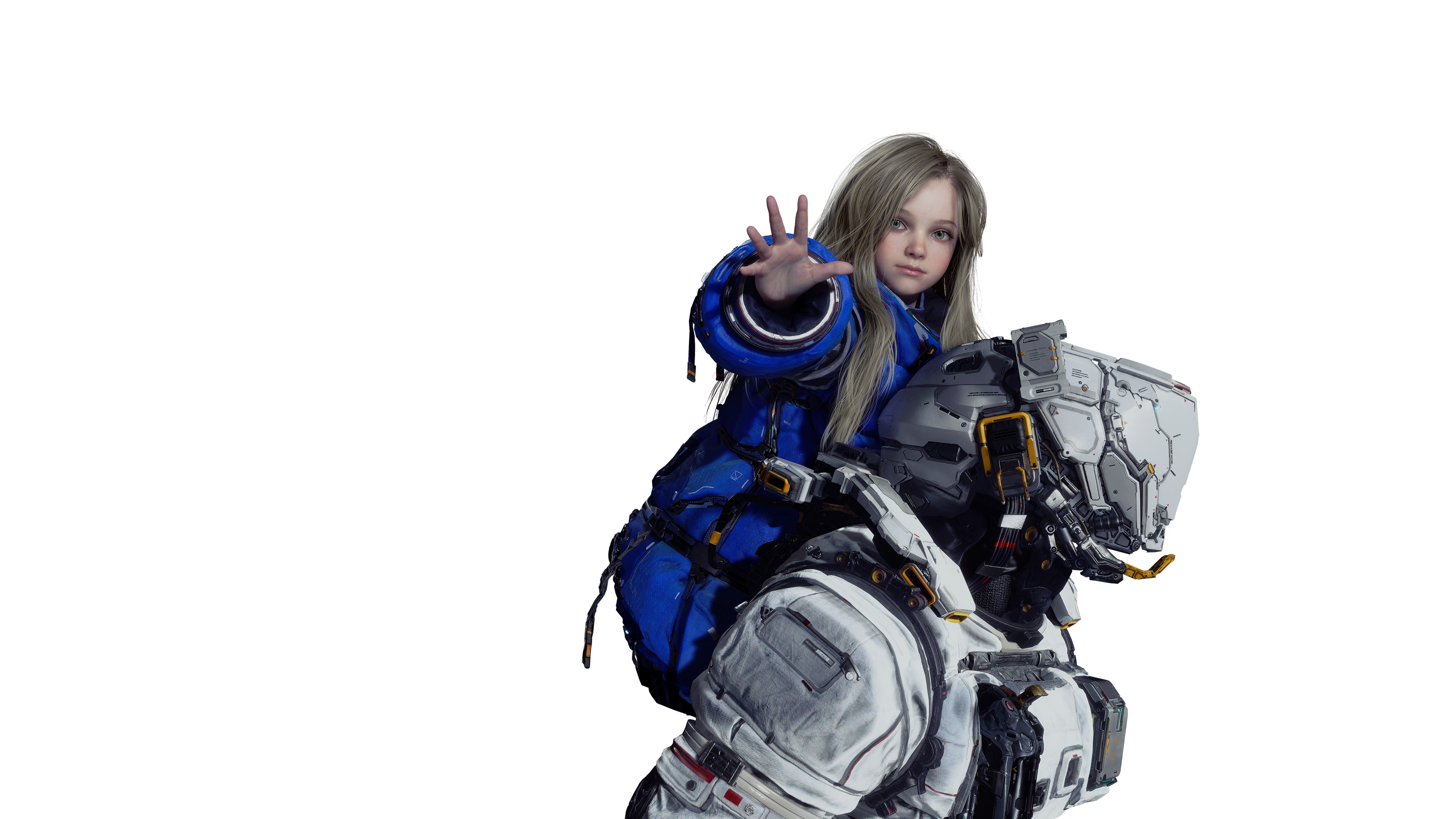
Pragmata’s core fantasy is not just “cool sci-fi,” it is the relationship and cooperation between two characters who solve problems differently. Capcom’s own description frames the story around Hugh, a spacesuit-wearing human, and Diana, an android girl, working together on the moon while trying to make it back to Earth. That partnership matters because it is a built-in gameplay design excuse to give you two toolsets that must talk to each other. When games do this well, it feels like playing a duet instead of a solo. You are not just firing a gun and calling it a day. You are reading a situation, splitting tasks, and sometimes improvising when things go sideways. It also gives the game room for emotion, because a harsh environment like the moon becomes more interesting when you are not facing it alone. Two characters means banter, friction, trust-building, and the little moments that make a world feel lived-in instead of just rendered.
Why “buddy” design can make sci-fi feel personal
Sci-fi can sometimes feel cold, even when it looks incredible, because it leans so hard on metal and math that it forgets the human part. A duo setup helps fix that. Hugh and Diana are not just a story beat, they are a way to make every encounter feel like a shared problem instead of a mechanical chore. Think of it like moving a couch up a narrow staircase. One person can do it, technically, but it becomes a sweaty mess full of regrets. Two people can communicate, pivot, and actually get the job done without repainting the walls with frustration. That is the promise here: cooperation as the game’s identity, not a side feature. If the demo nails that feeling, it will probably be the moment a lot of people go from “interested” to “okay, this is my thing.”
Combat plus hacking: the action-puzzle mix Capcom is aiming for
Capcom has positioned Pragmata as a sci-fi action-adventure that mixes puzzle and action elements, and the Famitsu discussion points at hacking as a key part of that identity. This is where the game can separate itself from the crowd, because “third-person shooter in space” is not rare, but “third-person combat where your brain is as important as your trigger finger” is harder to pull off. When hacking systems are designed well, they change how you see enemies and environments. Instead of asking, “How many bullets do I have?” you start asking, “What can I control, disable, or turn against them?” That mindset shift is powerful, because it turns every fight into a small story you create in the moment. It is also the kind of design that can feel amazing on a controller if it is responsive, readable, and fast. If it is clunky, it feels like trying to text while wearing oven mitts. The demo is going to be the truth serum for that.
What we know about the demo plan across consoles
One of the most player-friendly things said around this reveal is the plan to offer a demo on every home console Pragmata launches on. In the Famitsu interview, Oyama directly encouraged everyone to try it once those demos are available, and he framed the game as being close to a state that people can fully enjoy. Separately, Capcom also stated that a playable demo would be released first on PC starting December 12, 2025, as a way to convey the appeal of the game. Put those together and the roadmap looks clear: PC got the first bite, and console players are meant to get their own bite too, not just watch someone else chew. That matters because it reduces the usual platform anxiety. Instead of guessing how it feels on Switch 2, you will be able to test it. Instead of arguing about graphics, you can judge image quality and motion clarity with your own eyes.
Why demos are the best antidote to trailer brain
Trailers are candy. They taste great, but they are designed to dissolve fast and leave you craving more. A demo is a meal. It lets you test the texture, not just the flavor. You get to feel camera speed, aim assist, menu flow, how readable the hacking interface is, and whether the character movement feels precise or floaty. You also get to see how the game handles your real-world setup, like your TV settings, your preferred controller, and the way you actually play when nobody is watching. That is why the “demo on every home console” line is such a big deal. It signals confidence and it respects your time. Capcom is basically saying, “Do not take our word for it. Put your hands on it.” In a world where we are often asked to commit before we can test, that is refreshing.
What to look for when you play the demo
If a demo lands soon on Switch 2 and other consoles, we can treat it like a smart checklist rather than a hype parade. First, watch how quickly you understand the hacking flow. If you are confused for ten minutes, that is a design problem, not a you problem. Second, pay attention to readability in motion: can you track targets, UI prompts, and hacking nodes while moving, or does it feel like the game is throwing confetti in your face? Third, listen for audio cues and feedback, because good action design often lives in sound. Fourth, test comfort. Do you feel like you can play for an hour without your hands cramping or your brain overheating? Finally, check the “buddy” feel. Does Diana’s role feel essential, or does it feel like an optional gimmick that could be removed without changing much? If the demo answers those questions positively, the visuals talk will matter less, because the game will have proven it has a heartbeat.
Switch 2 expectations: visuals, feel, and realistic boundaries
We can be excited about the developers’ praise without turning it into a fantasy that every platform will be identical in every metric. The most grounded way to approach the Switch 2 version is to focus on what matters most to playability: stable responsiveness, clear image quality, and a presentation that feels modern and intentional. Oyama’s comments suggest confidence in overall quality, and Zhao’s reaction suggests the internal build hit a level the team was happy with. That is the meaningful part. At the same time, the Famitsu interview also avoids locking in exact resolution and frame-rate details in that moment, pointing instead to the upcoming demo as the place where more answers will become clear. That is not a red flag. It is normal. The practical takeaway is simple: the team is confident enough to let you test it, and that is the only comparison that counts when your hands are on the controller.
Why this launch is a big moment for Capcom’s new IP
Capcom does not need to gamble on new worlds. It has brands that could print money forever. That is exactly why Pragmata matters. Capcom has described it as a completely new IP, and it is positioning it as a “new type” of sci-fi action-adventure that blends puzzle and action while leaning on the relationship between Hugh and Diana. A new IP only gets one first impression, and launching day-and-date across major platforms, including Switch 2, is a strong way to maximize that first impression. It means conversations happen at the same time, clips circulate together, and nobody feels like they are watching from outside the party window. If the demo hits, it can create momentum early. If the final release lands cleanly, Pragmata could become one of those rare modern originals that people reference the way they reference classics, not because it has a famous name, but because it earned one.
The smartest way to follow updates without getting misled
Between now and April 24, 2026, there will be a lot of noise. Some of it will be useful, and some of it will be the internet doing what it always does: turning partial information into confident conclusions. The best approach is to stick to a simple hierarchy. Official statements from Capcom come first. Direct developer interviews from reputable outlets come next. Hands-on impressions and demo footage come after that, because they can be valuable but also inconsistent depending on settings and capture quality. Random social posts and “my friend says” stories belong at the bottom of the pile. When the console demos arrive, treat them as your main reference point. That is where you can judge the Switch 2 build for what it is, not what someone wants it to be. If we keep it that simple, we can enjoy the hype without letting it drive the car into a ditch.
Conclusion
Pragmata’s Nintendo Switch 2 confirmation feels surprising in the best way because it is presented as an equal seat at the table, not a late invite. Capcom has locked in April 24, 2026 and listed Switch 2 alongside PS5, Xbox Series X|S, and PC, which makes the release plan clear and unusually clean. The real spark, though, comes from the developer tone in the Famitsu interview. When a team says it was genuinely impressed the first time it saw the game running on a platform, that is not the same as a polished marketing promise. It is a peek behind the curtain, and it suggests confidence. The “shoulder to shoulder” comparison to Resident Evil Requiem is bold, but Capcom is not leaving it as a slogan, because the plan is to put a demo on every home console version. That means the next phase is not guesswork. It is hands-on reality. If the demo delivers a smooth, readable hacking-and-combat loop and makes the Hugh-and-Diana partnership feel essential, Pragmata could shift from “interesting sci-fi” to “must-play.”
FAQs
- When is Pragmata releasing on Nintendo Switch 2?
- Capcom has announced Pragmata is scheduled to release on April 24, 2026, and Nintendo Switch 2 is included in the official platform list.
- Is the Switch 2 version launching at the same time as other platforms?
- Yes. Capcom’s platform lineup lists Nintendo Switch 2 alongside PlayStation 5, Xbox Series X|S, and PC for the same April 24, 2026 release date.
- What did the developers say about Switch 2 performance and visual quality?
- In a Famitsu interview, the developers described being positively surprised when they first got Pragmata running on Switch 2, and the producer suggested the visuals are reaching a level that can stand shoulder to shoulder with Resident Evil Requiem.
- Will there be a demo on Nintendo Switch 2 and other consoles?
- The developers said a demo is planned for every home console the game will launch on, encouraging players to try it once available.
- What is Pragmata’s core setup and gameplay identity?
- Capcom describes Pragmata as a sci-fi action-adventure that blends puzzle and action elements, centered on cooperation between Hugh and the android girl Diana as they fight to return to Earth.
Sources
- All-new IP PRAGMATA to Launch on April 24, 2026!– The title is now also coming to Nintendo Switch 2; a PC demo releases today –, CAPCOM (IR Press Release), December 12, 2025
- 『プラグマタ』Switch2版は開発陣も驚いたハイクオリティー。各ハード向け体験版も展開予定。「ディアナのかわいさもぜひ体験して」〖開発インタビュー〗, Famitsu, December 12, 2025
- Pragmata escapes the Capcom mines after 6 years: release date set for April 2026, surprise demo out now, and Nintendo Switch 2 version announced, GamesRadar+, December 12, 2025
- 8 of the Biggest Moments from The Game Awards (Including Exciting Updates About Lara Croft and Resident Evil!), People, December 12, 2025