














Summary:
Ratatan has taken a clear turn in its platform strategy, and it is the kind of decision that says a lot about how difficult modern game development can be for smaller teams. Ratata Arts has confirmed that the game is no longer planned for Nintendo Switch 1 or PlayStation 4, even though those versions were part of the conversation when the rhythm action project first gained momentum. Instead, the team is putting its energy into a smaller lineup that includes newer hardware and PC. That shift may disappoint some backers, especially those who originally chose older systems, but the reasoning behind it is easy to understand once you look at the bigger picture.
The studio explained that it had spent time reviewing different ways to keep those versions alive while also trying to deliver the strongest possible experience. In the end, that balancing act became too difficult. Ratata Arts pointed to limited resources, the challenge of building a full online title across many systems, and the financial reality of licensing fees for legacy hardware. In plain terms, the team had to stop trying to be everywhere at once. That is never a fun message to deliver, but it is often the honest one.
What makes this especially interesting is that Ratatan is not disappearing from Nintendo platforms at all. Quite the opposite. The game is still headed to Switch 2, which shows that the issue was not Nintendo as a platform family, but the practical demands of supporting older hardware at the same time as newer systems. For backers, there is at least some flexibility, since platform choices can be swapped to Steam, Switch 2, PS5, or Xbox Series X. The result is a more focused release plan that may frustrate some people now, but could lead to a better game when it finally arrives.
Ratatan leaves Switch 1 behind
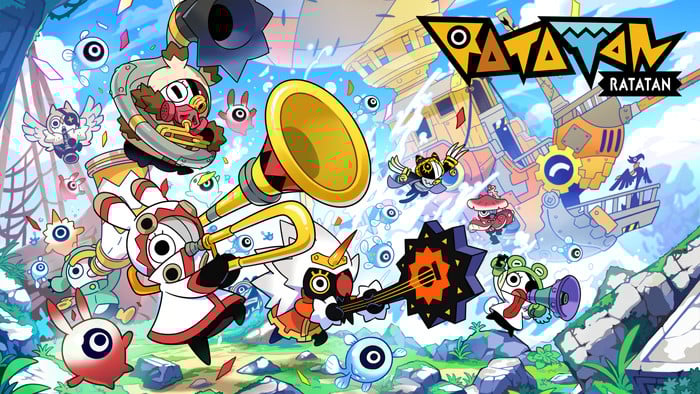
Ratatan is no longer on track for Nintendo Switch 1, and that changes the conversation around the game in a big way. For many players, this was one of those projects that felt like a natural fit for Nintendo’s older hybrid hardware. A rhythm-driven action game with strong style, colorful presentation, and roots tied to Patapon seemed perfectly suited to a platform built around flexible play. That is exactly why this update lands with a sting. Still, Ratata Arts did not frame the move as a sudden whim or a careless retreat. The team presented it as the result of difficult internal evaluation, platform reviews, and the practical limits of being an indie studio trying to launch an ambitious online-enabled game on too many systems at once. It is the sort of decision developers rarely want to make, but sometimes have to.
Why the platform change matters
This is not just a simple case of one version disappearing from a release list. It reflects a bigger reality about how development priorities shift when a project grows more demanding. Ratatan is trying to deliver a polished experience while also supporting multiplayer features and maintaining the personality that made people pay attention in the first place. That is not easy. When a team stretches itself too thin, the result can feel like trying to juggle drums, cymbals, and trumpets while riding a unicycle. Something is going to hit the floor. By stepping away from Switch 1 and PS4, Ratata Arts is effectively saying it would rather make fewer versions well than more versions poorly. For backers and future players, that may be frustrating in the short term, but it gives the final release a stronger chance of arriving in better shape.
How Ratatan moved from a broad launch plan to a tighter one
When Ratatan first entered the spotlight, it carried the kind of broad platform promise that helps build early excitement. More systems usually means more reach, more potential buyers, and more goodwill from fans who want to support a project on their preferred hardware. Over time, though, broad plans can start to buckle under real production pressure. Ratata Arts explained that it revisited several options while development continued and was able to add Switch 2 as a platform, which already showed that the team was rethinking its launch roadmap. Once Switch 2 entered the picture, the contrast between older hardware and newer targets likely became harder to ignore. A release list that once looked generous started to look heavy. Instead of keeping every option alive for the sake of optics, the studio chose a more manageable path.
What Ratata Arts told backers
The studio’s message to backers was direct and unusually transparent. Ratata Arts explained that it had explored multiple methods to make support for legacy systems possible, but the numbers and production limits did not line up. The team also pointed to the need to use limited funds wisely while building a full online title. That wording matters because it reveals the decision was not only technical, but financial and logistical as well. Ratata Arts was not just asking whether the game could run on those systems. It was asking whether supporting them made sense for the studio’s resources, the project’s long-term quality, and the expected return. That kind of calculation is rarely glamorous, but it is one of the most important parts of bringing a game over the finish line without breaking the people making it.
Why legacy hardware became the breaking point
Legacy hardware often sounds like a friendly phrase, but in development terms it can become a maze of compromises. Ratata Arts said the projected sales on older systems would not justify the licensing fees required to complete those versions. That is the heart of the decision. If the commercial upside looks too small while the cost of certification, licensing, testing, and support remains significant, a version can quickly turn into dead weight. Add in the performance expectations that come with launching on multiple devices, and the burden grows even larger. A smaller studio cannot throw infinite time and money at every problem. It has to pick its battles. In this case, Switch 1 and PS4 were the battles the team could no longer afford to keep fighting, especially while trying to preserve the overall standard of the game.
The role of online features in the decision
One detail that should not be overlooked is Ratata Arts describing Ratatan as a full online title. That alone changes the scale of the challenge. Online features can turn what looks like a compact and stylized game into something far more demanding behind the curtain. Network stability, cross-platform concerns, updates, optimization, compatibility checks, and certification standards all pile onto the workload. To players, the game may look cheerful and rhythmic on the surface. Under the hood, though, online support can be a beast with very sharp teeth. That helps explain why the team kept returning to the idea of platform focus. It was not only about graphics or raw power. It was also about building a version of Ratatan that feels solid where it matters most, rather than scattering effort across too many machines and hoping the rhythm somehow stays intact.
Why Switch 2 now makes more sense than Switch 1
The interesting twist in all of this is that Ratatan is still coming to Nintendo, just not to Nintendo Switch 1. That distinction matters because it tells us the studio did not lose confidence in the audience on Nintendo hardware. If anything, it may have found a better fit. Nintendo’s March 3, 2026 Indie World recap listed Ratatan for Switch 2 with a July 16 release date, which gave the platform update a more official shape. From a development standpoint, focusing on Switch 2 instead of trying to support both generations at once likely removes a huge amount of friction. Rather than designing around older limitations, the team can aim for a cleaner build on more current hardware. It is less a door slamming shut and more a lane change on a crowded road.
What this means for PlayStation 4 owners
PlayStation 4 owners are in the same boat as Switch 1 players, and that makes the update feel broader than a single Nintendo-focused setback. Ratata Arts has effectively drawn a line between legacy systems and the platforms it believes are worth prioritizing now. That can feel harsh, especially because PS4 still has a large player base and plenty of life left in it for many people. Even so, the studio’s reasoning was not built around sentiment. It was built around cost, complexity, and quality control. The message is clear: supporting older hardware simply did not make enough sense anymore. For players still on PS4, that is disappointing news, but at least the studio is offering replacements rather than leaving backers stranded in silence. In the world of crowdfunded game development, that kind of directness matters more than people sometimes admit.
How backers can swap to other platforms
Backers who originally chose Switch 1 or PS4 are not being told to shrug and walk away. Ratata Arts said those selections can be replaced with Steam, Switch 2, PS5, or Xbox Series X. That is a practical solution, even if it will not suit everyone perfectly. Some players backed the game specifically because they wanted it on the hardware they already owned, and a swap is not always a true substitute for that. Even so, giving people clear alternative options is better than leaving them stuck with a canceled version and no path forward. The studio also indicated that support tickets would be opened for people who do not have access to the newly supported platforms. That does not magically solve every problem, but it shows an effort to respond to backers as people rather than just as transaction numbers.
What the decision says about modern indie development
There is a wider lesson here, and it reaches far beyond Ratatan itself. Indie teams are often expected to be everything at once. Players want broad platform support, smooth performance, online features, quick updates, fair pricing, and strong launch quality. Publishers want viability. Backers want promises kept. Developers want to make something they can be proud of without running themselves into the ground. Put all of that together and you get a pressure cooker. Ratata Arts’ decision is a reminder that ambition always has a budget attached to it. A release plan can look exciting on paper and still become unrealistic once production gets serious. That is why platform cuts happen, even in projects that begin with every good intention. It is not always dramatic failure. Sometimes it is simply the hard math of survival.
Why quality won over platform spread
Ratata Arts repeatedly came back to the same core idea: the team wanted the highest possible quality game. That phrase can sound like polished public relations language, but in this case it connects directly to the concrete issues the studio named. Limited money, online functionality, licensing fees, and the burden of too many platforms all point toward the same conclusion. Something had to give. Choosing quality over maximum platform spread is often the least exciting option in a marketing sense, but it is usually the smarter one in development terms. A messy launch on too many systems can stain a game’s reputation faster than you can clap on the beat. By narrowing focus now, Ratata Arts is betting that a stronger version of Ratatan will matter more than a longer platform list that looks nice in a trailer and painful everywhere else.
What happens next for Ratatan
The next phase for Ratatan is now easier to read. The game is positioned around Switch 2, PS5, Xbox Series X|S, and Steam, with Nintendo’s own March 2026 showcase recap pointing to a July 16 launch on Switch 2. That gives players a clearer picture of where the project stands and where the studio’s energy is going. There is still room for disappointment, especially among those who hoped to play on Switch 1 or PS4, but the path ahead is less cluttered. Ratata Arts also left a small opening by saying it would continue to look into future possibilities for those platforms. That should not be taken as a promise. For now, the real takeaway is much simpler. Ratatan is moving forward with a narrower target, a firmer platform strategy, and a better chance of landing with the punch, polish, and rhythm it has been chasing all along.
Conclusion
Ratatan’s cancellation on Switch 1 and PlayStation 4 is disappointing, but it also feels like one of those decisions that is easier to respect than to celebrate. Ratata Arts clearly wanted to support more systems, yet the studio reached the point where ambition and practicality were no longer marching in step. By focusing on Switch 2, PS5, Xbox Series X|S, and Steam, the team is trying to protect the game’s quality instead of overloading development with too many moving parts. That may leave some backers frustrated, and understandably so, but it also gives Ratatan a better shot at arriving as a sharper, stronger release. Sometimes the smartest rhythm is not the loudest one. It is the one that keeps the whole band together.
FAQs
- Is Ratatan canceled completely?
- No. Ratatan is still planned for Switch 2, PS5, Xbox Series X|S, and Steam. The canceled versions are Nintendo Switch 1 and PlayStation 4.
- Why did Ratata Arts cancel the Switch 1 and PS4 versions?
- The studio said limited resources, the demands of building a full online title, and the licensing costs for legacy hardware made those versions difficult to justify.
- Was Ratatan originally planned for Switch 1?
- Yes. Earlier platform messaging around the game included Nintendo Switch, but the more recent official platform rollout shifted to Switch 2 and other newer systems.
- Can Kickstarter backers change their selected platform?
- Yes. Backers who chose Switch 1 or PS4 can switch to Steam, Switch 2, PS5, or Xbox Series X, and the team has also said it will review options for people without those systems.
- When is Ratatan releasing on Switch 2?
- Nintendo’s March 3, 2026 Indie World recap listed Ratatan for Nintendo Switch 2 on July 16.
Sources
- New Indie World Showcase spotlights upcoming games on Nintendo Switch 2 and Nintendo Switch, Nintendo, March 3, 2026
- Ratatan Dev Cancels The Switch Version, Nintendo Life, April 4, 2026
- Ratatan’s Nintendo Switch version officially cancelled, dev explains why, Nintendo Everything, April 3, 2026
- Ratatan Release Date Revealed! Launching 16th July on Nintendo Switch 2, Games Press, March 3, 2026
- Ratatan, Kickstarter, July 31, 2023