














Summary:
Resident Evil Requiem has already given fans plenty to talk about, but one of its most interesting talking points sits right at the heart of the game’s atmosphere: performance. Angela Sant’Albano, the actor behind Grace Ashcroft, recently explained that Capcom placed real importance on making the acting feel cinematic. That one detail says a lot. Horror can have the sharpest lighting, the creepiest creature design, and the most polished environments in the world, but if the people inside that nightmare do not feel convincing, the illusion starts to crack. What Sant’Albano describes is a production that understood this from the start.
That matters because Resident Evil Requiem is clearly aiming for a more polished and emotionally believable form of horror. Grace is not simply there to move the player from one frightening corridor to the next. She needs to sell fear, confusion, determination, and vulnerability in a way that feels natural. According to Sant’Albano, Capcom wanted performances that matched the game’s visual leap, and that suggests a team trying to make every part of the experience pull in the same direction. The acting was not being treated like a decorative extra. It was part of the machinery of fear.
The result is easy to understand. When visuals and voice work align, horror lands harder. A shaky breath, a strained pause, or a frightened line delivery can do as much heavy lifting as any monster reveal. That is why Sant’Albano’s comments matter beyond a single interview quote. They point to a version of Resident Evil Requiem that wants to feel more immediate, more film-like, and more emotionally locked in. For fans, that is a strong sign that Grace Ashcroft is not just a new face in the series. She is part of a broader push to make the terror feel more personal.
Resident Evil Requiem gives performance a bigger role in horror
Resident Evil has always known how to create tension, but Resident Evil Requiem seems especially aware of how much acting shapes that tension. Angela Sant’Albano’s recent comments make that clear. She explained that Capcom cared deeply about making the performances feel cinematic, and that choice says a great deal about the game’s priorities. This is not just about delivering lines with a little extra drama. It is about making fear feel lived in. When a horror game wants to unsettle you, it needs more than shadows and sound effects. It needs people who react in a way that makes the danger feel close enough to touch. That is where performance becomes essential. It turns scripted moments into something that feels spontaneous, raw, and personal. Resident Evil Requiem appears to understand that a scream lands harder when it sounds like it came from a real place, not a recording booth checklist.
Angela Sant’Albano helps define Grace Ashcroft
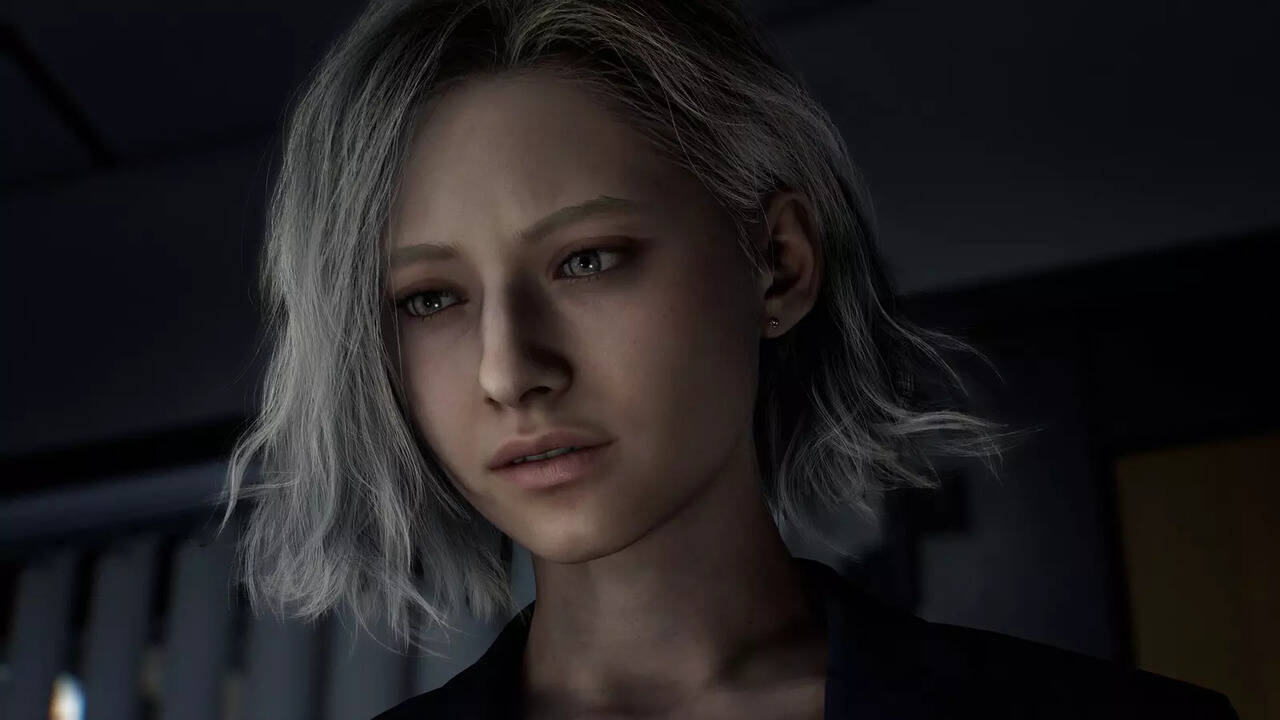
Grace Ashcroft enters Resident Evil Requiem with a lot resting on her shoulders. She is not just another name passing through the series. She is one of the key faces players will associate with this chapter, which means her performance has to carry emotional weight from the opening stretch onward. Sant’Albano’s comments help explain why Grace seems to have made such an impression so quickly. If Capcom wanted cinematic performances, then Grace could never feel flat or mechanical. She had to sound like someone processing danger in real time, someone whose fear is mixed with focus, doubt, and instinct. That kind of balance is tricky. Lean too hard into panic and the character can feel exaggerated. Lean too far into control and the horror loses its teeth. Grace needs to sit in the uneasy middle, and that is where a thoughtful performance can do magic. It makes her feel like a person before she feels like a playable role.
Grace works because vulnerability is not treated like weakness
One reason Grace appears to connect with players is that she does not seem built as an untouchable action figure. There is a human softness to her presence, and that can be a gift in survival horror. A vulnerable character gives the danger more bite. You worry more. You listen closer. You stop charging into rooms like you own the place and start moving with the hesitation the scene deserves. Sant’Albano’s remarks suggest that Capcom leaned into that quality rather than sanding it away. That is smart. Horror breathes through uncertainty. A character who sounds too polished can flatten the mood, while a character who feels fragile in believable ways can make every hallway feel longer. Grace’s role benefits from that balance, because she becomes the player’s emotional anchor. If she sounds rattled, you feel rattled too.
That human edge sharpens the game’s identity
It is easy for big horror releases to chase spectacle so hard that the emotional center gets blurry. Resident Evil Requiem seems to be trying something more disciplined. By putting real care into performance, Capcom gives the game a stronger personality. Grace is not memorable just because she is new. She becomes memorable because the acting helps her occupy the world in a convincing way. That matters in a series where atmosphere has always been king. If the central character feels believable, everything around her gains weight. Even silence starts doing extra work.
Capcom’s cinematic target changes the tone
Sant’Albano’s quote about Capcom wanting cinematic performances because the game itself looked so cinematic is one of those remarks that opens a window into the whole production. It suggests a team looking at the visuals and realizing the acting needed to rise to meet them. That is a healthy instinct. Modern horror games cannot rely on presentation alone. When environments look richer, faces look more detailed, and camera work feels more deliberate, weak performance stands out faster than ever. It is like putting a cardboard prop in the middle of a beautifully lit film set. You notice it immediately. Capcom appears to have understood that the technical side and the human side had to evolve together. That does not just improve polish. It changes tone. It makes the game feel more unified, more serious about its mood, and more capable of delivering fear that lingers after the jump scare fades.
Visual polish and acting now move together
There is something powerful about a horror game where the acting and the visual design seem to speak the same language. That appears to be what Resident Evil Requiem is chasing. Sant’Albano points to a process where Capcom was not satisfied with one side of the presentation carrying the other. Instead, both had to work in tandem. That is where cinematic horror becomes more than a marketing phrase. It becomes a design principle. A dark corridor is one thing. A dark corridor filled with a character whose breathing tightens, whose voice catches, and whose reactions feel immediate is something else entirely. Suddenly the environment is not just scenery. It is pressure. The performance turns the space into a threat. That marriage between visual craft and acting is often what separates a good horror experience from one that worms into your memory and stays there like an unwelcome houseguest.
Why believable reactions matter more than loud reactions
Horror does not always need bigger reactions. It needs truer ones. Sometimes the most unsettling moment in a game is not a scream but a whisper, a pause, or the sound of someone trying very hard not to fall apart. That is why Capcom’s focus on cinematic performances matters. It suggests the team was chasing nuance, not just noise. A believable response can make a scene feel far more intense than a theatrical outburst. In a genre built on tension, restraint is often the sharper knife. Grace’s performance benefits from that idea because it allows the fear to creep under your skin rather than just banging on the door.
Horror works better when reactions feel believable
Anyone who has played survival horror for long enough knows the basic truth: if the person at the center of the nightmare feels fake, the whole thing starts wobbling. You can have grotesque enemies, rich sound design, and beautiful environmental storytelling, but unbelievable acting can still pull the rug out from under the experience. Resident Evil Requiem seems determined to avoid that problem. Sant’Albano’s comments point to a production that treated emotional credibility like a pillar, not an afterthought. That is exactly what horror needs. Fear is contagious when it looks and sounds honest. A player may know they are safe on the couch, but if the performance captures enough real tension, the body still reacts. Shoulders tighten. Breathing changes. You hesitate before opening the next door. That is the sweet spot. It is the point where the game stops feeling like a sequence of designed scares and starts feeling like an ordeal you are sharing with the character.
Grace feels human because the performance stays grounded
Grace Ashcroft’s appeal is not just about where she fits into Resident Evil lore. It is about how she feels moment to moment. A grounded performance can make even familiar horror setups feel fresh because it changes how players read danger. Instead of watching a stock hero stride through chaos like they have seen it all before, you get someone who seems to absorb the room, react to the unknown, and carry the emotional bruises of what is happening. That creates intimacy. It invites the player to pay attention to small details, to tone shifts, to the weight behind a line rather than just the plot information inside it. Sant’Albano’s praise for Capcom’s cinematic approach hints that this grounded style was part of the mission. If so, it explains a lot about why Grace stands out. She feels less like a genre tool and more like a person trying to survive an impossible situation without losing herself in the process.
Capcom appears to understand what modern horror needs
Resident Evil has never survived for decades by standing still, and Requiem looks like another example of that instinct. Sant’Albano’s comments suggest Capcom is not simply polishing old habits. The studio seems to recognize that modern horror audiences expect more than technical spectacle and familiar iconography. They want performances that can hold close-ups, carry emotional subtext, and make even quieter scenes worth sitting with. In some ways, that is the real upgrade. Fancy lighting and sharper facial animation are impressive, sure, but they mean far more when the acting can actually use them. Think of it like handing a concert violin to someone who only knows one note. The tool is beautiful, but the result stays limited. Capcom appears to be aiming for harmony instead. The visuals, the acting, and the horror direction are being pushed toward the same effect, which gives Requiem a better chance of feeling cohesive rather than merely expensive.
Resident Evil Requiem strengthens its identity through restraint
There is a temptation in long-running series to prove importance through sheer scale. Bigger set pieces, louder stakes, more obvious drama. But horror often grows stronger when it resists that urge. The remarks from Sant’Albano point toward something more controlled. Capcom wanted cinematic performances, yes, but not in a way that sounds showy or self-congratulatory. It sounds focused. The game looks cinematic, so the acting had to carry that same emotional texture. That is a measured goal, and it may be one of the reasons Requiem feels so confident. Rather than throwing everything at the wall and hoping terror sticks, it seems to be building mood carefully, piece by piece. That kind of restraint can make a horror experience feel richer. It trusts atmosphere. It trusts silence. It trusts an actor’s face or voice to do the kind of work explosions never could.
Why fans are responding so strongly to Grace
When players praise a horror performance, they are usually responding to more than one thing at once. They are reacting to voice, timing, vulnerability, and the sense that the character belongs in the world rather than floating above it. Grace appears to hit that balance. Sant’Albano mentions hearing from fans that the performances felt real, and that may be the most telling point of all. Real is what horror needs. Not perfect. Not theatrical. Not glossy for the sake of it. Real. The minute players start describing a performance that way, you know the acting has done its job. It has made the fear easier to buy into. It has made the character easier to care about. And in horror, caring is everything. The moment you stop caring, the monsters become decoration.
What this says about the future of Resident Evil performances
If Sant’Albano’s remarks reflect a broader direction for the series, then Resident Evil may be entering a phase where performance is treated as one of its defining strengths rather than a supporting feature. That would be a smart path forward. Horror has become increasingly sophisticated across games, film, and television, and audiences notice when acting rises above the expected baseline. Requiem seems positioned to benefit from that shift. It is not just offering another outbreak, another mystery, or another run through darkness. It is trying to make those pieces feel more immediate through performance that matches the visual ambition around it. That can only help the series. A stronger emotional core gives every scare more weight, every twist more sting, and every quiet scene more tension. If Grace Ashcroft is an early sign of that future, Resident Evil may be sharpening one of its best tools without even needing to shout about it.
The biggest takeaway from Sant’Albano’s interview
The most interesting thing about Sant’Albano’s comments is how simple the core idea is. Capcom looked at the game, saw how cinematic it was becoming, and understood that the acting needed to be just as committed. That sounds obvious when you say it out loud, but many games still fail to connect those dots. Resident Evil Requiem appears to have done so, and Grace Ashcroft is one of the clearest beneficiaries. Her performance helps sell the horror because it sounds tied to the world around her. Nothing feels detached. Nothing feels like it was added later to patch over the gaps. Instead, the acting seems built into the atmosphere itself. That is why the interview matters. It reveals a production choice that players can already feel, even if they could not name it straight away. Sometimes the scariest thing in a horror game is not the monster in the dark. It is the tremor in a voice that tells you the dark is winning.
Conclusion
Angela Sant’Albano’s comments offer a revealing look at why Resident Evil Requiem feels so effective. Capcom did not treat performance like a side dish next to the visual spectacle. It treated it like part of the main meal, and horror is better for it. By aiming for cinematic acting that matched the game’s presentation, the studio gave Grace Ashcroft a stronger foundation and gave the wider experience more emotional credibility. That balance between visual craft and believable reaction is where fear starts to feel personal. For players, it means the horror has more texture. For Resident Evil, it suggests a future where acting is not just remembered, but expected to carry real weight.
FAQs
- Who is Angela Sant’Albano in Resident Evil Requiem?
- Angela Sant’Albano is the actor behind Grace Ashcroft, one of the central characters in Resident Evil Requiem.
- What did Angela Sant’Albano say about Capcom’s approach?
- She said Capcom cared strongly about making the performances feel cinematic, especially because the game itself looked so cinematic.
- Why do cinematic performances matter in a horror game?
- They help fear feel more believable. When reactions sound natural and emotionally grounded, the horror becomes more immersive.
- Why has Grace Ashcroft connected with fans?
- Her performance feels human and emotionally real, which makes the danger around her more convincing and easier to invest in.
- What does this suggest about Resident Evil Requiem?
- It suggests Capcom wanted the visuals, acting, and atmosphere to work together closely, giving the game a more polished and emotionally effective horror identity.
Sources
- “I’ve Always Loved Doing Guttural Screams” – Angela Sant’Albano On Joining The World Of Resident Evil, Nintendo Life, March 6, 2026
- Resident Evil Requiem – The latest installment, serving as the ninth main series entry, is now available!, Capcom Town, February 27, 2026