














Summary:
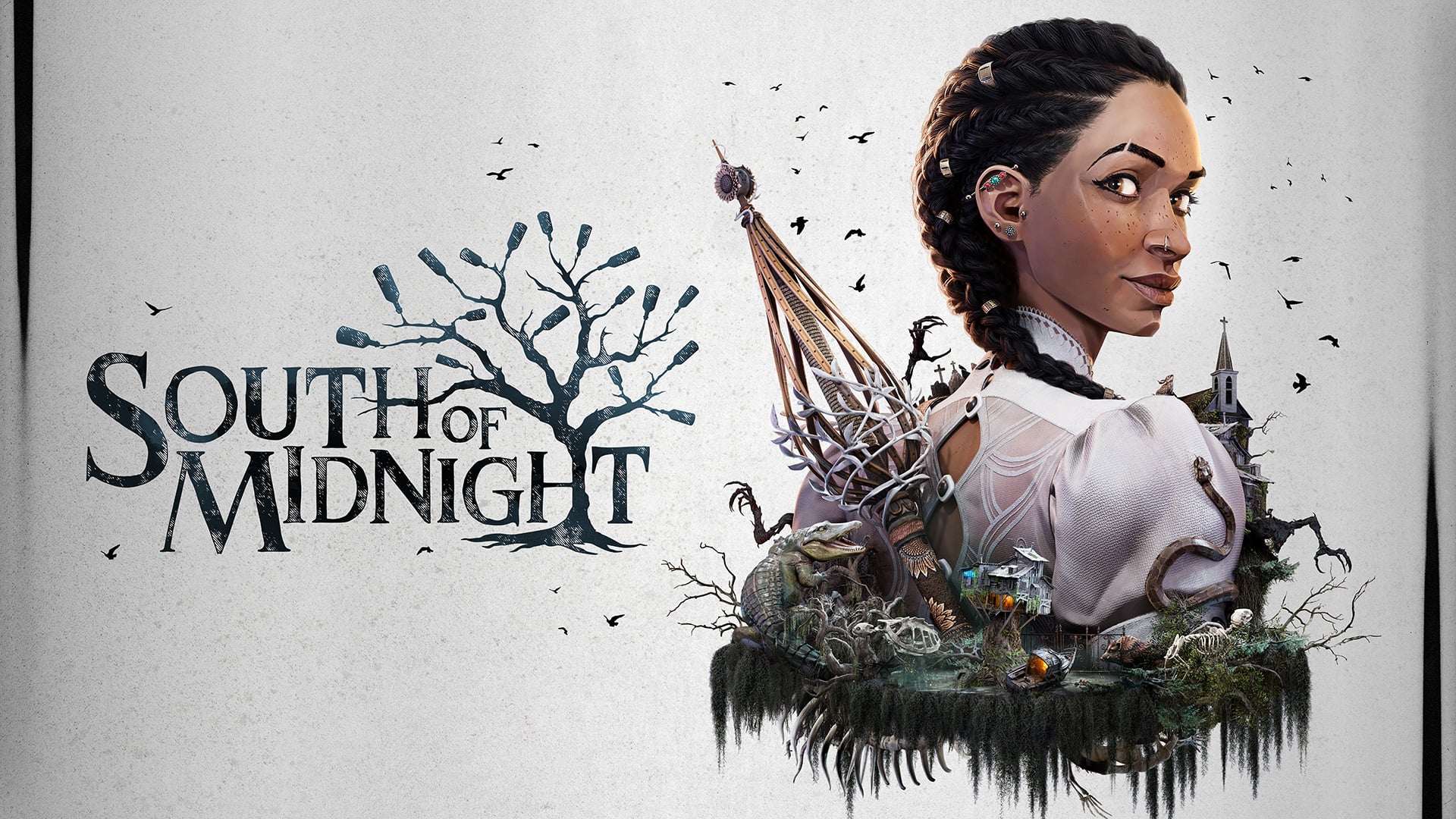
South of Midnight arriving on Nintendo Switch 2 on March 31 feels like the kind of move that instantly gets attention, and not only because the game was once tied so closely to Xbox. It is the kind of release that makes people stop and look twice because the match suddenly feels obvious. This is a visually striking third person action adventure with a strong point of view, a memorable lead, and a setting that does not blend into the background. Hazel’s journey through Prospero and the wider Deep South mythos carries an emotional pull that helps the game stand apart from more familiar fantasy worlds packed with interchangeable monsters and generic lore. Instead of chasing that route, South of Midnight leans into folklore, memory, grief, family, and place. That gives it texture. It gives it a pulse.
What makes the Nintendo Switch 2 version especially interesting is how neatly the game’s identity lines up with what often clicks on Nintendo hardware. There is stylized art, a strong storybook quality, creature design with real personality, and a world that feels handcrafted rather than factory-made. Even when the tone turns eerie, there is still warmth in the presentation. That balance matters. It means South of Midnight can be haunting without becoming hollow, and dramatic without losing its sense of wonder. The March 31 launch date also gives the game fresh momentum, putting it back in the spotlight for players who may have admired it from a distance the first time around.
There is also something appealing about the way South of Midnight presents its ideas. Hazel is not simply swinging through another action game checklist. She is pulled into a Southern Gothic world shaped by trauma, legacy, and strange beauty, and her weaving abilities give the whole experience a more personal texture. The mythical creatures are not there just to fill space. The music is not decoration. The setting is not wallpaper. Everything seems built to reinforce the same mood. That is why this release stands out. South of Midnight does not just arrive on Nintendo Switch 2 with a date and a trailer. It arrives with a clear identity, and that is often what sticks.
South of Midnight finally reaches Nintendo Switch 2
South of Midnight landing on Nintendo Switch 2 on March 31 gives the game a second big moment, and it feels well earned. When a release like this first appears attached to one platform family, many players naturally file it away as something to admire from afar. They watch the trailers, take in the atmosphere, maybe even fall a little in love with the art direction, but they never quite step through the door. That changes here. Nintendo Switch 2 players are getting access to a game that already has a distinct voice, and that matters because voice is hard to fake. South of Midnight does not look like it was assembled from a box of familiar trends. It feels specific. The Southern Gothic tone, the storybook melancholy, and the creature design all give it a flavor that is hard to confuse with anything else. That alone makes the release worth paying attention to, because in a crowded lineup, a game that can be recognized in seconds already has a head start.

Why the move from Xbox exclusivity stands out
There is always extra curiosity when a former Xbox exclusive starts opening up to other systems. Part of that is simple industry fascination, but part of it is more personal for players. A game once treated as part of one ecosystem now gets a chance to meet a different audience with different expectations. In South of Midnight’s case, that shift feels especially interesting because the game’s strengths seem built to resonate beyond the platform where it started. It has the kind of bold visual identity that can pull people in at a glance, but it also has a quieter strength underneath that first impression. Hazel’s story is rooted in family, memory, and legacy, which gives the whole experience more emotional weight than a standard action setup. It is not just about getting from one fight to the next. It is about what those fights mean, what the world remembers, and what Hazel is forced to carry with her as she moves through it.
Why the March 31 release date gives this version extra energy
A launch date can do more than mark a calendar. Sometimes it can sharpen interest in a way a broad window never quite manages. March 31 does that here. It gives South of Midnight a concrete return to the spotlight, and that is useful for a game with such a distinctive look and tone. Instead of drifting around in a vague spring conversation, it now has a fixed moment to grab attention. That matters because games with strong atmosphere often benefit from renewed focus. Once people start seeing Hazel again, hearing the music again, and revisiting that strange, beautiful world again, the appeal comes rushing back fast. A precise launch date also gives the Nintendo Switch 2 version a sense of intent. It no longer feels like a future maybe. It feels close, real, and ready to be part of the conversation again.
Hazel’s role gives the whole experience its emotional center
Hazel is a major reason South of Midnight seems to linger in people’s minds. Plenty of action adventures ask you to care about the lead, but not all of them give that character enough grounding to feel human once the monsters show up. Hazel appears to avoid that trap by being tied so closely to the game’s emotional foundation. Her journey begins with disaster hitting her hometown, and from there the story moves into something far stranger and more mythic. Yet the emotional thread remains personal. She is trying to rescue her mother, protect what matters, and make sense of forces that seem much bigger than her. That combination of intimate stakes and supernatural scale is powerful. It makes the adventure feel less like a distant fantasy and more like a storm breaking over real memories. Hazel becomes the bridge between the grounded and the uncanny, and that gives the whole game a beating heart.
A Southern Gothic world that refuses to feel generic
One of the most striking things about South of Midnight is how confidently it leans into its setting. The American Deep South is not used here as a decorative backdrop or an excuse for mood lighting. It feels central to the game’s identity. That is important because too many fantasy worlds end up feeling like they were printed from the same template, with the names changed and the fog adjusted. South of Midnight seems far more rooted than that. Prospero and the surrounding regions carry a sense of place that feels weathered, lived in, and full of echoes. There is beauty in it, but it is not polished beauty. It is the kind that grows through cracks in the wall. That balance between lushness and decay gives the world texture. You can almost feel the damp air, hear the uneasy stillness, and sense how history clings to the land like mist that never quite burns away.
The folklore angle gives the setting real character
Folklore can either make a game feel richer or send it tumbling into a pile of half-used ideas. South of Midnight looks much more like the first case. The game frames Hazel’s journey through a world where myth and memory are tangled together, and that gives the supernatural side of the adventure more purpose than simple shock value. The creatures are not there only to make the world seem dangerous. They help define its emotional logic. That is a big difference. When mythological figures and local legends are tied to trauma, grief, and restoration, the result feels more resonant. Suddenly these encounters are not random. They say something about the people, the place, and the burdens Hazel is navigating. It is the difference between a haunted house built for jumps and a haunted house built on sorrow. One startles you for a second. The other stays with you.
Prospero seems built to be remembered, not merely crossed
Some game worlds are designed as scenery between objectives. Prospero looks like the kind of place meant to leave fingerprints on your memory. That matters because strong settings often do half the storytelling without saying a word. A bent road, a fading house, a stretch of swamp under strange light, a local face carrying too much history in one expression, these things can tell you plenty before the next major scene even begins. South of Midnight appears to understand that beautifully. The town and its surrounding spaces seem shaped to hold feeling, not just function. That makes exploration more appealing because you are not simply moving forward. You are reading the world as you go. You are learning what kind of hurt it carries and what kind of beauty survives anyway. That tension between damage and resilience gives the setting real gravity.
The game’s visual style helps it stand apart instantly
There are plenty of good-looking games. There are far fewer that feel visually authored. South of Midnight seems to fall into that second category. Its crafted art direction does more than make screenshots pop. It gives the game its own rhythm and presence. The world feels handmade in the best sense, as though every shape and color choice is trying to support the same eerie, emotional tune. That is a big reason the Nintendo Switch 2 version feels exciting. Games with such a strong stylized identity often travel well because they are not chasing photorealism as their only trick. They are chasing atmosphere, silhouette, and emotional texture. That usually gives them a longer shelf life too. A visual style with intention ages more gracefully than one obsessed with surface shine. South of Midnight looks ready to prove that again for a new audience.
Weaving magic and mythical creatures give the adventure its personality
The gameplay pitch behind South of Midnight is easy to understand, but what makes it interesting is the way it is wrapped in the game’s world and themes. Hazel uses ancient weaving magic, and that already sounds more evocative than the usual bag of elemental tricks. It suggests repair as much as power, and that is a smart fit for a story built around broken bonds, trauma, and inherited burdens. The enemies, especially the destructive Haints, are not just obstacles dropped into combat spaces for the sake of pacing. They connect back to the game’s larger emotional fabric. That helps the action feel purposeful. Even the idea of reweaving tears in the Grand Tapestry gives the whole adventure a stronger identity. It sounds mythic, but it also sounds intimate, like mending something fragile by hand. There is something memorable about that. Sword swings are common. Stitching a fractured world back together with strange magic is not.
Combat sounds more expressive because it ties back to the story
A lot of action games talk about their combat as though sheer speed or spectacle is enough. South of Midnight seems more thoughtful than that. Hazel’s powers are framed as part of who she becomes and what the world needs from her, which gives the action extra meaning. When the mechanics echo the themes, the whole experience tends to feel tighter. That is what seems to be happening here. The same power that helps Hazel confront dangerous creatures also connects to restoration and understanding. That makes the combat feel less like interruption and more like extension. In other words, the fights are not just there to keep your hands busy. They are part of the larger emotional and narrative rhythm. It is a simple idea, but when it works, it can make a game feel far more cohesive.
The creatures are more than monsters waiting in the dark
Mythical creatures are everywhere in games, but many of them blur together because they exist only as boss fodder or spooky set dressing. South of Midnight appears to avoid that by making its creatures part of the world’s wounded history. The official description points toward restoration and uncovering the traumas that consume them, which immediately adds more depth. These are not just things to defeat and forget. They are symptoms of something older, sadder, and more tangled. That gives each encounter a different emotional color. Even when danger is front and center, there is still the sense that these beings belong to a larger web of pain and memory. That can make confrontations more compelling because they carry more than simple threat. They carry meaning. And meaning is what turns a decent enemy roster into one people actually remember.
The Grand Tapestry idea pulls the whole game together
The phrase Grand Tapestry does a lot of work for South of Midnight because it captures the game’s view of the world in a single image. Life, memory, pain, family, place, myth, it is all woven together. Tear one part and the damage spreads. Try to mend it and you are forced to understand what caused the break in the first place. That is an elegant way to frame both gameplay and storytelling. It gives the game a poetic center without making it feel vague. Hazel’s weaving powers, the damaged creatures, and the fractured world all start to sound like parts of the same song. That unity is important. It means South of Midnight is not just throwing pretty ideas at the wall and hoping they stick. It has a clear thematic thread, and the best games usually do.
Why South of Midnight feels like such a natural match for Nintendo Switch 2
Not every high profile port feels intuitive. Some arrive and leave you wondering who exactly they are for. South of Midnight does not have that problem. Even before seeing it in motion on Nintendo hardware, the fit makes sense. The game has a strong visual identity, a memorable lead, mythic creature design, and a world that feels handcrafted rather than industrial. Those qualities often land well with Nintendo players because they value personality as much as polish. There is also a theatrical quality to South of Midnight that helps. It looks like a game that wants to perform, not just function. The atmosphere is bold, the folklore hook is unusual, and Hazel’s journey feels emotionally grounded enough to give the spectacle weight. That combination can be hard to resist. It is like finding a strange old storybook on a shelf and realizing the cover was not overselling it for once.
Players who missed it before now have a very good reason to look again
One of the best things about a release like this is the simple fact that it reopens the conversation. Players who skipped South of Midnight on Xbox or PC now get a fresh entry point without needing to feel late to the party. In some ways, that timing may even help. The noise around a first launch can sometimes drown out what actually makes a game interesting. A later platform debut gives people room to focus on the game itself rather than the surrounding rush. That could work nicely here because South of Midnight’s appeal is not based on shock value or novelty alone. It is based on mood, story, and identity. Those strengths do not expire after launch week. If anything, they often become clearer once the dust settles. So for Nintendo Switch 2 players coming in fresh, this version may feel less like leftovers and more like perfect timing.
The launch matters because the game already knows what it is
There is a quiet advantage to arriving on a new platform after the world already understands your core appeal. South of Midnight does not need to guess at its own identity anymore. It is not trying to explain itself from scratch. People know the hooks now: Hazel, weaving magic, Southern folklore, Haints, Prospero, family history, haunting beauty. That clarity makes the Nintendo Switch 2 launch stronger because the message is sharper. The game can walk onto the stage and say exactly what it is without fumbling for a pitch. That usually helps with games that thrive on atmosphere. Once the audience knows the mood, they can decide whether it speaks to them. And with South of Midnight, there is a good chance it will. It has a distinctive voice, and distinctive voices tend to travel well.
South of Midnight has the kind of identity people talk about after the credits
What gives South of Midnight its staying power is not just the premise or the setting. It is the feeling that all the parts are pulling in the same direction. Hazel’s story, the Southern Gothic atmosphere, the folklore creatures, the weaving magic, the music, and the visual style all seem connected. That sort of alignment is rare enough to matter. It is what turns a release from interesting into memorable. You do not walk away only remembering a boss fight or a dramatic trailer beat. You remember the mood. You remember the world. You remember how the game made its sorrow and beauty sit side by side without either one swallowing the other. For Nintendo Switch 2 players, that is the promise here. Not just another addition to the release calendar, but a game with a voice sharp enough to cut through the noise.
Conclusion
South of Midnight coming to Nintendo Switch 2 on March 31 feels significant because the game brings more than platform curiosity with it. It brings character. Hazel’s journey, the Southern Gothic setting, the folklore-driven creatures, and the weaving-based fantasy all combine into something that looks far more personal than a routine action adventure. That is what gives the release its appeal. It is stylish, yes, but it is also rooted in story, place, and emotion. For players who have been waiting for a chance to step into Prospero on Nintendo hardware, that chance is now very close. And for anyone who simply wants a game with atmosphere thick enough to feel like weather, South of Midnight looks ready to make a very strong impression.
FAQs
- When is South of Midnight coming to Nintendo Switch 2?
- South of Midnight is set to launch on Nintendo Switch 2 on March 31, giving players a specific date to mark down rather than a broad seasonal window.
- What kind of game is South of Midnight?
- It is a third person action adventure focused on Hazel, a young woman drawn into a Southern Gothic world filled with folklore, memory, and strange creatures.
- What is the story setup in South of Midnight?
- After a hurricane tears through Prospero, Hazel is pulled into a surreal world and begins a journey to rescue her mother while facing the weight of family, history, and legacy.
- What makes South of Midnight stand out from other action adventures?
- Its strongest hooks are its American Deep South setting, folklore-inspired creatures, weaving magic, emotionally grounded story, and a visual style that feels carefully crafted rather than generic.
- Why does South of Midnight seem like a strong fit for Nintendo Switch 2?
- The game’s stylized presentation, memorable world, distinct atmosphere, and storybook-like identity all feel well matched to an audience that often responds strongly to games with personality and artistic flair.
Sources
- South of Midnight, Compulsion Games, April 8, 2025
- South of Midnight, Xbox, April 8, 2025
- South of Midnight, Steam, April 8, 2025
- South of Midnight Weaver’s Edition for Nintendo Switch 2 – Nintendo Official Site, Nintendo, March 2026
- South of Midnight for PS5, Switch 2 launches March 31, Gematsu, March 6, 2026
- Another Xbox Game Jumps To PS5 And Switch 2 Very Soon, GameSpot, March 6, 2026
- South of Midnight to launch on PlayStation and Nintendo Switch 2 next year, Windows Central, December 11, 2025