














Summary:
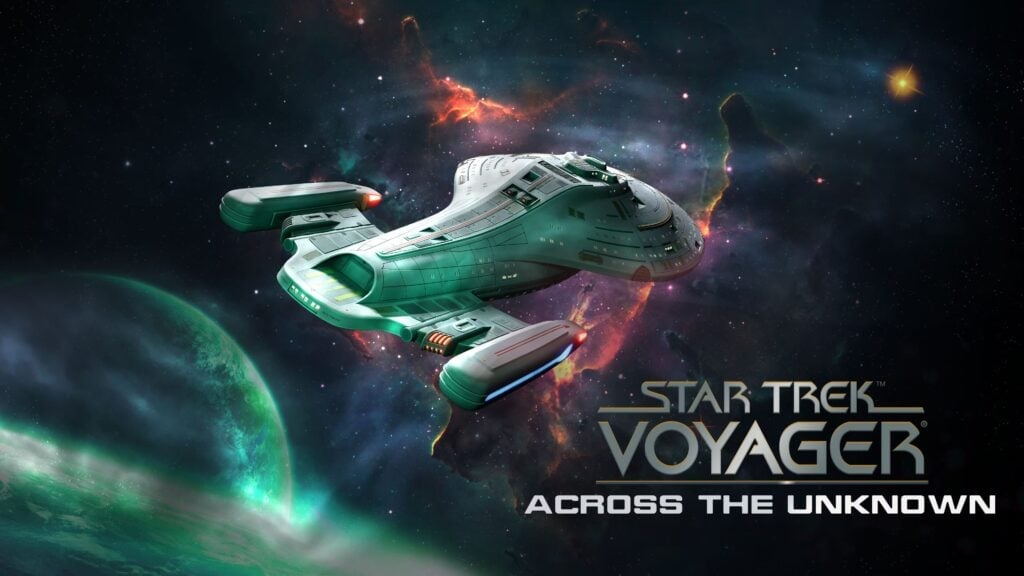
Star Trek Voyager: Across the Unknown is officially on the way to Nintendo Switch 2, with a confirmed release date of February 18, 2026, alongside other platforms. We’re looking at a survival strategy setup built around one clear fantasy: you’re in the captain’s chair, and the U.S.S. Voyager’s long trip home is now your problem. Not in a “press one button to win” kind of way either. The promise here is tension and responsibility: ship management, crew oversight, exploration choices, and the kind of decision making that can feel heroic one minute and painfully pragmatic the next.
At its heart, we’re juggling competing needs. Voyager has to stay powered, repaired, supplied, and staffed, while the Delta Quadrant keeps throwing surprises at you like a cosmic prankster with a grudge. Exploration is not just sightseeing, it’s calculated risk. Combat exists, but it’s part of the survival puzzle rather than the whole point, because winning a fight is only helpful if you can afford what it costs in fuel, hull integrity, time, and morale. That’s where this setup gets interesting: every choice has an opportunity cost, and even a “good” outcome can leave you limping into the next crisis.
We also know a Switch 2 demo is planned for a later date, though it hasn’t been given a specific release day yet. So if you’re the kind of player who likes to test the feel before committing, that option is on the roadmap. Until then, the most useful way to get ready is to understand what this kind of survival strategy loop asks from you, and why Voyager, of all ships, might be the perfect stage for it.
Star Trek Voyager: Across The Unknown – What’s confirmed for Switch 2
We have the important bits locked in: Star Trek Voyager: Across the Unknown has been announced for Nintendo Switch 2, and it’s set to launch on February 18, 2026. It’s described as a survival strategy game where you take command of the U.S.S. Voyager, with a mix of ship management, combat, exploration, and decision making steering the experience. That blend matters because it tells you what the game wants you to do minute to minute: keep the ship functional, keep people alive, and make calls that shape how the journey unfolds. We also know a Switch 2 demo is planned for a later date, but there’s no firm day attached to it yet. So, the launch date is real, the demo exists as a plan, and the core pillars are clear. If you like strategy that feels like you’re constantly balancing plates while the floor gently shakes, you’re in the right neighborhood.
Why Voyager is a perfect fit for survival strategy
Voyager is basically a built-in survival premise with a Star Trek badge on it. One ship, far from help, trying to cross a massive stretch of space with limited resources and a crew that has to stay functional for the long haul. That’s the exact shape survival strategy games love: a closed system under pressure, where every decision echoes later. The Delta Quadrant also gives you a natural excuse for unpredictability. New regions, unfamiliar factions, strange anomalies, sudden opportunities, and the occasional “this is definitely going to go wrong” situation. The best part is that it doesn’t need to pretend tension exists, because Voyager’s entire vibe is tension with moments of hope. When a game puts you in charge of that, the drama is not just cinematic, it’s mechanical. You’re not watching the ship barely make it, you’re the reason it does or doesn’t.
The core loop: keep the ship running, keep the crew steady
Survival strategy lives or dies by its loop, and we’re set up for something pretty intuitive here: assess your situation, plan your next move, execute, then deal with consequences. You’ll manage the ship, allocate people to tasks, keep an eye on supplies, and choose where to go next. It sounds tidy until you remember that the game also promises exploration and decision making, which is where neat plans go to get mugged in a dark alley. You might head out looking for resources and come back with damage, strained morale, or a new problem that doesn’t fit on your to-do list. That’s not a flaw, it’s the point. The loop works when you feel like you’re steering a big machine through uncertainty, not solving a puzzle with a single correct answer. If we’re doing it right, you’ll have moments where you say “we can handle this” and immediately regret saying it out loud.
Ship management: systems, damage, and hard trade-offs
Putting you in command of Voyager means the ship can’t be a background prop. Ship management implies you’re tracking essential systems and making practical choices about what gets attention first. Repairs, readiness, and resource allocation tend to be the backbone of this genre, because the ship is both your home and your tool. If something breaks, it’s not just a visual effect, it changes how safely you can move forward. That’s where trade-offs get spicy. Do you spend precious resources to fix a problem now, or do you limp onward and hope the next stop gives you what you need? Do you prioritize long-term stability or short-term survival? Strategy games love turning “smart” into “situational,” and a starship is perfect for that. It’s like managing a tiny city that can also get shot at, which is a sentence that should be terrifying, but also kind of exciting.
Resources: the quiet pressure that drives every decision
Resources are the invisible hand on your shoulder, constantly reminding you that you can’t do everything. In survival strategy, scarcity is the engine. It forces meaningful decisions because every action has a price tag, whether it’s materials, time, crew stamina, or some form of operational capacity. Voyager’s theme fits that pressure naturally. You’re not cruising between friendly ports, you’re making do, improvising, and sometimes gambling. A resource system also makes exploration more interesting, because exploration stops being “go look at the pretty thing” and becomes “is this worth the risk.” When the game gives you a tempting route or a questionable opportunity, you’ll feel that little internal calculator switch on. That’s the fun. Not because math is thrilling, but because the math represents survival, and survival represents the story you’re writing with your choices.
Crew management: skills, fatigue, and the human side of survival
Crew management is where the game can get emotionally sticky, in the best way. A ship is metal and wiring, but the crew is where pressure turns into drama. When you assign tasks, you’re not just moving tokens around. You’re relying on people, and if the game models fatigue, stress, or limited availability, those people start to feel like individuals rather than numbers. That’s a big deal for a Voyager setup, because the show’s identity is tied to a crew holding it together under impossible circumstances. In gameplay terms, that means you’ll likely be matching skills to jobs, deciding who handles critical systems, and making sure you’re not burning out your best people just because they’re reliable. If the game gives you tough calls involving risk, sacrifice, or prioritization, crew management becomes the heart of the experience. You’re not only trying to get home, you’re trying to get home with as many people as possible still standing.
Morale and consequences: when the spreadsheet starts talking back
Morale systems can sound clinical, but they’re really about turning tension into readable signals. If morale drops, your efficiency might slip, conflicts might rise, or your options might narrow. That’s how survival strategy makes “feelings” matter without needing a cutscene for every mood swing. For Voyager, morale fits like a glove. The ship’s journey is long, uncertain, and often dangerous, and a crew that loses hope becomes a crew that makes mistakes. Mechanically, morale is also a great way to make decisions feel heavier. You might be able to choose a ruthless option that boosts short-term survival, but it could damage trust or confidence. Suddenly you’re not just optimizing, you’re leading. And leadership is messy. The best morale systems create those moments where you realize the “best” option depends on what kind of captain you want to be, not just what keeps the lights on.
Exploration: the Delta Quadrant as a risk map
Exploration in a survival strategy game is basically route planning with personality. You’re choosing where to go, what to investigate, and how much danger you’re willing to accept for potential rewards. The Delta Quadrant is a perfect setting for that because it’s unfamiliar territory with unpredictable stakes. When you explore, you’re not only gathering resources or scanning anomalies, you’re stepping into situations where the game can challenge your priorities. Exploration also ties directly into pacing. If the game lets you decide how aggressive or cautious you are, you’ll end up shaping the rhythm of your run. Some players will sprint toward opportunity like it’s free candy. Others will move like they’re carrying a full cup of coffee through a hallway of toddlers. Both approaches can work, but they’ll create different stories. That’s what you want: exploration that feels like you’re charting your own path, not following a dotted line.
Events and dilemmas: how “what if” moments shape the journey
Decision making is listed as a key pillar, which usually means you’ll face events where your choice changes the immediate outcome, and sometimes the long-term direction. These dilemmas are the spice rack of the genre. They can deliver surprises, moral tension, and meaningful consequences without needing massive set-piece battles every time. In a Voyager setting, “what if” decisions feel natural, because the premise is already about navigating unfamiliar space with imperfect information. The interesting part is not just picking the “nice” option or the “efficient” option, it’s managing uncertainty. You’ll choose a path, and only later learn what you traded away. A good event system also encourages replay because you can’t see everything in one run, and because your choices can lead to different pressures later. It’s like choosing doors in a hallway where some doors contain help, some contain headaches, and a few contain both.
Choice design: making your call matter without spoiling the story
For choices to feel real, the game needs to respect your intent even when outcomes are unpredictable. That doesn’t mean every decision should have a perfect one-to-one payoff. It means your call should change something you can feel: your resources, your relationships, your risk profile, or your future options. The trick is doing that without turning every dilemma into a neon sign screaming “bad choice here.” If we’re getting narrative-driven survival strategy, we want choices that feel like leadership under pressure. Sometimes you’ll pick the cautious move and still get punished because space is rude like that. Other times you’ll gamble and get rewarded, but with a new complication attached. The best choice systems also make you reflect on your own play style. Are you the kind of captain who protects the crew first, even if it slows the journey? Or do you push forward and trust the ship to survive the bruises? Either way, the game works when your answers become your story.
Combat: what to expect when diplomacy fails
Combat is part of the package, but in a survival strategy framing, it’s usually one tool among many rather than the only tool. That’s important because the fantasy here isn’t “be the biggest ship in the room,” it’s “get home.” Combat becomes a risk-reward decision: fight, flee, negotiate, or outmaneuver. Even when you win, you might spend resources, take damage, or lose time, and time can be its own kind of currency in these games. If the game leans into tactical ship encounters, you’ll likely weigh your readiness before engaging. If it leans into broader strategic resolution, combat might feel like a scenario you prepare for rather than a twitch test. Either way, combat should reinforce the survival vibe. You’re not hunting fights for sport, you’re handling threats because the Delta Quadrant doesn’t always let you pass politely.
Progression: research, upgrades, and building a safer Voyager
Progression is where survival strategy turns panic into momentum. Early on, you’re patching leaks. Later, you’re building systems that reduce how often you have to patch leaks in the first place. Research and upgrades give you long-term goals and a sense of growth, which matters when the setting is a long journey home. You’ll likely unlock technologies, improve ship performance, and expand what your crew can handle. The fun part is that progression doesn’t remove tension, it changes it. You might solve one category of problem and expose a new one. Or you might become strong enough to take risks you couldn’t afford earlier, which is how overconfidence sneaks in wearing a friendly smile. In a Voyager-themed game, progression can also feel thematic: you adapt, you learn, you improvise. The ship becomes more capable because you’re making it more capable, and that ownership is the hook.
Release timing, platforms, and the demo plan
Let’s put the calendar on the table: Star Trek Voyager: Across the Unknown launches on February 18, 2026, and Nintendo Switch 2 is confirmed as part of that release lineup. If you’re planning your early 2026 backlog, that date is the anchor. We also have confirmation that a Switch 2 demo is planned for a later date, but it hasn’t been assigned a specific release day yet. That means it’s best to treat the demo as “coming later” rather than building plans around it. If you’re deciding whether to buy on day one, the smartest move is to watch for that demo announcement and any official details tied to it, because the timing matters. Still, the key takeaway is simple: Switch 2 players aren’t being treated as an afterthought here. The platform is named, the date is set, and the experience is positioned alongside other versions.
Conclusion
Star Trek Voyager: Across the Unknown coming to Nintendo Switch 2 on February 18, 2026 sets up a very specific kind of excitement: the excitement of responsibility. We’re not just showing up for a familiar name, we’re showing up to manage a ship, a crew, and a long list of problems that will not politely wait their turn. If you enjoy strategy where every win has a cost and every choice feels like it could become a story you’ll tell later, this premise has real pull. Voyager’s setting is ideal for survival systems because it’s built on scarcity, uncertainty, and leadership under pressure. Add exploration, decision making, and combat into that mix, and we’re looking at an experience that can feel tense, personal, and replayable in a way that fits the franchise naturally. Keep an eye out for the planned Switch 2 demo when it gets dated, and until then, get ready to take the captain’s chair and see what kind of Voyager journey we end up creating.
FAQs
- When does Star Trek Voyager: Across the Unknown release on Nintendo Switch 2?
- It launches on February 18, 2026.
- What type of game is Star Trek Voyager: Across the Unknown?
- It’s a survival strategy game focused on commanding the U.S.S. Voyager with ship management, exploration, combat, and decision making.
- Do we know when the Switch 2 demo will be available?
- A Switch 2 demo is planned for a later date, but a specific release day hasn’t been announced.
- What will we actually do in moment-to-moment play?
- We’ll manage ship systems and resources, assign crew to tasks, choose routes and responses to events, and handle threats, including combat, as part of staying alive and moving forward.
- Is the Switch 2 version releasing on the same day as other platforms?
- Yes, the Switch 2 release date is confirmed as February 18, 2026 alongside other platforms.
Sources
- Preorders Open for Star Trek: Voyager – Across the Unknown as Deluxe Edition, Console Demos, Switch 2 Version And Launch Date Are Revealed, Daedalic Entertainment (Prezly), January 13, 2026
- Star Trek: Voyager – Across The Unknown Beams Onto Switch 2 Next Month, Nintendo Life, January 13, 2026
- Star Trek Voyager: Across the Unknown announced for Nintendo Switch 2, Nintendo Everything, January 13, 2026
- Star Trek: Voyager – Across the Unknown Officially Announced for Switch 2, Deluxe Edition Revealed, Demo Announced, GoNintendo, January 13, 2026
- Star Trek: Voyager Game Release Date Revealed With Announcement Trailer, PlayStation LifeStyle, January 13, 2026