














Summary:
Konami has brought Bomberman back in a way that feels tailor-made for the “pass the controller” crowd. Super Bomberman Collection is available digitally on Nintendo Switch and Nintendo Switch 2, bundling seven classic entries and presenting them across 12 different versions. That version detail matters more than it sounds at first, because it captures how these games actually lived back then: regional releases, tweaks, and differences that shaped what players remember. It is not just one rom per title slapped into a menu. It is a broader snapshot of Super Bomberman across Japan, the US, and Europe, plus a couple of earlier Bomberman roots.
The headline for a lot of players is simple: Super Bomberman 4 and Super Bomberman 5 are included with English localized versions, and those were famously tied to Japan for a long time. That alone makes this package feel like a small correction to history, like finally getting the full set instead of a box with two missing discs. Then there are the modern touches that make older games easier to actually enjoy in 2026, like Save and Load Anytime and a rewind feature for those moments when a mistake snowballs into a full-on disaster. Add Boss Rush for people who want a more focused challenge, plus bonus features like a gallery and a music player, and we end up with a collection that aims to be both a party game and a time capsule.
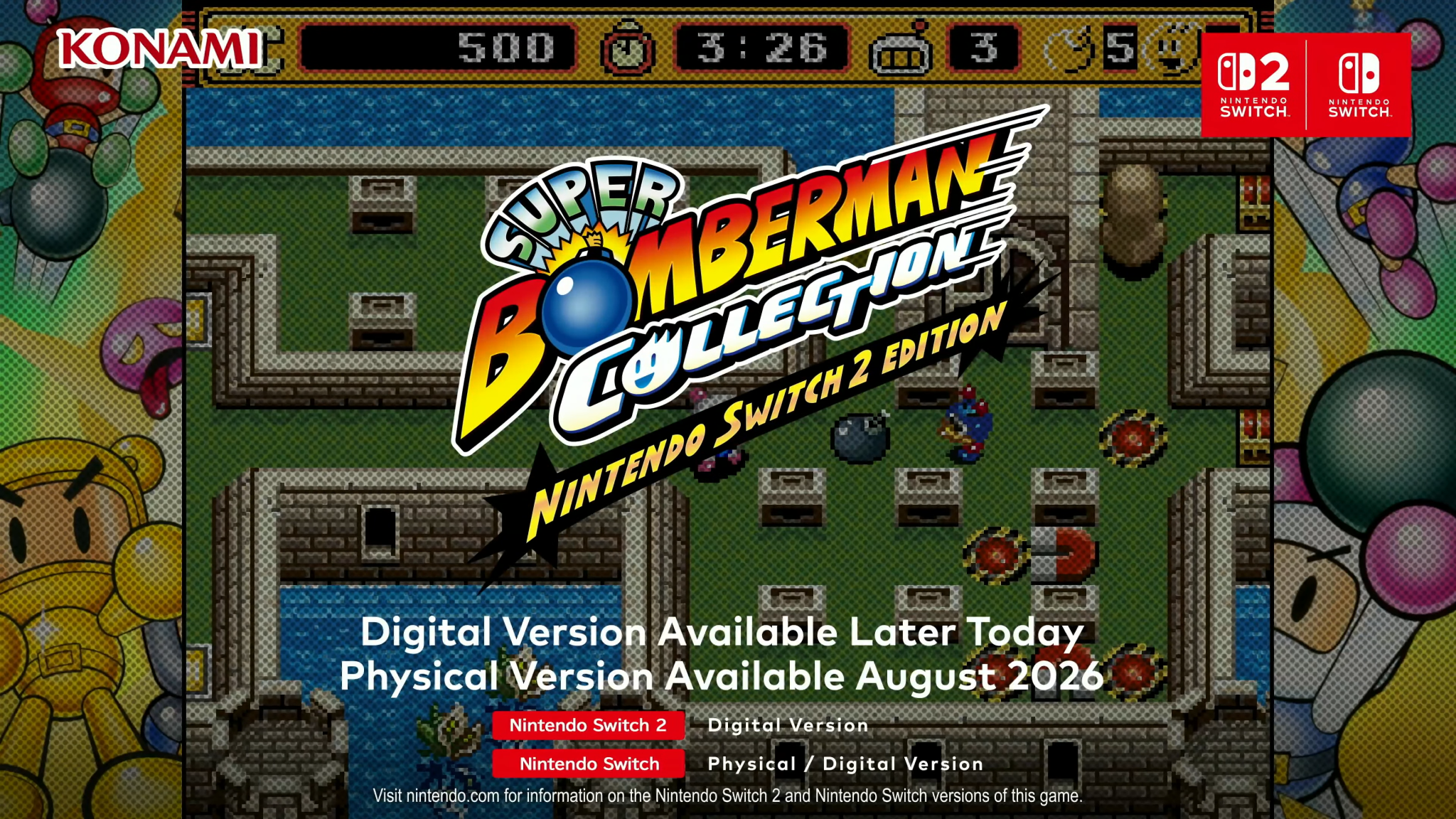
For Nintendo Switch 2 owners, there is an extra hook: the Nintendo Switch 2 Edition supports GameShare features so one copy can be shared for play with additional people, which is exactly the kind of feature that turns a good party night into a great one. If you are the friend who always ends up hosting, this is the sort of perk that saves everyone money and gets everyone playing faster. And if you prefer a box on the shelf, physical editions are scheduled to release on August 28, giving collectors a clear date to circle.
Super Bomberman Collection arrives with perfect party energy
There is a specific kind of chaos that only Bomberman delivers. It is cheerful and sneaky at the same time, like a birthday party where someone brought confetti cannons and also decided to hide banana peels on the stairs. Super Bomberman Collection taps right into that vibe by putting multiple classic entries in one place, then backing it up with modern features that make the games easier to jump into. When people talk about party games, they usually mean something that creates stories in minutes, not hours, and Bomberman has always been great at that. One round turns into five because everyone is convinced the last loss was “cheap,” and suddenly you are negotiating rules like you are running a tiny sports league. That is the core appeal here: a set of games built around quick matches, big laughs, and the kind of friendly betrayal that makes you point at your friend and yell, “You did not just do that!”

What we actually get: 7 games across 12 versions
Konami is not being subtle about the value proposition. This package includes seven games total, but it presents them across 12 versions, pulling from Japanese, US, and European releases where applicable. That breakdown gives the collection a bit more personality, because it preserves the idea that these titles were not always identical everywhere. The included lineup covers the five Super Bomberman entries released during the 16-bit era run, plus earlier Bomberman titles that show where the formula came from. If you have ever argued with someone about “which one had that specific item” or “which version had that exact pacing,” this is the kind of release that helps settle those debates without anyone needing to pull out ancient hardware. It also means newer players are not just getting a single narrow slice of Bomberman history. We are getting a wider platter, like a sampler board where you can taste the evolution of the series from one entry to the next.
Why Super Bomberman 4 and 5 being localized matters
For longtime fans, the inclusion of Super Bomberman 4 and Super Bomberman 5 with English localized versions is a big deal, because those games were historically tied to Japan in ways that made them feel like “the missing chapters.” When a series is built on local multiplayer memories, gaps like that become part of the folklore. People talk about these entries like rare trading cards, the ones you heard about but never actually held. By putting them in the same package as the more widely known titles, the collection makes the series feel complete in a way it often has not for Western audiences. It also changes the conversation for newcomers. Instead of hearing “yeah, but you cannot easily play 4 and 5,” the story becomes “they are right there, try them and tell us your favorite.” That is a healthier place for a legacy series to be, because it invites curiosity instead of gatekeeping.
The new quality-of-life touches that change everything
Old games can be charming, but they can also be stubborn. Sometimes it feels like they are daring you to keep playing, like a cat that only sits on your lap when you have somewhere to be. Super Bomberman Collection adds modern support features that make these classics more welcoming, including Save and Load Anytime and a rewind function. Those two features alone can transform how a wider audience experiences retro titles. Instead of losing progress and feeling like you have been kicked out of the fun, you can correct a mistake and keep moving. The rewind option is especially useful for learning, because you can experiment with riskier approaches and see what happens without the fear of wasting time. It is also a nice way to keep the mood light during group play sessions, because fewer people end up frustrated. The best party nights are the ones where the game stays the side dish and the laughs are the main meal, and these features help keep it that way.
Save and load anytime makes quick sessions feel possible
Save systems are one of the biggest reasons some retro games feel hard to revisit. Life is busy, and most of us do not have the patience to replay chunks of a game just because we had to answer the door or switch to another activity. Save and Load Anytime is basically a modern handshake that says, “We respect your time.” It lets you dip in for a few minutes and still feel like you made progress, which is perfect for handheld play or short breaks. It also makes the collection easier to recommend to people who are curious but not hardcore retro players. When you can save wherever you are, you spend more time enjoying the game and less time bargaining with it. And honestly, anything that reduces the “I lost everything because I sneezed at the wrong moment” feeling is a win.
Rewind turns frustration into learning
Rewind is the feature that quietly saves friendships. Not because Bomberman needs it for multiplayer chaos, but because the single-player experience can have moments where one tiny error creates a chain reaction of disaster. Rewind gives you a way to treat those moments like learning opportunities instead of brick walls. It is like having a time machine that only goes back far enough to stop you from stepping on the rake again. For new players, it can also make older design choices feel less punishing. You still need to understand timing and spacing, but you do not get sent to the shadow realm for making one mistake. That balance matters because it keeps the games feeling classic without feeling cruel, and it helps the collection fit modern expectations without sanding off what makes these titles distinct.
Boss Rush mode turns nostalgia into a challenge run
Boss Rush is one of those modes that sounds simple until you actually play it, and then you realize it is basically a stress test for your skills. The idea is straightforward: fight bosses consecutively, push for better times, and see how far you can go without slipping up. In a collection like this, Boss Rush does two useful things. First, it gives returning players a fresh reason to engage beyond “I remember this.” Second, it creates a quick, focused activity that fits modern play habits. You do not need to commit to a long session to feel the adrenaline. You can jump in, take your shot, and either celebrate like a champion or laugh at how fast you got humbled. It also becomes a great party side mode, because people can pass the controller and compare runs, which turns a solo challenge into a group spectacle. Everyone loves a little friendly scoreboard drama.
Time Attack makes the old bosses feel new again
Time Attack adds a layer of replayability that is easy to underestimate. When you are racing the clock, you stop playing “safe” and start playing “sharp.” You look for patterns, optimize movement, and try to cut out wasted actions. That shift can make familiar bosses feel surprisingly fresh, because you are no longer asking “can I win,” you are asking “how clean can I make this.” It also creates a fun loop for improving over time, which is the secret sauce for keeping a classic collection installed on your system instead of deleting it after a weekend. Even if you are not a speedrunner type, it is satisfying to shave seconds off a run and feel yourself getting better. It is the same satisfaction as finally parking perfectly on the first try, except with more explosions.
Gallery and BOMB Radio: the museum wing of the package
Not everyone buys a retro collection only to play. Some people want context, art, and the little historical extras that make the package feel like it cares about its own legacy. Super Bomberman Collection includes bonus features like a gallery and BOMB Radio, which are essentially the “take a look around” parts of the experience. The gallery gives you a place to browse artwork and development materials, while BOMB Radio lets you listen to music from the included titles and build playlists. That matters because Bomberman has a distinct sound and style that is easy to forget until it hits you again. The music is energetic, playful, and sometimes oddly intense for a game where you are basically a cute character dropping bombs in a maze. These bonus features also make the collection feel like more than a menu of games. It feels like a curated shelf, where the games are the main attraction but the extras give you reasons to linger.
The gallery is a nostalgia trigger in the best way
A good gallery feature does not just show images, it triggers memories. You see a character design or a piece of promotional art and suddenly you are back in a childhood living room, sitting too close to a CRT and arguing about who gets the “good” controller. That emotional hit is part of why collections like this work. They are not only about access, they are about rekindling the feeling. The gallery also helps newer players understand the era these games came from, when art and manuals did a lot of the storytelling work. In a world where games update constantly and menus change every season, it is oddly comforting to browse static pieces of history that still look confident and bold. It is like flipping through an old photo album, except the album occasionally reminds you that you once lost a match because you panicked and boxed yourself in.
BOMB Radio is perfect for background vibes
BOMB Radio is the kind of feature that sneaks into your routine. At first you try it out for a minute, then you realize the music works great as background sound while you are doing other things. Bomberman tracks are built to loop without being annoying, which makes them surprisingly good for setting a playful mood. And because this is a collection tied to multiple entries, it becomes a little jukebox of an era, where you can jump between different tones and styles across the series. It is also a fun way to show friends what the games sound like before they even play. Sometimes a soundtrack sells the vibe faster than a trailer, because it hits emotion directly. If you want your game night to feel like a classic arcade cabinet came to life in your living room, this feature helps.
Nintendo Switch vs Nintendo Switch 2 Edition: what changes
The base idea stays the same across both platforms: seven titles, multiple versions, and a set of modern features. The key difference is that Konami also highlights a Nintendo Switch 2 Edition that supports GameShare features designed around Nintendo Switch 2. That matters because it turns the collection into something more flexible for group play. On the original Switch, multiplayer is still the heart of Bomberman, but you are generally thinking in terms of who owns the game and who is physically there with controllers. On Switch 2, the conversation expands into sharing access in ways that fit modern hardware features. It is not about replacing the classic couch vibe. It is about making it easier to get everyone involved without turning setup into a chore. If you are the person who always hosts, you know the pain of ten minutes of logistics before the fun starts. Anything that shortens that runway is worth paying attention to.
The Switch 2 Edition leans into Nintendo’s sharing features
GameShare support is the headline, and it is a very Bomberman-friendly idea. Bomberman is at its best when more people can jump in quickly, because the game thrives on social energy. When sharing is easier, matches happen faster, and the night stays lively. Konami also notes additional Switch 2 related capabilities on its official site, including support for higher display resolutions in TV mode when paired with a compatible display. That is not the main reason to play Bomberman, but it does help the collection feel at home on newer hardware. More importantly, the Switch 2 Edition framing makes it clear Konami is not treating this as a simple legacy drop. It is positioning the collection as something that should be part of the current platform conversation, not just a retro footnote.
GameShare on Switch 2: how sharing the fun works
GameShare is one of those features that sounds technical until you translate it into real life. The practical version is this: one person owns the game, and other people can join in without each needing their own copy, depending on how the platform feature is used. That fits Bomberman like a glove, because the whole point is a group of players trying to outsmart each other in short rounds. It is the gaming equivalent of bringing one deck of cards to a party and still getting everyone playing. When sharing works smoothly, it lowers the barrier for casual friends to join, which is how Bomberman creates its best moments. Someone who “does not really play games” can still understand Bomberman in seconds, and then they are yelling louder than anyone when they pull off an upset win.
Why this feature matters for real group play
Every group has a bottleneck. Sometimes it is controllers, sometimes it is time, and sometimes it is simply that not everyone wants to buy the same game just to try it once. GameShare tackles that last problem directly. It lets a group treat the game like a shared activity instead of a purchase requirement. That can change how often the game hits the table, because it becomes easier to say, “Sure, jump in.” It also fits families well, because household play is often about one main purchase and multiple players. If you have ever tried to organize a multiplayer night and watched enthusiasm drop during setup, you understand why this matters. Bomberman should feel like lighting a fuse, not filling out paperwork.
Multiplayer night plans: how to set this up with friends
If you want to get the most out of Super Bomberman Collection, treat it like a party tool. Start with short rounds, rotate players, and keep the tone playful. Bomberman works best when everyone gets a chance to laugh and recover quickly after a loss. It is also worth agreeing on small house rules if your group gets spicy. Some groups love ruthless play, others prefer a “no targeting the same person three rounds in a row” truce. The collection’s structure makes it easy to hop between titles and versions, which is perfect if you want variety during a session. You can run a mini “tournament” where each round uses a different entry, and the winner gets bragging rights and absolutely no real power, which is the safest kind of power. And if you are playing with a mixed-skill group, the modern support features help keep frustration low so the mood stays upbeat.
Who this collection is for, and who might bounce off
This collection is a natural fit for anyone who loves local multiplayer, classic games, or series history. If you grew up with Bomberman, it is an easy yes because it bundles multiple entries and adds convenience features that make revisiting them smoother. If you are new to Bomberman, it is still approachable because the core concept is instantly understandable and the matches are quick. That said, some people may bounce off if they only enjoy modern online-first party games with constant progression systems and unlocks. Bomberman is more like a board game: the fun is in the match itself, not in building a long-term profile. If you like games that create immediate stories with friends, you will probably click with it fast. If you need a long narrative hook, it might feel like a snack instead of a meal. The good news is that Bomberman is a very satisfying snack, and it rarely leaves you with regret.
Buying options: digital, physical edition in August
Konami has made the timeline easy to follow. Digital versions are available on Nintendo Switch and Nintendo Switch 2, and physical editions are scheduled to release on August 28, with pre-orders opening alongside the announcement. That split is perfect for two types of players: the “play it tonight” crowd and the “put it on the shelf” collectors. If you are someone who likes owning the box art and having a tangible library, you get a clear date and a clear plan. If you just want to start blowing up your friends immediately, the digital option is ready right now. The important part is that the package is not framed as a limited novelty. It is being positioned like a proper release with multiple platforms, multiple editions, and a real physical window. In other words, this is not Bomberman tiptoeing back. This is Bomberman showing up, ringing the doorbell, and already arguing about who gets Player 1.
Conclusion
Super Bomberman Collection lands with a simple promise: classic Bomberman fun, made easier to enjoy on modern hardware. Seven games across 12 versions gives us a broader slice of the series than many people have had easy access to, and the inclusion of localized Super Bomberman 4 and 5 helps the lineup feel less like a greatest-hits remix and more like a proper archive. The modern features like Save and Load Anytime and rewind smooth out the rough edges that can make retro play sessions stall, while Boss Rush adds a focused challenge for anyone who wants something more intense than party rounds. On Nintendo Switch 2, GameShare support is the cherry on top, because it fits the social DNA of Bomberman and helps more people join the chaos without friction. With digital versions available and physical editions set for August 28, this release gives both instant gratification and collector-friendly plans. If you want a party game that can turn five minutes into a full evening, this is exactly the kind of spark that starts the fire.
FAQs
- What games are included in Super Bomberman Collection?
- It includes seven titles: Super Bomberman 1 through 5, plus the original Bomberman (1985) and Bomberman II (1991), presented across multiple regional versions where applicable.
- How many versions are included in the package?
- The collection includes 12 versions across Japanese, US, and European releases for the included titles, depending on the specific game.
- When is the physical edition releasing?
- Physical editions are scheduled to release on August 28, 2026, with pre-orders opening alongside the announcement.
- What is new compared to playing the originals?
- Modern support features like Save and Load Anytime and a rewind function are included, plus modes and extras such as Boss Rush, a gallery, and BOMB Radio for music playback.
- What does the Nintendo Switch 2 Edition add?
- Konami highlights GameShare support as a key feature of the Nintendo Switch 2 Edition, designed to make shared play with other players easier through Switch 2 system features.
Sources
- A blast from the past: SUPER BOMBERMAN COLLECTION digital versions release today for consoles and PC; physical versions set to release August 28, Swipe Right (Mynewsdesk), February 5, 2026
- SUPER BOMBERMAN COLLECTION Official Website, Konami, February 5, 2026
- SUPER BOMBERMAN COLLECTION, Nintendo (Nintendo eShop listing), February 5, 2026
- Super Bomberman Collection has been announced for Switch and Switch 2, is available today, Video Games Chronicle, February 5, 2026
- Super Bomberman Collection Gets A Surprise Shadow Drop On Switch 2, Nintendo Life, February 5, 2026