














Summary:
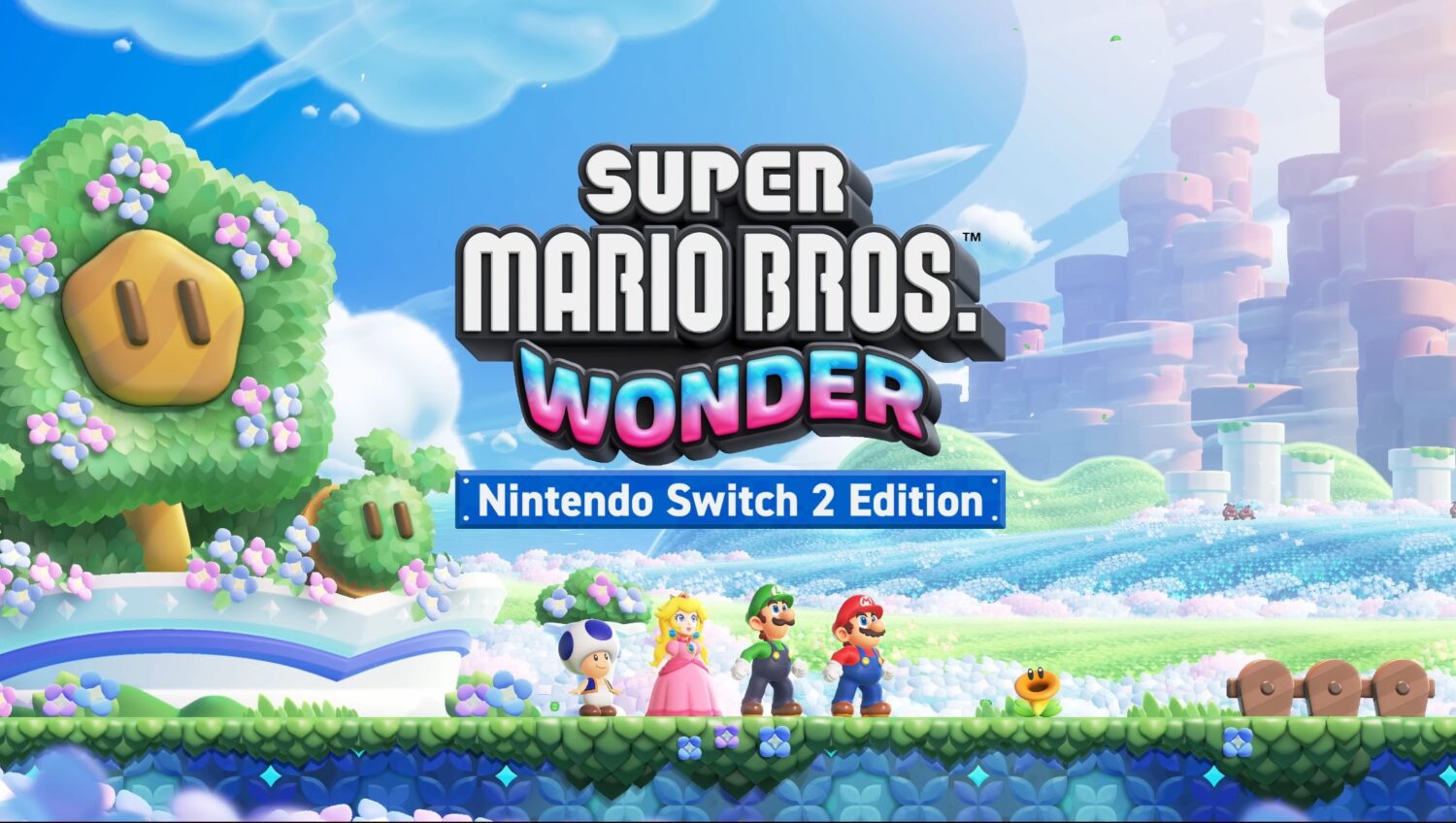
We just got one of the clearest “yep, this is moving along” signals for Super Mario Bros. Wonder – Nintendo Switch 2 Edition + Meetup in Bellabel Park: an official ESRB rating. The listing gives the game an E for Everyone rating with the descriptor Mild Fantasy Violence, plus the interactive element In-Game Purchases. That combination should feel familiar to anyone who played the original Wonder, and it also lines up with what Nintendo has already said about this release: it’s the same bright, playful Flower Kingdom vibe, now packaged as a Nintendo Switch 2 Edition with extra features and a new place to hang out.
The big hook is Bellabel Park. Nintendo describes it as a plaza with attractions where you can team up with friends and family, or turn into rivals for a few rounds, depending on your mood. That matters because Wonder already shines as a “pass the controller” platformer, and a plaza-style set of activities gives us a reason to come back even after the credits roll. On top of that, the Nintendo Switch 2 Edition is positioned as more than a label. Nintendo has said there are performance and enhancement improvements, and it’s also clear about how the game behaves across systems: this edition is meant for Nintendo Switch 2, while inserting the game card into the original Nintendo Switch plays the Nintendo Switch version without the Switch 2-exclusive extras.
Nintendo has a Spring 2026 release window on record, and an ESRB rating is one more step that tends to show up once a release is real and actively being prepared. It does not guarantee a date reveal tomorrow, but it does tell us we’re not dealing with vapor. If you’re deciding whether to replay Wonder, wait for the upgrade pack, or jump in for the first time, we can use what’s confirmed right now to make smart choices, without turning every rumor into a prophecy.
The Super Mario Bros. Wonder Nintendo Switch 2 Edition + Meetup In Bellabel Park ESRB rating
An ESRB rating might sound like paperwork, but it’s also a public checkpoint. Super Mario Bros. Wonder – Nintendo Switch 2 Edition + Meetup in Bellabel Park is listed as E for Everyone, with Mild Fantasy Violence, and it includes the interactive element In-Game Purchases. That tells us two practical things right away. First, the tone is still classic Mario: bright, cartoonish action where nobody’s getting traumatized, just bonked. Second, the listing exists because the release is far enough along to be evaluated and posted. It’s like seeing a restaurant put the chairs outside and stack menus by the door. It doesn’t tell us the exact opening hour, but it absolutely suggests the lights are on and the staff is working.
What “E for Everyone” and Mild Fantasy Violence really mean
E for Everyone is the ESRB’s way of saying the experience is broadly suitable, and the descriptor Mild Fantasy Violence keeps expectations grounded. In Mario terms, we’re talking about the kind of action we’ve seen for decades: characters jumping on enemies, tossing shells, getting knocked back, and shaking it off with cartoon flair. No gore, no realistic harm, no “why did that cutscene make me call my therapist” energy. The useful part is how it frames family play. If you’re planning couch sessions with kids, younger siblings, or the friend who only plays games when snacks are involved, this rating is a green light that the tone stays friendly and familiar. It also matches how Wonder already feels in motion: chaotic in the fun way, not intense in the heavy way.
Interactive elements: In-Game Purchases
The ESRB listing includes In-Game Purchases, and that label can make people raise an eyebrow, especially when they hear it next to a first-party Nintendo release. The key is not to overreact or invent details that aren’t stated. The label simply means there is some purchase-related functionality associated with the game. It does not automatically mean loot boxes, aggressive monetization, or a design that nags you every five minutes. What it does mean is that if you’re sensitive to purchase prompts, or you’re setting up parental controls, you should plan with that label in mind. Think of it like a “check the ingredients” sticker on food. It’s not saying the meal is bad, it’s saying you should know what’s in the kitchen before you serve it.
What the Nintendo Switch 2 Edition is
Nintendo is calling this a Nintendo Switch 2 Edition for a reason, and it’s not just a shiny badge slapped on the box. Nintendo’s own game page frames it as “more experiences” in the Flower Kingdom, plus other enhancements, with a release window of Spring 2026. The simplest way to think about it is this: it’s still Super Mario Bros. Wonder at its core, but it’s being positioned as the best version for Nintendo Switch 2 owners, with extra features tied to that hardware and a new addition called Meetup in Bellabel Park. If the original Wonder is a great theme park ride, the Switch 2 Edition is that same ride with a smoother track, sharper signage, and a new area to explore after you get off.
Why this version is tied to Nintendo Switch 2
Nintendo states that Super Mario Bros. Wonder – Nintendo Switch 2 Edition + Meetup in Bellabel Park is playable only on Nintendo Switch 2 when you want the Switch 2 Edition features. That’s a direct, practical line in the sand. It’s not saying you can’t play Wonder at all on the original Nintendo Switch. It’s saying the upgraded edition and its exclusive additions are designed around Nintendo Switch 2. If you’re shopping for the “best possible” version, that’s the deciding factor. This also fits how platform holders usually roll out enhanced editions. They keep the base experience accessible, but the performance and enhancement layer lives where the newer hardware can actually deliver it. Nobody wants a “better graphics” option that runs like a tired treadmill.
How the game card behaves on the original Nintendo Switch
Nintendo is also clear about a scenario lots of people will test immediately: inserting the game card into a Nintendo Switch console. In that case, Nintendo says you can play the Nintendo Switch version of the game, without the additional features exclusive to the Nintendo Switch 2 Edition. That’s a helpful detail because it means the card is not a useless coaster if you still have an older system in the house. It also hints at how Nintendo is thinking about households with multiple consoles. Maybe your Switch 2 is in the living room, while the original Switch is in a bedroom or backpack. The card behavior supports that kind of reality. You can still play, but you’re not bringing the Switch 2-only extras with you on older hardware.
Upgrade options for people who already own Wonder
If you already bought Super Mario Bros. Wonder on Nintendo Switch, Nintendo has good news: you don’t necessarily have to repurchase the entire game to get the Nintendo Switch 2 Edition experience. Nintendo says you can purchase an upgrade pack to play the Switch 2 Edition. That one sentence is doing a lot of work, because it suggests Nintendo expects a huge chunk of the audience to be returning players. And that makes sense. Wonder is the kind of game people finish, smile about, and then immediately imagine replaying with a different group of friends. An upgrade path turns that “maybe later” replay into an easier decision, especially if you’re the type who hates paying twice for the same base adventure.
What an upgrade pack is meant to do
Nintendo’s wording points to the upgrade pack as the bridge between what you own and what the Switch 2 Edition offers. The value proposition is straightforward: keep your original purchase, then pay for access to the enhancements and additions that are tied to Nintendo Switch 2. What we can say for sure, based on Nintendo’s own pages, is that the Switch 2 Edition includes extra experiences and enhancements, and that Bellabel Park is part of the deal. The upgrade pack is how existing owners step into that. If you think of your original Wonder copy as the main ticket, the upgrade pack is the wristband that lets you into the new area and the upgraded attractions. You still have the park, but now you have the new perks.
Smart ways to decide between upgrade and full purchase
The decision usually comes down to one thing: what you already own, and how you like to buy games. If you own Wonder digitally and you’re comfortable staying digital, an upgrade pack path is often the cleanest route, because it’s designed for returning players. If you own a physical copy and like lending games to friends, the physical angle might matter more, because you may want the version that fits how your household shares and swaps games. Another practical factor is who you’re playing with. If you’re the “one copy, one console” type, the upgrade pack is hard to ignore. If you’re building a small library for multiple consoles in the home, you might value having a dedicated copy tied to the Switch 2 Edition experience. Either way, the best move is to base the choice on your habits, not hype.
Performance and visual upgrades: what we can say for sure
Nintendo has said this Nintendo Switch 2 Edition includes performance and enhancement improvements over the original release, and that’s the part that will make platformer fans lean forward like they just heard the snack bag open. The reason is simple: 2D Mario lives and dies on feel. When inputs respond cleanly and visuals stay crisp during chaotic moments, the game feels like it’s reading your mind. When performance wobbles, even a tiny bit, it feels like the floor shifts under your feet. While we should avoid inventing exact technical numbers, we can still talk about what “performance and visual upgrades” means in real play. It means smoother motion, clearer readability, and fewer moments where the screen turns into a confetti cannon of effects you can’t parse.
Why platformers feel better with stable performance
In a platformer, stability is not a luxury. It’s the whole point. You’re timing jumps, reacting to enemies, and committing to movement with confidence, and the game has to reward that confidence. Wonder already thrives on surprise, especially when levels twist into weird, delightful shapes. When you stack that with multiplayer chaos, stability becomes even more important, because the screen is busier and the stakes of a mistimed jump are higher. If the Switch 2 Edition improves how smoothly the game runs, that improvement will show up in the most satisfying way: you won’t notice it as a feature, you’ll notice it as a feeling. The best tech upgrades are the ones that disappear and leave only “wow, that felt good.”
Visual clarity: why small improvements can look huge
Visual upgrades are often misunderstood as “make it shinier,” but for Mario, clarity can matter more than sparkle. Cleaner edges, sharper backgrounds, and improved readability can make levels easier to parse, especially when multiple players are on screen and the action is layered with effects. Wonder’s art style is already vibrant and expressive, so the goal is not to replace it. The goal is to let it breathe. If enhancements make the image cleaner and the motion smoother, that can reduce eye fatigue and improve the moment-to-moment comfort of play. It’s like cleaning a window, not repainting the room. The same view is there, it’s just easier to see and enjoy for longer sessions.
Meetup in Bellabel Park: the new addition
Bellabel Park is the real “new toy on the table” here, because it’s described as a plaza with attractions that support teaming up or competing. Nintendo highlights activities like collecting the most coins, running and hiding in Phanto Tag, and working together to pass a Bob-omb to the goal. That mix matters because it signals variety. Some groups want friendly co-op. Some groups want a winner and a loser, preferably decided by who can steal coins the fastest. A plaza structure also suggests something you can drop into without committing to a full level run. That’s a big deal for families and friend groups, because not every session has time for a full campaign stretch. Sometimes you have twenty minutes and a stubborn desire to prove you’re still the best Mario player in the room.
Bellabel Park as a plaza built for groups
Nintendo’s description paints Bellabel Park as a place where the social side of Wonder gets a dedicated home. That’s smart design because it gives multiplayer a “meeting point” feeling, instead of treating it like something that only happens inside standard stages. A plaza also fits how people actually play together. You gather, you pick an activity, you laugh when someone messes up, and you try again. When the options include both cooperative tasks and competitive challenges, the plaza becomes a mood ring. If everyone’s feeling chill, you pick something teamwork-focused. If everyone’s feeling spicy, you pick something that lets you dunk on your friend who keeps bragging about their jump timing. Either way, it’s built for repeat play, which is exactly what an add-on like this should aim for.
Co-op and versus energy: picking the right vibe
The phrase “team up (or work against)” is doing a lot of heavy lifting, because it tells us Bellabel Park isn’t locked into one style of play. Co-op energy is about shared wins, quick recoveries, and the kind of friendly chaos where everybody’s laughing even when things go wrong. Versus energy is about bragging rights, tiny betrayals, and that one person who becomes suspiciously good at stealing coins at the last second. A good multiplayer suite supports both, and the plaza framing suggests you can switch vibes without friction. That matters for real groups, because the vibe changes fast. One minute you’re helping someone learn the ropes, and the next minute you’re all yelling because Phanto Tag just turned into a tiny horror comedy where nobody trusts anyone.
How Bellabel Park fits the spirit of Wonder
Super Mario Bros. Wonder worked because it embraced surprise while keeping controls approachable. It’s weird in the best way, but it’s still readable and welcoming. Bellabel Park sounds like it’s designed to extend that same philosophy into a more social, bite-sized format. The Flower Kingdom setting is already playful and full of personality, so adding a plaza of attractions feels like adding a new hallway to a house you already like living in. It also addresses a common pattern with Mario platformers: once you beat the main path, you either chase collectibles or you move on. A plaza of group activities gives the game a different kind of afterlife. It’s less “grind every last thing” and more “come back when you have people over.” That’s a strong fit for a Mario release, especially one being positioned for new hardware.
Keeping the Flower Kingdom feel
Nintendo’s own wording keeps pointing to “more experiences” in the Flower Kingdom, and that’s the right framing. Wonder’s tone is cheerful, musical, and a little mischievous, and Bellabel Park is described in a way that matches that. Phanto Tag, coin challenges, and a cooperative Bob-omb passing task all sound like activities that can be playful without turning into something that feels out of place. The best Mario side activities feel like they were always meant to exist, even if they didn’t before. If Bellabel Park carries the same visual charm and quick humor as the base game, it will feel like an extension, not an attachment. Nobody wants a bonus mode that feels like it wandered in from another franchise wearing a fake mustache.
Why this is a nice excuse to replay
Let’s be real: many of us don’t need a reason to replay a Mario game, but having a new social hub makes the replay feel fresh for a different reason. It’s not just “do the levels again.” It’s “do the levels again, then mess around in a plaza with your friends.” That shift matters because it changes the pacing of a play session. You can run a level, then cool down with a quick attraction. You can hand the controller to someone new and let them try a shorter activity before committing to a full stage. It turns the experience into something more flexible, like a playlist rather than a single long album. And when you’re playing with a group, flexibility is what keeps the night fun instead of exhausting.
The trailer: what to watch for without guessing
Nintendo has shared a trailer for Super Mario Bros. Wonder – Nintendo Switch 2 Edition + Meetup in Bellabel Park, and it’s worth watching with the right mindset. Not “pause every frame and draw conspiracy charts,” but “watch for what Nintendo is actually choosing to show.” Trailers are marketing, sure, but they’re also curated hints about what the team thinks will matter to players. If the spotlight is on group activities in Bellabel Park, that’s a signal that the social, replayable side is the headline feature beyond the technical enhancements. If you want to rewatch it right now, here’s the link: https://www.youtube.com/watch?v=ee2xR2a1Dok
Moments that show the tone of Bellabel Park
The most important trailer detail is often the tone, not the fine print. Does it look like quick, friendly competition, or longer structured challenges? Does it emphasize teamwork, or cheeky sabotage? Nintendo’s written descriptions already call out coin collecting, Phanto Tag, and a cooperative Bob-omb passing goal, so the trailer becomes the vibe check. When you watch, focus on how quickly activities start, how players interact, and whether the plaza feels like a central place you’ll return to often. A good multiplayer add-on should feel like a party game you can boot up at the end of a long day, not a complicated system you have to relearn. If it looks pick-up-and-play, that’s a win for real-life schedules and real-life attention spans.
A simple way to rewatch trailers like a detective
Here’s a low-stress method that keeps you grounded in what’s real. First watch: just enjoy it, no pausing, no analysis. Second watch: look for repeated scenes, because repeated scenes are usually the selling points. Third watch: listen to the language Nintendo uses in any on-screen text or narration, because that wording is often consistent with official pages. This approach helps you avoid the classic trap of over-interpreting one flashy shot. Trailers love flashy shots. That’s their job. Your job is to separate “cool montage moment” from “this is a feature we want you to understand.” With Bellabel Park, the repeated emphasis on teaming up or competing is the signal that matters most, because it lines up across Nintendo’s own descriptions.
Spring 2026 timing and what a rating does and doesn’t tell us
Nintendo lists Spring 2026 as the release window for this Nintendo Switch 2 Edition, and the ESRB rating is now public. It’s tempting to treat that like a countdown clock, but we should keep it honest. A rating is a real milestone, and it supports the idea that the release plan is active. What it does not do is guarantee that a release date reveal is imminent, or that the launch is locked to a specific week. Timelines can shift, marketing plans can change, and Nintendo can sit on information until it wants to make noise. The healthy way to read this is: the product is far enough along to be rated and listed, and Nintendo continues to state Spring 2026. That’s solid ground to stand on.
Ratings are real milestones, not countdown timers
Ratings happen because companies need them to sell games in key markets, and they usually appear once a release is being prepared for retail and digital storefronts. That’s meaningful, but it’s not a promise that a specific announcement is around the corner. Think of it like seeing shipping labels printed in a warehouse. You know something is being packed, but you don’t know whether the truck leaves tomorrow morning or next week. The best move is to treat the ESRB listing as confirmation, not prophecy. It confirms the game’s exact title, its rating details, and the platform association with Nintendo Switch 2. Everything beyond that, like guessing a specific date, is where people start building castles out of clouds.
Where Nintendo usually puts final dates
If you’re waiting for the final release date, the safest place to look is Nintendo’s official channels and regional game pages, because those are the sources that ultimately get updated when dates lock. Nintendo also tends to pair date reveals with broader announcements, especially when there’s new gameplay to show. The Nintendo UK page already lists Spring 2026, and Nintendo’s news post notes the same window while pointing viewers to the trailer. Those official pages are the practical “watch list,” because they get updated when the plan becomes specific. It’s not glamorous, but it’s reliable. If you’re the type who hates missing preorders or wants to plan a group game night calendar, official pages beat rumor chasing every time.
Who this release is for
This Nintendo Switch 2 Edition is aimed at two overlapping groups: people who already loved Wonder and want a reason to return, and people who skipped it and want to start with the most enhanced version. Bellabel Park pushes hard toward the social crowd, which is a clever move because Mario games are often the glue that holds a mixed-skill group together. One person can be an expert, another can be brand new, and the night can still be fun because the tone is welcoming. Add confirmed performance and enhancement improvements on top of that, and it becomes a pretty easy sell for anyone building a Switch 2 library. The tricky part is not “is it good,” because Wonder’s foundation is strong. The tricky part is deciding how you want to buy it, and how you actually play games at home.
If you loved Wonder the first time
If you already played Wonder and it left you grinning, this edition is basically Nintendo handing you a new invitation with the same familiar handwriting. Bellabel Park is the main reason to return, because it’s a new chunk of experience that’s built around multiplayer attraction-style play. Returning players also benefit from the performance and enhancement layer, because you already know the game’s flow and you’ll feel improvements more clearly. It’s like replaying a favorite song on better speakers. The melody didn’t change, but it hits different. The upgrade pack option also matters here, because Nintendo is explicitly acknowledging returning owners. If you’re the kind of player who wants a clean excuse to get the group together again, Bellabel Park looks designed to be that excuse.
If you skipped it and want the best first impression
If you didn’t play Wonder the first time around, the Switch 2 Edition gives you a strong “start here” moment. You’re getting the core game that already earned its reputation as a joyful 2D Mario adventure, plus the Bellabel Park addition that leans into multiplayer. Starting with the enhanced edition also means you’re not doing the “play it now, then upgrade later” dance. You get the version designed around Nintendo Switch 2 from the start. That’s helpful if you’re trying to build a simple library where you don’t have to remember which version has which features. It’s the cleanest path: one purchase, one experience, and the extras are already included as part of the package.
If you play with family or friends on the couch
Couch play is where Mario earns its keep, and Bellabel Park sounds like it’s targeting exactly that kind of session. Short attractions are perfect for mixed groups because they reduce the pressure. If someone is new, they can jump in without feeling like they’re dragging the team through a long level. If someone is competitive, they can chase coin totals and brag. If someone is cooperative, they can focus on shared goals like getting a Bob-omb safely to the end. The “team up or work against” framing is basically Nintendo saying, “We know how people actually play together.” And if you’ve ever hosted a game night, you know that flexibility is the difference between a great night and a night where someone quietly checks their phone and fades into the couch.
A practical checklist before launch
When a release has a window like Spring 2026, the best plan is to prepare without obsessing. Start by deciding whether you’re likely to buy fresh or use an upgrade pack, because that affects how you budget and how you track listings. Next, decide what kind of sessions you’re planning. Are you mostly solo, or do you want Bellabel Park to be the centerpiece of group nights? Finally, keep your information sources simple and official. Nintendo’s regional pages and official news updates are the most reliable places for changes, including a final release date and any details about what the enhancements include. That’s the grown-up approach, and yes, it’s less dramatic than rumor chasing. But it also saves you from being the person who confidently tells friends the wrong date and then has to pretend they never said it.
What to double-check about play styles and purchases
Before you buy, make sure you’re clear on what hardware you’ll be using and what you expect to get. Nintendo states the Switch 2 Edition features are for Nintendo Switch 2, while inserting the card into the original Switch plays the original Switch version without the Switch 2-exclusive features. That’s a key detail for households with multiple systems. Also consider who will be playing. If Bellabel Park is a big draw, plan around group play and how often you realistically get people in the same room. If you’re mostly solo, Bellabel Park may still be fun, but your value calculus might lean more toward the enhancements and the convenience of having the best version on your main console. And if you care about purchase controls, remember the ESRB listing includes In-Game Purchases, which is worth factoring into your settings and expectations.
How to keep tabs using official pages
The easiest way to stay informed without burning energy is to bookmark Nintendo’s official pages for the game and check them occasionally, especially as Spring 2026 gets closer. Nintendo’s UK game page already lists the release window and explains the Switch 2-only nature of the enhanced features, and Nintendo’s official news post highlights the Bellabel Park attractions and points people to the trailer. Those are the pages that will change when the plan changes. If a final date drops, you’ll see it there first, and you’ll see it in language Nintendo is willing to stand behind. That’s the difference between being informed and being entertained by speculation. Speculation is fun, but official updates are what you can actually plan around.
Conclusion
Super Mario Bros. Wonder – Nintendo Switch 2 Edition + Meetup in Bellabel Park now has an ESRB rating, and that’s a solid, tangible milestone. The listing confirms an E for Everyone rating with Mild Fantasy Violence and notes In-Game Purchases, which fits the friendly Mario tone while giving families a useful heads-up for settings. Nintendo continues to list Spring 2026 as the release window, and its official descriptions make the pitch clear: this is Wonder with performance and enhancement improvements on Nintendo Switch 2, plus new social-style attractions in Bellabel Park that let you team up or compete. If you’re a returning player, the upgrade pack option is the obvious path to watch. If you’re new, the Switch 2 Edition looks like a clean starting point. Either way, the best approach is simple: enjoy the trailer, keep your expectations tied to what Nintendo and the ESRB have confirmed, and let the final release date come to you through official updates instead of rumor fog.
FAQs
- What rating did the ESRB give the Switch 2 Edition of Wonder?
- The ESRB lists it as E for Everyone with the content descriptor Mild Fantasy Violence, and it also includes the interactive element In-Game Purchases.
- Is this version playable on the original Nintendo Switch?
- Nintendo states the Switch 2 Edition features are for Nintendo Switch 2, and that inserting the game card into an original Switch lets you play the Nintendo Switch version without the Switch 2-exclusive features.
- What is Meetup in Bellabel Park?
- Nintendo describes Bellabel Park as a plaza with attractions where you can team up with or compete against friends and family, including activities like collecting coins, Phanto Tag, and passing a Bob-omb to the goal.
- Do existing owners of Super Mario Bros. Wonder have an upgrade option?
- Nintendo says that if you already own Super Mario Bros. Wonder for Nintendo Switch, you can purchase an upgrade pack to play the Nintendo Switch 2 Edition.
- Does the ESRB rating mean the release date will be announced immediately?
- A rating is a meaningful milestone and confirms the listing details, but it does not guarantee an immediate date announcement. Nintendo still lists the release window as Spring 2026.
Sources
- Super Mario Bros. Wonder Nintendo Switch 2 Edition + Meetup in Bellabel Park, ESRB, n.d.
- Super Mario Bros. Wonder – Nintendo Switch 2 Edition + Meetup in Bellabel Park (Nintendo UK), Nintendo, n.d.
- Super Mario Bros. Wonder – Nintendo Switch 2 Edition + Meetup in Bellabel Park launches on the Nintendo Switch 2 system in Spring 2026, Nintendo, September 19, 2025
- Super Mario Bros. Wonder – Nintendo Switch 2 Edition + Meetup In Bellabel Park Has Been Rated, Nintendo Life, January 2026
- Super Mario Bros. Wonder – Nintendo Switch 2 Edition + Meetup in Bellabel Park (Trailer), YouTube, n.d.