














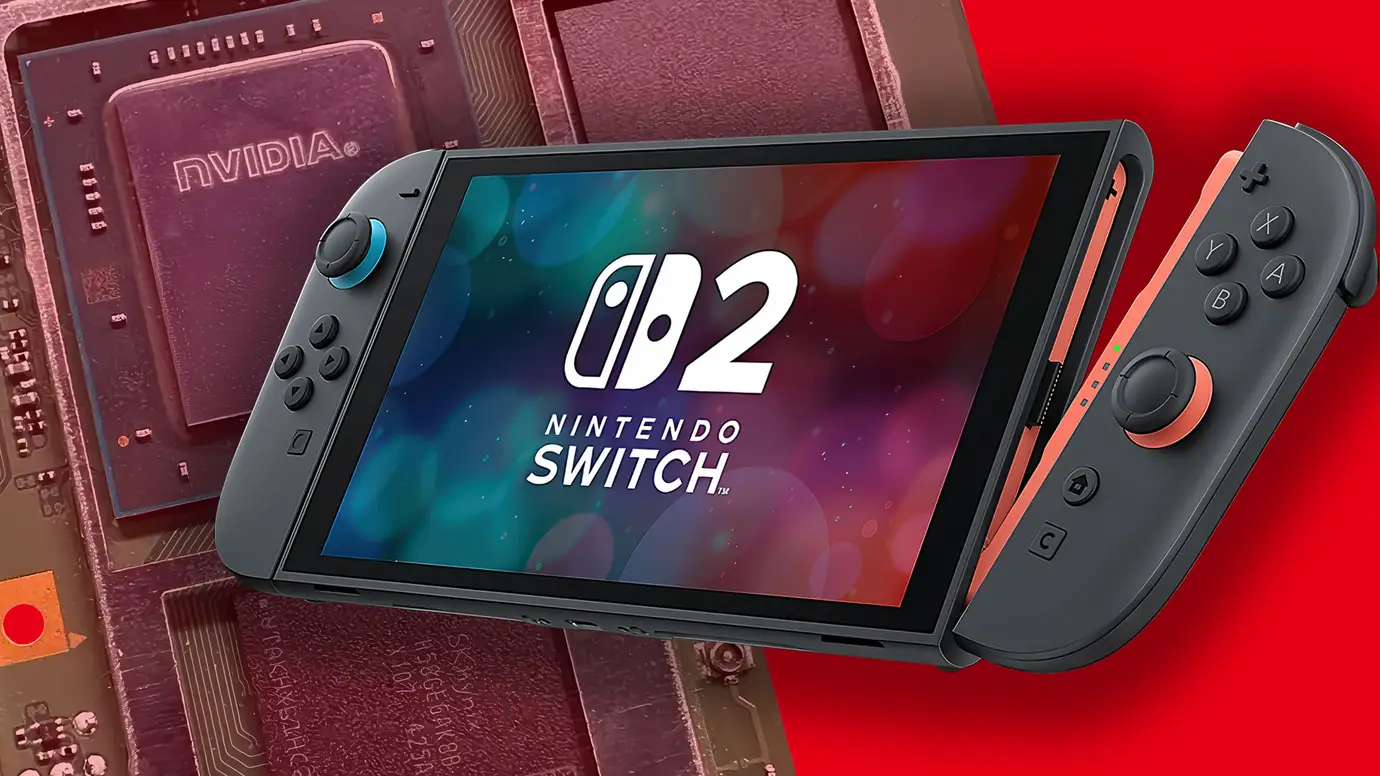
Summary:
NVIDIA CEO Jensen Huang’s recent appearance on the Nintendo Today! app did more than congratulate Nintendo on launching the Switch 2—it crystallized a years-long dream first voiced by beloved former president Satoru Iwata. Huang recalled how Iwata imagined a console that would slip into a backpack yet still project big-screen, cinematic adventures, opening creative floodgates for developers everywhere. According to Huang, the Switch 2’s custom NVIDIA architecture finally meets that high bar, uniting desktop-class performance with handheld convenience. This piece unpacks the emotional tribute, the technical wizardry behind the new system, and the ripple effects for gamers, developers, and the wider hardware landscape in 2025.
Jensen Huang’s Message: A Moment That Resonates
The Nintendo Today! alert lit up screens worldwide, but the words that followed carried a weight few promotional clips ever achieve. Jensen Huang spoke with an unmistakable mix of excitement and reverence, pointing straight back to the late Satoru Iwata’s dream of merging portability and power. By publicly connecting the Switch 2 to Iwata’s legacy, Huang bridged corporate partnership and heartfelt tribute in a single breath. Gamers felt it; social feeds erupted with gratitude, and industry watchers noted how rarely a hardware launch gets such a personal endorsement from a tech titan. In barely two minutes, the NVIDIA chief framed the console not merely as a product but as a promise kept—fueling buzz that marketing budgets can’t buy.

The Legacy of Satoru Iwata and the Quest for Portable Power
Satoru Iwata never stopped chasing playful possibilities, and his pitch to Huang years ago proved it: imagine carrying a machine that plays blockbuster epics without tethering you to a couch. This wasn’t wishful thinking; it was the cornerstone of Nintendo’s philosophy that hardware should dissolve barriers rather than erect them. Back when most firms were splitting their lines between immovable home boxes and pared-down handhelds, Iwata envisioned a single hybrid that excelled at both. While the original Switch in 2017 moved the idea forward, technological limits still capped raw performance. Switch 2, with its strengthened silicon and smarter power management, steps squarely into the territory Iwata once sketched—where RPG cut-scenes look theatre-ready even on a train commute.
A Vision Shared Over Dinner
Huang’s story of chatting with Iwata over a modest meal paints the scene vividly: two leaders scribbling concepts on napkins, swapping anecdotes about gamer expectations, and laughing at early prototypes that ran hot enough to warm the table. Those evenings weren’t contractual negotiations; they were brainstorming sessions fueled by mutual respect. By resurfacing that memory, Huang reminded listeners that the roots of Switch 2 are deeply personal. It’s not an incremental spec bump but the outcome of camaraderie between engineering romantics who saw play as a universal language. That anecdote underscores why fans feel emotionally invested—every button press now echoes a conversation between friends who believed fun and technical elegance could coexist.
NVIDIA’s Technological Backbone in the Switch 2
Getting from sketchbook dream to commercial reality required an NVIDIA engine designed from scratch. Unlike the Tegra X1 lineage that powered the first Switch, the new chip blends dedicated AI cores with updated GPU clusters, enabling real-time upscaling and advanced lighting effects without draining the battery in record time. NVIDIA’s engineers targeted paradoxes: bigger worlds but smaller power draw, louder explosions yet cooler thermals. The breakthrough lay in coupling an Ada-era GPU slice with next-generation DLSS acceleration, letting frames render at lower native resolutions and smartly upscale to crisp output before your eyes detect compromise. Silicon, firmware, and even memory pathways were co-designed alongside Nintendo’s game teams to ensure seamless handshakes between low-level code and high-level creativity.
From Tegra to Custom AI Silicon
Tegra once symbolized mobile horsepower, but seven years of algorithmic leaps made its successor unrecognizable. Engineers stripped away legacy modules, shifted to a 5 nm process, and sprinkled specialized tensor accelerators across the die. These units run AI-driven noise removal, geometry reconstruction, and foveated rendering, effectively giving the console “contextual eyesight.” Instead of brute-forcing every pixel, the chip guesses intelligently where extra detail matters most—saving energy for those breath-catching boss fights. The result is a handheld that delivers effects formerly reserved for desktop PCs, such as ray-traced reflections shimmering across harbor waters or volumetric fog swirling around candlelit corridors, all while whisper-quiet fans keep your thumbs sweat-free.
Portability Meets Performance: Balancing Act
Designing portable power is like stuffing a thunderstorm into a lunchbox: thrilling but tricky. Heat, battery life, and ergonomic demands form a triangle that can’t be ignored. Nintendo and NVIDIA tackled these constraints by adopting vapor-chamber cooling, a denser battery chemistry, and a chassis that subtly ventilates through the kickstand hinge. Players can now log a cross-country flight without hunting for outlets, yet dock the console at home to access higher performance caps through power-unlocked clock speeds. This dual-mode philosophy allows game designers to push boundaries in cut-scenes without sacrificing handheld practicality, harmonizing home-theatre grandeur with on-the-go spontaneity.
Unleashing Developer Creativity Through Hardware Freedom
When hardware steps up, software hearts race faster. Studios no longer trim texture resolution to fit memory ceilings or cut particle counts to protect frame rate. Instead, the Switch 2 welcomes sprawling open worlds populated by AI-driven NPCs that remember your last conversation and adjust quests accordingly. The expanded RAM pool helps maintain seamless fast travel, while SSD-based storage slashes loading screens to postcard flashes. Smaller indie teams, too, rejoice: DLSS levels the playing field, letting lean budgets target 720p internally yet ship 4K-worthy frames on the big screen. Huang’s shout-out to creativity wasn’t marketing fluff—it signals a platform shaped just as much by artists’ ambitions as by transistor counts.
How DLSS Elevates Handheld Gaming Visuals
Deep Learning Super Sampling (DLSS) once felt like magic for desktop rigs, and now that same sleight of hand arrives in backpack-friendly form. Instead of brute-rendering every pixel, the console’s neural nets predict detail from earlier frames and motion vectors. The effect is akin to a painter filling fine brushstrokes where sketches once sat, delivering sharpness and temporal stability without overheating the SoC. Gamers gain smoother action sequences and richer foliage density, while battery metrics barely flinch. In docked mode, an even more aggressive DLSS profile kicks in, letting AAA titles flirt with 60 fps at 4K—something console historians would have deemed science fiction back in the Wii U era.
Real-Time Upscaling on the Go
Run a frantic shooter on the commute, and you’ll witness DLSS flex mid-match: explosions bloom with high-frequency detail, and enemy silhouettes remain crisp when you spin 180 degrees. The neural network adapts frame by frame, learning interior lighting cues to reduce shimmering on metal surfaces. That responsiveness matters because handheld screens sit mere inches from your retinas; any visual artifact feels magnified. Thanks to AI-assisted upscaling, the Switch 2 sidesteps the usual resolution sacrifices common in portable gaming, proving that road-trip entertainment no longer means compromise.
Market Expectations and Early Reception
Within hours of the message going live, preorder queues swelled, and analysts revised shipment forecasts upward. Critics praised Nintendo’s decision to launch with a cross-genre lineup—an open-world fantasy epic, a couch-co-op party romp, and a photorealistic racing sim—demonstrating the platform’s range. Investors, meanwhile, highlighted the deepened NVIDIA partnership as a moat against competitors who must juggle multiple silicon vendors. While some skeptics worry about initial supply constraints, the broader sentiment mirrors Huang’s optimism: the Switch 2 isn’t just a sequel; it redefines what a hybrid console can deliver at home or on the move.
The Broader Handheld Landscape: Competitors and Differentiators
Steam Deck, ROG Ally, and a wave of Snapdragon-powered devices have turned handheld PC gaming into a crowded playground, yet Nintendo still plays by different rules. First-party franchises remain exclusive, Joy-Con versatility invites local multiplayer spontaneity, and battery-aware OS optimizations let the Switch 2 outlast beefier PC rivals in marathon sessions. More importantly, the holistic hardware-software symphony—refined over decades—creates experiences that walled-garden ecosystems struggle to mimic. Add cloud backup, cross-progression, and an expanding eShop indie scene, and Nintendo’s hybrid continues to carve a unique lane where family fun and tech spectacle share the same track.
Implications for the Future of Nintendo and NVIDIA Partnership
Huang’s cameo doesn’t close a chapter; it opens the next one. With AI now baked into the hardware, future firmware updates could unlock further enhancements, like adaptive latency reduction or user-authored neural filters that personalize visual styles. The long-term road map likely extends beyond consoles, too: Nintendo’s IPs thriving in NVIDIA cloud data centers, or collaborative research into haptic feedback powered by machine-learning models. By fusing Nintendo’s talent for joyful experiences with NVIDIA’s AI leadership, the pair signal a strategy that transcends iterative hardware cycles. Gamers win, developers gain new canvases, and Iwata’s dream keeps evolving far beyond its portable, powerful starting point.
Conclusion
Jensen Huang’s heartfelt salute did more than celebrate a launch date; it tied past, present, and future into a single, uplifting narrative. Switch 2 stands as proof that a pocket-sized device can host cinematic sagas without cutting corners, honoring Satoru Iwata’s belief that hardware should expand possibility, not limit it. As players unbox their new hybrids and studios test creative boundaries, the partnership between Nintendo and NVIDIA promises a fresh era where portability no longer competes with power—it complements it, pointing the gaming world toward adventures only hinted at a decade ago.
FAQs
- Is the Switch 2 backward-compatible with original Switch cartridges?
- Yes, physical cartridges and digital libraries transfer seamlessly, so your existing collection travels forward without hassle.
- How long does the battery last in handheld mode?
- Expect 6–9 hours on mixed usage, thanks to improved battery chemistry and smarter power management.
- Does the console support ray tracing in handheld mode?
- Ray-traced effects are available, though at slightly reduced resolution to preserve frame rate and battery longevity.
- Can developers opt out of DLSS?
- Absolutely—studios can disable DLSS if they prefer a native-resolution approach, though most embrace it for performance gains.
- Will cloud saves require a subscription?
- Basic cloud backup remains tied to Nintendo Online, but offline save transfer through micro-SD is still supported.
Sources
- Nvidia boss says Switch 2 chip is the evolution of Iwata’s vision, Polygon, June 3, 2025
- Nintendo Switch 2 Leveled Up With NVIDIA AI-Powered DLSS and 4K Gaming, NVIDIA Blog, April 2025
- Nvidia’s Jensen Huang talks Switch 2, The Verge, June 3, 2025
- Nvidia CEO Claims The Switch 2 Redefines Portable Gaming Graphics, GameSpot, June 3, 2025
- Creator’s Voice Special Edition – Nintendo Switch 2’s Custom Processor, YouTube, June 3, 2025