














Summary:
The ESRB rating for The Adventures of Elliot: The Millennium Tales is now public, and it lands exactly where most people expected: T for Teen, with Fantasy Violence, Mild Language, and Use of Alcohol. That mix tells us a lot without spoiling anything. We’re looking at a game that wants sword swings, monster clashes, and magical danger to feel exciting, but not grim. We’re looking at dialogue that can be a little spicy now and then, but not constantly crude. And we’re looking at a world that probably includes taverns, celebratory drinks, or item flavor that treats alcohol like a normal part of fantasy life rather than a shock tactic.
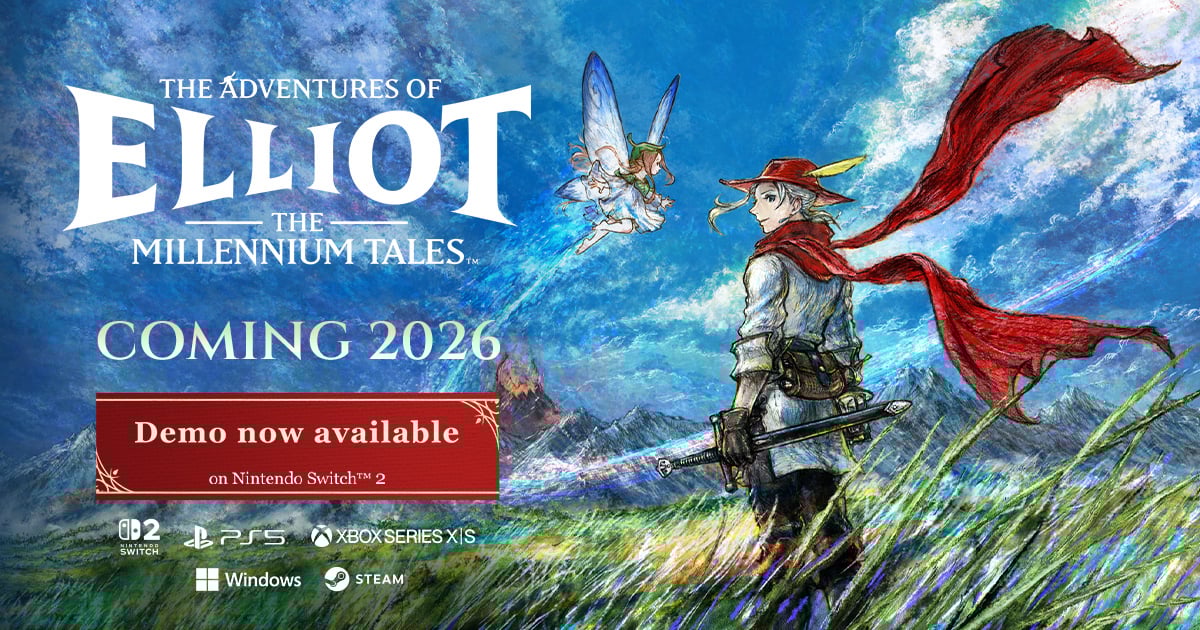
More importantly, a rating appearing at this stage is a real sign that the publisher has begun clearing key release steps, even if it doesn’t lock in a date on its own. We still don’t have an official day circled on the calendar, but we do have something you can play right now: a free debut demo on Nintendo Switch 2. If you’ve been curious about how HD-2D looks and feels when it’s paired with real-time action, this is the easiest way to answer that question with your own hands. The rating is the headline, but the demo is the proof-of-feel, and together they make Elliot’s next update feel a lot closer to “when,” not “if.”
The ESRB rating for The Adventures Of Elliot: The Millennium Tales
The Adventures of Elliot: The Millennium Tales has an official ESRB rating, and the label is straightforward: T for Teen. The descriptors attached to it are Fantasy Violence, Mild Language, and Use of Alcohol, which is the ESRB’s way of saying, “Yes, there’s combat and danger, but we’re not heading into the darkest corner of the dungeon.” This is the kind of rating that fits a big, colorful fantasy adventure where battles are a core loop and the world still has room for charm, jokes, and a sense of wonder. If you’re trying to read the tea leaves, the biggest takeaway is simple: the game’s tone is likely adventurous first, intense second, and it’s aiming for a wide audience that includes teens and adults who just want a good quest without the mood turning heavy every five minutes.
What “T for Teen” signals for Elliot’s tone and moment-to-moment play
A Teen rating is a bit like a bouncer who checks your ID, nods, and says, “You’re fine, just don’t start a bar fight.” It usually means we can expect real action and real stakes, but the presentation stays controlled. In practice, that often looks like enemies that feel threatening, weapons that feel sharp, and boss encounters that look dramatic, while avoiding the kinds of graphic detail that would push things into an older rating category. It also suggests the writing is willing to be natural, not squeaky clean, but it won’t lean on constant profanity or shock value. If you’ve played fantasy RPGs that balance peril with warmth, that’s the vibe this rating points toward. It’s a promise of intensity you can enjoy, not intensity that tries to wear you out.
Breaking down the rating descriptors in plain language
Those three descriptors are the real story behind the single letter on the box. They’re basically the ESRB saying, “Here are the reasons we landed on Teen, so families and players know what they’re signing up for.” When we see Fantasy Violence, we should think swords, spells, monsters, and stylized impacts rather than realistic gore. When we see Mild Language, we should think occasional swearing or sharper insults, not constant harsh profanity. And when we see Use of Alcohol, we should think taverns, drinks in a cutscene, or item references rather than anything that turns alcohol into the main theme. None of this confirms exact scenes, but it does map the borders of what the game is comfortable showing on-screen.
Fantasy violence – what that usually looks like in an HD-2D action RPG
Fantasy violence is one of those descriptors that can cover a lot of ground, but it usually points to combat that’s energetic and frequent, with enemies that are clearly part of a fantasy setting. Think beasts, armored foes, magical creatures, and bosses built to look cool in motion, especially in a style like HD-2D where lighting and effects can make every hit feel punchier. The “fantasy” part matters because it signals stylization: flashes of magic, exaggerated impacts, and defeat animations that focus on drama rather than realism. If you’re worried about the game being too intense, this descriptor tends to land in the “action-adventure excitement” lane. It’s the kind of violence that’s meant to make your hands sweat during a boss fight, not make you look away from the screen.
Mild language – what to expect from dialogue and character flavor
Mild language is often a sign that the script wants characters to feel like people, not robots who only speak in polite quest text. In fantasy stories, that can show up as frustrated outbursts, insults during combat, or the occasional swear when something goes horribly wrong, like when a plan collapses in real time and everyone panics. The key word is “mild,” which usually means it’s not constant and it’s not the harshest stuff. It’s seasoning, not the whole meal. If you enjoy RPG banter, this can actually be good news, because it hints at a tone that allows humor and emotion without being overly sanitized. It’s the difference between a world that feels lived-in and a world that feels like it was wiped down with disinfectant.
Use of alcohol – how games typically handle taverns, items, and jokes
Use of alcohol can sound dramatic on a rating label, but in fantasy RPGs it’s often pretty ordinary. A town has an inn, an inn has drinks, and somebody in the background is living their best tavern life. Sometimes it’s a visual reference, like mugs on a table or a character sipping in a cutscene. Sometimes it’s a gameplay reference, like an item with a description that mentions wine, ale, or a celebratory toast. The presence of this descriptor is basically a heads-up that alcohol exists in the world, not a statement that the story revolves around it. If anything, it can be a tiny sign that the game’s towns and social spaces are aiming for that cozy “adventurers regroup here” feeling, the place where quests start and rumors spread.
How the ESRB process lines up with where a game is in development
When an ESRB rating appears, it means the publisher has submitted the materials needed for the rating process, and that’s an important milestone. The ESRB assigns ratings prior to release using publisher-provided disclosures and review materials, which is why ratings often surface when a game is far enough along that its overall tone and key content are stable. That said, a rating is not a release date, and it doesn’t magically guarantee a specific launch window by itself. What it does signal is momentum: the game is moving through real-world publishing steps that tend to happen as launch plans solidify. In other words, we’re past the phase where everything is hypothetical. We’re in the phase where storefront pages, demos, and ratings start lining up like dominoes, and one small push can make the rest fall quickly.
The Switch 2 debut demo – what we can play right now and what it suggests
If you don’t want to guess what the game feels like, the free debut demo on Nintendo Switch 2 is the no-nonsense solution. Demos are like a test drive where the salesperson can’t talk over you, because your hands are on the wheel. This one is positioned to show exploration and battle, which makes it especially useful for an action RPG where movement, timing, and responsiveness matter as much as art style. It also quietly tells us something about confidence. Publishers don’t usually put out a demo unless they believe the core loop can win people over in minutes, not hours. If you’ve been on the fence about the shift toward real-time action, the demo is where you’ll feel whether the combat clicks, whether the world pulls you forward, and whether HD-2D lighting and depth deliver that storybook punch on modern hardware.
Faie, co-op, and why a fairy companion can change exploration
One of the most interesting hooks is that Elliot isn’t traveling alone, because Faie is right there as a fairy companion. That matters because companions can be more than chatter – they can be the difference between a world that’s pretty and a world that’s interactive. A fairy partner can justify support abilities, puzzle mechanics, and exploration tools in a way that feels natural, like having a Swiss Army knife with opinions. Co-op support also changes the energy of play, because suddenly exploration becomes a shared conversation instead of a solo checklist. One player can focus on movement and combat flow while the other handles assistance and situational tools, which can make the whole experience feel lighter and more social. It’s the classic duo dynamic: the hero swings the sword, the partner turns problems into opportunities, and together they keep the adventure moving.
HD-2D meets real-time action – why this shift matters for Team Asano fans
The pitch for The Adventures of Elliot: The Millennium Tales hits a sweet spot: the HD-2D style many people love, paired with action gameplay that’s built around timing and control. For fans of Team Asano’s previous work, that blend is fascinating because it’s a change in rhythm. Turn-based systems let you breathe, plan, and treat fights like chess. Real-time action asks you to react, adapt, and treat fights like a dance where the music can speed up without warning. The demo exists for a reason, because this is the kind of shift that players need to feel, not just read about. If the combat lands well, it could open the door to a new branch of HD-2D games that keep the visual identity while exploring different gameplay styles. If it doesn’t land, people will know quickly. Either way, it’s a bold swing, and bold swings are how new favorites are born.
What we should watch next – announcements, storefront updates, and timing
Right now, the most honest position is simple: we have a rating, we have a playable demo, and we’re still waiting on a specific release date. The smartest thing we can do is watch for the practical signals that usually come next, like an updated storefront listing, a new trailer that includes an actual day and month, or a publisher post that tightens the release window. Ratings, demos, and official pages tend to move together, and when one of them updates, the others often follow like a chain reaction. If you’re eager, treat it like tracking a storm on radar: the clouds are already here, the pressure is changing, and the next update could arrive fast. Until then, the demo is the best way to stay grounded, because it’s real, it’s playable, and it tells you more about the game’s identity than any rumor ever could.
Conclusion
The ESRB rating for The Adventures of Elliot: The Millennium Tales is a clear, official snapshot of what kind of adventure we’re dealing with: Teen-rated fantasy action with stylized combat, occasional mild language, and a world where alcohol exists in normal, everyday ways. That’s a comfortable lane for an HD-2D action RPG, and it fits the idea of a journey that wants to feel exciting without turning grim. The bigger story is the timing. A public rating and a free Switch 2 demo together create a sense of forward motion, even while the exact release date remains unannounced. If you want something solid to hold onto, the demo is the anchor and the rating is the signpost. Play the demo, get a feel for the combat and exploration, and keep an eye on official storefront updates, because the next step is usually when the calendar finally gets a real mark on it.
FAQs
- What ESRB rating did The Adventures of Elliot: The Millennium Tales receive?
- It’s rated T for Teen, with the descriptors Fantasy Violence, Mild Language, and Use of Alcohol.
- Does an ESRB rating mean the release date is confirmed?
- No. A rating means the publisher has gone through the rating process prior to release, but it doesn’t guarantee a specific launch date on its own.
- Is there a demo available on Nintendo Switch 2?
- Yes. A free debut demo is available on the Nintendo Switch 2 eShop.
- What does “Fantasy Violence” usually mean in a game like this?
- It typically points to stylized combat against monsters or enemies, with dramatic action and effects rather than realistic gore or graphic detail.
- Why does “Use of Alcohol” appear as a descriptor?
- It usually means the game includes references to alcohol, like taverns, drinks in scenes, or item flavor text, without making it the core theme.
Sources
- The Adventures of Elliot: The Millennium Tales – ESRB, ESRB, January 2026
- ESRB ratings process for physical and digital video games, ESRB, January 2026
- The Adventures of Elliot: The Millennium Tales Debut Demo, Nintendo, January 2026
- The Adventures of Elliot: The Millennium Tales, Square Enix, January 2026
- The Adventures of Elliot: The Millennium Tales Debut Demo, Nintendo (UK), July 31, 2025