














Summary:
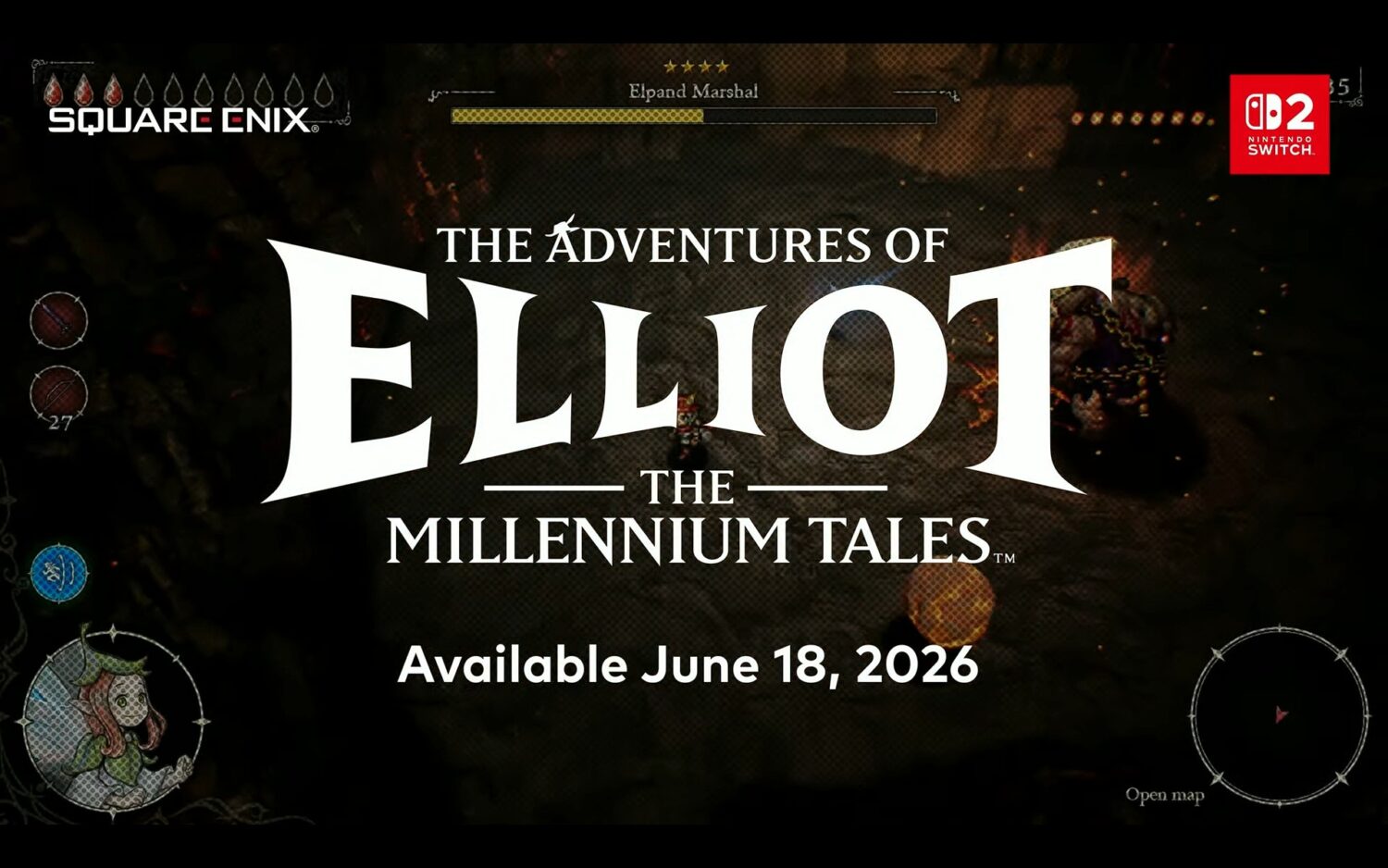
Square Enix has locked in a clear date for The Adventures of Elliot: The Millennium Tales, with the HD-2D action RPG arriving on Nintendo Switch 2 on June 18, 2026. If you have been waiting for a game that blends crisp pixel art charm with modern lighting and depth, while still letting you actively swing, block, and react in real time, this one is aiming straight at that sweet spot. We are not talking about a slow stroll through menus. We are talking about a world that wants you out in the wild, learning patterns, choosing tools, and leaning on a tiny but crucial partner.
The setup is built around a continent overrun by beast tribes, with humanity clinging to survival inside the Kingdom of Huther, protected by a magical barrier. Elliot, an adventurer with a soft spot for helping people, steps beyond that safety alongside Faie, a fairy who supports him with abilities that add a strategic layer to the action. The story stretches across multiple eras, tying the present to the distant past, and it uses that time-spanning structure to make exploration and discovery feel like more than just moving from dungeon to dungeon. Add in weapon variety, magicite-based upgrades, and a debut demo that has already shaped adjustments to how the game feels, and we have a release worth circling on the calendar.
The Adventures Of Elliot – HD-2D meets action RPG energy
HD-2D has a way of making familiar fantasy landscapes feel like living dioramas, where pixel characters pop against layered scenery, light shafts cut through fog, and every torch-lit hallway looks like it has depth you can almost reach into. The twist here is that we are pairing that look with action-first gameplay, so the visuals are not just a pretty frame around turn-based decisions. You are actively moving, attacking, defending, and choosing positioning while the world keeps breathing around you. That blend matters, because HD-2D can sometimes feel like a museum display if the gameplay is too still, but fast reactions and flowing movement give it momentum. If you like the idea of classic vibes without classic stiffness, this is the kind of combination that can feel like wearing a vintage jacket with brand-new sneakers. It keeps the nostalgia, but it actually moves.

The release date and what it signals
June 18, 2026 is not a vague window, and that alone changes the mood. A firm date tells us we are past the “someday” phase and into the part where trailers, demo impressions, and feature details start to matter because they connect to a real finish line. It also gives you a clean runway to plan your time with the debut demo, revisit it if you already tried it, and figure out whether the combat rhythm clicks with you. We can treat the wait like a countdown instead of a question mark, and that is a lot more fun. If you have ever followed a game that kept sliding around the calendar, you know how refreshing it is when a publisher plants a flag and says, “Here, this day.” It turns curiosity into anticipation you can actually schedule.
The world of Philabieldia and the Kingdom of Huther
The setting starts with a strong contrast: a continent overwhelmed by beast tribes, and one human stronghold that is still standing because a magical barrier keeps the worst threats out. That stronghold is the Kingdom of Huther, and it is framed as humanity’s last bastion in the region, which instantly adds pressure to every step outside its safety. The barrier is not just background flavor either, because it shapes the stakes. When a kingdom survives by magic, the obvious question is what happens when that magic is strained, challenged, or tied to a person who cannot simply walk away. That tension makes the outside world feel less like a theme park and more like a problem that needs solving. Philabieldia is not there to be admired from a distance, it is there to be faced, understood, and gradually opened up.
Elliot and Faie as the heart of the journey
Elliot is positioned as an adventurer, the kind of person who takes on requests and steps into danger because someone has to do it. Faie is his fairy companion, and the relationship is not just “cute sidekick energy,” because her role is tied directly into how you fight and how you think. The core promise is action-based combat that still rewards planning, with Faie providing support abilities that can change how encounters play out. That dynamic is important because it keeps the game from becoming pure button-mashing. When you have a partner who can set up opportunities, protect you, or enable smarter plays, you start looking at enemies differently. You stop thinking only about damage and start thinking about timing, space, and the safest way to turn a messy fight into a controlled one.
A story told across four ages
The narrative structure leans into time, not as a single twist, but as a foundation. The journey spans four ages, stretching across a long sweep of history, which gives the world room to surprise you with contrasts between eras rather than repeating the same scenery with a different coat of paint. A time-spanning story also does something sneaky to your motivation: it makes you want answers that go beyond “beat the next boss.” When ruins, forgotten events, and long-running threats are part of the premise, every new location can feel like a clue. It is like pulling on a loose thread in an old sweater and realizing the whole pattern is connected. If the game delivers on that structure, we are not just traveling across a continent, we are traveling across the reasons the continent became what it is.
Why the Kingdom’s magic matters
Huther’s protection is tied to a spell that keeps the kingdom safe, and that type of protection always comes with a cost. A magical barrier can be comforting, but it can also create dependency, and dependency can become a trap if the outside world keeps changing while the people inside stay sheltered. That is where the story’s tension gets interesting, because it is not only about monsters at the gate. It is also about what it means for a society to rely on a single layer of defense, and what kind of risks an adventurer must take to secure a future that is not balanced on one spell forever. When you step outside the barrier, you are not just exploring for treasure, you are stepping into the pressure the kingdom has been avoiding. That gives Elliot’s journey weight even before the big plot beats start landing.
Combat feel, pacing, and smart decision-making
Action RPG combat lives or dies on feel. If movement is sluggish or hits lack impact, even the prettiest world starts to drag. The good sign here is that the design pitch is not “mindless speed,” it is rewarding action with strategic support layered in. That usually means you are expected to read enemy behavior, choose when to commit, and know when to back off, rather than treating every encounter like a blender set to maximum. Think of it like sparring instead of flailing: the difference is attention. When combat is built around patterns, you start noticing the little tells in animations and the timing windows that make a clean block or dodge feel satisfying. The presence of Faie’s support abilities also encourages you to slow your brain down even when your hands are moving fast, which is a great trick when it works.
Weapons and why variety matters
Weapon variety is more than a checklist, because it changes how you approach space and enemies. A sword invites close-range confidence, while a bow shifts you into positioning and line-of-sight thinking, and tools like bombs add a layer of planning that can turn the environment into part of your kit. When a game supports multiple weapon types, it gives you permission to adapt instead of forcing you to grind through every situation in one style. That matters in a world that promises different biomes and threats, because a one-size approach gets stale fast. If you love experimenting, this is where the game can become personal. Your Elliot can feel like your Elliot, not the one the designer quietly pushed everyone into playing.
How specific tools shape encounters
Some tools change not only damage numbers but the entire rhythm of a fight. Shields introduce defense and timing, rewarding you for knowing when to guard rather than always attacking. Boomerangs and other thrown options can create multi-hit opportunities based on flight paths, meaning skill is not only about reaction but also about aiming and positioning. Bombs bring delayed impact, which is a fancy way of saying you can set a trap, lure an enemy, and then enjoy that satisfying moment when planning pays off. Spears, hammers, and chain-based weapons can also shape range and control in different ways, making some fights feel safer with reach and others feel better with raw impact. The more the game encourages switching based on context, the more alive combat tends to feel, because you are making real choices instead of repeating a single routine.
Magicite, upgrades, and build choices
Magicite upgrades are the kind of system that can quietly become the reason you keep playing. When enhancements are meaningful, you stop thinking only about leveling up and start thinking about tuning your approach. Upgrades that change properties, add effects, or improve how a weapon behaves can make your toolkit feel like it grows with you, not just alongside you. It is also a way to reward exploration, because finding upgrade materials in dungeons turns discovery into power, and power is the universal language of motivation. The best part is that magicite systems often invite experimentation. You try something, you feel the difference, and you keep refining until the combat starts matching the way you naturally think. If you enjoy tinkering, this is where the game can hook you.
Accessories and early bonuses
Beyond core systems, there are also clearly defined bonuses tied to editions and early access choices, including preorder packs and digital deluxe extras. Those details matter because they affect how the early hours feel, even if they do not change the main arc of progression. A small boost can smooth the opening stretch, but it is still the underlying combat and exploration loop that will decide whether the game sticks. It is worth thinking of these bonuses like seasoning: nice when it fits your taste, not the meal itself. If you are the type who wants to start with a little extra flexibility, the accessory-focused bonuses may appeal. If you prefer a clean baseline, the date is what matters most, because it tells you exactly when the full experience becomes available.
Exploration, dungeons, and opening new paths
The game’s exploration pitch is built around pushing beyond safe boundaries and finding ways to carve forward through an untamed continent. That “open new paths” idea suggests a focus on progression that is not only about beating enemies but also about interacting with the world, navigating dungeons, and solving environmental problems. In action RPGs, exploration is where the pacing breathes. It gives you moments of tension, then quiet, then discovery, then danger again, like a good hike that mixes scenic overlooks with steep climbs. Dungeons in particular can become memory-makers when they ask you to pay attention, and when your tools have uses beyond combat. If bombs can break certain walls or obstacles, for example, that turns your kit into a set of keys, and every locked-looking place becomes a question you want to answer.
The debut demo and what it already changed
A demo is not only a sample, it is a conversation, especially when feedback leads to real adjustments. The debut demo for the Switch 2 version has already been associated with changes and refinements, including tweaks aimed at improving how the game feels to play. That is a good sign, because responsiveness is the lifeblood of action RPGs, and even small movement or usability improvements can make the difference between “pretty” and “addictive.” It also means we should pay attention to how the final release builds on what the demo shows. If you tried it and felt something was slightly off, this is the part where you can be hopeful without doing mental gymnastics. The game has had time to respond to real player hands, not just internal testing.
Why pacing adjustments matter more than people think
When players talk about action RPGs, they often mention bosses, visuals, or big story beats, but pacing is the invisible glue holding everything together. Movement speed, menu convenience, and how quickly you can swap or access your options shape the moment-to-moment experience more than a single flashy cutscene ever will. If you have ever played a game where opening a menu felt like wading through mud, you know how quickly excitement leaks out of a session. Adjustments based on demo feedback can prevent that leak. It is like tightening the bolts on a bike before a long ride: you may not think about it while riding, but you will absolutely notice if something rattles. The smoother the pacing, the more the game lets you stay in the adventure instead of fighting the interface.
How Switch 2 fits the experience
Switch 2 is a natural home for a game like this because HD-2D thrives on a clear screen, strong contrast, and lighting effects that make pixel art feel layered rather than flat. Having that style in a portable form factor means the world can be enjoyed in short sessions without losing its charm, which is perfect for an action RPG where you might want to tackle a dungeon room-by-room or knock out a few quests and then step away. The fact that the debut demo is available on Switch 2 also reinforces that this platform is not an afterthought in the rollout. When a demo exists specifically to let people feel combat and exploration, it signals confidence in hands-on appeal. If you are the kind of player who likes testing a game’s vibe before committing, Switch 2 is giving you that doorway.
What to focus on between now and June 18, 2026
With the date set, the smartest move is simple: treat the demo like your personal preview window. Pay attention to how combat makes you feel, because that gut reaction is hard to fake. Does blocking or dodging feel satisfying, or does it feel like you are always a half-second late? Do you enjoy the push-and-pull of action mixed with support abilities, or would you rather have something faster and looser? Also, watch the trailers with an eye for variety. Different environments, different enemy types, and different tools are not just marketing shots, they are signals about how quickly the game might evolve over time. By the time June arrives, you should not be guessing whether this is your kind of action RPG. You should already know, and then launch day becomes a celebration instead of a gamble.
Conclusion
The Adventures of Elliot: The Millennium Tales has a clear launch date on Switch 2, and that gives us a solid foundation to talk about what matters: feel, world, and the promise of a time-spanning adventure. The setup is strong, with humanity protected behind a magical barrier in the Kingdom of Huther while danger spreads across Philabieldia. Elliot and Faie bring a duo dynamic that can keep action combat thoughtful instead of frantic, and systems like weapon variety and magicite upgrades give the experience room to become personal. The debut demo is the real secret weapon here, because it lets you judge the pacing and responsiveness for yourself, and it has already played a role in shaping improvements. If you want an HD-2D world that is not just pretty to look at but fun to move through, June 18, 2026 is a date worth keeping close.
FAQs
- When does The Adventures of Elliot: The Millennium Tales launch on Switch 2?
- It launches on June 18, 2026 for Nintendo Switch 2.
- What kind of game is it?
- It is an HD-2D action RPG that combines real-time combat with strategic support abilities from a fairy companion.
- Who are the main characters?
- You play as Elliot, an adventurer, alongside Faie, a fairy who supports him with abilities that influence combat and exploration.
- What is the setting?
- The story is set on the continent of Philabieldia, where the Kingdom of Huther stands as humanity’s bastion behind a magic barrier.
- Is there a demo on Switch 2?
- Yes, a debut demo is available on Nintendo Switch 2.
Sources
- The Adventures of Elliot: The Millennium Tales launches June 18, Gematsu, Feb 5, 2026
- The Adventures of Elliot The Millennium Tales further details story, characters, and gameplay systems, Nova Crystallis, Feb 6, 2026
- The Adventures of Elliot: The Millennium Tales Gets June 18th Release Date in Latest Trailer, GamingBolt, Feb 5, 2026
- Square Enix reveals $230 The Adventures of Elliot Collector’s Edition, GamesRadar, Feb 6, 2026
- The Adventures of Elliot: The Millennium Tales, SQUARE ENIX, n.d.