Summary:
The Duskbloods has started showing multiple, verifiable signs of activity across the web, and the reason it feels louder than a normal rumor cycle is simple – we are not talking about one stray screenshot. We are talking about a chain of things that can be checked. Reports note that the game has appeared on the Nintendo eShop under a new releases-style discovery path in at least one region, which matters because a store page is usually the first public-facing “placeholder” Nintendo uses before it flips the switch on heavier messaging. At the same time, a Finnish retailer listing briefly displayed a specific date, March 27, 2026, before changing to a more generic December 31, 2026 placeholder. That swap is important because it tells us the original date is not locked as an official public promise, even if it could reflect internal planning at some point. It is a reminder that retailer databases are messy, and sometimes the neat-looking date is just the cleanest field someone could select.
Then we have the extra spark – adverts. Multiple reports describe ads for The Duskbloods appearing online, including examples spotted by users on Reddit and referenced by outlets that noted the ads were tied to Nintendo accounts in Australia and New Zealand. Ads do not confirm a launch date on their own, but they do confirm that somebody is actively pushing awareness now, not “someday.” Put those pieces together and we get something practical: we can say with confidence that The Duskbloods is positioned as a Nintendo Switch 2 exclusive with a 2026 window on official Nintendo pages, and we can say that storefront infrastructure and marketing placements are showing movement in February 2026. What we cannot do is treat a retailer date as final, or treat an ad as a trailer countdown. The smart move is to watch the official store page for concrete changes – price, pre-order status, release date text, and updated media – because those are the breadcrumbs that stop being vibes and start being facts.
A fresh eShop appearance for The Duskbloods
When a game “pops up” on the Nintendo eShop in a way that regular players can stumble into, it changes the whole vibe of the conversation. We are no longer dealing with a closed-door entry in a database that only a backend crawler can see. We are dealing with a storefront moment – something the public can reach, share, and refresh like it is a weather app. Recent reporting highlights that The Duskbloods appeared on the eShop under a new releases-style browsing route in at least one region, and that single detail matters because it suggests Nintendo has started treating the page like a real stop on the customer journey. Even if the page is light on details, the visibility alone is a step. For fans, it is like seeing stage lights come on before the band walks out. Nothing has been “announced” in that moment, but the venue is clearly open.
What Nintendo officially confirms about The Duskbloods
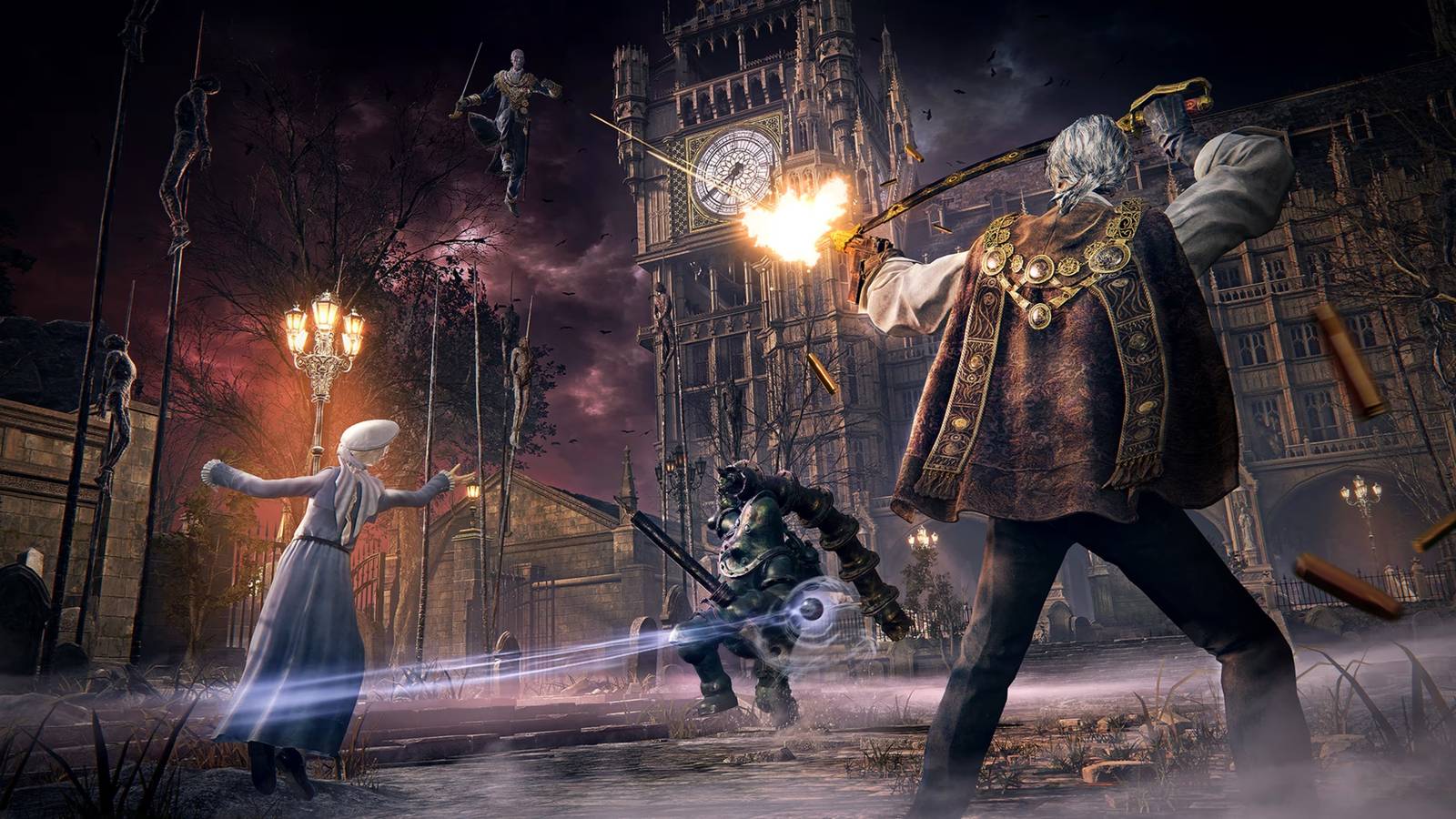
Let’s anchor everything to the part that is not up for debate. Official Nintendo pages describe The Duskbloods as a Nintendo Switch 2 exclusive with a 2026 release window, and they frame it as a multiplayer title from FromSoftware. That matters because it sets the floor for what we can safely say without leaning on guesswork. We can also connect it back to the original reveal messaging covered by major outlets: it is directed by Hidetaka Miyazaki, and it is positioned as a multiplayer-focused experience rather than a traditional single-player-only adventure. The official pages do not provide a precise release date in public view right now, and that absence is the whole reason small signals – like retailer dates and ads – get amplified. If you want the cleanest takeaway, it is this: we have a confirmed platform, a confirmed year window, and a confirmed studio identity. Everything else should be treated as “movement,” not a promise.
The Switch 2 exclusivity piece changes expectations
Exclusivity shifts how people interpret silence. When a project is tied to one platform, fans tend to assume the platform holder has a bigger hand in timing, reveals, and the way information is staged. That does not mean Nintendo is hiding something dramatic – it just means the rhythm is different. With a multiplatform release, you might see a steady drip across multiple storefronts and social channels. With an exclusive, you can see long quiet stretches followed by sudden clarity, because the messaging often gets coordinated around a platform moment. That is why an eShop page becoming easier to find is such a loud signal. It suggests Nintendo is at least preparing the storefront side for a wider audience, which is usually a prerequisite for bigger beats like updated trailers, pre-orders, or launch date messaging. No crystal ball needed – just basic store hygiene.
The Finnish retailer date and why it changed
The Finnish retailer listing is the detail that grabbed the most attention because it looked so clean: March 27, 2026. That date then changed, with coverage noting it shifted to December 31, 2026, which is the kind of placeholder you see when a site needs a date field filled but does not want to commit. The change is the real story because it tells us the listing is not being treated as a final public statement. A retailer can receive early information, sure, but retailer systems also get populated through templates, educated guesses, or internal placeholders that are never meant to be taken literally. In other words, the existence of a date is not the same thing as confirmation. The moment it flips to a “last day of the year” placeholder, it is basically the site saying, “We need a date value, but we do not want to keep that earlier one visible.” That makes it a useful clue, not a launch calendar entry.
How this kind of listing happens in real life
Retail sites often run on rigid product templates. Someone creates a product page, adds a title, a platform, a price field, and a release date field, because the system demands it. If the publisher has not provided a final date, the retailer still needs something to keep the page functional for internal workflows. That is where placeholders come in, and March 27 could have been anything from a tentative internal target to a human picking a “reasonable Friday.” Then, once attention hits – and it always hits once people start screenshotting – the retailer updates the page to something safer. That is exactly why the change to December 31 reads as damage control, not a secret wink. It is the retailer switching from “specific” to “non-committal” once the page becomes public drama.
Why March 27 stands out anyway
Even while we keep our feet on the ground, it is fair to explain why March 27 jumped off the screen. It is a Friday, which is a common release day for major games, and it sits early enough in 2026 to feel plausible if Nintendo wants a notable exclusive in the first part of the year. That is the psychological hook – it feels tidy. But tidy is not proof. The real, responsible way to treat that date is as a data point that tells us at least one retailer once had March 27 entered in its system, and later decided not to show it. That is it. If a real date lands later, it might match. If it does not, the retailer date will just be another ghost in the machine, like so many before it.
Why placeholder dates show up so often
Placeholder dates are the duct tape of online storefronts. They are not glamorous, but they keep the machinery from rattling apart. A retailer might need a date to calculate shipping estimates, to place the product in a release calendar widget, or to decide whether it belongs in a “coming soon” bucket. December 31 is a classic because it is easy, it fits the year, and it signals “sometime in this year” without picking a real day. The reason fans hate it is the same reason retailers love it – it is intentionally vague. If we want to stay factual, we should treat placeholder dates as what they are: administrative convenience. They can sometimes start life as a real internal target that later shifts. They can also be a total guess that gets replaced later by a real date once a publisher provides it. Either way, the placeholder is not the headline. The headline is when the placeholder disappears and gets replaced by something official-looking across multiple places at once.
The biggest trap – confusing a database need with a promise
If there is one mistake that burns people over and over, it is treating a required field like a pledge. A site needs a value in the “release date” slot, so it fills the slot. That is a technical requirement, not an announcement. The reason this trap is especially sticky with big studios is because fans want a clean answer, and the internet rewards the clean answer with shares. “March 27” is shareable. “Retail systems require dates even when publishers have not confirmed them” is not. So the smart move is to watch for consistency: if multiple major retailers, platform storefronts, and official channels align on the same date, that is when the date starts acting like reality.
The adverts popping up online and what they prove
Ads are not the same as a release date, but they are not nothing either. Reports in mid-February 2026 describe adverts for The Duskbloods appearing across the web, including examples circulating on Reddit. Another key detail from coverage is that at least one ad was described as being served from Nintendo’s Australia and New Zealand account, which makes it feel less like random third-party noise and more like real platform-level promotion. That matters because ads cost money and require some planning. Nobody casually flips on paid placements for a game they intend to ignore publicly for another year. Ads are often used to test messaging, build awareness, and funnel people toward a storefront page where they can wishlist, follow, or at least learn the basics. Even if the page is still barebones, the combination of “store page exists” plus “ads are running” tells us there is active marketing motion right now.
Why ads and store pages tend to arrive together
An ad without a destination is like handing someone a map with no address. If Nintendo is buying attention, it typically wants that attention to land somewhere – an official page, a trailer, a storefront listing, or a sign-up funnel. That is why this pairing makes sense: the eShop page becomes the stable landing spot, and the ads become the shove that sends curious people toward it. You do not need to assume a trailer is imminent to understand this logic. It is simply how digital marketing works when a platform holder is involved. The storefront page can be updated quietly over time, and the ads can scale up or down depending on strategy. In practical terms, this means the eShop page is the place where future changes will become visible first, because it is the hub the ads can point at again and again.
What the eShop page can tell you right now
Even when an eShop listing looks “empty,” it still communicates. A page can confirm the platform, the general release window, the publisher, and sometimes genre framing. Official Nintendo pages for The Duskbloods already emphasize the 2026 window and position it as a FromSoftware multiplayer title exclusive to Nintendo Switch 2. That is the baseline. Beyond that, the page becomes most interesting when fields start changing: when a price appears, when pre-orders open, when the release date line shifts from “2026” to a specific day, and when screenshots or trailers get added or replaced. Those are not subtle. They are the kind of changes you can verify in seconds, and they tend to ripple outward as other sites update their own listings to match. If you are trying to keep things clean and factual, this is the single best habit: treat the storefront like the scoreboard, not the crowd noise.
The difference between discoverable and searchable matters
There is a quiet but important difference between a page existing and a page being easy to find. When something starts appearing in more browsable areas, like new releases discovery paths, it becomes part of the normal shopping experience, not just a hidden corner. That shift can happen before any big social media push, because the platform can stage it gradually. The reason people noticed this at all is because discoverability changes the fan experience overnight – now anyone can stumble onto the page without being handed a direct link. That kind of shift does not confirm a launch date, but it does confirm intent: Nintendo is making the game more visible to regular shoppers.
What we still do not have – and why that matters
For all the noise, the most important missing piece is still missing: an official, public release date. There is also no universal pre-order rollout visible in the sources discussing the page, and the reporting around retailer dates explicitly highlights the swap to a placeholder, which undercuts any “locked in” narrative. This matters because it keeps expectations sane. Without a public date, any confident countdown is just fan fiction wearing a calendar. The better approach is to treat February 2026 as a month where multiple signals appeared at once – storefront visibility, retailer database movement, and paid promotion chatter – while still acknowledging that the official public posture remains “2026.” That combination can be frustrating, but it is also normal. Big games often move from vague to precise in one sharp moment, and until that moment happens, the responsible move is to track changes rather than invent certainty.
Why this feels louder than normal anyway
It feels louder because there are multiple independent-looking touchpoints, and they all point toward the same basic truth: The Duskbloods is not asleep. A retailer page had a specific date and then backed off. The eShop page became visible enough for people to notice it in real browsing. Ads were spotted and discussed widely enough to be picked up by outlets. None of these alone is definitive. Together, they form a pattern of activity. Think of it like footsteps behind a closed door. We cannot see who is coming out or when, but we can confidently say someone is moving around in there.
How to track updates without getting baited
If you want to stay excited without getting played, build a simple checklist and stick to it. First, prioritize official Nintendo pages and eShop listings for changes in the release date field, pricing, and pre-order status. Second, watch for coordinated updates across multiple credible outlets that cite the same kind of hard change – not “a person said,” but “the store page now shows.” Third, treat retailer listings as supporting signals only, especially when they have already shown a willingness to revert to placeholders. Fourth, keep your eyes on media updates: if new screenshots or a new trailer embed appears on official pages, that is a real shift in how the game is being presented. This approach keeps the hype fun and keeps your confidence grounded in things you can actually verify. Nobody needs to live in rumor soup to stay informed.
A quick sanity filter for every new claim
Before you share anything, ask two questions. Can we click it? Can we screenshot it today and get the same result? If the answer is yes, it is worth discussing. If the answer is no, it is probably just heat. This is especially useful when people start tossing around dates, prices, and “insider” timelines. A real storefront change is repeatable. A whisper is not. The goal is not to be joyless – it is to avoid building expectations on sand. That way, when the real update lands, it feels like a win instead of a rescue mission.
What to watch next if you want clean confirmation
The next clean confirmation will look boring in the best way. It will be an official page update that adds a specific release date, or it will be a pre-order opening that forces Nintendo to attach a date and a price publicly. It might also come in the form of an official Nintendo communication beat tied to Switch 2 messaging, because that is where exclusives often get highlighted. Until then, the most practical move is to monitor the eShop page for changes and to pay attention when multiple regions show the same updates. A single-region oddity can happen. Multi-region alignment is harder to dismiss. And if you want the simplest possible “tell,” it is this: when the store page starts showing a precise date everywhere, the guessing stops, because the platform has finally chosen to speak in numbers instead of vibes.
The short version for busy people
Here’s the clean, no-drama wrap-up. The Duskbloods is officially positioned as a Nintendo Switch 2 exclusive with a 2026 release window on Nintendo’s own pages. In mid-February 2026, multiple reports noted fresh storefront visibility and marketing chatter, including a retailer listing that briefly showed March 27, 2026 before changing to a December 31, 2026 placeholder. Separately, adverts were reported as appearing online, including examples discussed on Reddit and referenced by outlets. These signals confirm activity – they do not confirm a final launch date. The best thing we can do is keep our excitement, keep our receipts, and watch for the moment Nintendo flips the public fields from “2026” to an actual day you can circle without feeling silly.
Conclusion
The Duskbloods is giving us a cluster of real-world signals at the same time: increased storefront visibility, retailer database movement that later retreated to a placeholder, and reported ads appearing online. That combination is meaningful because it points to ongoing preparation and promotion, not silence. At the same time, the official public position remains straightforward – Nintendo’s own pages still present a 2026 window, and there is no universally confirmed date in the official messaging highlighted by the sources. So the sensible middle ground is easy: we can acknowledge the momentum without turning it into a countdown. Keep the eShop page as the main reference point, treat retailer dates as unstable until they are echoed by official updates, and watch for the boring-but-powerful changes like pricing, pre-orders, and a specific release date line. When those appear, the conversation stops being “maybe” and starts being “here it is.”
FAQs
- Is The Duskbloods officially confirmed for Nintendo Switch 2?
- Yes. Official Nintendo pages list The Duskbloods as a Nintendo Switch 2 exclusive with a 2026 release window.
- Is March 27, 2026 the confirmed release date?
- No. Reports describe March 27, 2026 as appearing on a Finnish retailer listing, but that listing later changed to a December 31, 2026 placeholder, which signals the date is not locked as an official public commitment.
- Do online adverts mean a trailer or announcement is guaranteed right away?
- No. Ads confirm active promotion, but they do not guarantee an immediate trailer drop or a specific announcement date.
- What is the most reliable place to watch for real updates?
- The official Nintendo game page and the Nintendo eShop listing are the most reliable places to watch for concrete changes like a specific release date, pricing, and pre-order status.
- Why do listings switch to December 31 so often?
- December 31 is commonly used as a placeholder date when a storefront needs a value in the release date field but the final date is not publicly confirmed.
Sources
- The Duskbloods adverts also now appearing online, My Nintendo News, February 19, 2026
- The Duskbloods hopium is out in full force as FromSoftware fans spot ad following the emergence of a new eShop listing, GamesRadar+, February 19, 2026
- The Duskbloods Release Date Potentially Revealed Through New Listing, Insider Gaming, February 19, 2026
- Finse retailerlijsten The Duskbloods releasedatum voor volgende maand, Gamereactor, February 19, 2026
- The Duskbloods, Nintendo UK, February 21, 2026
- FromSoftware is making a multiplayer Switch 2 exclusive called The Duskbloods, The Verge, April 2, 2025