














Summary:
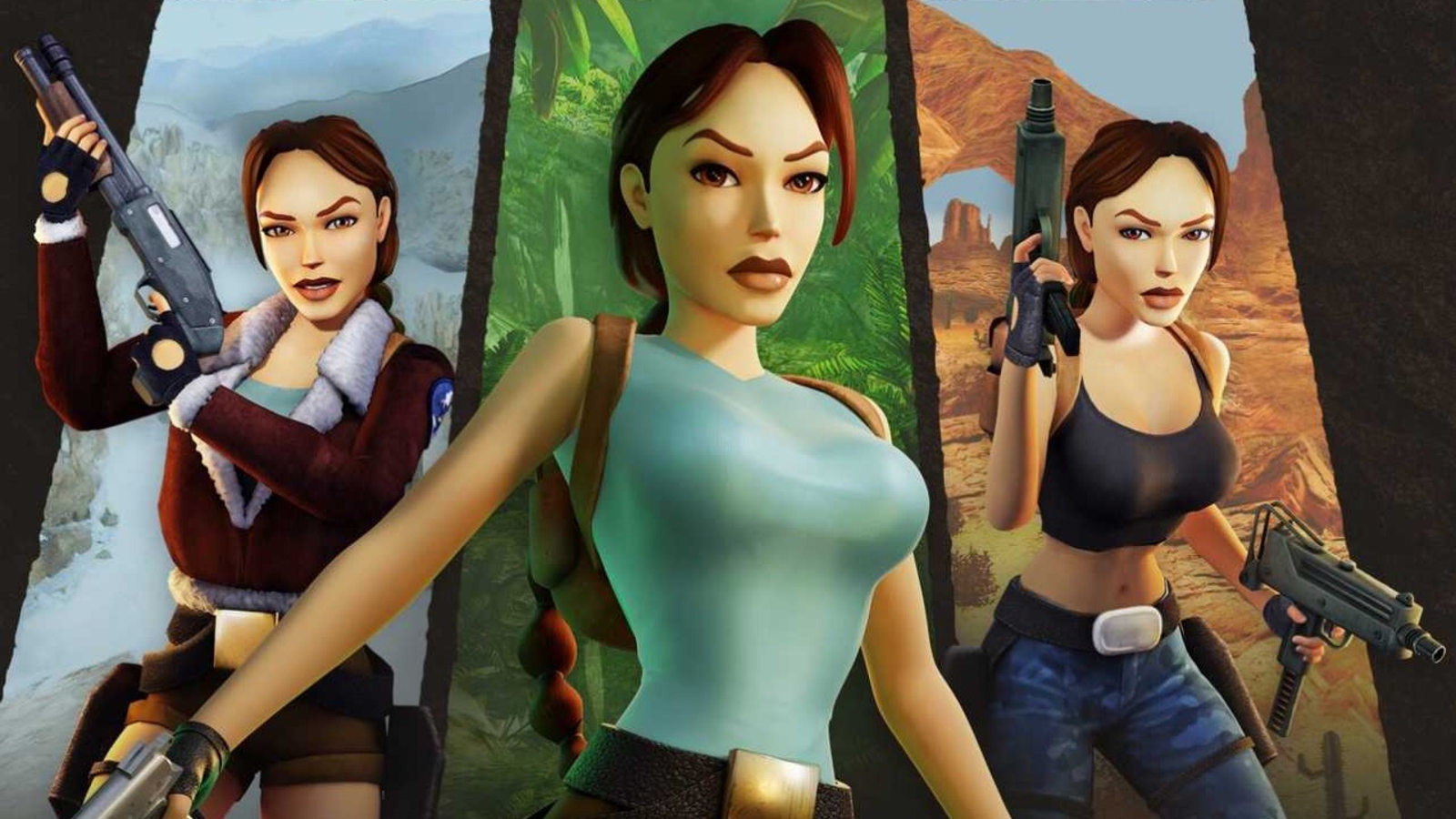
Tomb Raider I-III Remastered has now made the jump to Nintendo Switch 2, and that alone is enough to put Lara Croft back in the spotlight. What makes the update more interesting, though, is that this is not just a quiet platform refresh with nothing else going on around it. The release lands alongside a new Challenge Mode update, giving the trilogy a fresh hook at exactly the right time. That combination matters because it turns what could have been a simple availability note into something with real energy behind it. Players are not only getting access to the collection on newer hardware, they are also getting a new way to interact with games many already know by heart.
There is another reason the announcement lands so well. Anyone who already owns Tomb Raider I-III Remastered on Nintendo Switch is set to receive a free upgrade path to the Nintendo Switch 2 version. That kind of move always helps. It lowers the barrier, rewards existing owners, and makes the transition feel welcoming instead of transactional. On top of that, the game’s current Nintendo eShop discount gives newcomers a timely excuse to jump in without paying full price. Suddenly, this is not only good news for longtime Lara Croft fans, but also a very approachable entry point for players who have somehow missed this collection until now.
What stands out most is how neatly all of this fits together. A classic trilogy, a newer platform, a replay-focused update, and a discounted asking price create the sort of package that is hard to ignore. Lara Croft has always had that rare ability to feel both iconic and surprisingly easy to revisit, and this latest move proves it again. The result is a release that feels practical, well-timed, and just a little bit exciting in the way only a sudden Lara Croft update can be. Some returns arrive with fireworks. Others arrive with confidence, a backpack full of relics, and a reminder that old-school adventure still has plenty of bite.
Tomb Raider I-III Remastered arrives on Nintendo Switch 2
Tomb Raider I-III Remastered is now available on Nintendo Switch 2, bringing Lara Croft’s original three adventures to Nintendo’s newer system in a more tailored way. That is an appealing development on its own, because this collection was already well liked for how it preserved the feel of the classic games while making them easier to revisit on modern hardware. Now the trilogy gets another lift by landing on a platform that fits it naturally. Tomb Raider has always worked well as a pick-up-and-play adventure, even when the puzzles make you stop, squint at the screen, and wonder whether the real enemy is a panther or your own sense of direction. On Switch 2, the collection feels like it has found another comfortable home.

Why this Switch 2 release matters
This is more than a case of a familiar game simply appearing on another storefront. A native arrival on Nintendo Switch 2 gives the trilogy renewed visibility at a moment when players are still watching closely to see which older favorites are making the move to the new machine in a meaningful way. That matters for a collection like this because Tomb Raider I, II, and III are not disposable nostalgia pieces. They are foundational games with a tone, rhythm, and sense of mystery that still stand out. Bringing them forward again tells players these adventures are still worth making room for. That is a pretty nice compliment for a set of games old enough to remember when triangle-shaped shoulders were a serious design choice.
The free upgrade is the headline many players wanted
One of the strongest parts of this release is the free upgrade path for existing Nintendo Switch owners. That decision changes the mood around the announcement immediately. Instead of asking current players to buy the same package all over again just to stay current, the upgrade approach treats them like people who already invested in the trilogy and deserve a smooth move forward. In a market where re-releases can sometimes feel like a second toll booth on the same road, that kind of generosity stands out. It also removes hesitation. If you already own the game, there is no annoying mental math to do, no awkward pause, and no sense that you are being asked to pay extra just because hardware changed.
Why a consumer-friendly upgrade matters
Goodwill travels fast, especially around legacy collections and remasters. When players hear that a publisher is making the move to a new system painless, it creates a much warmer reaction than any marketing slogan ever could. That is exactly what happens here. The trilogy already had a solid reputation, so pairing that with a free upgrade makes the whole release feel easy to root for. It tells returning players that their earlier purchase still matters. It also sends a useful message to anyone on the fence about similar releases in the future. When publishers handle upgrades like this, trust grows. And trust, unlike an ancient switch hidden behind a crumbling wall, is something you do not want to trigger only after twenty failed jumps.
Challenge Mode gives the trilogy fresh momentum
The arrival of Challenge Mode is what pushes this update from pleasant news into something a lot more interesting. The original trilogy already had nostalgia, atmosphere, and plenty of replay value, but a new mode gives returning players an actual reason to step back in rather than simply admire the release from afar. That distinction matters. A platform launch by itself creates awareness, but a gameplay-focused addition creates activity. Suddenly, this is not only about where the trilogy can be played, but also about how it can be played in a different way. That is the kind of update that keeps a remaster feeling alive instead of preserved behind glass like a museum piece with very good cheekbones.
New outfits and modifiers add more reasons to replay
Challenge Mode brings new modifiers, additional achievements, and unlockable outfits that enhance Lara’s abilities. Those additions may sound modest at first, but they are exactly the sort of features that work well for a collection built on replay. They add structure, goals, and experimentation to games many players already know scene by scene. Instead of simply replaying favorite levels because they remember them fondly, players now have extra incentives layered on top. That can change the feel of a return run in a surprisingly meaningful way. It gives seasoned players more to chase and gives curious newcomers a version of the trilogy that feels a little more alive, a little more reactive, and a lot less like something frozen in 1990s amber.
Why replay hooks suit classic Tomb Raider so well
The older Tomb Raider games thrive on tension, route memorization, environmental awareness, and those wonderfully stubborn moments where success comes only after a few failed attempts and a muttered, “Oh, that’s what they wanted me to do.” Because of that design, they are especially well suited to modifiers and challenge-based replays. These are not games that fall apart once you know the route. In many ways, they become more enjoyable because you understand their language better the second time around. Challenge Mode leans into that strength instead of fighting it. It respects the original design and adds a layer that encourages experimentation rather than replacing the heart of what made the trilogy memorable in the first place.
Why this collection still holds up
There is a reason people still care when Lara Croft’s early adventures get updated or reintroduced. The original trilogy has a distinct identity that modern action games rarely try to copy. These adventures are slower, moodier, and more committed to isolation. You are not being dragged through constant chatter or buried under objective markers every ten seconds. Instead, you are dropped into spaces that feel ancient, eerie, and occasionally rude in the way they punish bad timing. That structure gives the games a lasting charm. The remastered collection helps preserve that feeling while sanding down just enough rough edges to make returning easier. It understands that the goal is not to rewrite history, but to let players enjoy it without wrestling the hardware first.
A better fit for portable play than ever
Tomb Raider’s original format suits handheld sessions surprisingly well. The levels are substantial, but they break naturally into segments where you can make progress, save your place, and come back later without losing the thread. That makes the trilogy a strong match for Nintendo hardware. On Switch 2, that portable appeal becomes even stronger because the collection now feels less like a legacy item running by association and more like part of the current platform conversation. For players who enjoy having a substantial single-player adventure they can carry around without needing a giant open-world checklist, this collection scratches that itch nicely. It is the kind of game you can dip into for twenty minutes and somehow emerge an hour later after being humbled by one suspiciously placed ledge.
The eShop discount makes the timing even stronger
The current Nintendo eShop discount helps turn this release into a stronger recommendation. Tomb Raider I-III Remastered has a regular price of $29.99 on Nintendo’s U.S. store, and the current 50 percent discount brings that down to $14.99. That changes the conversation around value very quickly. Three classic adventures, expansion content, a new mode, replay modifiers, unlockables, and a free upgrade path for existing Switch owners already make a persuasive case. Add a lower entry price, and the package becomes even easier to recommend. Timing matters with digital releases, and this is smart timing. The sale makes the trilogy feel less like a nostalgic luxury and more like one of those pleasantly dangerous eShop purchases where you say you are “just browsing” and somehow leave with Lara Croft.
What this means for returning fans
For players who already spent time with the trilogy, this update is an invitation rather than a demand. That is an important difference. The Switch 2 arrival and Challenge Mode do not erase what came before. They build on it. Returning fans get to revisit familiar tombs, enemies, secrets, and set pieces with a few extra tools and objectives in the mix. That keeps the experience feeling respectful instead of gimmicky. It also reinforces the strength of the remaster itself. Good remasters do not just remind you that a game was once great. They make room for it to feel lively again. That seems to be the case here, and that is a strong outcome for a trilogy whose reputation rests on atmosphere, challenge, and one of gaming’s most recognizable leads.
Why new players have a great entry point here
Newcomers are getting a pretty inviting version of these games. The trilogy already benefits from modern platform availability, visual updates, and the option to switch presentation styles, but the added mode and current discount sweeten the deal further. There is also something refreshing about stepping into a set of adventures that trust you to pay attention. These games ask more from players than many modern releases do, but that is part of the appeal. They can be awkward, clever, moody, and occasionally brutal, yet that combination is exactly why they remain memorable. For anyone curious about where Lara Croft’s legacy really began, this release offers a practical and timely way to find out without having to hunt down older systems or tolerate a pile of technical friction.
Conclusion
Tomb Raider I-III Remastered landing on Nintendo Switch 2 would have been good news on its own, but the free upgrade path and the new Challenge Mode give the release far more punch. Instead of feeling like a routine platform expansion, it feels like a meaningful refresh for a collection that already had a lot going for it. Existing owners have a simple route forward, newcomers have a stronger value proposition, and everyone gets a new reason to spend time with Lara Croft’s earliest adventures. That is a tidy, well-judged package. Some revivals overcomplicate the formula. This one keeps things simple: classic games, smarter timing, better accessibility, and a new twist that makes heading back into the tombs feel tempting all over again.
FAQs
- Is Tomb Raider I-III Remastered available on Nintendo Switch 2?
- Yes. The collection is now available on Nintendo Switch 2, giving Lara Croft’s original trilogy a native place on Nintendo’s newer system.
- Do Nintendo Switch owners get a free upgrade?
- Yes. Players who already own Tomb Raider I-III Remastered on Nintendo Switch can upgrade to the Nintendo Switch 2 version at no extra cost.
- What is Challenge Mode in Tomb Raider I-III Remastered?
- Challenge Mode adds new modifiers, achievements, and unlockable outfits that enhance Lara’s abilities, giving players more reasons to replay the trilogy.
- How much does Tomb Raider I-III Remastered cost on the Nintendo eShop?
- The game is listed at $29.99 on Nintendo’s U.S. store and is currently discounted by 50 percent, bringing it to $14.99 during the sale period.
- Is this a good entry point for new Tomb Raider players?
- Yes. The remastered trilogy offers the original adventures with modern accessibility, added replay features, and a lower sale price that makes jumping in much easier.
Sources
- Tomb Raider I-III Remastered Challenge Mode Patch Is Live, Tomb Raider, March 12, 2026
- Tomb Raider I-II-III Remastered now available for Switch 2, iOS, and Android alongside ‘Challenge Mode’ update, Gematsu, March 12, 2026
- Tomb Raider I-III Remastered Starring Lara Croft, Nintendo, accessed March 12, 2026
- Discover Lara Croft’s original adventures in Tomb Raider I-III Remastered, Nintendo, February 14, 2024