














Summary:
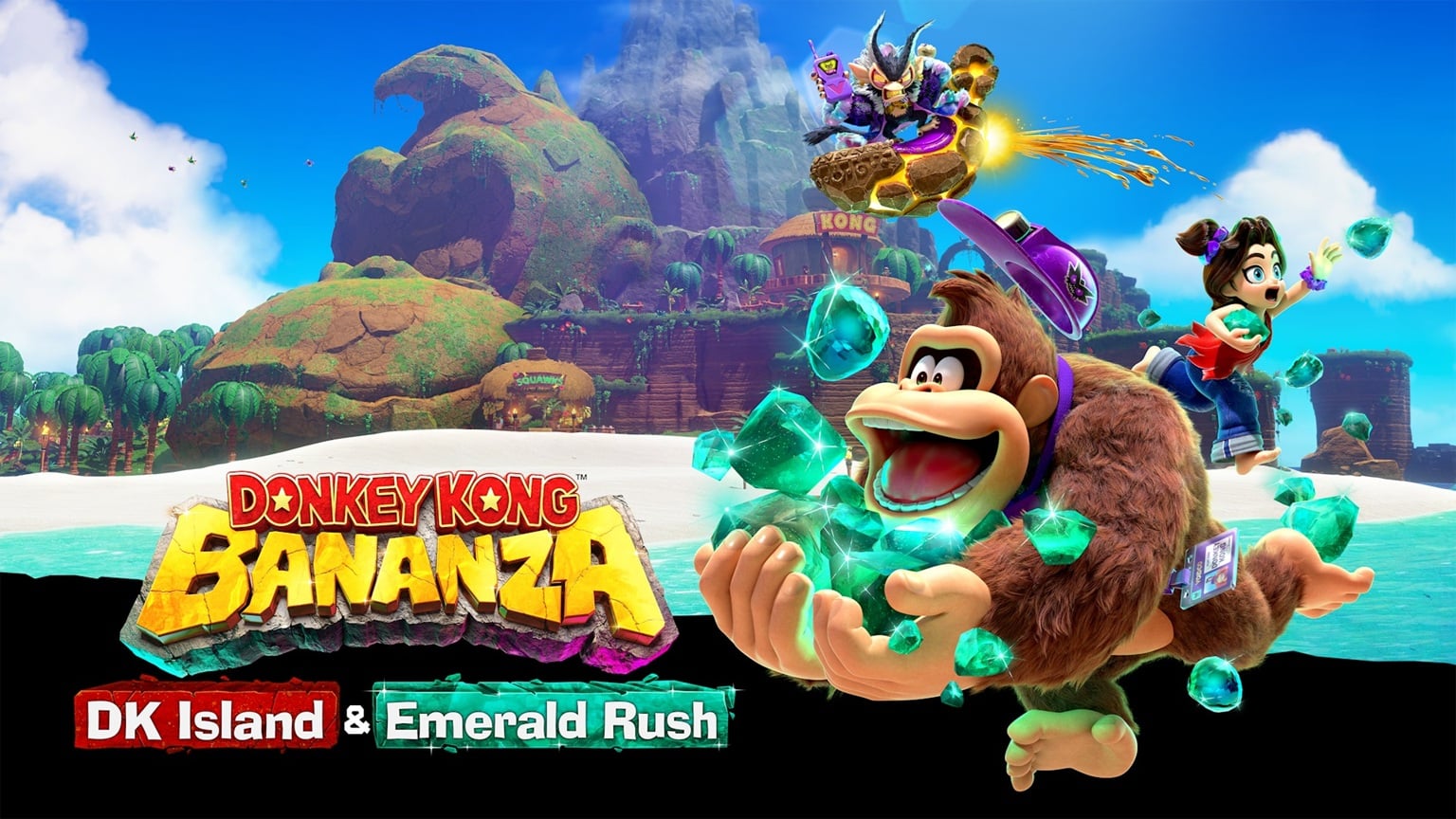
Donkey Kong Bananza’s DLC sparked a lot of noise when it launched, and much of that noise focused on the wrong thing. Plenty of players saw the price, saw the marketing emphasis on DK Island, and assumed the expansion was mostly a small bonus area dressed up as a bigger deal. That reading sells Emerald Rush short. The real heart of this DLC is not the nostalgic hub space, charming as that may be. It is the challenge mode that pushes Bananza far beyond the breezy rhythm of the main adventure and gives the game something every great platformer benefits from – a reason to come back after the credits have rolled.
What makes Emerald Rush stand out is how thoroughly it changes the way you play. The base adventure gives you room to improvise, smash through scenery, and enjoy the ride without much resistance. Emerald Rush takes that familiar toolkit and turns it into something far more demanding. Suddenly, moves that felt optional become essential. Route planning matters. Equipment matters. Fossil locations matter. Even your understanding of how each layer is laid out can decide whether a run feels smooth or collapses in a heap. It is part challenge mode, part score attack, and part test of how well you really understand Donkey Kong Bananza once the training wheels come off.
That shift is why the DLC has aged so well. Instead of offering a one-and-done detour, it adds a system with staying power. Limited-time events refresh the formula, layer unlocks create long-term goals, and higher difficulties ask more from you than almost anything else in the game. For players who wanted Bananza to bite back a little harder, Emerald Rush gives it teeth. It does not suddenly turn the game into an unforgiving monster, but it does add the kind of focused, replayable challenge that can keep a save file alive for months. That is what gives the expansion its real value, and that is why the early backlash now looks more like a first impression problem than a fair final verdict.
Why Donkey Kong Bananza’s DLC was judged too quickly
First impressions can be brutal, especially when a Nintendo release walks straight into an online argument. That is exactly what happened here. The DLC arrived with a price tag that immediately raised eyebrows, and much of the discussion locked onto the idea that players were being asked to spend extra money for what looked like a modest side addition. On the surface, that frustration was understandable. Nobody likes the feeling that a game is holding something back, and nobody wants a paid add-on to seem thinner than it really is. The problem is that early reactions focused heavily on the wrong selling point. Much of the public conversation treated DK Island as the main attraction, when the real centerpiece was the replayable mode attached to it. That misunderstanding shaped the backlash from the start. Once people spend a few weeks repeating the same complaint, the complaint begins to feel like fact. But Emerald Rush changes the picture entirely. It is not a tiny extra with a flashy wrapper. It is the feature that gives Donkey Kong Bananza a longer life, a sharper edge, and a reason to stay installed instead of becoming a fond memory gathering dust.
The real appeal of Emerald Rush after months of play
Some modes shine brightly for a weekend and then vanish from your routine like a firework that looked amazing for five seconds and then left only smoke behind. Emerald Rush does the opposite. It becomes more interesting the more time you spend with it. At first, it can feel like a neat distraction, maybe even a clever side mode with a few hooks. Then, over time, its design starts to click. You begin recognizing better routes, smarter perk combinations, and tiny opportunities you missed before. Runs that once felt messy start to feel deliberate. You stop reacting and start planning. That transition is where the mode earns its place. A lot of platformers are wonderful on a first playthrough and much less exciting once the final boss is done. Emerald Rush resists that drop-off. It gives players something active to improve at. It turns revisiting Bananza into a skill-building loop rather than a nostalgic stroll. That matters because replay value is often promised and rarely delivered in a form this sturdy.
Why Emerald Rush succeeds where other replay modes fall short
Replay modes can go wrong in all sorts of ways. Some feel repetitive, some feel gimmicky, and some depend too heavily on exploits or awkward level design quirks. Emerald Rush works because it asks you to master systems that already belong to Donkey Kong Bananza instead of bending the game into something unnatural. It builds challenge through pressure, planning, and optimization rather than through cheap tricks. That is a crucial difference. When a mode rewards obscure nonsense more than actual play, it can feel like a puzzle with the answer missing from the box. Emerald Rush rarely falls into that trap. It demands knowledge, yes, but it is knowledge rooted in movement, resource management, and familiarity with layers you already explored in the main adventure. The result is a mode that feels like a natural extension of the full experience rather than a strange side experiment bolted onto it at the last minute.
The base game’s easy difficulty and why that matters
Let’s be honest about something many players noticed quickly: Donkey Kong Bananza is not a punishing game for most of its main adventure. Outside of standout moments like the final boss, much of the campaign is designed to welcome a wide audience. Bosses can go down fast, objectives are generally readable, and there is a lot of room to barrel forward without being forced to wring every mechanic dry. That approach makes sense for a big first-party Nintendo release. These games are built to be inviting, flexible, and approachable for different skill levels. Still, accessibility can leave experienced players with a familiar itch. You enjoy the world, enjoy the movement, enjoy the destruction, but part of you keeps wondering when the game is finally going to ask for your full attention. Emerald Rush is the answer to that question. It takes a friendly, free-form adventure and says, all right, now prove how well you actually know it. That balance works beautifully. The main adventure stays welcoming, while the postgame mode becomes the place where mastery finally matters.
How Emerald Rush changes the way you use Donkey Kong’s moveset
One of the smartest things Emerald Rush does is reveal how many useful actions the base adventure lets you ignore. In a normal run through Bananza, you can get away with a lot. You can prioritize momentum, smash through scenery, and use the most obvious tools without feeling underpowered. Emerald Rush strips away that comfort. Suddenly, every movement option starts looking like a potential scoring engine. A spin jump is no longer just a stylish flourish. A water-bounce jump is no longer an obscure trick sitting in the corner. These actions become part of your economy. They feed perk synergies, speed up routes, and help you squeeze more value out of every second. That design is brilliant because it makes familiar controls feel fresh without rewriting them. The mode does not hand you a new character or a separate ruleset. It simply shines a brighter light on what was already there. It is like discovering hidden gears inside a clock you thought you already understood.
The resource loop that makes every run feel alive
At the center of Emerald Rush is a loop that feels wonderfully busy in the best way. Gold becomes emeralds, perks reshape priorities, Banandium Chips help rebuild abilities, and each decision nudges the run toward success or failure. That constant juggling act is what gives the mode its pulse. You are not just wandering and collecting. You are weighing options in motion. Should you grab one upgrade now or push for a faster objective chain? Should you detour for fossils because the payoff is worth it, or stay focused on enemies and Void Goals because the timer pressure is rising? The mode keeps asking questions without stopping the action. That is why it feels so engaging. Every run becomes a conversation between your current knowledge and the game’s shifting demands. When the loop clicks, it is hard not to get pulled in. You start spotting little efficiencies everywhere, and the whole thing becomes delightfully hard to put down.
Why layer knowledge becomes part of the fun
A big reason Emerald Rush remains satisfying is that it rewards familiarity without making that familiarity feel like homework. Learning where fossils are hidden, where enemies cluster, and which routes let you chain objectives together creates the kind of knowledge that makes you feel smart instead of tired. That distinction is important. Good mastery systems turn learning into momentum. Bad ones turn it into memorization drudgery. Emerald Rush lands on the right side because the information you gather feeds directly back into smoother, more confident play. You feel the improvement. A route that once seemed chaotic starts to unfold cleanly. A layer that once felt sprawling begins to look like a map full of opportunities. That sense of growth is a major part of the reward. It is not only about hitting emerald targets. It is about feeling your understanding deepen with each attempt. Few things are more satisfying in a platformer than returning to a stage and suddenly moving through it like you belong there.
Which layers support Emerald Rush and why some do not
Not every part of Donkey Kong Bananza is built for this kind of mode, and that restraint is actually a strength. Smaller or more specialized layers are not always suitable for a system built around gathering resources, completing goals, and routing efficiently across a wider space. A layer that is too compact or too narrowly structured would likely turn Emerald Rush into a cramped checklist rather than an exciting challenge. By keeping certain areas out of rotation, the mode preserves its rhythm. The layers that do support it give Donkey Kong enough room to move, improvise, and stack multiple objectives together in satisfying ways. That matters because a replayable mode lives or dies by flow. If the environment cannot sustain the loop, players feel it immediately. Here, the better-suited layers create room for tension and experimentation, which is exactly what the format needs.
Equipment, perks, and the strategy behind strong runs
Emerald Rush would already be fun if it were only about routing, but the extra layer of build planning is what gives it real bite. Equipment choices can shift a run from manageable to brilliant, and perk selection adds another moving part that rewards quick thinking. The best part is how these elements push you to adapt rather than rely on a single fixed answer. One run may thrive because a particular bonus syncs with your movement habits. Another may demand that you lean into environmental advantages or protect against hazards that would otherwise cost you time and momentum. That variety keeps the mode from feeling solved too early. There is strategy here, but it is living strategy, not the kind that calcifies into one obvious template. You are constantly looking for a cleaner, sharper, more rewarding route, and equipment becomes part of that puzzle instead of a passive stat boost you barely notice.
Limited-time events make the mode feel fresh again
The event structure is another reason Emerald Rush keeps its grip. A rotating event can take the same foundation and tilt it in a new direction by narrowing the perk pool or encouraging a specific style of play. That is a clever way to create freshness without reinventing the whole system every time. Instead of asking players to relearn everything, events ask them to reframe what they already know. That produces exactly the kind of variation a long-term challenge mode needs. One event may reward aggressive movement, another may favor transformation-heavy play, and another may push you toward a strategy you would normally ignore. Suddenly the same layer feels different because your priorities have changed. It is a bit like jazz played on a familiar melody – the structure is recognizable, but the performance bends into new shapes. That keeps the mode lively and gives returning players something new to chew on.
Why the DLC price debate missed the real value
The loudest arguments around this expansion were often the simplest ones. Twenty dollars felt steep to some players, especially if they believed the main addition was a compact island hub and a handful of cosmetic extras. Framed that way, the criticism writes itself. The problem is that the value equation changes dramatically once Emerald Rush is treated as the true headline. A replayable mode that can absorb dozens of hours, encourage mastery, and refresh itself through events is not the same thing as a decorative side trip. It is closer to a long-tail system layered onto the base game, something designed to stretch your relationship with Bananza far beyond the campaign. That does not mean every player will feel the same value. Someone who only wants a one-time tour of the world may bounce off it. But for players who enjoy challenge, optimization, and returning to a favorite game with a purpose, the package makes much more sense than the early reaction suggested. In other words, the backlash was not pulled from thin air, but it was aimed at the wrong target.
Marketing made DK Island look more important than it is
This is where the criticism lands more cleanly. The way a release is presented matters. If the marketing spotlight falls too heavily on the nostalgic hub area, players are naturally going to evaluate the DLC through that lens. They will ask whether the island itself looks big enough, varied enough, or exciting enough to justify the asking price. That is a weaker pitch than the one Nintendo actually had. Emerald Rush is the reason this expansion matters. DK Island is pleasant, charming, and full of fan-pleasing flavor, but it is not the mechanic that gives the DLC its staying power. When the wrong feature is framed as the main event, disappointment becomes almost inevitable. So yes, the package deserved a more accurate sales pitch. It should have been sold as a challenge-focused extension built around replayability and skill. That angle would have set expectations far better and likely would have softened much of the launch-day pushback.
What Emerald Rush adds to Donkey Kong Bananza in the long run
The best postgame additions do not simply add more places to visit. They change how you think about the full experience. Emerald Rush does exactly that. It reframes Donkey Kong Bananza from a fun, approachable 3D platformer into a game with a serious challenge layer hiding beneath its colorful surface. It gives advanced players something to chase without stripping away the accessibility that made the main adventure so inviting in the first place. That is not easy to pull off. Plenty of expansions either feel disposable or swing so hard toward difficulty that they stop feeling connected to the original release. Emerald Rush threads the needle. It keeps the same bones, the same movement, the same world logic, but asks more from all of it. The result is a DLC package that improves with time. Months later, it still gives players a reason to return, sharpen their routes, chase harder goals, and squeeze more out of a game that might otherwise have ended at the credits. That kind of staying power is rare, and it is exactly why Emerald Rush deserves more respect than it got at launch.
Conclusion
Emerald Rush does not just add extra playtime to Donkey Kong Bananza. It adds purpose. That is the difference. Instead of sending players through a lightweight side attraction and calling it a day, the DLC introduces a mode that rethinks movement, rewards system mastery, and gives the base game a much-needed competitive pulse. The early backlash made the package seem thinner than it really is, and the marketing did not help, but the mode itself has proven far stronger than its launch reputation. For players who wanted Bananza to push back, challenge harder, and stay interesting long after the main adventure ended, Emerald Rush delivers. Not every Nintendo DLC earns that kind of praise, but this one has. And yes, the Chunky Kong statue does not hurt either.
FAQs
- Is Donkey Kong Bananza’s DLC mainly about DK Island?
- No. DK Island is a fun extra, but Emerald Rush is the real core of the package and the feature that adds the most lasting value.
- Why does Emerald Rush feel so different from the base game?
- Because it turns Bananza’s relaxed movement and exploration systems into a score-driven challenge where routing, perks, and efficient play matter much more.
- Does Emerald Rush add meaningful replay value?
- Yes. Its difficulty options, unlock structure, events, and strategy layers give players a reason to keep returning without restarting the whole adventure.
- Was the $20 price point unfair?
- The frustration made sense at first, but much of it came from misunderstanding what the DLC actually offered. For players who engage with Emerald Rush, the value looks much stronger.
- Who will get the most out of Emerald Rush?
- Players who enjoy mastering mechanics, optimizing routes, and chasing tougher postgame goals will benefit the most from what the mode offers.
Sources
- Donkey Kong Bananza: DK Island & Emerald Rush, Nintendo, September 12, 2025
- Donkey Kong Bananza, Nintendo UK, July 17, 2025
- Donkey Kong Bananza: DK Island & Emerald Rush DLC review, Nintendo Everything, September 15, 2025
- Donkey Kong Bananza Emerald Rush strategy guide, Nintendo Everything, September 19, 2025
- Donkey Kong Bananza is getting DLC that lets you explore DK Island, complete with a new roguelike mode that’s available today, GamesRadar+, September 4, 2025