














Summary:
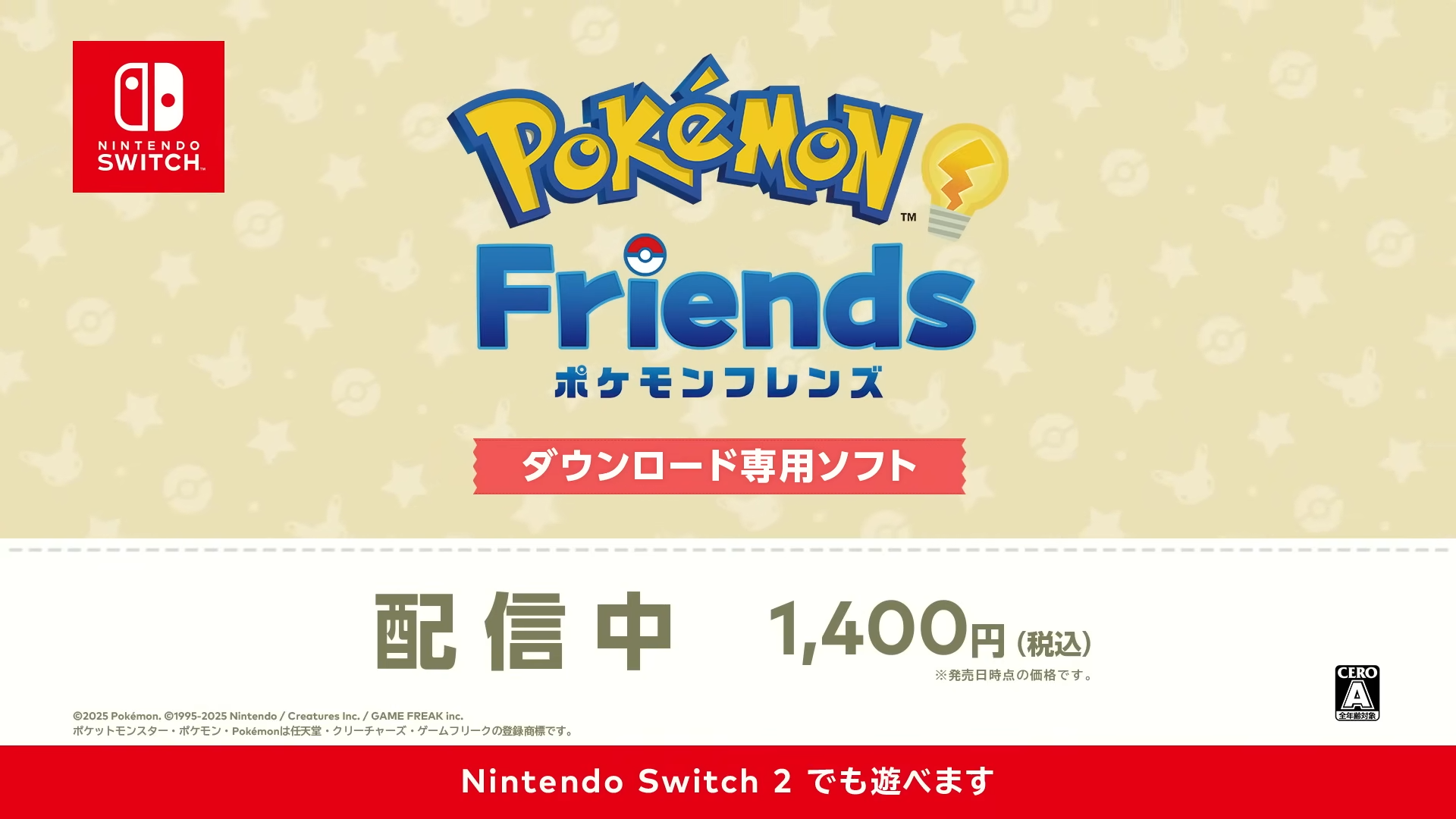
Pokémon Friends blends cozy visuals with more than 1,200 quick-fire brainteasers, inviting players to knit virtual plushies of beloved Pokémon and decorate playful in-game rooms. Priced at 1,400 yen on Nintendo eShop—roughly the cost of a real-world Pikachu keychain—the title delivers bite-sized challenges that reward persistence with collectible cuteness. You solve three puzzles at a time, feed the yarn you earn into a whimsical Plush-O-Matic, and watch a new plush pop out like magic. Switch owners can enjoy the experience docked or handheld, while Switch 2 players gain crisper textures and faster load times. Daily quests, friend leaderboards, and timed events keep the loop fresh, and a Combo Bundle adds extra puzzle packs for plushie completionists. Whether you’re looking for a relaxing commute companion or a late-night mental stretch, Pokémon Friends turns puzzle sessions into a plush-collecting hobby that never feels like work.
What Sets Pokémon Friends Apart
Pokémon has flirted with puzzles before—remember the sliding tiles in Goldenrod City?—yet Pokémon Friends carves its own cozy corner by meshing brain-teasing riddles with the irresistible urge to hoard plushies. Instead of catching creatures in tall grass, you’re untangling riddles that feel like miniature escape rooms. Each success rewards yarn, the lifeblood of every stuffed companion you’ll craft in the cheery Plush-O-Matic. Because progress hinges on your wits rather than twitch reflexes, the game welcomes veteran Trainers and complete newcomers alike. Even better, the puzzles rotate three at a time, so sessions stay snack-sized—perfect for bus rides, coffee breaks, or winding down before bed.
The charm doesn’t stop at gameplay. Pokémon Friends leans hard into tactile warmth: soft pastel palettes, chunky buttons, and subtle felt textures line every menu. The moment a plushie plops onto your digital bedroom shelf, you’ll swear you can feel its squishy belly through the Joy-Con. That fusion of puzzle satisfaction and collectible snugness makes the title stand out amid a crowded eShop, promising a play experience that soothes as often as it stimulates.
How the Puzzle Gameplay Keeps You Hooked
At its core, each brainteaser asks you to spot patterns, rotate shapes, or complete logic strings—think Professor Layton’s greatest hits distilled into bite-sized bursts. Yet Pokémon Friends spices things up with an “energy” ribbon mechanic: every move burns a ribbon, and unused ribbons convert into bonus yarn. Suddenly you’re juggling efficiency and experimentation, weighing the thrill of discovering a clever shortcut against the risk of wasting precious resources. A slick hint system steps in if you’re stumped, doling out gentle nudges rather than outright solutions, so the dopamine hit of an aha-moment remains intact. Ingredient-style objectives—match three lightning bolts for Pikachu plush fabric, line up five leaves for Bulbasaur stuffing—add thematic flair that feels organically Pokémon.
Variety prevents fatigue. One puzzle might ask you to untangle a knot of colored yarn in as few moves as possible, while the next challenges you to rearrange plushie silhouettes until they align perfectly in shadow. End-of-day performance reports show average move counts and highlight personal bests, nudging you toward self-improvement without the harsh glare of global leaderboards. The result is an addictive “just one more set” loop that mirrors the satisfaction of planting Poké Puffs in Pokémon-Amie—low pressure yet endlessly rewarding.
Building Your Plushie Collection
Plushies in Pokémon Friends aren’t mere trophies; they’re interactive decor that injects personality into your digital den. Each plush comes with a mini-animation: Charmander jiggles its tail flame, Snorlax lets out a tiny snore, and Jigglypuff puffs up when tapped. Arranging them is half the fun. Want an all-Electric squad perched on the top shelf? Go for it. Prefer a rainbow lineup from Grass to Dragon? The game’s simple drag-and-drop interface makes Feng Shui experimentation a breeze. As your shelves fill, you unlock extra rooms—think a seaside cabana for Water-types, or a cozy study for Psychic plushies—turning the plush catalogue into a visual diary of your puzzle prowess.
The Plush-O-Matic’s mechanics strike a clever balance between chance and agency. Input enough yarn to spin the machine’s fluffy gears, and you’re guaranteed a plush, but specific blueprints pop up less frequently. That scarcity breeds excitement whenever a coveted Gengar or Sylveon blueprint appears, triggering a scramble to stockpile the right yarn colors. Seasonal blueprints, available only during limited-time events, encourage consistent play without feeling punitive: miss one, and you’ll likely see it again in a future rotation. It’s a friendlier approach than classic gacha systems, sidestepping paywalls while preserving the thrill of discovery.
Daily Quests, Events, and Seasonal Surprises
Routine is the heartbeat of Pokémon Friends. Each morning the game hands out three Daily Quests—solve a puzzle under a move threshold, craft a plush of a certain type, or gift yarn to an NPC villager. Completing all three stamps your in-game calendar, and hitting weekly streak milestones unlocks exclusive furniture like a Poké Ball beanbag chair or a Ditto-shaped lamp. These cosmetic rewards might seem minor, but they transform your plush rooms into personal galleries that are uniquely yours. Weekend “Busy Threads” events crank up yarn payouts, making marathon sessions especially lucrative, while holiday celebrations reskin puzzles with festive graphics—imagine Pumpkaboo plush patterns for Halloween or snow-dusted Eevee silhouettes in December.
The developers also weave in community-wide goals. A global meter tracks the total number of puzzles solved across all players; when it fills, everyone receives a mystery blueprint and a shower of rainbow yarn. Watching the meter climb fosters a subtle sense of camaraderie—every solved riddle feels like a stitch in a communal quilt. It’s an elegant, noncompetitive way to unite puzzle enthusiasts, proof that collective progress can be just as thrilling as head-to-head showdowns.
Playing on Nintendo Switch vs. Switch 2
Pokémon Friends runs smoothly on the original Switch, but slotting the cartridge—or downloading the digital copy—onto Switch 2 feels like swapping standard cotton for premium velvet. Load times shrink from a brief yawn to a blink, background textures sharpen, and plush animations hit a buttery 60 frames per second. Even handheld play looks crisp on Switch 2’s OLED successor, with vivid colors making plushies pop like storefront toys under spotlight. Battery life holds steady thanks to efficient engine optimization, so marathon puzzle sessions won’t leave you scrambling for a charger during a train commute.
Players moving between consoles will appreciate cloud-save functionality: progress syncs automatically via Nintendo’s online service, ensuring your carefully arranged plush shelves remain pristine no matter which system you fire up. That seamless transition encourages pick-up-and-play habits—start a puzzle set on the couch with Switch 2’s Pro Controller, finish it in bed on a legacy Switch Lite without missing a beat. The design philosophy aligns with the Pokémon ethos of play anywhere, anytime, making Pokémon Friends a poster child for cross-generation comfort.
Performance and Visual Enhancements
Under the hood, Switch 2’s beefier chipset allows dynamic resolution scaling that hovers at native 1080p docked and a crisp 900p in handheld mode. Improved anti-aliasing smooths out stitch lines on plush textures, while enhanced particle effects add soft flecks of yarn when a puzzle completes. The devs even slipped in subtle ray-traced lighting during room decoration screens; plushies cast gentle shadows that shift as you rotate them, lending the scene a diorama-like depth. None of these upgrades alter gameplay mechanics, but they elevate the sensory experience, making each plush seem one step closer to tangible reality.
HD Rumble and Touch Support
Both Switch generations feature HD Rumble, yet Pokémon Friends tunes vibration cues with remarkable nuance. Successfully sliding a puzzle piece into place triggers a satisfying “thunk,” while misaligned moves buzz with a short, corrective quiver—like a friend nudging your elbow in gentle admonishment. Touch input, meanwhile, is buttery smooth: dragging shapes feels akin to moving felt cutouts across a craft table. On Switch 2, a higher touch sampling rate translates to snappier response, shaving milliseconds off move execution and subtly boosting precision in ribbon-restricted challenges.
Price Breakdown and Bundle Choices
On the Japanese eShop, Pokémon Friends costs 1,400 yen—a sweet spot that undercuts many indie puzzlers while signaling premium polish. Western storefronts list it at $15.99/€14.99, aligning with other Pokémon spin-offs like Pokémon Café ReMix’s microtransactions. A more lavish Combo Bundle sits at roughly $53.99, bundling the base game with two Puzzle On! packs that add 400 extra puzzles and a handful of exclusive plush blueprints. Crucially, there’s no pay-to-win path. Every plush is achievable through steady play; the bundle merely accelerates access and extends longevity for dedicated collectors.
Microtransactions are refreshingly restrained. A Yarn Doubler optional pass halves the yarn requirement for each plush for seven days, ideal for players facing busy schedules. Because quests and events award premium currency in generous chunks, you never feel cornered into spending real money. In short, the pricing strategy respects both impulse buyers hunting a cute weekend diversion and hardcore completionists chasing every plush silhouette.
Visuals, Audio, and Overall Vibe
The art direction channels the softness of a children’s storybook. Backgrounds resemble watercolor murals, splashed with cozy gradients that evoke lazy Sunday mornings. Plushies sport subtle stitched seams and fuzzy shading, nudging your brain to imagine their texture. Even menu icons mimic fabric patches, complete with embroidered borders. The UI’s gentle drop shadows and rounded corners echo the cuddly theme, reinforcing the sense that the entire game might fit inside a nursery toy chest.
Audio completes the comfort cocoon. Fluffy xylophone jingles accompany puzzle moves, while low-fi acoustic guitar loops in the background evoke coffee-shop calm. Each plush emits a tiny, character-specific sound on tap—Pikachu’s faint crackle, Psyduck’s confused quack—adding personal flair without overwhelming the mix. Wear headphones and you’ll catch subtle depth: distant chatter in town squares, wind chimes swaying outside the plush rooms’ windows. Together these design choices transform Pokémon Friends into a virtual blanket fort where stress melts faster than a Vanillite in July.
Multiplayer and Community Features
Pokémon Friends skips direct versus modes in favor of asynchronous camaraderie. A friends list lets you peek at shelf arrangements shared via QR-style Friend Codes. Heart icons under each plush allow quick reactions—tapping one sends a sparkly “like” and a sprinkle of celebratory confetti to the recipient’s screen. Weekly Community Challenges ask players to collectively craft specific plush families; meeting the quota unlocks limited-edition wallpapers mimicking classic Pokémon Center designs. The absence of PvP leaderboards keeps the environment welcoming, focusing on celebration rather than competition.
If you do crave numbers, the Snapshot Booth tracks niche stats—fastest puzzle solve, plush variety score, total yarn spun. You can post these metrics to X (formerly Twitter) with a single button press, accompanied by a stitched Polaroid of your current room layout. Social integration stops short of bombarding timelines, striking a balance between sharing joy and avoiding feed fatigue. It’s a model other cozy games could happily copy.
Pro Tips for New Puzzle Masters
First, resist the urge to brute-force solutions. Because unused ribbons convert into bonus yarn, efficiency pays dividends. Scan the board and mentally draft a two-step plan before moving—like playing chess with plushies. Second, prioritize Daily Quests that align with your immediate goals. Chasing yarn colors you don’t need yet wastes valuable stamps when streak rewards are on the line. Third, experiment with the hint system early. Hints reveal potential move arcs without spoiling final configurations, training your brain to recognize underlying patterns faster. Think of them as training wheels rather than crutches.
Inventory management matters too. Crafting plushies drains yarn colors unevenly; keep a spreadsheet-style mental tally so you don’t end up yarn-rich in blue but destitute in red. Finally, decorate often. Rearranging plushies isn’t just aesthetic—moving them yields tiny XP bursts that can push you over level thresholds right before Daily Quest resets, maximizing stamp rewards. Treat your room like a living scrapbook and you’ll progress faster without grinding.
What the Future Holds
Developers at The Pokémon Company have hinted at quarterly Puzzle On! packs, each bringing 200 fresh challenges and plush sets themed around regional variants—imagine Alolan sugar-white Vulpix plushies arriving just as winter blankets Sinnoh. Data miners have spotted placeholders for multiplayer co-op puzzles where friends solve interlocking boards simultaneously, each controlling a separate half of the puzzle field. If realized, that feature could elevate Pokémon Friends from relaxing solo activity to delightful couch-co-op staple.
An in-game survey also teased augmented-reality Plush Room visits on Switch 2’s rumored camera accessory, letting you drop your curated shelf into real-world living rooms. Whether these teasers pay off remains to be seen, but the groundwork is there: a flexible puzzle engine, a beloved brand, and an audience eager for gentle brainteasers. With thoughtful updates, Pokémon Friends could mature into the ultimate comfort game—always ready with a new plush, a fresh riddle, and a warm welcome back.
Conclusion
Pokémon Friends proves that clever puzzles and plushie charm make a match as perfect as ketchup and Pikachu. Weaving daily brainteasers into a rewarding collectible loop, it offers a soothing escape without skimping on depth. Whether you’re clearing your mind over morning coffee or chasing rare blueprints late at night, the game wraps every session in a cozy blanket of yarn-fueled satisfaction. Add cross-generation play, respectful pricing, and a roadmap brimming with potential, and you’ve got a title poised to nestle on countless Switch home screens for years to come.
FAQs
- Is Pokémon Friends playable on both Switch generations?
- Yes. Save data syncs through Nintendo’s cloud, so you can swap between consoles effortlessly.
- How many plushies can I collect?
- At launch there are 150 unique plush designs, with more arriving in seasonal updates.
- Does the game include microtransactions?
- Optional passes accelerate yarn collection, but every plush is achievable through regular play.
- Can I play offline?
- You can solve puzzles and craft plushies offline; online features like Community Challenges require an internet connection.
- Is there local multiplayer?
- Not yet, though future updates may introduce cooperative puzzle modes based on developer teases.
Sources
- Video: Pokemon Friends Switch Introduction Trailer, NintendoSoup, July 23 2025
- Pokemon Friends Out On Switch And Mobile, NintendoSoup, July 23 2025
- Pokémon Presents reveals new puzzle game Pokémon Friends…, TechRadar, July 22 2025