














Summary:
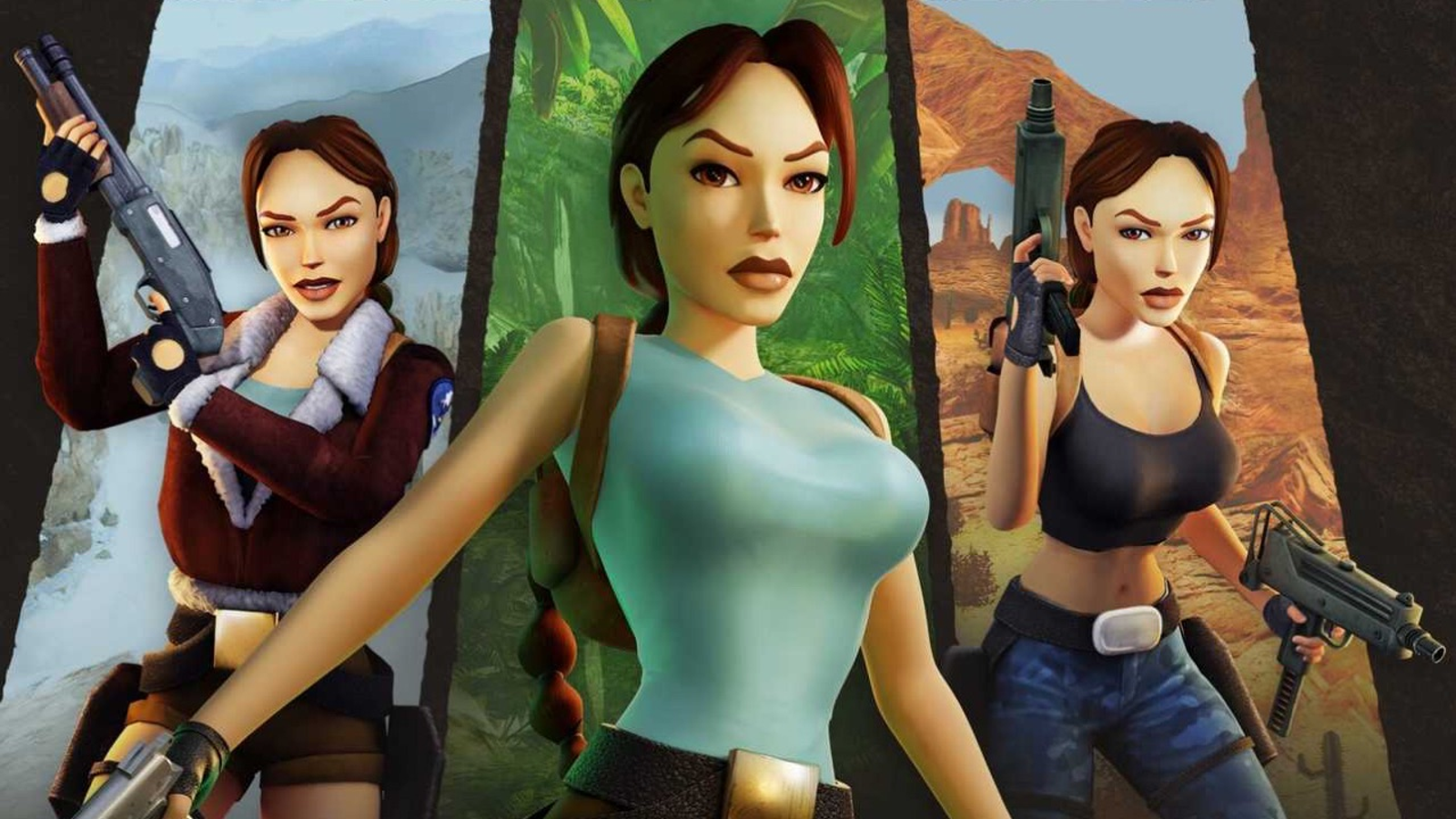
The recent Challenge Mode update for Tomb Raider I-III Remastered was meant to give players something fresh to enjoy, but it ended up opening the door to a wave of criticism instead. What should have felt like a nice extra quickly turned into one of those updates that players notice for all the wrong reasons. Videos began circulating online showing fresh bugs, strange texture problems, and visual issues that made parts of the remastered collection look rougher rather than better. That kind of reaction spreads fast, especially with a series as beloved as Tomb Raider, where fans tend to notice every crack in the wall the moment it appears.
What made the situation worse was the growing sense that Aspyr was not saying much while frustration kept building. As complaints piled up, some players also began accusing the studio of using generative AI for Lara Croft’s new outfits. That accusation gave the backlash an extra spark, because it shifted the conversation from technical problems to trust, craftsmanship, and whether the update had been handled with enough care. Once a discussion moves in that direction, silence rarely helps.
Aspyr has now responded with a statement that tries to steady the ship. The company says its top priority is delivering a patch to fix texture issues and technical bugs, while also promising a wider series of updates for problems across all platforms. Just as importantly, it directly denies the AI claims, saying the outfits were created by its own artists and that no AI-generated assets were used. That response does not erase the rough launch of the update, but it does give players something concrete to hold onto. Right now, that matters. Fans want less spin, fewer excuses, and a clear sign that the game will be cleaned up properly. The next patch will decide whether this becomes a temporary stumble or a lingering stain on an otherwise fondly remembered remaster.
Aspyr finally breaks its silence on the Tomb Raider I-III Remastered Challenge Mode backlash
For a while, the mood around the Challenge Mode update felt tense in the worst way. Players were posting clips, screenshots, and side-by-side comparisons that made the problems hard to ignore, yet the official response seemed slow to arrive. That gap between player frustration and studio communication created exactly the kind of atmosphere that lets irritation boil over. Fans of Tomb Raider are not shy about speaking up when something feels off, and in this case they had plenty to point at. The update was supposed to add value, not make people question the state of the collection. Once that frustration took hold, every strange texture, every awkward visual detail, and every bug became part of a much bigger conversation. Aspyr’s statement matters because it finally gives shape to that conversation. Instead of letting speculation run wild, the company has now acknowledged the complaints, confirmed that fixes are being worked on, and tried to bring the focus back to repair rather than rumor. That does not instantly smooth things over, but it is at least a real step forward.
Why the Challenge Mode update landed so poorly with fans
Updates like this live or die by first impressions. If players boot up a game and immediately notice things that feel broken, messy, or out of place, the goodwill disappears fast. That appears to be exactly what happened here. The Challenge Mode addition itself may have sounded promising on paper, but the surrounding technical issues dragged the whole thing into the mud. Fans were not just nitpicking tiny details buried in obscure corners of the game. They were seeing problems plainly enough that clips started spreading online with the speed of a rolling boulder in a Tomb Raider trap room. When that happens, criticism stops being isolated. It becomes shared experience. And shared frustration is powerful. Many players were not reacting to one single flaw, but to the overall sense that the update felt undercooked. That is what gave the backlash its bite. It was not merely disappointment. It was the feeling that something added to celebrate the game had instead chipped away at the polish players expected.
Texture issues quickly became the biggest talking point
Visual problems tend to grab attention first because they are immediate. You do not need patch notes, technical know-how, or a long explanation to spot a texture that looks wrong. You see it, you pause, and you think, what happened here? That kind of reaction is especially damaging for a remastered release, where presentation is part of the promise. Players come to a remaster expecting sharper visuals, better clarity, and a cleaner overall look that respects the original while improving the experience. When textures begin drawing negative attention instead, it feels like the promise has been flipped inside out. In this case, the reported texture issues became a symbol of the wider problem. They were easy to share, easy to mock, and easy to use as proof that the update had missed the mark. Even people who had not yet played the update could understand the criticism the moment they saw the footage. That is why Aspyr specifically addressing texture issues in its statement matters so much. The company clearly knows this is one of the first fires it has to put out.
Technical bugs made frustration spread even faster
Visual stumbles are one thing, but technical bugs make everything feel shakier. A rough-looking outfit can annoy players, but a bug that disrupts the experience can sour an entire session. Once reports started stacking up about technical problems, the backlash grew teeth. Players were no longer only talking about taste or art direction. They were talking about function, stability, and whether the update had been tested thoroughly enough before release. That is a much harder problem for a studio to shrug off. It turns criticism from subjective to practical. Nobody wants to feel as though they are stress-testing a release after it goes live. When players start encountering bugs in a remastered collection built on nostalgia and trust, the whole thing can feel like finding a hidden floor switch that drops you into a pit. It is sudden, frustrating, and not remotely the kind of surprise anybody wanted. Aspyr’s promise of a patch and a broader run of updates suggests the team understands that the problems are not limited to a single cosmetic complaint.
The outfit controversy added another layer to the criticism
If the discussion had stayed limited to bugs and textures, the reaction still would have been harsh. But the outfit controversy pushed things into a different lane entirely. Once players started questioning the quality and look of Lara Croft’s new costumes, the conversation expanded from technical concerns to creative judgment. That is a tricky shift because art-related criticism often taps into identity, expectation, and emotional attachment. Lara is not just any character. She is one of gaming’s most recognizable icons, and fans tend to have strong feelings about how she should look and how new additions should fit the tone of the series. When the new outfits failed to impress, they became easy targets. Some players mocked the designs outright, while others went further and suggested the work looked artificial. That sort of criticism is explosive because it does not only say the result was poor. It suggests the process itself lacked care. Once that idea gets loose online, it spreads quickly and sticks stubbornly.
Aspyr pushes back on generative AI accusations
The most direct part of Aspyr’s response is also the most important for the outfit debate. The company says the outfits were created by its team of artists and that no AI-generated assets were used in the update. That is a firm denial, and it needed to be firm. When accusations like that take hold, anything vague or half-hearted tends to make the situation worse. Players wanted a clear answer, and they got one. Whether that settles the discussion completely is another matter, because online outrage rarely packs up its bags neatly and heads home the moment a statement appears. Still, the wording matters. Aspyr is not ducking the accusation or burying it under corporate fog. It is addressing it head-on. That gives the studio at least a fighting chance to reset the conversation. The problem, of course, is that words alone will not carry this very far. If the patch arrives and the overall quality still feels shaky, the denial may not repair trust on its own. Players will judge the response by the results that follow.
What the official statement actually tells us
There are three parts of the statement that stand out. First, Aspyr says its top priority is a patch focused on texture issues and technical bugs. That tells players the studio sees these problems as urgent rather than cosmetic side notes. Second, it says a series of updates is on the way across all platforms. That suggests the studio expects more than one cleanup pass, which is important because it hints at a broader repair effort rather than a quick bandage. Third, the company uses the statement to correct what it calls mistaken information about the outfits, making it clear that its own artists created them. Put together, the message is doing two jobs at once. It is trying to reassure players that fixes are coming while also defending the work and people behind the update. That balancing act matters because the backlash touched both the technical shape of the game and the perception of how the update was produced.
Why a patch now matters more than another explanation
At a certain point, players stop wanting more words and start wanting visible change. That is where things stand now. A clean statement can calm part of the noise, but only for so long. The next meaningful step has to come in the form of a patch that genuinely improves what players are seeing and experiencing. If the update fixes the most obvious texture issues, tackles the bugs people are running into, and stabilizes the game across platforms, the mood can shift surprisingly fast. Players are often willing to forgive a rough moment when they feel a studio has corrected course properly. But if the fixes are slow, incomplete, or introduce another round of headaches, this situation could linger longer than Aspyr would like. That is the awkward truth about modern game updates. The recovery patch often becomes more important than the update that caused the trouble in the first place. It is the moment when a studio either rebuilds confidence or lets doubt settle in deeper.
What players across platforms will want fixed first
The priorities here are not difficult to guess because players have already been showing the studio exactly where the pain points are. Texture issues will likely be near the top of the list because they are so visible and so widely discussed. Technical bugs follow close behind because they affect the day-to-day feel of playing. Beyond that, players will want consistency. No one wants one platform getting a cleaner experience while another is left wrestling with rough edges. Aspyr specifically mentioning all platforms is important because it acknowledges that the update’s problems are not being treated as isolated incidents. Fans will also want the patch notes to be specific. Vague lines about general stability are rarely enough after a backlash like this. People will be looking for clear signs that the studio has listened to what was being flagged online. In other words, the patch needs to feel targeted. A broad promise is nice, but a precise fix list is what restores confidence.
The bigger question facing Aspyr after this rough update
Even once the immediate problems are addressed, a larger issue remains. How did an update meant to add something fun end up triggering this kind of response in the first place? That question sits quietly in the background, but it matters. Fans are not only reacting to what broke. They are also wondering how the update cleared the runway in this state. That speaks to expectations around quality control, communication, and the handling of a series that carries a lot of history. Remastered collections walk a narrow path. Players want respect for the original experience, but they also expect careful improvements that feel thought through and well executed. When that balance slips, the reaction can be fierce because it feels like the remaster is borrowing nostalgia while mishandling the details that made the originals special. Aspyr now has to do more than patch problems. It has to remind players that the collection is in steady hands.
Can Tomb Raider I-III Remastered regain player trust
Yes, but it will depend on execution rather than sentiment. Trust in games is a practical thing. Players rebuild it when they see problems addressed clearly, quickly, and without introducing fresh chaos. The good news for Aspyr is that this is not an impossible hill to climb. Many games have recovered from rough patches when studios responded with solid fixes and better communication. The challenge is that Tomb Raider is not just another name on a release calendar. It carries legacy, memory, and a fanbase that notices when something feels careless. That means recovery needs to feel deliberate. The patch must land well. Follow-up support must stay steady. Communication must remain clear. If all of that happens, this update could eventually be remembered as an unfortunate stumble rather than a defining mistake. But right now, the pressure is very real. Players have heard the promise. The next step is proving it.
Conclusion
The Challenge Mode update for Tomb Raider I-III Remastered was supposed to add excitement, yet it ended up putting Aspyr on the defensive. Between texture issues, technical bugs, and the uproar surrounding Lara’s new outfits, the update quickly turned into a lesson in how fast community frustration can snowball. Aspyr has now responded with the two things players most wanted to hear: fixes are in the works, and the studio says no AI-generated assets were used for the outfits. That gives the situation a clearer shape, but it does not close the book. What happens next matters far more than the statement itself. If the promised patch cleans up the problems properly and the wider updates do the same across all platforms, the collection can recover. If not, the backlash will keep echoing. Right now, players are watching for action, not just reassurance.
FAQs
- Why are players upset with the Tomb Raider I-III Remastered Challenge Mode update?
- Players have been criticizing the update because of newly reported bugs, texture issues, and disappointment with some of Lara Croft’s added outfits. The reaction grew stronger as videos and screenshots spread online.
- Did Aspyr say it used generative AI for Lara’s new outfits?
- No. Aspyr explicitly said the outfits were created by its own team of artists and stated that no AI-generated assets were used in the update.
- Is a new patch coming for Tomb Raider I-III Remastered?
- Yes. Aspyr said its top priority is delivering a patch that fixes the texture issues and technical bugs tied to the recent update.
- Will the fixes only apply to one platform?
- Aspyr said a series of updates is planned to address technical issues across all platforms, which suggests the support effort is not limited to a single version of the game.
- What should players expect next from Aspyr?
- Players should expect more information on patch timing and patch details once Aspyr is ready to share them. In the meantime, the company has encouraged players to submit bug reports through its support site.
Sources
- Tomb Raider I-III Remastered: Challenge Mode Update | Patch Notes, Aspyr Support, March 12, 2026
- Aspyr issues statement in response to claims that Tomb Raider 1-3 Remastered’s new update uses AI, Nintendo Everything, March 18, 2026
- Tomb Raider Remastered studio denies using generative AI in latest update, says fixes for bugs and texture issues are on the way, PC Gamer, March 18, 2026