














Summary:
Fifteen years is long enough for a console generation to become retro, for old accessories to end up in bargain bins, and for the word “Wiimote” to trigger a wave of muscle memory in your wrist. Yet Nintendo’s legal fight with Bigben Interactive, now known as Nacon, kept ticking along in the background the entire time. The dispute centered on a third-party Wii controller that Nintendo said crossed the line from “compatible” into “infringing,” and the courts ultimately agreed with Nintendo on the key point: the patents at issue were valid for this situation, and the accessory maker was responsible for the infringement. The most eye-catching part is what happened next. After years of wrangling over money, a German court ordered Nacon to pay a total that lands just under seven million euros once interest, legal costs, and the rest of the tab are added up – roughly $8.2 million when converted.
What makes this outcome extra interesting is not only the size of the payment, but the logic behind it. Nacon argued that if shoppers did not buy its controller, they would have bought some other third-party option anyway, so Nintendo should not be treated as if it “lost” those sales. The court did not buy that reasoning, pointing out that the hypothetical alternatives were likely infringing too, which means the infringer does not get a discount by imagining a different infringer taking its place. It is a very “nice try” moment, delivered with legal vocabulary. Nacon has filed an appeal, so the story may stretch a little further, but Nintendo’s win is real, specific, and backed by a damages ruling that finally puts a price tag on a dispute that started back when the Wii was still the hot new thing.
The Nintendo Wii controller just won after 15 years
Nintendo has secured a major damages win in a long-running dispute tied to the Wii era, with a court ordering Bigben Interactive GmbH – now operating under the Nacon name – to pay a total that comes in just under seven million euros once damages, interest, and legal costs are counted together. In plain terms, this is the moment where the argument stops being mostly about who was right and becomes very much about who owes what. The case stems from Nintendo’s claim that a third-party Wii-compatible controller infringed Nintendo’s patent rights, and the damages decision lands after years of procedural delay and back-and-forth over how to calculate the financial harm. If you have ever joked that “the lawyers will be the only winners,” this time the scoreboard says Nintendo did, in fact, win – and the amount is large enough to be more than symbolic. It is also a reminder that even when a company wins on liability early, the money phase can take ages to finish.
Who Bigben Interactive is – and why the name now says Nacon
If the Bigben name sounds familiar, that is because it has been attached to gaming accessories for years, especially in Europe, spanning controllers and other add-ons that aim to ride the wave of popular hardware. Over time, corporate branding shifted, and Bigben Interactive’s identity in this story now shows up as Nacon, which is why recent reporting often uses both names in the same sentence. That matters because legal cases love precision: the company you sue, the company that sells the product, and the company that pays the bill may be linked through subsidiaries and rebrands, but the court paperwork still needs a clear target. In this dispute, the defendant is described as Bigben Interactive GmbH, now Nacon, which keeps the chain of responsibility intact even as the logo on the front door changes. For readers, it also prevents the classic confusion of “Wait, is this the same company?” Yes – this is the same thread, just with a different label stitched on top.
What the disputed product was – and why “Wii-compatible” mattered
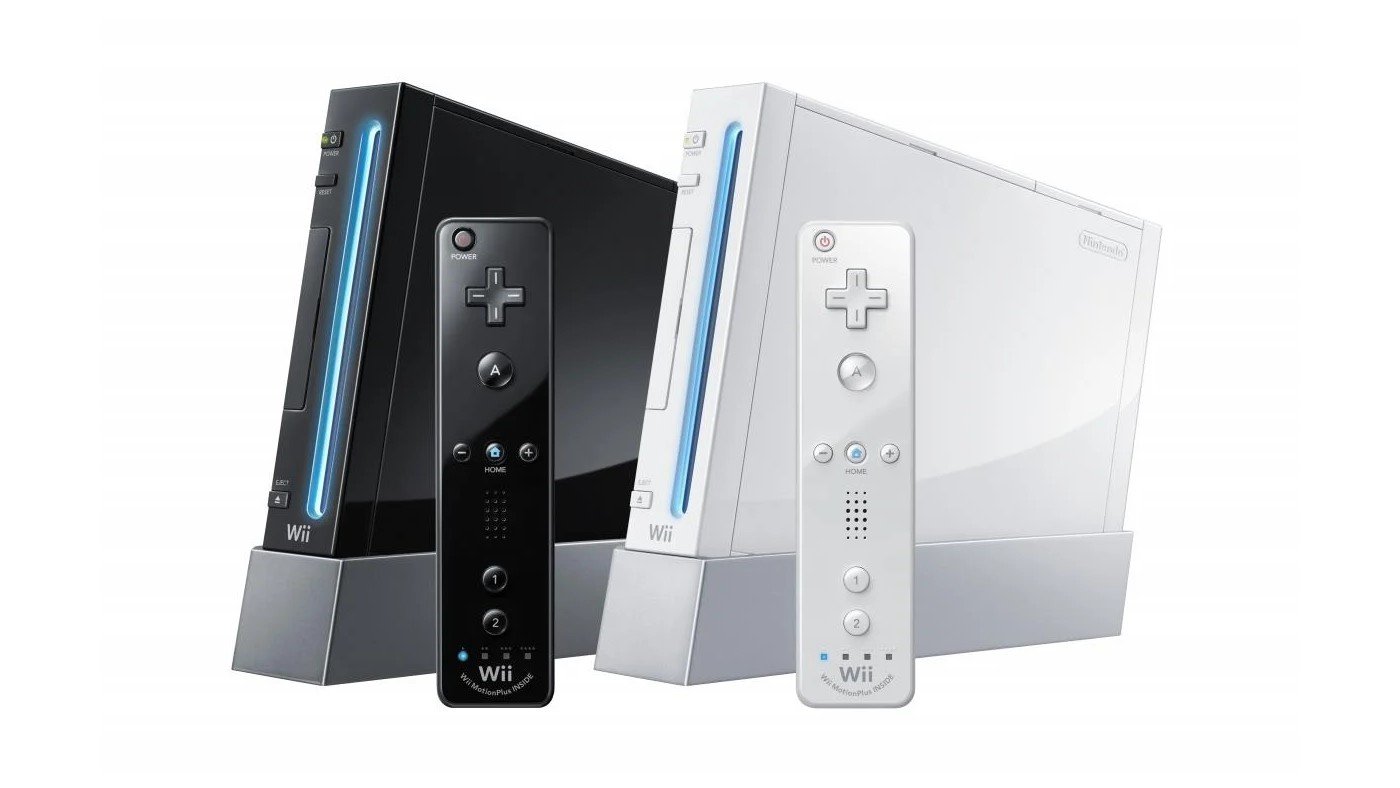
At the center of the dispute is a third-party controller marketed to work with the Wii, specifically the Wii Remote-style experience that defined the platform’s identity. Wii compatibility is not just a checkbox – it often requires mimicking core functions that made Nintendo’s controller special, including how it tracks movement and interacts with the console’s input expectations. Nintendo’s position was that Bigben’s controller crossed from lawful interoperability into patent infringement, meaning it did not merely “talk to the Wii,” it allegedly used protected technical solutions in the process. That distinction can sound abstract until you remember what the Wii sold as a concept: you swing, point, flick, and the game responds like it is reading your intent. Reproducing that feeling is exactly what makes a third-party Wii Remote tempting to buyers – and exactly what makes Nintendo protective of the underlying inventions. In this case, the court’s path ultimately led to damages being awarded, which tells us the infringement claim did not stay theoretical.
Compatibility is a promise, not a sticker
When a product says “compatible,” buyers hear “it will work like the real thing.” That is not an insult – it is the entire point of buying a cheaper alternative. But legally, that promise can become risky if delivering the same behavior requires copying protected solutions rather than building a genuinely different approach. The uncomfortable truth for accessory makers is that the better the imitation, the easier it can be to argue that protected design and engineering choices are being reused. For Wii-style controllers, compatibility is tightly tied to the same physical motions and the same expectations of responsiveness, which narrows the room to innovate while staying plug-and-play. And from the buyer’s side, we get it: you want a controller that connects, calibrates, and behaves without drama. Nobody wants to spend Saturday night troubleshooting instead of bowling in Wii Sports. The legal system, however, does not grade on “vibes” – it looks at what is actually implemented, and whether that implementation steps on patent rights.
Why the sensor bar and motion control details mattered
The Wii Remote experience is not magic, even if it felt like it in 2006. It is built on specific hardware and sensing ideas that translate real-world movement into game input, and those ideas are exactly the kind of thing patents are designed to protect when they are novel and properly granted. Reporting around this damages ruling points to the infringement of a European patent connected to the Wii Remote, and discussions of the Wii Remote’s protected features often mention the combination of motion sensing and the camera-based tracking used with the sensor bar. From a user perspective, it is simple: point at the screen, and the cursor behaves. From a technical and legal perspective, “simple” can be the result of very particular engineering choices that are not supposed to be copied without permission. That is why details matter in court even if players never think about them. The smoother the imitation feels in your hand, the more likely it is that the same protected blueprint is being followed.
The core patent claim – and what the court accepted
The heart of Nintendo’s win is that the court accepted an infringement finding tied to the Wii Remote-related European patent at issue, and the later damages ruling treated that infringement as a settled foundation rather than an open question. That matters because damages are not awarded in a vacuum – they depend on an underlying conclusion that rights were violated. In the materials and reporting available, the damages decision is described as coming from the Mannheim Regional Court and tied to infringement of European patent EP 1 854 518 relating to the Wii Remote game controller. The court’s approach is notable because it did not water down Nintendo’s claim by assuming the market would have simply shifted to other third-party sellers if Bigben’s products were absent. Instead, it treated Nintendo’s position as stronger: if those substitute products would likely infringe too, the infringer does not get to reduce what it owes by pointing to a hypothetical line of alternative infringers. It is a bit like saying, “You cannot defend a speeding ticket by arguing other cars were also speeding.”
A quick timeline from 2010 filing to the 2025 damages ruling
This dispute stretches across an absurdly long span of gaming history. Nintendo filed the infringement lawsuit back in 2010, and a court found in Nintendo’s favor on infringement well over a decade ago, meaning the core “who was right” portion did not need 15 years to resolve. The drag came later, during the damages phase, where courts and parties wrestle with the numbers, evidence, and methods used to price the harm. The damages ruling discussed in current reporting is dated October 30, 2025, and it is framed as the point where the court finally put a concrete monetary obligation on Nacon for the earlier infringement. That gap between early liability and late money is not unique to this case, but it is extreme here, which is why it has grabbed attention. The Wii itself went from flagship hardware to nostalgic icon while the paperwork kept moving. If you ever needed proof that legal timelines do not care about console cycles, this is it.
How the damages ballooned – interest, legal fees, and delays
One reason the total payment is so large is that time is not neutral in court, especially when interest is involved. The damages portion described in the press coverage includes not only a base damages amount, but also interest and legal costs, with interest running for years and pushing the total close to seven million euros. Some reporting notes that delays in the proceedings made the final sum substantially higher, turning a long defense strategy into an expensive one. You can think of it like leaving a tap running – at first it is “just a little,” and then you get the water bill and suddenly you are doing math you did not want to do. Legal fees add another layer, because complex patent cases are not solved with a single stamped form. Experts, filings, hearings, and appeals all cost money, and when the court decides you were in the wrong, those costs can follow you. The end result is that a case that might have been financially manageable early on can become punishing after years of accrual.
The “customers would have bought another third-party pad” defense
Nacon’s key damages argument, as described in coverage of the decision, was essentially: “Even if we did not sell these controllers, customers would have bought some other third-party controller instead, so Nintendo should not be treated as if it lost those sales.” On the surface, it sounds like a realistic market point, because accessory shelves are rarely empty. But the court was not convinced, because the hypothetical substitutes were not treated as clean, lawful alternatives. The reasoning presented is sharp: if the alternative third-party controllers would also likely infringe the same patent, then you cannot reduce damages by imagining a different infringement filling the gap. In other words, the infringer cannot benefit from a crowded field of likely infringers. This is a big deal because it supports a stronger “lost profits” style calculation, where the court can assume Nintendo would have captured the sales that the infringing product took, rather than shaving the number down based on speculative market behavior.
Why this matters beyond the Wii – a message to accessory makers
Even though the Wii is a legacy platform, the lesson here is modern: compatibility-driven accessories live on a tightrope. Players want cheaper options, extra controllers for party nights, and replacements when the dog decides your nunchuk cable is a snack. Manufacturers want to meet that demand. But the closer an accessory gets to replicating a signature controller experience, the more likely it is to collide with patents and other protected rights. This case also shows that the “money phase” can be as strategically important as the infringement phase, because damages methodology can massively change the final exposure. If a court is willing to accept a strong lost-profits approach and dismiss the “someone else would have sold it” argument, that shifts risk calculations for companies building lookalike controllers. The message is not “never make accessories.” The message is “if you build too close to the original, the bill can arrive years later, with interest.”
What an appeal could change – and what it usually cannot
Nacon has filed an appeal, which means the dispute is not guaranteed to be finished in the most satisfying, roll-credits way. Appeals can challenge aspects of the ruling, including legal reasoning, procedural issues, or how damages were assessed, depending on what is being appealed and how the record looks. But appeals are not a reset button that replays the whole case like a save file. They often focus on whether the lower court made an error, not on rewriting history because one side is unhappy with the result. In this situation, current reporting treats the appeal as possible but unlikely to flip the overall outcome, especially given how long the infringement findings have been litigated and how developed the damages record appears to be. Still, “unlikely” is not “impossible,” and until the appellate process is exhausted or settled, the story keeps a tiny asterisk attached. The practical takeaway is simple: the ruling stands now, and it is a meaningful win while the appeal runs its course.
What it means for players, collectors, and the used accessory market
If you are a player, you might be wondering, “Does this change what is in my drawer right now?” For most people, it is not a day-to-day gameplay change. The Wii is no longer a current platform, and this is a dispute between companies, not a crackdown on individual buyers. Where it can matter is in how future third-party accessories are designed and marketed, especially for platforms where the official controller experience is part of the brand identity. For collectors and retro enthusiasts, it is also a reminder that not all third-party gear has equal legitimacy, even if it works perfectly. Some accessories are clever, lawful alternatives; others are risky copies that may disappear from shelves or become footnotes in legal decisions. And yes, it can feel strange that a lawsuit about a motion controller can outlive the motion-controller craze itself. But that is how IP enforcement works: it moves slowly, and then it lands all at once. For players, the best mindset is calm curiosity – enjoy your hardware, but understand why companies fight so hard over the inventions that made it special.
Conclusion
Nintendo’s win over Bigben Interactive, now Nacon, is not just a “courtroom trivia” moment – it is a clear example of how long patent disputes can run, and how expensive they can become when damages, legal costs, and interest finally stack up. The key points are straightforward: Nintendo sued back in 2010 over a Wii-compatible controller, the courts found infringement, and a damages ruling in 2025 ordered a total close to seven million euros – roughly $8.2 million. Nacon’s appeal keeps the door slightly open, but the current state of play favors Nintendo in a way that is hard to ignore. For accessory makers, the takeaway is to innovate instead of imitate. For players, the takeaway is simpler: the controller wars do not always end when the console generation ends. Sometimes they end when a judge signs off on the final invoice – and in this case, Nintendo is the one sending it.
FAQs
- How much money was Nacon ordered to pay Nintendo?
- Reporting on the damages decision describes a total that comes in just under seven million euros once damages, interest, and legal costs are added together, which has been widely described as roughly $8.2 million when converted.
- What was the dispute actually about?
- The dispute centered on a third-party controller marketed as compatible with the Wii, with Nintendo alleging that the product infringed patent rights related to the Wii Remote. The damages ruling follows earlier findings that supported Nintendo’s infringement position.
- Why did the case take so long if the court sided with Nintendo years ago?
- In long-running IP disputes, it is possible for liability to be addressed earlier while the damages phase drags on due to evidence gathering, expert analysis, procedural disputes, and strategic delays. This case is a textbook example of the “money phase” taking years.
- What was Nacon’s main argument to reduce the damages?
- Nacon argued that buyers who did not purchase its controller would have bought another third-party controller instead, so Nintendo should not be treated as if it lost those sales. The court rejected that logic in the damages context because the hypothetical alternatives were considered likely to infringe as well.
- Does the appeal mean Nintendo might not get paid?
- An appeal means the legal process is not fully closed, but it does not erase the current ruling. Appeals typically focus on whether the lower court made legal or procedural errors, and current coverage treats a full reversal as possible but not the expected outcome.
Sources
- Nintendo Wins $8.2 Million In Damages Over Wii Controller Patent Infringement, Nintendo Life, December 18, 2025
- Nintendo Wins Damages Lawsuit With BARDEHLE PAGENBERG: BigBen To Pay Nearly EUR 7 Million, Mondaq, December 18, 2025
- After 15 years of suing third-party Wii controller maker Bigben (Nacon) over a patent, Nintendo has won a 7 million euro damages judgment – which is now being appealed, Games Fray, December 16, 2025
- Nintendo gewinnt Schadensersatzprozess gegen Nacon: Knapp sieben Millionen Euro wegen Wii-Remote-Patentverletzung, Nintendo Connect, December 18, 2025
- Après 15 ans, Nintendo remporte son procès pour la manette Wii, KultureGeek, December 18, 2025
- Nintendo vince causa contro Nacon dopo 15 anni, SpazioGames, December 18, 2025