














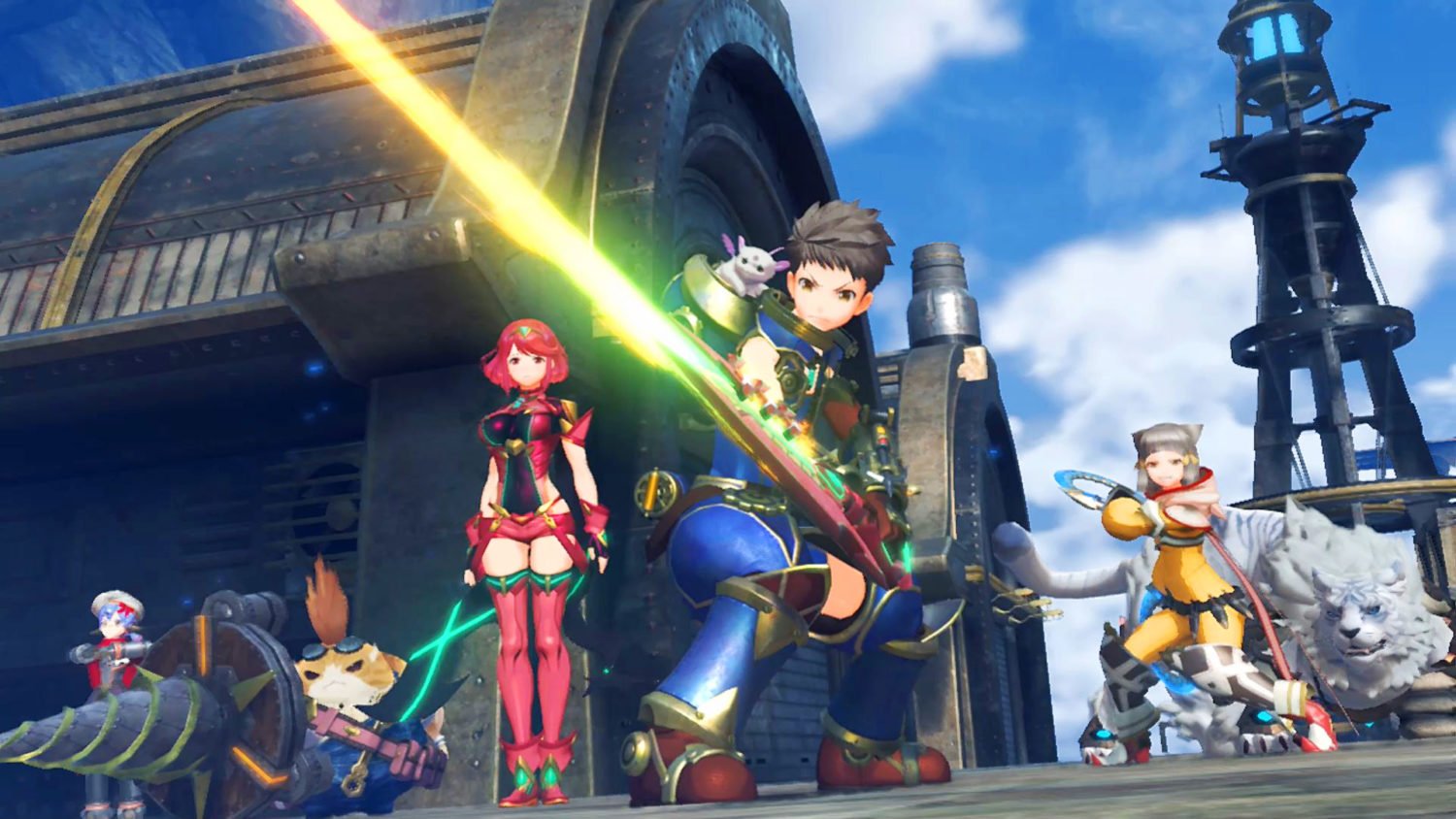
Summary:
A small detail can hit the Xenoblade community like a cymbal crash, and this time it’s a single number: “2026.” The chatter started because Caitlin Thorburn, a voice actress tied closely to Xenoblade Chronicles 2 through roles like KOS-MOS and Nim, was reported to have a Spotlight credit entry that lists a Xenoblade Chronicles project with the date set to 2026. That combination is basically catnip for fans. A recognizable performer. A platform people associate with professional credits. A future date that looks like a release year. Put it together and it feels like someone accidentally left a window open during a storm.
Still, a credit line is not a trailer, and it isn’t an announcement. The most grounded takeaway is also the least thrilling: something Xenoblade-related may be in motion, and people noticed a hint that could be meaningful. The most popular interpretation is a Switch 2-focused re-release of Xenoblade Chronicles 2, since the specific role association points back to that game’s cast. But there are other explanations that fit the same evidence without requiring giant leaps, like additional recording for an upgrade, extra content, a side project, or even a simple database mistake that gets cleaned up later.
What matters is how we handle the gap between “interesting breadcrumb” and “confirmed plan.” If we keep our feet on the ground, we can talk about the realistic paths forward, what a Switch 2 Edition might actually improve, and what signals would turn this from rumor into something solid. In the meantime, we can enjoy the speculation for what it is: a spark, not a wildfire.
Voice Actor sparks the Xenoblade 2026 speculation
The latest wave of Xenoblade talk didn’t begin with a Nintendo trailer or a Monolith Soft teaser. It started the way a lot of modern gaming rumors start: someone noticed a small detail on a public-facing profile and the community did what it always does, which is connect dots at lightning speed. Reports say Caitlin Thorburn’s Spotlight profile includes an entry for a Xenoblade Chronicles project where the date is listed as 2026. Because she’s associated with specific Xenoblade Chronicles 2 roles, fans immediately started asking the obvious question: are we looking at a Switch 2-related return for Xenoblade Chronicles 2 this year? That question spread fast because it feels oddly specific. A generic “video game voice work” credit would be easy to ignore, but “Xenoblade Chronicles” plus a future year reads like a signpost. The key thing is that the speculation is tied to a single data point. That makes it easy to discuss clearly, but it also means one small error could explain everything. So we can treat it as a clue worth watching, without treating it like a promise carved into stone.
Why a Spotlight credit catches people’s attention
Spotlight has a reputation as a professional hub for performers, so when something shows up there, it tends to feel more “real” than a random screenshot floating around social media. The logic is simple: if a platform is used for professional visibility and credits, then an entry that looks like a future project can feel like it slipped out early. That’s why fans reacted so quickly. A casting and performer platform is not built for teasing game announcements, so anything that looks like a release-year hint can feel accidental rather than marketing. At the same time, professional platforms can still contain placeholders, typos, or entries that aren’t meant to be read as public release windows. That’s where the tension lives. Spotlight can be a serious place where people manage their professional history, but it’s still a place where humans type things in, update items over time, and sometimes make changes that don’t translate cleanly to how fans interpret them. The result is a rumor that feels believable enough to discuss, while still being far from confirmed.
How Spotlight profiles get updated
One reason this rumor has legs is the belief that a performer’s profile reflects their own credits and professional record, which makes an unusual entry feel intentional. In practice, profiles can be updated over time as performers manage their public-facing information, and that can include tweaks, corrections, and new additions. From a fan perspective, that matters because it frames the entry as something that likely wasn’t generated automatically by a random third party. Still, “updated by the performer” does not automatically equal “release date confirmed.” People update profiles for lots of reasons: to keep credits current, to align naming with how projects are listed publicly, or to add work that is finished but not yet announced in detail. The tricky part is that professional timelines and fan timelines are not the same thing. A performer might think in terms of when something is due to be credited or released, while fans read it as a neon sign pointing to a specific launch. That mismatch is where misunderstandings grow. So, yes, an update can be meaningful, but the meaning is not always the one we want most.
Why dates on credits can be tricky
A single year beside a project name can represent several different things, and that’s why the “2026” detail needs careful handling. It might be a planned release year, but it could also be an internal reference point, a placeholder, or even the year the credit was added or expected to become public. Sometimes people enter a year because it’s the best available estimate, not because it’s locked in. Sometimes a platform format nudges you to fill a date field even when the project is under wraps. And sometimes, honestly, someone simply clicks the wrong year in a dropdown and moves on with their day. The internet, of course, does not move on with its day. It grabs that dropdown choice like it’s the last slice of pizza at a party. If we want to stay factual, we can say this: the date is the spark, but the date alone doesn’t tell us what kind of Xenoblade project it is, how big it is, or how close it is to release. It only tells us that something about “Xenoblade Chronicles” plus “2026” is being discussed widely enough to catch attention.
Caitlin Thorburn’s Xenoblade roles and why they matter
This rumor doesn’t feel random because Caitlin Thorburn is not loosely connected to the series. Fans recognize her name specifically because she voiced characters tied to Xenoblade Chronicles 2, including KOS-MOS and Nim, and her involvement often gets mentioned when people talk about that game’s rare and fan-favorite Blades. That’s why the role detail matters so much. If the profile entry references her work as KOS-MOS, fans naturally point back to Xenoblade Chronicles 2 first, not Xenoblade Chronicles 1 or 3. It’s like finding a key with a very specific cut pattern. You don’t try it on every door in the neighborhood, you try it on the door it most obviously fits. That doesn’t prove what the project is, but it does shape the most reasonable guesses. If we’re being honest, this is why the Switch 2 Edition idea dominates the conversation. The rumor is not just “a Xenoblade thing.” It’s “a Xenoblade thing that seems linked to a Xenoblade Chronicles 2 character credit.” That focus narrows the field in a way that feels practical rather than wishful.
KOS-MOS, T-elos, and Nim as a clue, not a promise
When fans see a performer tied to multiple Xenoblade Chronicles 2 roles, it’s tempting to treat it like a smoking gun. But it’s more accurate to treat it like a fingerprint smudge on a window. It suggests someone was there, but it doesn’t tell us what they did inside the building. Those characters could be relevant for a straight re-release, a performance upgrade, new scenes, new voice lines, or even a small cameo situation depending on what the project actually is. Also, voice work can happen for reasons that don’t map neatly onto “brand-new full game.” If an updated edition adds new menus, new tutorials, new story beats, or even new in-game hints, that could require recording. If an update improves accessibility and adds narrated elements or re-recorded lines, that could require recording too. The point is that returning voice work can point to “something happening,” while still leaving the scope wide open. So we can use the character association as a sensible compass direction, but we shouldn’t pretend it’s a GPS route with turn-by-turn directions.
Why the character list points back to Xenoblade Chronicles 2
KOS-MOS is especially important in fan discussions because she’s strongly associated with Xenoblade Chronicles 2’s Blade system and has a history that reaches beyond Xenoblade into the wider Xeno legacy. When a rumor references that role, it naturally pulls attention toward Xenoblade Chronicles 2 more than any other entry in the series. Nim and T-elos reinforce that connection because they’re also tied to that game’s roster. So if we’re looking for the simplest explanation that fits the evidence, it’s this: if the credit is real and the role label is accurate, a Xenoblade Chronicles 2-related release is a plausible target. That could mean a Switch 2 Edition style package, a Definitive Edition style re-release, or a version that adds performance improvements and a few extras. The reason this theory feels “clean” is that it doesn’t require new lore gymnastics. It just requires a business decision: bring a popular game forward onto a newer platform generation with enhancements. Fans want it because it would be fun, and publishers like it because it’s a proven title that can be refreshed for a new audience. That alignment is exactly why the community grabbed onto this angle so fast.
The most common fan theory: a Xenoblade Chronicles 2 Switch 2 Edition
If you’ve spent even five minutes around Xenoblade fans, you already know the wish list: smoother performance, sharper visuals, faster loading, and fewer rough edges when the screen gets busy. A Switch 2 Edition rumor fits that wish list like a glove. The idea is not that Xenoblade Chronicles 2 suddenly becomes a different game. It’s that the same core experience gets a cleaner runway to take off from, with fewer stutters and more breathing room for its big scenes. And because Switch 2 is widely discussed as a stronger platform, fans see it as the perfect excuse to revisit Xenoblade Chronicles 2 with improvements that the original hardware sometimes struggled to deliver consistently. This is also the kind of move that makes sense on a practical level. A refreshed edition can bring in new players who skipped the original, while giving returning players a reason to jump back in. If the rumored “2026” credit is pointing to something release-tied this year, a Switch 2 Edition sits near the top of the “realistic options” list, especially given the character association that keeps pointing back toward Xenoblade Chronicles 2.
What “Switch 2 Edition” could realistically mean
When people say “Switch 2 Edition,” they often imagine a total rebuild. In reality, it’s usually more like renovating a house you already love. You keep the layout, you fix the drafty windows, and you finally replace that one door that always sticks. A Switch 2 Edition could be as simple as a performance pass paired with higher resolution targets and more stable frame pacing, plus a few modernized settings. It could also include quality-of-life tweaks that make the early hours smoother and the menus faster to navigate. If Nintendo and Monolith Soft wanted to go further, they could bundle all existing add-ons, add a new mode, or include bonus story content. But the baseline expectation that fits the rumor best is improvement-focused rather than reinvention-focused. That matters because it keeps our expectations grounded. If this rumor turns into something real, the smartest way to avoid disappointment is to picture an enhanced version of the same game, not a brand-new game hiding inside an old shell. The excitement can still be real. It just needs to be aimed at the most likely outcome.
Performance, resolution, and load times
This is the practical heart of why fans want a Switch 2 Edition so badly. Xenoblade Chronicles 2 can look gorgeous, but it can also get messy when the action stacks effects on top of effects. A stronger platform could help the game hold its visual targets more consistently and reduce the moments where clarity dips. Faster load times would be a quality-of-life win that you feel constantly, not just in a few highlight scenes. Smoother menu responsiveness matters too, because Xenoblade games ask you to manage a lot of systems, and sluggish navigation can make even fun tinkering feel like pushing a shopping cart with a squeaky wheel. A Switch 2 upgrade path is the kind of change that makes the game feel more welcoming without changing its identity. It’s polishing the lens, not repainting the picture. And for a game that many players already adore, that kind of upgrade can be the difference between “I love it, but…” and “I love it, full stop.”
Quality-of-life changes fans keep asking for
Beyond raw performance, the Xenoblade Chronicles 2 conversation often circles back to usability. Players talk about clearer tutorials, smoother onboarding for complex systems, and better visibility for mechanics that the game sometimes explains in a roundabout way. People also bring up menu clarity, sorting options, and ways to reduce friction when managing Blades and gear. A revised edition could tighten those edges without changing the game’s personality. Think of it like reorganizing a toolbox. The tools are the same, but now you can actually find the wrench when you need it, instead of dumping everything on the floor and hoping it rolls into view. Quality-of-life improvements are also the kind of changes that can justify fresh voice work in small ways, depending on what gets added. If new tutorials are voiced, if new story snippets exist, or if new content needs returning characters to speak, that could connect back to why a voice credit might show up in the first place. Again, none of this is confirmed. But it’s a coherent set of possibilities that match how these re-releases often evolve.
Other possibilities that fit the same evidence
Even if the Switch 2 Edition theory is the crowd favorite, it’s not the only explanation that fits what’s being discussed. Xenoblade has a history of weaving characters, themes, and voice talent across entries, so returning voices can happen for many reasons. The profile entry being labeled broadly as “Xenoblade Chronicles” rather than a clearly numbered sequel could point to something that isn’t simply “Xenoblade Chronicles 2 again,” depending on how the credit was entered. It could also reflect a listing style choice rather than a title reveal. Another possibility is that the work relates to an add-on, a remaster-type adjustment, or a side release that still uses existing characters. The important point is that the evidence we have, as discussed publicly right now, doesn’t force a single conclusion. It supports a handful of plausible options, and the smartest approach is to keep those options in view instead of marrying one theory immediately. Speculation is fun, but locking ourselves into one interpretation too early is how we end up feeling burned later.
A new Xenoblade entry with returning voices
A totally new Xenoblade game is the most exciting option on paper, and it’s not impossible for a new entry to bring back certain voices. Series callbacks happen, and Xenoblade has proven it can connect threads across games in ways that reward long-time players. If a new project includes legacy characters, cameo appearances, flashbacks, or crossover-style nods, then returning performers could show up even if the main cast is largely new. The catch is that, based on what’s being reported, we don’t have enough to say “new game” with confidence. A new game claim needs stronger signals: official teasers, multiple independent reports, or some kind of consistent paper trail beyond one profile detail. Still, it’s fair to keep this as a possibility in the background, especially because a “Xenoblade Chronicles” label can be interpreted broadly by fans. If the rumor grows and more details emerge from reliable reporting, this option becomes easier to weigh. Until then, it remains the exciting branch on the tree, not the trunk.
Extra story content or a side project
There’s also a middle path between “full re-release” and “brand-new mainline game,” and that’s where side projects live. Extra story content, an expansion-style addition, or a smaller Xenoblade-related release could require new voice work while still being tied to older characters. This is the kind of scenario that can create confusing credit entries, because the performer might list the broader franchise name rather than a very specific subtitle that isn’t public yet. It’s also the kind of scenario that could explain a year marker without guaranteeing a massive launch. Side projects can be scheduled differently, announced later, or even adjusted quietly. If this turns out to be the case, the “KOS-MOS” connection could still matter, but the outcome might look different than what fans are currently picturing. In other words, we might be staring at a sign that says “something is coming,” while arguing about whether it points to a stadium concert or a small club show. Both are real events. They just have very different scales.
How to treat this kind of leak without spiraling
Rumors like this are a test of our ability to stay calm on the internet, which is honestly a tall order. The best approach is to treat the Spotlight detail as a watchlist item rather than a countdown timer. That means we can talk about realistic outcomes, but we avoid acting like release plans are locked. It also means we keep space for the boring explanations, because boring explanations are common and they don’t care about our feelings. A date field could be wrong. A credit could be incomplete. A profile could be updated and then corrected. None of those outcomes are exciting, but all of them are plausible. The upside of staying grounded is that we get to enjoy the fun part of speculation without turning it into a promise we feel owed. Think of it like hearing thunder in the distance. It might rain. It might not. Either way, it’s smart to bring the laundry in instead of announcing to the neighborhood that a storm is definitely arriving at exactly 7:00.
Simple checks we can do before believing anything
We can’t verify everything as fans, but we can be smarter about how we weigh rumors. First, we can check whether multiple independent outlets are reporting the same core detail, and whether they’re clear about what they have and haven’t verified. Second, we can pay attention to whether the reporting sticks to observable facts, like “a profile entry was spotted and shared,” rather than jumping straight to a definitive product claim. Third, we can watch for follow-up behavior: does the entry remain visible, get edited, or get removed? Changes can be meaningful, even if they don’t confirm a game. Finally, we can watch official channels without obsessing. If something Xenoblade-related is coming, it will eventually need an announcement, marketing, and storefront presence. Those signals tend to appear closer to release windows. Until then, it’s healthier to hold the rumor lightly. You can be curious without being certain, and you can be excited without locking your expectations to a single outcome.
Cross-checking who is reporting it
Not all reporting is equal, and that’s not an insult, it’s just reality. Some outlets will clearly label a rumor as a rumor and explain what they could verify. Others will repeat a claim with fewer details, which can inflate confidence without adding new information. The smart move is to focus on the parts that stay consistent across reports: the platform mentioned, the performer mentioned, the year mentioned, and the fact that the community discussion is driven by that specific combination. If multiple sources describe the same core detail and all treat it as unconfirmed, that tells us something important: the rumor is widespread, but the confirmation is not. That’s actually useful, because it helps us avoid the trap of mistaking repetition for proof. If the same screenshot gets reposted a hundred times, it’s still one screenshot. Cross-checking is how we keep the excitement fun instead of turning it into a runaway train.
Watching for official signals
If this turns into something real, official signals will eventually show up. That could be a Nintendo announcement, a Monolith Soft mention, a store listing, a trailer, a press release, or a rating board entry, depending on how the rollout is handled. The timing of those signals matters too. If the community is guessing a 2026 release window, we’d expect official steps to appear in a reasonable lead-up period, not years in advance with no follow-through. That doesn’t mean we set hard deadlines and declare the rumor “dead” if nothing happens next week. It means we stay alert to the kinds of confirmations that actually count. Until we get that, the best stance is simple: interesting, plausible, and not official. That’s not a mood killer. It’s how we keep the conversation fun while still respecting the line between what’s being discussed and what’s been announced.
Conclusion
The Xenoblade 2026 speculation is a perfect example of how one small detail can light up a fanbase. A reported Spotlight credit entry tied to Caitlin Thorburn, paired with a “2026” date and a role association that points back toward Xenoblade Chronicles 2, creates a rumor that feels both specific and believable. The most common theory, a Switch 2 Edition style return for Xenoblade Chronicles 2, makes practical sense and matches what many players want: smoother performance, sharper visuals, and quality-of-life improvements that let the game shine without friction. But the facts we have in public discussion still support multiple possibilities, including side releases or other Xenoblade-related work that could involve returning voices. The best way to handle it is to treat the detail as a watchlist clue, not a confirmation, while keeping an eye out for the official signals that would turn curiosity into certainty.
FAQs
- Does the Spotlight “2026” entry confirm a new Xenoblade game?
- No. It’s being discussed as an unconfirmed hint, not an official announcement. A profile detail can be meaningful, but it can also be a placeholder or a mistake.
- Why are fans linking this rumor to Xenoblade Chronicles 2 specifically?
- The reported role association points to characters tied closely to Xenoblade Chronicles 2, which makes a re-release or upgraded version a straightforward interpretation.
- What would a Xenoblade Chronicles 2 Switch 2 Edition likely improve?
- Fans mainly hope for more stable performance, better image clarity, faster load times, and smoother menus, plus optional quality-of-life tweaks.
- Could this be something smaller than a full re-release?
- Yes. Extra content, a side project, or additional recording for an upgrade could involve returning voices without meaning a brand-new mainline release.
- What would count as real confirmation?
- An official Nintendo or Monolith Soft announcement, a legitimate store listing, a trailer, or other formal release information would be the signals that move this beyond rumor.
Sources
- Rumour: Xenoblade Chronicles Voice Actor Might Have Leaked Evidence Of A New Release, Nintendo Life, February 4, 2026
- Rumor: Voice actor page leaks Xenoblade game for 2026, Nintendo Everything, February 3, 2026
- Caitlin Thorburn updates Spotlight page to say she worked on Xenoblade game for 2026, My Nintendo News, February 4, 2026
- Xenoblade stem actrice lekt mogelijk nieuwe game, N1UP, February 4, 2026
- Spotlight and Filmmakers Announce Partnership, Filmmakers.eu, February 19, 2024