














Summary:
Crimson Desert is the kind of game that makes people argue about platforms before they even argue about bosses. A fresh wave of Switch 2 chatter kicked off after Kiwi Talkz discussed the idea that the game is headed to Nintendo’s next system, and that single spark hit dry grass because there was already an older clue in the background – a GameStop product page that was spotted by fans and later removed. Put those together and it’s easy to see why the rumor mill started spinning like a slot machine that thinks you’re about to win.
Still, there’s a difference between “this feels possible” and “this is confirmed.” Pearl Abyss has promoted Crimson Desert with an official platform list, and that list does not include Nintendo Switch 2 at the time of writing. That matters, because official platform messaging is the one place where the fog usually clears. So the smartest way to handle this is to separate what’s concrete from what’s interesting, then keep a clean checklist for what would count as real confirmation later. That means treating interviews, retailer pages, and social chatter as clues – not verdicts.
We’re also going to talk about what Crimson Desert actually is – the world of Pywel, the tone, and the kind of open world action adventure it’s aiming to be – because rumors land harder when the game itself is easy to imagine on a new device. And if you’re feeling that familiar gamer anxiety of “Do I wait, or do I just pick a platform and move on with my life?” you’re not alone. We’ll keep it grounded, keep it practical, and keep the focus on what you can verify.
Crimson Desert is coming to Nintendo Switch 2?
Let’s start with the clean split that keeps us sane. The claim in circulation is simple: Kiwi Talkz has suggested Crimson Desert is coming to Nintendo Switch 2. That statement is not the same thing as a publisher announcement, a store pre-order, or a platform logo on an official trailer. What we can confirm is that the claim exists and people are reacting to it because Crimson Desert is known for looking technically ambitious. What we cannot confirm from that claim alone is timing, performance targets, or whether a Switch 2 build is finished, planned, or merely discussed internally. In other words, this is a rumor-shaped conversation built on an interview-style spark, and rumors need guardrails. Think of it like hearing footsteps upstairs – you know something moved, but you don’t know if it’s your friend, your cat, or a rogue houseplant falling over dramatically.
The Kiwi Talkz spark and why it spread fast
When a recognizable voice says “this is happening,” it travels fast because it feels like it comes from proximity to the industry. That’s the social fuel here. Kiwi Talkz is part of the gaming interview ecosystem, and that gives the impression of access, even when the audience doesn’t have the full context behind the statement. Add in the fact that Crimson Desert has spent years being talked about as a visual flex, and you get a perfect storm: people already believe the game is a big deal, so any platform rumor becomes a headline in their group chat. The important move for us is to treat the statement as a starting point, not an endpoint. If you’ve ever watched one friend mishear a plan and suddenly the whole group thinks dinner is at 7 instead of “maybe around 7,” you know exactly how this happens. The speed is the point – the accuracy comes later, if it comes at all.
The GameStop page clue – what it suggests and what it doesn’t
The other ingredient is the retailer breadcrumb: a GameStop product page for Crimson Desert on Nintendo Switch 2 was reportedly spotted and later taken down. That kind of thing matters because retailer systems often reflect internal catalogs and placeholders that the public usually never sees. At the same time, retailer pages can exist for lots of reasons that have nothing to do with a locked-in release. Sometimes they’re placeholders waiting for confirmation. Sometimes they’re automated listings created from partial data. Sometimes someone fat-fingers a platform field and the internet does the rest. The takedown also cuts both ways. People read removal as “someone got caught,” but removal can just as easily be standard cleanup once attention hits it. The factual posture here is: the page being spotted is a real clue worth noting, but it is not a substitute for Pearl Abyss putting Nintendo Switch 2 in its official platform messaging.
What Pearl Abyss has officially said about platforms so far
Official messaging is the boring part that saves you money and stress. Pearl Abyss has communicated a platform list for Crimson Desert through its own channels, and that list is the safest anchor point we have because it reflects what the publisher is willing to stand behind publicly. As of the latest official notices, Crimson Desert is promoted for platforms like PlayStation 5, Xbox Series X|S, and PC storefronts, with additional messaging around specific services and regions. The key detail for the Switch 2 discussion is equally simple: Nintendo Switch 2 is not included in those official platform callouts right now. That doesn’t “disprove” a future port, but it does define the current reality. If you’re trying to be practical, you treat the official list like the menu and rumors like someone describing a meal they heard might get added next season. Interesting, sure – but you don’t order it yet.
Where Crimson Desert is currently announced and sold
Based on Pearl Abyss’ published notices, the game has an announced release date and an official pre-order footprint on named platforms. That matters because it shows where the publisher is focusing its marketing and sales pipeline today. It also helps explain why Switch 2 rumors flare up anyway – when a game is close enough to release to have clear platform messaging, people start asking, “Okay, what about my platform?” and that question tends to get answered by speculation when the publisher stays quiet. If you’re sitting on a Switch 2 and hoping for a big open world action adventure to sink into, you’re basically looking at a buffet through a window. You can see the plates moving, you can smell the hype, and you’re asking the staff if your table is on the list. Right now, the only truthful answer is that Pearl Abyss has not publicly seated Switch 2 at that table.
Why “not announced” is a real status, not a vibe
It’s tempting to treat “not announced” as a coy wink, like the publisher is hiding something just to build suspense. In reality, “not announced” is a concrete status with practical implications. Without an announcement, there’s no official store page to trust, no confirmed release window for that platform, and no guarantee that a version exists in a playable state. This is where a lot of fans get emotionally overextended, because silence feels like mystery when it’s often just planning, legal timing, or marketing sequencing. If you’ve ever waited for someone to text back and invented three different stories in your head, you know the feeling. The disciplined move is to let “not announced” mean exactly what it says: it isn’t official yet. That keeps expectations realistic and makes real confirmation feel like confirmation, not like something we “knew all along.”
What Crimson Desert is, in plain language
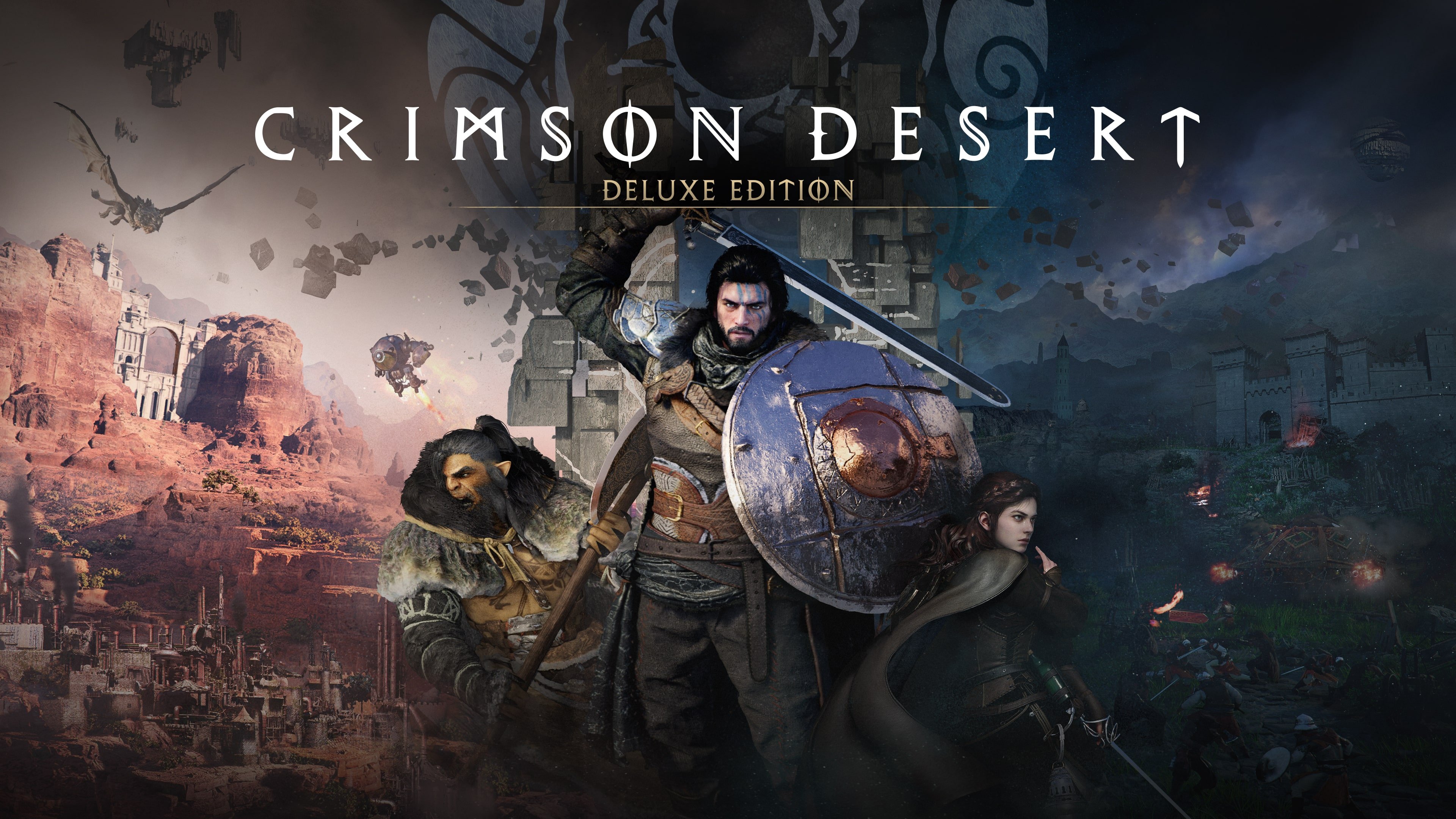
Crimson Desert isn’t being talked about like a small side project. It’s positioned as a large-scale open world action-adventure with a fantasy setting, big set pieces, and the kind of system-heavy gameplay that makes preview videos look like highlight reels. The world is Pywel, and the pitch leans into conflict, factions, and the feeling that danger is always close. Even if you’ve only seen short clips, the vibe is clear: this is meant to feel grand, chaotic, and alive, the way a stormy coastline feels alive even when nobody’s around. That scope is a big reason platform rumors catch fire. People look at the game and think about hardware capability, portability, and whether they can take that world on the go. Before we even touch the Switch 2 question again, it helps to ground ourselves in what the game is trying to deliver, because that shapes why a port would be attractive and why it would also be challenging.
Pywel as a setting – factions, conflict, and tone
Pywel is framed as a continent under pressure, with rival forces and fragile balances that don’t stay fragile for long. That’s the narrative engine that powers an open world – you need tensions that can spill into quests, battles, and shifting alliances, not just pretty hills and a map full of icons. The tone being sold is perilous and adventure-forward, the kind where you’re not just sightseeing, you’re surviving bad decisions and cleaning up other people’s messes. If you like worlds that feel like they could bite you, Pywel is built for that mood. And that matters for platform talk because the emotional hook is strong: people don’t just want to play Crimson Desert, they want to live in it for a while. When a world sells that fantasy, fans start shopping for the most convenient way to carry it around, and that’s where Switch 2 becomes part of the daydream.
Kliff and the Greymanes – the human core of the story
Open worlds can be huge and still feel empty if there isn’t a human thread holding everything together. Crimson Desert leans on its protagonist and his group – the kind of setup that gives the chaos a center. A named lead and a crew create relationships, loyalties, and stakes that make the world feel personal instead of purely scenic. That’s also why the rumor discussion gets emotional. People don’t just imagine “a game on a platform,” they imagine following a character’s journey in the way that fits their lifestyle. Maybe you’re the kind of player who squeezes quests into commutes, late nights, and stolen weekends. In that case, portability isn’t a feature, it’s your entire gaming schedule. So when you hear “Switch 2 version,” you’re not thinking about logos – you’re thinking, “Could this fit into my life better?” That’s a valid feeling. It’s just not a substitute for confirmation.
Why Switch 2 talk keeps following this game
Some games attract port rumors because they’re popular. Others attract port rumors because they’re ambitious. Crimson Desert sits in that second camp, where people look at it and immediately start asking hardware questions. That’s not cynicism, it’s curiosity. Switch 2 is also a natural magnet for these conversations because Nintendo platforms often become the “can it run there?” test in public discourse, fairly or unfairly. Add the fact that fans saw a retailer clue and heard an interview-based claim, and you get a loop: rumor fuels discussion, discussion makes the rumor feel bigger, and the bigger it feels, the more people go hunting for more clues. It’s like hearing there’s a secret concert in town – suddenly everyone’s a detective, even the friend who can’t find their keys most mornings.
Big ports aren’t magic tricks – they’re planning problems
A port is less like teleportation and more like moving house. You can move a lot of furniture, but you still have to measure the doorways, protect the fragile stuff, and accept that something will need to be rearranged. Big open world games involve streaming assets, managing performance in unpredictable scenarios, and making sure the experience feels stable in both busy cities and empty wilderness. None of that tells us whether Switch 2 is getting Crimson Desert, but it explains why people debate it so intensely. If Pearl Abyss chose to do it, it would be a deliberate project, not a quick checkbox. And that’s why official confirmation is so important. If a Switch 2 version exists, Pearl Abyss will eventually want to control the narrative around what it is, when it arrives, and how it compares in feel. Until that happens, everything else is just us trying to guess the route of a train based on the sound of a whistle.
Performance chatter without pretending we know numbers
It’s easy to slide from “Is it coming?” into “How will it run?” and then into made-up specifics that sound confident but aren’t sourced. We’re not doing that. What we can say, without inventing details, is that Crimson Desert is widely framed as visually ambitious, and that makes performance a natural concern on any platform. If a Switch 2 version is ever announced, the real conversation will be about how the experience feels – responsiveness, stability, readability on a handheld screen, and whether the world remains dense and convincing. Until then, the healthiest approach is to avoid treating random claims about frame rates or resolution as fact. Those claims spread because they scratch an itch, not because they’re verified. If you’ve ever seen someone confidently give directions while clearly walking in circles, you understand the vibe. Confidence is cheap. Confirmation is rare.
Retailer listings versus publisher reveals
Retailer listings are like smoke. Sometimes there’s a fire. Sometimes someone burned toast. They can be meaningful because stores often receive early product data, internal platform categories, and placeholder entries long before the public announcement. They can also be meaningless because retail systems are messy, automated, and often built to accept incomplete info. The key is to treat retailer activity as a clue you file away, not a promise you plan your year around. In the Crimson Desert case, the reported GameStop page gained attention precisely because it aligned with fan hopes and because it appeared to point at a platform that wasn’t officially listed. That tension makes people treat the listing like a confession, but the truth is more boring and more useful: it’s an unconfirmed signal that needs backup from the publisher.
How placeholder pages happen in the real world
Placeholder pages can be created for a dozen reasons that don’t require a secret plan. Retailers may pre-build pages for anticipated products, especially when a game is high profile and expected to expand platforms later. They may also pull data from third-party catalogs that include speculative platform fields. In some cases, a page can be created as part of internal tracking and then accidentally becomes publicly visible. And yes, sometimes a page exists because a real version is planned, but the retailer jumped early. The problem is that we can’t reliably tell which scenario applies without official confirmation. That’s why the safest approach is to treat a retailer page like a blurry photo. You don’t deny it exists. You also don’t claim you can read a license plate from it.
Why takedowns are frustrating, but not proof either way
A page being removed feels dramatic, and drama is rocket fuel for speculation. People assume removal means someone got told to delete it, and sometimes that can happen. But removal can also mean the retailer noticed misinformation, corrected a category, or cleaned up a page that was never meant to be public-facing. Both realities are possible, and the honest stance is to avoid choosing the one that matches our hopes. The good news is that takedowns don’t erase the underlying truth forever. If a Switch 2 version is real, the official announcement will arrive in a form that’s impossible to mistake – platform logos in official marketing, a Nintendo eShop listing, and publisher messaging that clearly states availability. Until then, we can acknowledge the frustration and still keep our feet on the ground.
How to follow updates without getting whiplash
If you’ve ever followed game rumors, you know the emotional pattern. First it’s excitement. Then it’s arguments. Then it’s fatigue. The trick is to build a simple system that protects your time and your expectations. We’re not trying to “win” the rumor conversation. We’re trying to stay accurate. That means prioritizing primary sources – Pearl Abyss notices, official trailers, platform storefront listings – and treating everything else as secondary until confirmed. It also means watching for language that signals certainty versus possibility. Words like “announced,” “available,” and “pre-order now” are concrete. Words like “reportedly,” “rumored,” and “could” are not. That distinction sounds obvious, but it’s the difference between planning a weekend trip and daydreaming about one.
Signals that matter when you’re trying to stay factual
The strongest signals are the ones that create accountability for the publisher. An official notice that lists Nintendo Switch 2 as a platform would be a major shift. A trailer uploaded to an official channel with Switch 2 branding would matter. A storefront listing on Nintendo’s side would matter. Even press releases distributed through formal channels carry more weight than social chatter because they’re designed to be cited and repeated. Another helpful signal is consistency across official places. When the same platform list appears in multiple Pearl Abyss updates, it becomes clear what the publisher is actively supporting. If you want a simple rule: trust what forces someone to be responsible for the claim. Rumors don’t require responsibility. Official platform messaging does.
Red flags that usually mean “ignore this”
There are a few classic red flags that show up in almost every rumor cycle. One is fake precision – claims that include exact dates, exact performance targets, or exact internal timelines without any supporting documentation. Another is the “everyone is saying” style of sourcing, where the proof is basically that people are repeating it. Repetition is not verification. A third red flag is when the claim changes shape every time it’s retold. One day it’s a launch title, the next day it’s “maybe later,” then it becomes “exclusive,” then it becomes “cloud.” That shapeshifting is usually a sign the story is being inflated by attention. If you catch yourself checking your phone for updates like it’s election night, that’s your cue to step back. Games are supposed to be fun, not emotional cardio.
If a Switch 2 version happens, how it could roll out
We can talk about possible rollout patterns without pretending we know what Pearl Abyss will do. Big games often expand platforms either alongside the initial launch or after the dust settles. Sometimes the team prioritizes core platforms first, then targets additional hardware once the base version is stable. Sometimes platform partners coordinate announcements for marketing beats. Sometimes a later version arrives with bundled updates or quality improvements that benefit from time. None of this confirms anything for Switch 2. It simply explains why a Switch 2 announcement could plausibly come later even if it exists as a plan today. The main takeaway is that timing alone is not proof. A quiet period does not mean “never,” and it also does not mean “soon.” It just means we don’t have the official words yet.
Timing scenarios that don’t require guesswork
Here are the only timing scenarios that stay factual: either Pearl Abyss announces a Switch 2 version before launch, around launch, or after launch. That’s it. Anything more specific needs confirmation. If an announcement happens before launch, it would likely be used to expand pre-launch momentum and pre-orders. If it happens around launch, it could be tied to broader marketing coverage and reviews. If it happens after launch, it could be framed as “now available” with optimizations, bundles, or a new audience push. As a player, the practical point is deciding whether you want to play at the first available opportunity on confirmed platforms, or whether you’re comfortable waiting for a platform you prefer, knowing that waiting is a gamble until the publisher speaks.
Save files, editions, and the small details that suddenly matter
If you’re the kind of person who cares about the little practicalities, you’re right to care. When additional platforms enter the mix, questions pop up fast: are editions identical, do pre-order bonuses match, and is there any cross-save support? We do not have confirmed answers for those topics in a Switch 2 context, so the honest move is to treat them as “to be determined” until official details exist. But it’s still useful to keep them on your mental checklist because they can influence your decision. Nobody wants to sink 60 hours into a world and then realize the version they really wanted arrived later with a feature they value. That feeling is like buying a jacket and then seeing it on sale the next day. It doesn’t ruin the jacket, but it does sting.
What we can do right now if we’re interested
If Crimson Desert has your attention, you don’t need to live in rumor mode to handle it well. You can decide what matters most to you: playing as soon as possible, playing on a preferred platform, or waiting for more information before committing. There’s no moral victory in waiting, and there’s no shame in choosing a confirmed platform if you want certainty. The smart approach is to treat your decision like choosing a route on a map. One path is guaranteed and clearly marked – the officially announced platforms. Another path might be faster and more convenient – a potential Switch 2 version – but it’s currently unmarked. You can still hope the unmarked road exists, but you don’t pack your whole trip around it until you see the sign.
Choosing where to play without betting on rumors
If you want the least stress, anchor your plan to what Pearl Abyss has officially announced. That means you’ll be able to follow official pre-load info, reviews, and performance impressions for those platforms without guessing. If portability is your top priority and Switch 2 is your main place to play, it’s reasonable to wait a bit for official clarity, especially if you’re not in a rush. The key is setting a personal deadline so you don’t wait forever out of habit. For example: “If there’s no official Switch 2 announcement by the time launch coverage settles, I’ll choose a confirmed platform.” That turns endless waiting into a choice. And choices feel better than limbo, because limbo is where hype goes to get weird.
A simple watchlist you can keep without living on rumor fuel
If you want to stay informed without doom-scrolling, keep a short watchlist and check it when you feel like it, not when the internet tries to make you panic-refresh. First, watch Pearl Abyss’ official notices for any change in the platform list or any new announcement that names additional hardware. Second, watch for official storefront listings, because those are hard to fake at scale and usually arrive alongside real release planning. Third, watch for official trailers or press releases that include platform branding. Fourth, treat retailer pages and social claims as “interesting” but not “actionable” until confirmed by the publisher. That’s it. No spreadsheets required, no conspiracy wall with red string. Just a calm, repeatable routine that keeps your excitement intact without letting it run your schedule.
Conclusion
Right now, the Switch 2 talk around Crimson Desert sits in the “interesting, unconfirmed” category. Kiwi Talkz has fueled the conversation, and the reported GameStop page that appeared and later vanished adds a second clue that explains why people are paying attention. But the clean, factual anchor remains the same: Pearl Abyss has not officially announced a Nintendo Switch 2 version in its platform messaging so far. If you’re excited, that excitement makes sense – the game looks like the kind of open world adventure that people want to take everywhere. The best way to handle that excitement is to keep your standards high for what counts as confirmation. When the announcement is real, it will be unmistakable and repeatable across official channels. Until then, you can either plan around confirmed platforms or choose to wait with clear boundaries, so you stay in control instead of being dragged around by every new whisper.
FAQs
- Has Pearl Abyss confirmed Crimson Desert for Nintendo Switch 2?
- No. As of the latest official platform messaging from Pearl Abyss, Nintendo Switch 2 has not been publicly announced as a platform for Crimson Desert.
- Does a retailer page mean the Switch 2 version is real?
- Not by itself. Retailer pages can be placeholders or catalog entries, so they’re best treated as a clue that needs official confirmation to become meaningful.
- What would count as real confirmation of a Switch 2 version?
- An official statement from Pearl Abyss naming Nintendo Switch 2, an official trailer with Switch 2 branding, or a legitimate Nintendo storefront listing tied to the game.
- Should we wait for Switch 2, or buy on a confirmed platform?
- It depends on your priorities. If certainty matters most, choose a confirmed platform. If portability matters most and you’re comfortable waiting, set a personal deadline and reassess when new official info appears.
- Is the Kiwi Talkz claim enough to plan around?
- It’s enough to pay attention, not enough to treat as fact. Until Pearl Abyss confirms it, it remains an unverified claim.
Sources
- Kiwi Talkz says Crimson Desert is coming to Nintendo Switch 2, My Nintendo News, January 16, 2026
- Kiwi Talkz Revives Rumor That Crimson Desert Is Coming To Nintendo Switch 2, Gameranx, January 16, 2026
- Crimson Desert Arrives March 19, 2026. Pre-order Now!, Pearl Abyss, September 25, 2025
- Crimson Desert Has Gone Gold!, Pearl Abyss, January 21, 2026
- Crimson Desert: Everything we know so far about the upcoming game, GamesRadar, January 24, 2026
- Crimson Desert secures a March release date as the ambitious Frankenstein’s monster of open world fantasy games goes gold, PC Gamer, January 22, 2026
- Crimson Desert Coming to NVIDIA GeForce NOW, Revealed at CES 2026, Pearl Abyss, January 9, 2026