














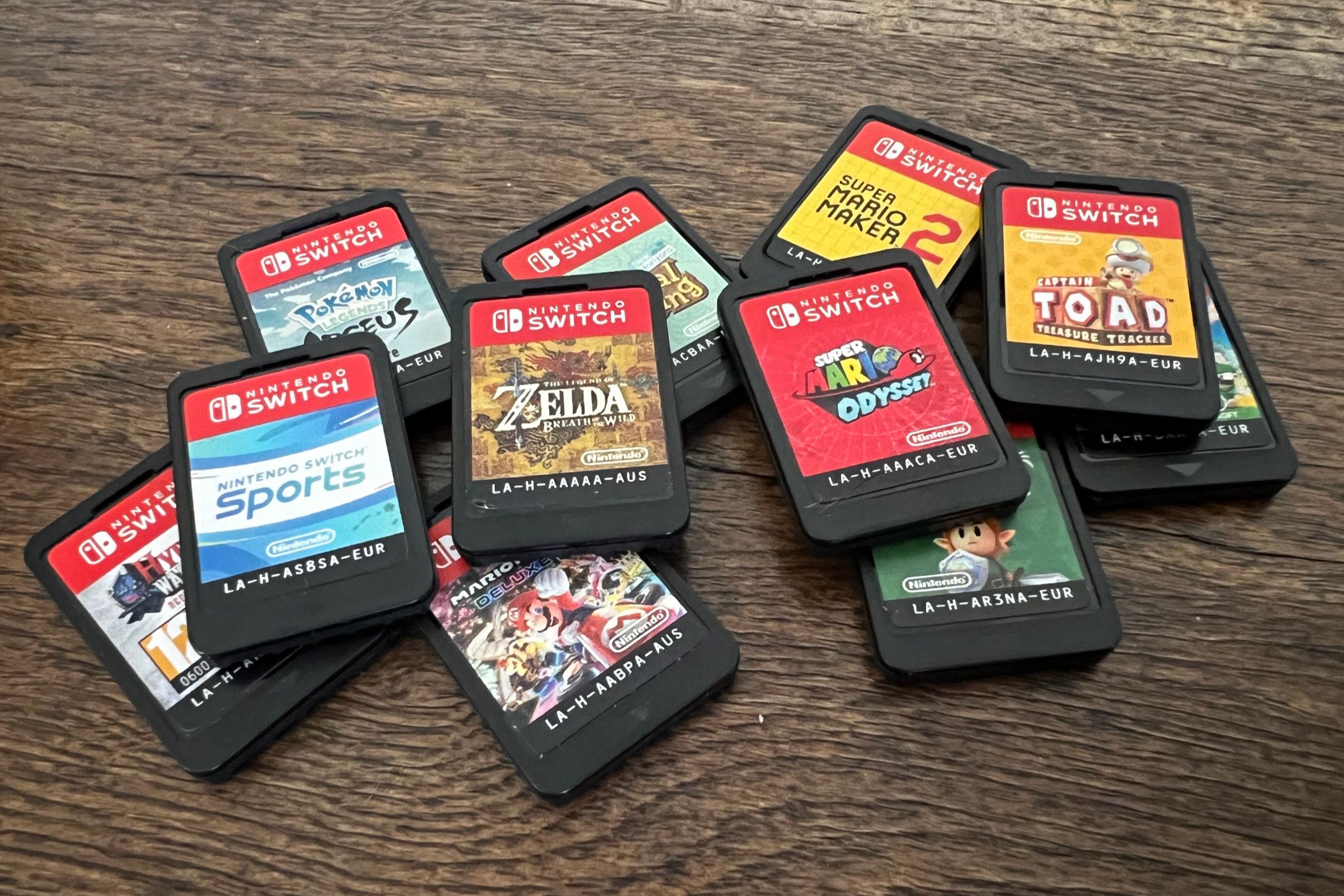
Summary:
We’re watching a very modern “physical media” problem play out in real time. Switch 2 has cartridges, sure, but the conversation keeps circling back to what’s actually inside them. If the practical ceiling for standard game cards is 64GB, that creates an awkward gap. For a small game, 64GB can feel like buying a moving truck to deliver a single chair. For a huge game, 64GB can be too tight, pushing publishers toward alternatives that look physical on the shelf but still ask you to download the real payload.
That’s where Game-Key Cards enter the picture. They’re essentially a cartridge-shaped permission slip: you insert the card, download the full game, and keep the card in the system to play. For some players, that’s better than a one-time download code because it can still be traded or resold. For others, it’s a headache because it shifts the storage burden back onto the console and your memory card setup.
Now add a second pressure point: reports claiming smaller-capacity Switch 2 cards are in production, but availability may be constrained by chip supply, and the price may remain high anyway due to materials costs. The result is a three-way tug-of-war between storage, retail convenience, and manufacturing realities. We’re not just picking between “physical” and “digital” anymore. We’re picking between different shades of physical, each with its own trade-offs in cost, installs, resale value, and how much space you’ll need before you even hit Start.
Switch 2 game cards: why everyone is talking about sizes
We’ve all had that moment at checkout where we think we’re buying something simple, then reality taps the glass. With Switch 2, the label “physical” can mean a few different things, and that’s why cartridge size has become such a hot topic. The core issue is that storage, manufacturing, and retail expectations are all pulling in different directions. Players want plug-and-play. Publishers want predictable costs. Retailers want a box they can stock and sell. When those goals collide, the format starts to look less like a neat little plastic card and more like a tiny battlefield where every gigabyte matters. If you’ve felt confused, that’s normal. The industry has been steadily moving toward bigger installs and faster performance, and Switch 2 sits right in the middle of that shift. So we’re not just talking about a technical detail. We’re talking about how the whole buying experience feels, from the shelf to the first boot.
The 64GB baseline and why it matters
When the practical “standard” physical card tops out at 64GB, it reshapes how games get released. On paper, 64GB sounds roomy. In practice, it can be strangely limiting because it’s a single, chunky option that doesn’t always match a game’s real size. If your game is 8GB or 12GB, a 64GB card can be overkill from a cost perspective, like paying for front-row concert tickets to listen from the parking lot. If your game is 70GB or 90GB, 64GB simply doesn’t fit, which means either aggressive trimming, splitting data across downloads, or choosing a format that avoids putting the full game on the card. That’s why you’ll often see players ask, “Why didn’t they just put it on the cartridge?” Sometimes the answer is blunt: the available card size and the economics around it make the “obvious” choice less obvious for publishers. It becomes a budgeting decision as much as a design decision.
Game-Key Cards explained in plain English
Game-Key Cards are best understood as “physical access with a required download.” You insert the card, the system downloads the full game, and then you keep using the card like a traditional cartridge to prove you own the license. That last part matters because it means the card still has real value in the second-hand world. If you can lend it, trade it, or resell it, it behaves more like a normal physical purchase than a one-time code ever could. We’ve also seen reporting that these cards are not tied to a single account, which reduces the fear that they become useless the moment someone redeems them. Still, there’s no getting around the trade-off: you’re committing storage space on your console, and you’re committing time to download. It’s a little like buying a book that comes with a key to unlock the pages after you bring it home. You still “own” something tangible, but you don’t get the full experience without an install step.
Smaller capacity cards: what the latest reports actually say
Here’s where things get spicy, because this is the part that players have been asking for since the 64GB chatter started: smaller-capacity game cards. Recent reports have claimed that smaller Switch 2 cartridge capacities are in production, aimed at giving publishers a more sensible menu of options. If true, it could reduce the pressure to use Game-Key Cards for titles that are nowhere near 64GB. But it’s important to keep the framing clean. As of now, these claims have been presented through reporting and social media commentary rather than a clear, detailed announcement from Nintendo listing capacities, pricing tiers, and rollout timing. So the smartest way to think about this is simple: the idea is plausible, the demand is obvious, and the real question is not “does it exist,” but “when does it show up at scale, and what does it cost?”
The claim: smaller cards are in production
The core claim is straightforward: smaller-capacity Switch 2 game cards are being produced, but they may not be widely available quickly due to chip constraints, and they may still be expensive because materials costs are rising. That combination is the part that can feel counterintuitive. Most of us grew up with the idea that “smaller equals cheaper,” like buying a small fries instead of a large. Storage manufacturing doesn’t always behave like fast food. The cost isn’t only about how many gigabytes you get. It’s also about the supply of the underlying memory components, the yields manufacturers can achieve, and the business reality of producing multiple SKUs reliably. If you’re a publisher, you don’t just want a smaller card to exist. You want it to exist in stable quantities, with predictable lead times, and at a price that makes sense versus a Game-Key Card release. Until those pieces line up, publishers may still choose the option that gives them the fewest unpleasant surprises.
What “in production” can mean when chips are scarce
“In production” sounds like a victory lap, but it can also mean “we can make it, just not enough of it.” In hardware terms, production can range from early runs to limited allocation to full-scale availability where anyone who wants the part can order it without sweating. If the broader chip environment is tight, you can end up with a situation where the product exists, but it’s rationed, delayed, or reserved for specific partners. Think of it like a bakery that adds a new pastry to the menu, but only bakes twelve a day. Yes, it’s real. No, you probably won’t get one unless you show up at dawn. Add rising component costs to the mix, and you also get a second twist: even if smaller cards arrive, the price might not drop in the way players expect, because the “scarcity tax” can cling to everything in the pipeline.
Why smaller does not automatically mean cheaper
It’s tempting to assume a 16GB or 32GB card would be dramatically cheaper than 64GB, but pricing can be sticky. Manufacturing lines, testing, packaging, licensing, and distribution all carry costs that do not scale down neatly just because capacity is lower. If memory pricing is volatile, the cost per gigabyte can also behave strangely, especially when demand from other industries squeezes supply. On top of that, a bespoke game card format is not the same as a commodity SD card you can buy anywhere. A specialized format can carry a premium simply because fewer suppliers can make it, and because the ecosystem around it is controlled and validated. So even if smaller cards show up, the realistic hope may not be “cheap cartridges for everyone tomorrow.” The more realistic win is “more right-sized options,” which could reduce waste and reduce pressure to choose Game-Key Cards for titles that would fit comfortably on a smaller physical card.
Cost pressure: materials, manufacturing, and the pricing ripple
Even if you don’t care about the behind-the-scenes stuff, the cost pressure matters because it shows up where you can feel it: in retail pricing, in how games are packaged, and in how often you’re asked to download. Reports across the tech world have highlighted rising memory and storage costs in 2025, and those forces don’t politely stop at the doors of the games industry. If memory components cost more, everything built on them gets pushed upward, including consoles, storage cards, and proprietary game media. That can lead to publishers making conservative choices. They may pick the format that keeps their risk low, even if it annoys the loudest corner of the community. This is also why the “why don’t they just do X” question can have an unglamorous answer: because X turns into a money bonfire when you multiply it across tens or hundreds of thousands of physical units.
Why publishers pick Game-Key Cards even for mid-size games
From a publisher’s point of view, Game-Key Cards can look like a safety valve. You still get a retail presence, which matters for visibility and sales, and you don’t have to buy the largest physical media option for every single boxed copy. That can be especially attractive for games in the 20GB to 50GB range where a full game card might technically work, but the cost structure makes it harder to justify. There’s also operational flexibility. A Game-Key Card release lets publishers ship a consistent physical product while relying on digital distribution for the payload. If they need to patch, update, or adjust content, the distribution pipeline already leans digital. None of this makes the choice “better” for every player, but it does explain why we see this format used heavily. It’s the business equivalent of packing a suitcase with more empty space than you need because you’re afraid the airline will lose your luggage. Not elegant, but it reduces certain risks.
Why some games still go all-in on a full game card
Despite the trend, full game cards still have a strong appeal, and we can see that reflected in how some releases position themselves. A full game card offers the cleanest experience: insert, install little or nothing, play. It’s also the format that best aligns with collecting, lending, and long-term preservation habits. For certain games, that smooth experience is part of the value proposition. It says, “We respect your time and your storage.” It can also be a strategic choice. If a publisher knows their audience cares deeply about physical ownership, a full card can become a marketing advantage, not just a distribution method. The catch is that this decision has to survive the spreadsheet test. If full cards are expensive or hard to source, publishers have to decide whether that advantage is worth the added cost. When it is, we get the kind of physical release that players celebrate like it’s a holiday.
What this changes for players: installs, storage, and buying habits
If you’re the one holding the console, the most noticeable shift is simple: buying “physical” no longer guarantees a low-install lifestyle. That means we have to shop a bit smarter, like checking the weather before leaving the house instead of trusting the sky to behave. With Switch 2, the friction points are predictable. Game-Key Cards require a download. Large games can fill internal storage quickly. Faster storage standards can raise the price of expansion. None of this is the end of the world, but it does change the rhythm of how we buy and play. The upside is that once you understand the patterns, you can avoid the most annoying surprises. You don’t need to become a hardware engineer. You just need a checklist mindset: what format is this, how big is the install, and do we have the storage ready before we plan a gaming night?
How to spot what you are buying before checkout
The easiest way to avoid disappointment is to treat the box like a contract. Look for labeling that indicates whether the cartridge contains the full game or functions as a key that requires downloading. Reporting has pointed out that packaging can include clear markers to distinguish Game-Key Cards from traditional game cards. If you’re shopping online, look for retailer descriptions that mention “download required” or similar language. If you’re in a store, flip the case over and scan for storage and download notes like you’re checking ingredients on a snack you don’t fully trust. This matters most for players with slower internet, data caps, or limited internal storage. It also matters if you buy physical specifically to reduce downloads. A tiny bit of attention at purchase time can save you from that sinking feeling later when you insert a cartridge and the console responds with, “Cool. Now please download 60GB.”
Storage strategy: internal space, microSD Express, and upgrades
Storage on Switch 2 is not just about “how many games can we fit,” it’s about “how fast and how expensive is expansion.” If the platform leans more heavily on installs, then having a solid expansion plan becomes as important as having a good controller. Faster card standards can cost more, and market conditions in 2025 have shown that memory pricing can spike in ways that ripple across consumer products. That means the smartest move is often preventative. If you know you’ll be buying third-party releases that tend to ship as Game-Key Cards, budget for storage early rather than treating it as a surprise fee later. Also consider your habits: do you rotate a small set of games, or do you hoard installs like a digital dragon sitting on a pile of icons? If you rotate, you can manage with less space by uninstalling when finished. If you hoard, you’ll want more expansion upfront to avoid constant juggling.
Where we go from here: what to watch in 2026
The next phase is less about one big announcement and more about quiet signals. If smaller-capacity cards are real and rolling out, we’ll likely see it reflected in the kinds of boxed releases that hit shelves. We’ll see fewer “key-style” releases for games that are obviously small enough to fit on modest media. We’ll also see more consistent messaging from retailers and publishers about what’s on the card versus what’s downloaded. But the biggest tell will be behavior, not marketing. If publishers start shifting back toward full game cards for mid-size titles, that suggests the economics and supply have improved. If Game-Key Cards remain dominant, that suggests either costs are still painful, supply is still constrained, or the format has simply become the path of least resistance. In other words, we should watch what companies do when nobody is watching, not what they promise when everyone is.
Signals that smaller cards are finally reaching shelves
The clearest signal will be boring in the best way: routine availability. When smaller cards are truly in the ecosystem, publishers will ship them without fanfare, and you’ll notice because the “download required” warnings become less common for smaller games. Another signal is release timing. If boxed versions launch day-and-date with digital for more third-party titles, that can suggest fewer constraints on physical media production. A third signal is pricing stability. If we see fewer cases where physical releases jump in price or vanish quickly, that can point to healthier supply. Finally, keep an eye on how often publishers talk about “choice.” When the manufacturing pipeline supports multiple capacities reliably, the industry tends to describe it as flexibility rather than compromise. That’s the end goal: physical options that feel like a normal decision again, not a trade-off you have to justify to yourself.
Conclusion
Switch 2 cartridges are no longer a simple yes-or-no question. We’re dealing with a spectrum: full game cards on one end, Game-Key Cards in the middle, and reports of smaller-capacity cards that could rebalance the whole situation if they arrive in meaningful volume. The 64GB limit matters because it nudges publishers toward formats that reduce risk, even when players would prefer a traditional plug-and-play experience. The reported push toward smaller capacities is encouraging, but the realistic expectation is not an instant price collapse. Supply constraints and rising materials costs can keep pricing stubborn, even for smaller media. For players, the win is knowledge. When we know what we’re buying, we can plan storage, avoid surprise downloads, and choose releases that match our preferences, whether that’s collecting, resale, or just getting into the game without a long install. If 2026 brings stable availability of smaller cards, we’ll likely feel it in quieter launches, clearer packaging, and fewer frustrating “download required” moments. Until then, the smartest play is to treat every physical purchase as a quick format check, not a blind leap of faith.
FAQs
- Are Switch 2 game cards really limited to 64GB?
- Multiple reports in 2025 described 64GB as the practical ceiling for standard Switch 2 game cards, which is why publishers often choose alternatives like Game-Key Cards when costs or file sizes make a full card less appealing.
- What exactly is a Game-Key Card on Switch 2?
- It’s a physical card that acts as an access key. You download the full game to your system, and the card must be inserted to play, similar to how a normal cartridge proves ownership.
- Can Game-Key Cards be resold or traded?
- Reporting has indicated Game-Key Cards are not tied to a single account, which supports resale and lending. The card functions on the console it is inserted into, making it closer to traditional physical ownership than single-use codes.
- If smaller-capacity cards arrive, will games get cheaper?
- Not automatically. Even if capacity is lower, costs can stay high due to component pricing, supply constraints, and the realities of producing specialized physical media at scale.
- How can we avoid surprise downloads when buying Switch 2 games?
- Check the case and retailer listing for “download required” style notes, and look for packaging markers that distinguish Game-Key Cards from full game cards. Planning storage ahead of time also reduces frustration.
Sources
- Rumour: Smaller capacity Nintendo Switch 2 game cartridges are in production, My Nintendo News, December 17, 2025
- Rumour: A Game-Key Card Alternative? Nintendo May Have Smaller Switch 2 Carts In The Works, Nintendo Life, December 17, 2025
- ‘Game-Key Cards Are Not Going Away’: Nintendo Switch 2 Smaller-Capacity Cards Won’t Reportedly Matter Due to Rising Costs of Materials, Wccftech, December 18, 2025
- Why some Switch 2 carts won’t have games on them, The Verge, April 7, 2025
- Nintendo Switch 2 Game-Key Cards Won’t Be Tied To Your Account, GameSpot, April 7, 2025
- Nintendo Switch 2 RAM prices rise 41%, NAND flash up 8% — console giant shares nosedive in face of increased cost warnings, Tom’s Hardware, December 12, 2025
- The Nintendo Switch 2’s Biggest Problem Is Already Storage, WIRED, August 3, 2025