














Summary:
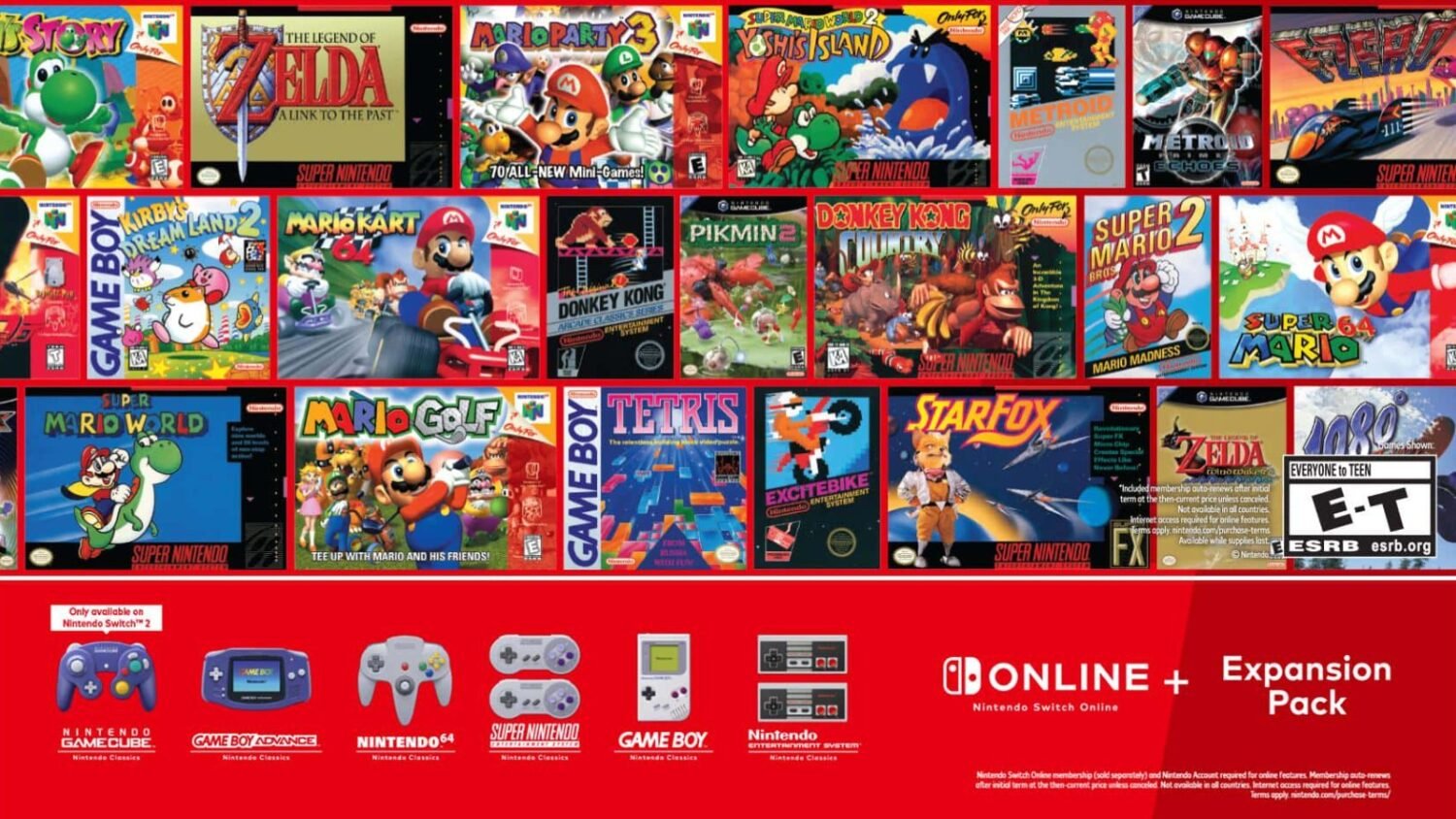
We’ve all seen it happen: one tiny detail slips into a retailer graphic, and suddenly the rumor train is doing full-speed laps like it just found a fresh set of rails. This time, the chatter centers on a promotional image spotted on Walmart’s site that advertises Nintendo Switch Online and, more specifically, the Expansion Pack tier that includes GameCube titles on Switch 2. People noticed two pieces of box art that don’t currently belong there – Pikmin 2 and Metroid Prime 2: Echoes. On paper, that looks like an accidental reveal, the kind that makes fans start mentally clearing their weekend schedule. But we also need to keep our feet on the ground, because retailer pages are messy kitchens. Sometimes they’re cooking with official ingredients, and sometimes they’re throwing in whatever was closest to the keyboard.
So we’re going to handle this the sensible way: treat the image as a clue, not a promise. We’ll talk about why these two games make sense as candidates, why they’re also awkward picks for different reasons, and how the current pace of GameCube additions shapes expectations. We’ll also dig into the boring-but-important reality of how promotional assets get made, uploaded, resized, swapped, and occasionally mangled. If you’re the kind of person who’s been refreshing the Nintendo Classics app like it’s a scoreboard, we’ll lay out what to watch next without turning every pixel into a prophecy. In other words, we’ll enjoy the mystery, but we won’t let it steal our lunch money.
The leaked Walmart image and the two unexpected box arts
The spark here is simple: a promotional graphic on Walmart’s site shows a collage of Nintendo Switch Online titles, and eagle-eyed fans spotted two GameCube covers that aren’t officially part of the service’s GameCube lineup right now – Pikmin 2 and Metroid Prime 2: Echoes. That’s the kind of thing that makes people sit up straight, because it looks less like a random wish list and more like a curated marketing image. The key detail is that the rest of the collage includes plenty of games that are already associated with Nintendo’s retro apps, which makes the two odd ones stand out even more. Still, we have to keep the “maybe” sign lit. Retailer pages can contain outdated assets, placeholder art, or internally made graphics that borrow recognizable covers just to fill space. Think of it like seeing a movie poster on a bus stop: sometimes it’s official, sometimes it’s a printed draft that slipped out early, and sometimes it’s just the wrong poster entirely because someone hit “upload” on the wrong file. Until Nintendo confirms anything, we’re reading tea leaves – not opening a gift.
Why Pikmin 2 fits the Switch Online GameCube lineup
Pikmin 2 is an easy sell in the “beloved GameCube era” conversation. It’s a sequel with a strong reputation, a distinct tone, and that classic Nintendo habit of turning something cute into something mildly stressful – like asking you to manage a tiny army while the clock ticks and your brain tries to remember where you left that one treasure. From a subscription-library perspective, it also has a comforting familiarity. People recognize the box art, they recognize the brand, and they know exactly what kind of oddly charming chaos they’re signing up for. The funny twist is that Pikmin 2 is also a slightly weird candidate, because it has already seen modern re-releases outside the subscription context. That doesn’t make it impossible for it to appear in a retro app, but it does make fans raise an eyebrow and go, “Wait, would they really do that?” The answer could be yes, especially if Nintendo treats the GameCube app as a way to keep the library feeling alive with recognizable names. If the goal is to keep people subscribed month to month, dropping a familiar classic is like putting a big neon sign in the window – hard to ignore, even if you already own the thing in another form.
Why Metroid Prime 2: Echoes shows up in rumor talk so often
Metroid Prime 2: Echoes lives in a very specific place in fan conversations. It’s respected, it’s moody, and it has that “cult favorite that deserves nicer shoes” energy. When people talk about it, the conversation often splits into two lanes: one lane wants a polished modern re-release, and the other lane just wants a convenient way to play it without digging up older hardware. That’s why seeing its box art in a modern service promo image causes such an immediate reaction. If it’s coming to a subscription app, that could satisfy the access problem for a lot of players, even if it doesn’t satisfy the dream of a bigger remaster-style treatment. At the same time, it’s exactly the kind of game that makes people second-guess the rumor. Fans ask, “Would Nintendo skip around the series?” because the idea of Prime 2 appearing in a subscription GameCube lineup can feel like jumping to chapter two without handing you chapter one. Yet Nintendo’s release patterns aren’t always a tidy straight line, and the current era has trained us to expect surprises. So Prime 2 shows up in rumor talk often because it sits right on the fault line between “likely candidate” and “we’re not sure what this implies.”
What the Expansion Pack GameCube catalog looks like right now
The context that matters here is the pace and size of the GameCube lineup within the Expansion Pack tier. Reports around this Walmart image specifically point out that the GameCube library on Switch 2 is still relatively small compared to older retro apps, and that makes every potential new addition feel louder. When a library is huge, one more game is a nice bonus. When a library is small, one more game feels like a whole event. That’s why a single promotional image can send the community into detective mode, zooming in like it’s the Zapruder film but for box art. It also shapes expectations about timing. People start asking whether additions follow a predictable cadence, whether surprise drops are possible, and whether a retailer image could be showing something scheduled internally. The most important practical takeaway is that the current lineup and the confirmed pipeline have been a major talking point, which makes any hint of extra games – even unconfirmed ones – feel like a big deal. In a smaller catalog, rumors don’t just whisper. They echo.
How retailer promos get made and where mistakes sneak in
Retailer marketing pages are often assembled through a mix of official assets, internal templates, and last-minute updates. Sometimes a platform holder provides a clean pack of images and instructions, and the retailer simply publishes them. Other times, a retailer’s creative team builds a banner themselves, pulling box art and logos from internal libraries, prior campaigns, or whatever materials they believe match the message. That’s where mistakes can creep in – not necessarily malicious, just human. A designer could grab the wrong Metroid cover because it’s in the same folder, or a marketer could assume a game is part of a lineup because it was discussed in a meeting and never updated afterward. It’s also possible for old drafts to get published by accident, especially if multiple versions exist for different regions or promotions. If you’ve ever attached the wrong file to an email and felt your soul leave your body for a second, you already understand the vibe. So while a retailer image can be a meaningful hint, it can also be a very expensive “oops.” That’s why the smartest stance is cautious curiosity: pay attention, but don’t treat it like a press release.
Nintendo-provided assets vs retailer-made graphics
The biggest question behind this rumor is whether the Walmart image looks like something Nintendo supplied or something Walmart assembled. If it’s an official asset bundle, that raises the odds that the box art selection reflects real internal plans. If it’s retailer-made, the odds tilt toward error, guesswork, or placeholder choices. In practice, it’s not always obvious from the outside, because good retailer design teams can make their own graphics look very “official.” They use consistent fonts, familiar layout patterns, and recognizable game cover placements that mirror Nintendo’s own marketing style. On the flip side, even official assets can be outdated, because marketing materials are often created weeks ahead of time and may not perfectly match the public schedule. So we’re stuck judging with imperfect information. The best we can do is treat the source chain as part of the evidence: if multiple outlets confirm the same image and its placement on an official retailer page, that makes it more noteworthy than a random social post. But even then, the difference between “Nintendo made this” and “Walmart made this” remains the hinge the whole rumor swings on.
Why box art choices matter more than people think
Box art isn’t just decoration – it’s a deliberate signal. When a promo image is packed with recognizable covers, it’s doing the marketing job of saying, “This is what you get.” That’s why the presence of specific GameCube covers matters. A random text list could be a typo; a carefully arranged collage feels like it went through at least one approval step. And when two covers in that collage don’t match the currently available lineup, it creates a strong impression that something changed behind the scenes, or that we’re seeing a future-facing version of the image. Of course, that impression can still be wrong, but it explains why the community reacts so quickly. It’s like seeing a setlist taped to the stage before a concert – you’re not supposed to see it, and the second you do, you start predicting the whole night. Covers also carry specific expectations, especially for series with multiple entries. Put Prime 2 in an image and people immediately ask about Prime 1, Trilogy, or remasters. Put Pikmin 2 in an image and people start debating versions, licensing quirks, and what exactly “included” would even mean. In other words, box art doesn’t just show games – it triggers conversations.
A quick reality-check checklist for rumors
Before we let a single promo image rearrange our entire wishlist, it helps to run a quick sanity check that keeps excitement fun instead of stressful. First, we ask whether the item is backed by more than one credible report – not because repetition makes it true, but because it reduces the odds we’re chasing a misread screenshot. Second, we check whether the “odd details” make sense: if the image includes many already-available games and only a couple of unannounced ones, that can be meaningful, but it can also be a sign someone grabbed covers they liked. Third, we look for official silence versus official correction. If the image stays live for a while, people assume that means something, but it can also mean nobody noticed or nobody is rushing to fix it. Fourth, we separate “likely to happen someday” from “scheduled soon.” Pikmin 2 and Prime 2 both feel plausible as eventual additions, which makes a leak claim feel believable even if it’s wrong. Finally, we remember the golden rule: until Nintendo says it, we treat it as smoke, not fire. That way, if it turns out to be nothing, we’re mildly disappointed – not emotionally flattened.
What a “near future” drop could look like if the rumor is real
If the Walmart image is pointing at real plans, the most reasonable expectation is that these games would be added as part of the usual drip-feed approach rather than a sudden flood. That’s not a prediction of exact timing – it’s simply how these libraries tend to grow. A “near future” release could mean the next couple of scheduled drops, or it could mean a quiet update that arrives alongside a broader service push. If you’re hoping for a surprise shadow drop, sure, it’s possible, but it’s better to treat that as a pleasant bonus rather than the default assumption. What would it look like in practice? Likely a short announcement, a date, and a refresh of the GameCube app lineup – not a huge fanfare, but enough to get people talking again. Pikmin 2 would probably be framed as a classic returning to the spotlight, while Metroid Prime 2: Echoes would attract the “finally, an accessible version” crowd. The real tell would be how Nintendo describes them: if it’s positioned as “original GameCube versions,” that sets expectations for control feel and presentation. If it’s positioned differently, that opens a whole other can of worms. Either way, “near future” is a foggy phrase, so we keep our expectations flexible and our snack supply steady.
The likely rollout pattern for GameCube additions
When a retro library expands, it usually follows a rhythm designed to keep subscribers engaged without overwhelming the calendar. That rhythm can include predictable monthly additions, occasional surprise drops, and strategic timing around bigger Nintendo beats. The reason this matters is that fans often treat leaks as if they imply immediacy, but a promo image could reflect a planned lineup that’s still weeks away, or even a batch meant for a later quarter. If Nintendo is spacing out GameCube additions, it would make sense to alternate between different types of games: a big-name first-party pick, then maybe something more niche, then something that appeals to a different audience. Pikmin 2 and Metroid Prime 2: Echoes would both be strong “headline” additions, which raises a fair question: would Nintendo drop two big ones close together, or would it split them up to stretch the attention longer? We can’t answer that with certainty, but we can acknowledge the logic. Subscription services thrive on cadence. A steady drip keeps people checking in. A sudden dump gives you a busy weekend and then silence. So if the rumor is real, the rollout pattern is likely to matter just as much as the games themselves.
Controllers, save support, and quality-of-life expectations
Whenever GameCube games come up, the conversation quickly shifts from “What’s next?” to “How will it feel?” because GameCube-era control schemes can be very specific. Metroid Prime 2: Echoes, in particular, brings up strong opinions about aiming, movement, and whether modern players will bounce off older defaults. Pikmin 2 raises its own questions, like how comfortably it maps to modern controllers and whether any small tweaks are applied or if it’s the original experience as-is. Beyond controls, people care about save behavior, convenience features, and overall stability. Even if we don’t list features as guarantees, we can acknowledge what players expect in 2026: smooth saving, predictable performance, and an experience that doesn’t feel like it’s fighting you. And yes, expectations are high because we’ve all been spoiled by modern quality-of-life touches. If the GameCube app is meant to be a “pick up and play” library, these details matter. Nobody wants to spend their limited free time wrestling with friction that didn’t feel like friction back in 2004. Nostalgia is great – but only when it doesn’t come with a side of frustration.
What this could mean for remasters and re-releases
This is where the rumor gets spicy, because people immediately start treating a subscription appearance as a sign that a remaster is less likely. The logic is understandable: if Nintendo is giving you a way to play a classic through a subscription, maybe they’re less motivated to sell you a premium updated version at full price. But that logic isn’t ironclad. Nintendo has made plenty of decisions over the years that don’t fit a single clean rule, and different teams can pursue different strategies at the same time. A GameCube app version can satisfy access and preservation vibes, while a remaster can satisfy “modern presentation and controls” vibes. They don’t perfectly overlap. Still, perception matters, and perception shapes hype. If Metroid Prime 2: Echoes shows up in the GameCube app, some fans will treat it as a signal that a remaster isn’t happening soon. If Pikmin 2 shows up despite already having a modern re-release path, it complicates that whole assumption and proves the situation isn’t binary. So the healthiest stance is this: treat an app addition as a way to play – not a crystal ball for what Nintendo will or won’t sell later.
How we can watch the signal without getting burned by hype
Rumors are more fun when we treat them like weather forecasts rather than guarantees. If the sky looks cloudy, we bring a jacket, but we don’t cancel the whole day. The practical approach here is to watch for official Nintendo updates to the Nintendo Switch Online lineup, keep an eye on whether major outlets continue to reference the same Walmart image, and see whether the promo graphic changes or disappears over time. Another smart move is to separate “I want this” from “this is definitely happening.” It sounds obvious, but it’s the difference between having a good time speculating and having a bad time doomscrolling. If Pikmin 2 and Metroid Prime 2: Echoes do arrive, great – we get two iconic GameCube-era experiences in a convenient place. If they don’t, it doesn’t mean the games are off the table forever; it just means this particular clue was misleading. That’s the whole game with leaks: sometimes they’re a peek behind the curtain, and sometimes they’re just a reflection in the glass. Either way, we can keep it light, stay curious, and wait for the one thing that actually settles it – Nintendo making it official.
Conclusion
The Walmart image rumor is a perfect example of how modern gaming news travels: one promotional graphic, two unexpected covers, and suddenly the whole community is playing detective with a magnifying glass and a caffeine habit. Pikmin 2 and Metroid Prime 2: Echoes are both plausible GameCube additions, which is exactly why the rumor feels believable, even while it remains unconfirmed. The important part is keeping the balance. We can be excited about the possibility while also admitting that retailer promos can be wrong, outdated, or built from assumptions. If the image turns out to reflect real plans, we’ll likely see these games arrive through a measured rollout that keeps the GameCube library growing at a steady pace. If it’s a mistake, the takeaway is still useful: these are the kinds of games people want, and the demand for strong GameCube additions is loud and clear. Until Nintendo confirms anything, we treat it as interesting smoke, not guaranteed fire – and we keep our expectations flexible enough to enjoy the ride either way.
FAQs
- Did Nintendo confirm Pikmin 2 and Metroid Prime 2: Echoes for Switch Online?
- No. The discussion is based on a retailer promotional image that appears to include their box art, but Nintendo has not officially announced these additions.
- Could the Walmart image simply be a mistake?
- Yes. Retailer pages can use placeholder art, outdated assets, or internally made graphics, so the image could reflect an error rather than a planned release.
- If Metroid Prime 2 comes to the GameCube app, does that mean no remaster is coming?
- Not necessarily. An app version can improve access, while a remaster would offer different value, like modern controls or upgrades. One does not automatically cancel the other.
- Why is Pikmin 2 a surprising pick for a subscription app?
- Because it has been available through modern re-releases, so some fans find it odd to see it presented again as a retro-app title. That said, it’s still a popular classic.
- What should we watch for next if we want confirmation?
- Look for an official Nintendo Switch Online announcement, an updated GameCube lineup in the Nintendo Classics app, or changes to the retailer promo image that sparked the rumor.
Sources
- Rumour: Switch Online GameCube Releases Might Have Been Leaked, Nintendo Life, January 27, 2026
- Walmart could have leaked Nintendo Switch Online’s next GameCube games, VGC, January 27, 2026
- Oopsie, Walmart’s Maybe Leaked Two Big-Name GameCube Games Coming To Switch Online, Kotaku, January 27, 2026
- Switch Online Leak Might Rule Out A Highly Requested GameCube Remaster, GameSpot, January 27, 2026
- Hopes for Metroid Prime 2 Remastered seemingly dashed as Walmart apparently leaks it and stone-cold classic Pikmin 2 for Nintendo Switch Online’s GameCube library, GamesRadar+, January 27, 2026