














Summary:
The Legend of Zelda: The Wind Waker has always had a strange place in Zelda history. At launch, it surprised many players with its bright, cartoon-like look, wide ocean setting, and lighter tone, yet it later became one of the series’ most beloved adventures. Recently resurfaced comments from a 2005 Edge interview add another layer to that story, because longtime Zelda producer Eiji Aonuma spoke openly about the game’s scope and the pressure behind its final shape. According to Aonuma, Nintendo had originally imagined something bigger for The Wind Waker, but the team had to make the adventure more compact so it could be completed on time. Rather than presenting that as a cold production fact, he took personal responsibility for players who felt the game left something on the table. That honesty gives the discussion a very human edge. Game development can look magical from the outside, especially when the final result includes talking boats, ancient islands, giant birds, and a sea full of secrets. Behind the curtain, though, every voyage has deadlines, compromises, and tough choices. The Wind Waker’s lasting charm shows that a smaller shape does not automatically sink a game. Sometimes, it simply means the crew had to steer through rough weather and still bring the ship home.
The Wind Waker’s smaller scale returns to the spotlight
The Legend of Zelda: The Wind Waker has sailed back into conversation because older comments from Eiji Aonuma have given fans a clearer look at how the GameCube adventure took shape. The remarks come from a 2005 Edge interview, later highlighted again by GamesRadar, where Aonuma addressed the feeling some players had that the adventure seemed smaller or less filled out than it might have been. He explained that Nintendo had once thought about a larger version of the game, but production realities pushed the team toward something more compact. That detail matters because The Wind Waker has always felt huge in one sense and strangely lean in another. Its ocean stretches wide, its islands shimmer with personality, and its art style still pops like a moving storybook. Yet players have long discussed whether parts of the journey felt trimmed, especially when compared with the grand dungeon-heavy rhythm many expected from Zelda.
Why Aonuma’s old comments still matter to Zelda fans
Aonuma’s comments still land with weight because Zelda fans rarely treat these games as simple products on a shelf. They treat them like memories, rituals, and little pieces of personal history. For many players, The Wind Waker was their first Zelda. For others, it was the entry that seemed too different at first, only to win them over years later like a song they did not understand until the chorus came back around. When Aonuma said the team had originally planned something bigger, it gave shape to a feeling fans had discussed for years. It did not turn the game into a failure, far from it, but it helped explain why certain parts of the voyage feel brisker than expected. There is something refreshing about hearing a major creator speak so plainly. Instead of hiding behind polished language, Aonuma treated the criticism as something worth taking seriously.
How time pressure shaped the final GameCube adventure
Game development is often a tug-of-war between ambition and time, and The Wind Waker appears to be a clear example of that struggle. Aonuma said the original idea was bigger, but Nintendo had to reduce the scale to finish the game on schedule. That kind of decision is rarely simple. Cut too much, and the adventure risks feeling thin. Keep too much, and the whole ship might miss the harbor. The final game still delivered a distinct world, memorable characters, expressive animation, and a central sailing system that made exploration feel breezy and mysterious. Even so, the idea that the team had to compress the vision helps explain why some players sensed gaps in the overall rhythm. It is a bit like seeing a beautiful map with a few blank corners. The route is still exciting, but you can tell there may have been more islands in the original plan.
Why compact did not mean careless
One of the most important parts of Aonuma’s reflection is that he did not describe The Wind Waker as something the team casually reduced and sent out the door. He made it clear that even with a more compact structure, the goal was still to entertain players and deliver an adventure worthy of the Zelda name. That distinction matters. A smaller scope can come from rushed choices, but it can also come from careful triage, where developers decide what must stay, what can change, and what has to be left behind. The Wind Waker’s strongest moments prove that the team still cared deeply. Link’s expressive face, the haunting mystery beneath the Great Sea, the personality of Tetra, the charm of Outset Island, and the dramatic return of Ganondorf all show a game built with warmth and craft. It may have been smaller than planned, but it was never empty.
The emotional weight behind Aonuma taking responsibility
Aonuma’s most striking response was not simply that the game had been made more compact. It was that he placed the responsibility on himself if players felt disappointed. That is a rare kind of public ownership, especially in a franchise as heavily scrutinized as Zelda. Development teams are made of many people, deadlines are shaped by many pressures, and final decisions rarely belong to one person alone. Still, Aonuma chose to frame the issue as his own lack of effort if players came away with that impression. Whether fans agree with that level of self-blame or not, it shows how seriously he viewed the relationship between Nintendo and its audience. Zelda games are not just judged by whether they function. They are judged by whether they feel magical, complete, and generous. That is a high bar, and Aonuma clearly understood it.
How Twilight Princess changed the conversation around Zelda expectations
The timing of the 2005 interview is important because Nintendo was preparing The Legend of Zelda: Twilight Princess, a game that seemed to answer many complaints aimed at The Wind Waker. Where The Wind Waker was bright, stylized, and ocean-bound, Twilight Princess leaned darker, moodier, and more grounded in the kind of fantasy imagery some players had wanted from the GameCube era. Aonuma’s comments suggest he did not want the next Zelda to leave players with the same impression of being too compact or unfinished. That does not mean Twilight Princess was only a reaction to criticism, but it did arrive with a very different energy. It looked like Nintendo was saying, “Fine, you want a shadowy kingdom, horseback battles, and a larger sense of scale? Here you go.” For fans who had struggled with The Wind Waker’s tone, Twilight Princess felt like a course correction. For others, it was simply another bold turn in a series built on reinvention.
Why The Wind Waker’s reputation grew stronger over time
The funny thing about The Wind Waker is that time has been incredibly kind to it. What once caused hesitation, especially its cel-shaded visual style, became one of its greatest strengths. Many realistic-looking games from the same generation now show their age more clearly, while The Wind Waker still looks lively because it was never chasing realism in the first place. Its world feels like a painted ocean in motion, with clouds rolling across the sky and waves carrying Link from island to island. The sense of adventure is not only in the destination, but in the quiet space between places. Yes, some players still point to the late-game Triforce search or the smaller dungeon count as weak spots. Yet the overall affection for the game has grown because its identity is so strong. It has the confidence of a game that wears its bright blue tunic in a room full of gray armor.
The Wii U version helped smooth out old frustrations
The Legend of Zelda: The Wind Waker HD later gave Nintendo a chance to revisit the adventure and soften some of the rougher edges that players had discussed for years. The Wii U version improved the visuals with HD presentation, added quality-of-life changes, and made sailing faster with the Swift Sail. It also adjusted parts of the second half, helping the pace feel less like a long detour and more like a proper voyage toward the finale. These changes did not rewrite the original structure from the ground up, but they did make the adventure easier to enjoy for modern players. That matters because some games need a second tide to reach their full audience. The Wii U version did not erase the production story Aonuma described, but it showed that Nintendo understood which parts of the experience could be polished without losing its heart.
What this says about Nintendo’s design philosophy
The Wind Waker’s history says a lot about Nintendo’s willingness to take creative risks, even when those risks are messy. The company could have followed Ocarina of Time and Majora’s Mask with a safer visual style, but instead it built a living cartoon full of bold colors, wide skies, and characters who could express more with a raised eyebrow than some heroes manage in a full speech. At the same time, Aonuma’s comments remind us that creativity still has to live inside schedules, hardware limits, staffing, and release windows. Nintendo’s best work often feels effortless, but it is usually the result of tough decisions hidden below the surface. The Wind Waker may have been more compact than originally planned, yet it also proved that a strong identity can carry a game across rougher waters. It is not perfect, but perfection was never the only reason people fell in love with it.
The Great Sea still gives The Wind Waker its lasting personality
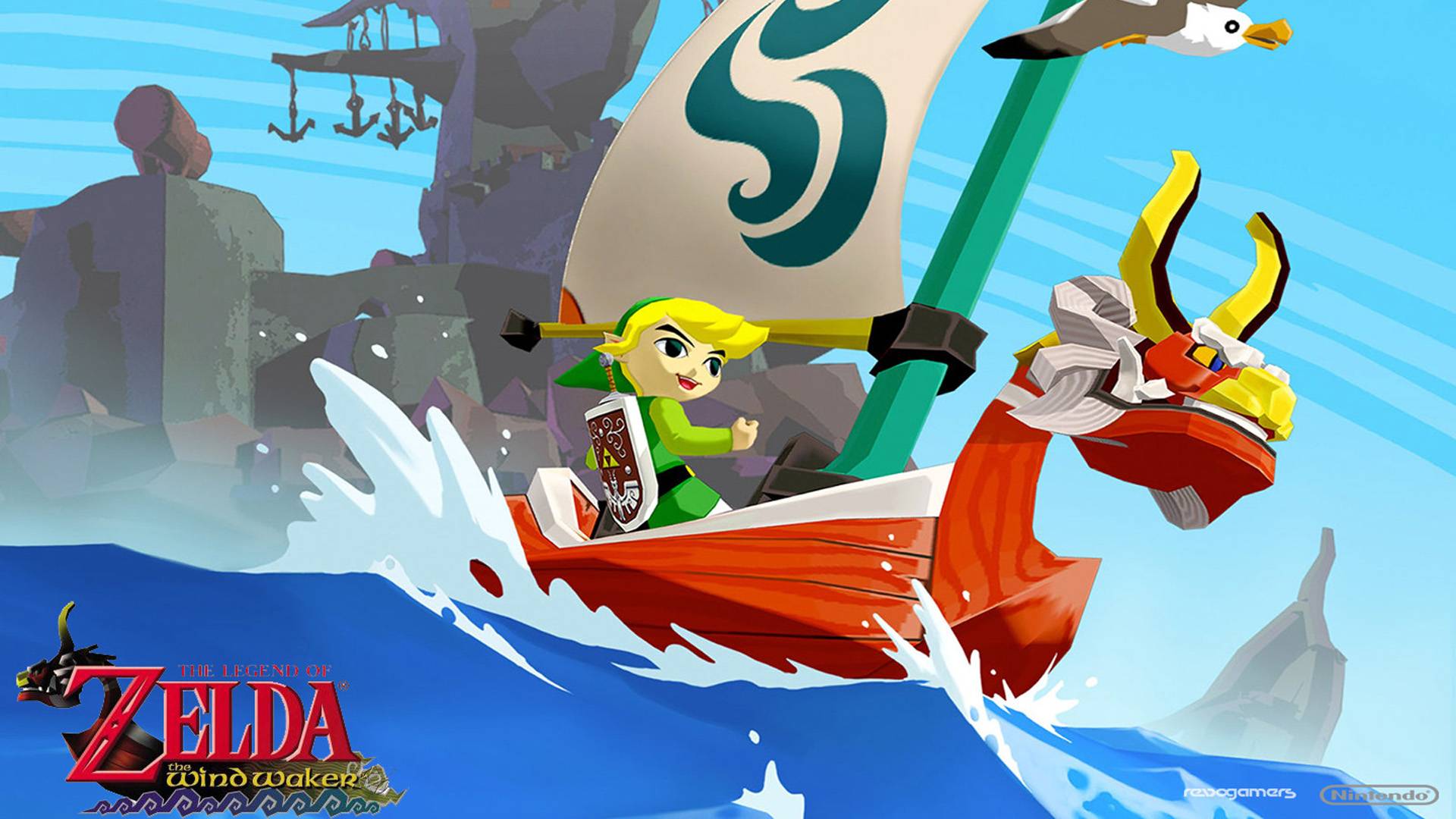
Even with the talk about reduced scale, The Wind Waker remains one of the most recognizable Zelda adventures because the Great Sea gives it a rhythm no other entry has fully replicated. Sailing can be calm, lonely, playful, or tense depending on the moment. One minute you are chasing the horizon with a gull overhead, and the next you are dodging enemy fire while the King of Red Lions cuts through the waves. That rhythm makes the world feel open in a way that was unusual for Zelda at the time. Instead of moving from one landlocked region to another, players crossed an enormous blue space where every island felt like a small promise. Some promises were bigger than others, of course. Not every square of the map hid a major reward. But the feeling of setting sail, checking the chart, and wondering what would appear next gave the game a personality that still stands apart.
Why fans keep returning to the cut-scope discussion
Fans keep returning to the question of The Wind Waker’s scale because Zelda games invite curiosity about what might have been. When a game already feels imaginative, learning that it could have been larger opens the door to endless speculation. Were there more dungeons? More islands? More story beats for Tetra and Hyrule? More strange little side quests tucked away like bottles on the shore? Aonuma’s comments do not provide a full list of what changed, so the mystery remains. That mystery can be frustrating, but it also adds to the game’s legend. Players love finished adventures, yet they are often just as fascinated by the invisible version that existed in sketches, prototypes, and planning documents. The Wind Waker sits right in that sweet spot. It is beloved as it is, but the thought of a bigger version still glimmers on the horizon like an island just out of reach.
The criticism and praise can both be true
One of the healthiest ways to talk about The Wind Waker is to allow two things to be true at once. The game can feel smaller than originally intended, and it can still be brilliant. It can have pacing issues, and it can still offer some of the most memorable imagery in the Zelda series. It can frustrate players with its structure, and still leave them humming its music years later. That balance is often missing when fans debate older games. People sometimes act as if criticism cancels affection, or affection erases flaws. The Wind Waker proves the opposite. Its charm is not fragile. It can survive an honest look at its development limits because its best qualities are so vivid. Like a favorite old boat with a few patched boards, it may not be flawless, but you still trust it to carry you somewhere special.
Why Aonuma’s honesty adds to the game’s legacy
Aonuma’s honesty makes The Wind Waker more interesting rather than less impressive. Knowing that the team had to make hard choices does not drain the magic from the final adventure. It makes that magic feel more human. The game was not created by a mythical machine that turns ideas into finished worlds without friction. It was made by people who had deadlines, goals, worries, and pride in what they were building. That context gives players a better understanding of why The Wind Waker feels the way it does. It also makes the final result easier to appreciate. Even under pressure, Nintendo created a Zelda adventure that still sparks debate, affection, nostalgia, and curiosity more than two decades later. That is not a small achievement. If anything, it shows how strong the game’s foundation really was.
The Wind Waker remains a bold chapter in Zelda history
Looking back now, The Wind Waker feels less like a compromised detour and more like one of Zelda’s boldest swings. It challenged expectations before players were ready to let go of them. It traded darker fantasy imagery for expressive animation and ocean air. It took the familiar idea of a kingdom in danger and buried that kingdom under the sea, turning Hyrule itself into a secret waiting beneath the waves. Aonuma’s comments about scale add important context, but they do not define the whole game. The Wind Waker’s legacy is bigger than what was cut or compressed. It lives in the way Link squints at danger, the way the sea changes color under the sky, the way Dragon Roost Island’s music seems to lift the whole room, and the way the ending carries a surprising emotional punch. For a compact adventure, it left a very wide wake.
Conclusion
Eiji Aonuma’s 2005 comments give fans a rare and valuable look at the reality behind The Legend of Zelda: The Wind Waker. Nintendo had imagined a larger adventure, but time constraints forced the team to make it more compact. Aonuma took responsibility for players who felt that result, which makes the story behind the game feel unusually personal. Yet The Wind Waker’s lasting reputation shows that size was never the only measure of its worth. Its art style, characters, ocean setting, music, and emotional finale helped it grow from a divisive release into a cherished part of Zelda history. The game may not have been everything Nintendo first imagined, but it became something with its own unmistakable soul. Sometimes a voyage changes course, and sometimes that changed course still leads somewhere unforgettable.
FAQs
- What did Eiji Aonuma say about The Wind Waker?
- Aonuma said Nintendo had originally imagined something bigger for The Wind Waker, but the team had to make it more compact to finish it on time. He also took responsibility for players who felt the game seemed unfinished or smaller than expected.
- Was The Wind Waker unfinished?
- Aonuma’s comments suggest the final game was smaller than originally planned, but that does not mean it was released carelessly. The team still worked to make the adventure entertaining, polished, and memorable within the time available.
- Why did some fans criticize The Wind Waker at launch?
- Some fans were surprised by its cartoon-like art style and felt the adventure did not match the darker Zelda they expected after earlier tech demos and Nintendo 64 entries. Over time, that same visual style became one of the game’s most praised qualities.
- Did The Wind Waker HD improve the original game?
- Yes, the Wii U version improved the presentation, added quality-of-life changes, made sailing faster, and adjusted parts of the later progression. These updates helped reduce some common frustrations from the GameCube version.
- Why is The Wind Waker still loved today?
- The Wind Waker remains loved because it has a strong identity, expressive visuals, memorable music, charming characters, and a sense of ocean adventure that still feels unique within the Zelda series. Its flaws are part of the discussion, but they have not stopped fans from celebrating it.
Sources
- Eiji Aonuma believed it was his “fault” that The Wind Waker wasn’t as meaty as other Zelda games, GamesRadar+, May 24, 2026
- Edge Gaming Magazine 150, Edge via Internet Archive, 2005
- The Legend of Zelda: The Wind Waker HD, Nintendo, October 4, 2013