

Summary:
Nintendo president Shuntaro Furukawa recently acknowledged that titles from third-party publishers account for a “significant share” of software unit sales, and that these games play a vital role in keeping players engaged across both Nintendo Switch and Nintendo Switch 2. That observation matters for anyone who follows Nintendo – it explains why major multiplatform releases are appearing on Switch 2 at the same time as other platforms, why download-only titles are an increasingly important part of the eShop landscape, and how Nintendo plans to balance its famous first-party output with strong third-party support. Below we break down what Furukawa said, what it means for players and collectors, and what to watch next as Switch 2 builds its library.
What Nintendo’s Furukawa actually said about third-party games sales
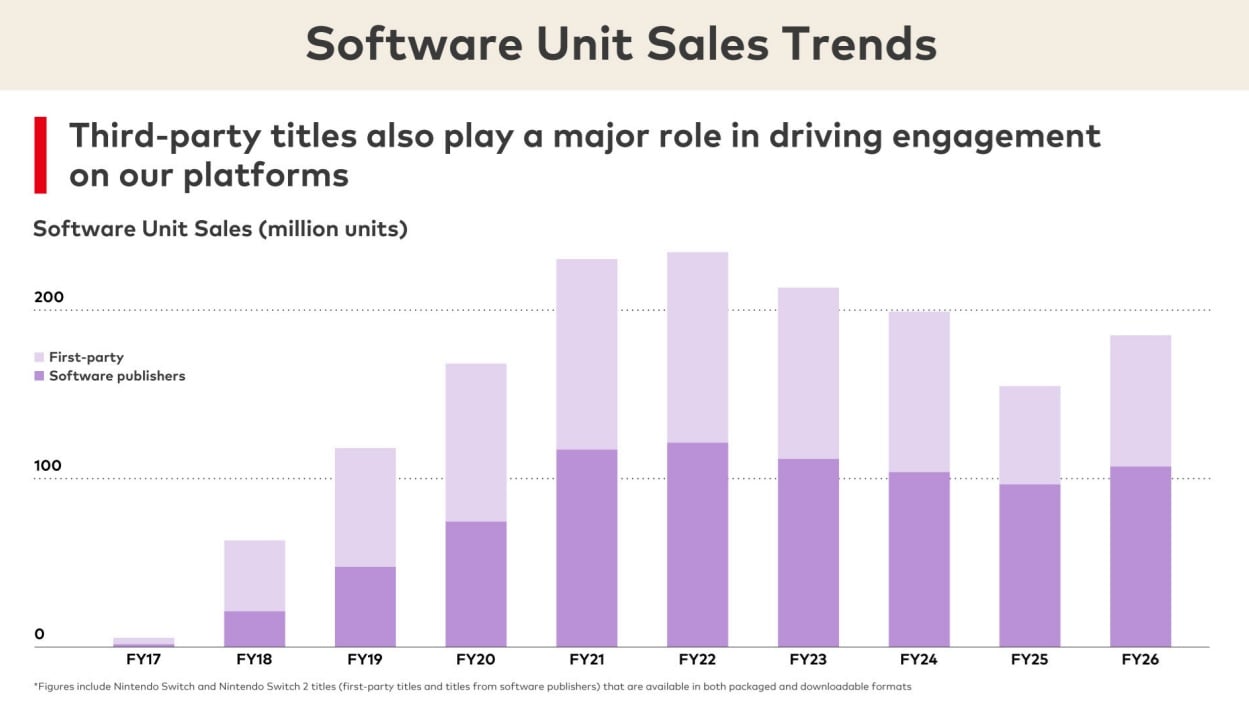
During Nintendo’s six months financial results briefing on November 6, 2026, president Shuntaro Furukawa stated that “titles from software publishers account for a significant share of software unit sales, making a substantial contribution to our business.” He also noted that third-party software has “a strong presence among download-only titles” and that these releases “play a major role in sustaining engagement with our hardware.” Those lines are straightforward but important – Nintendo is publicly recognising that publishers outside of Nintendo itself are not peripheral contributors but core parts of the software market. The comment came alongside broader discussion of Switch 2’s lifecycle and an uptick in multiplatform releases targeting the new hardware. For players this confirms that Nintendo values third-party partners and that the platform’s catalog will keep expanding with both ports and native Switch 2 projects.
Why third-party games matter for Nintendo’s ecosystem
Third-party games do more than fill storefront pages – they broaden genres, attract different player groups, and lengthen the period a console stays relevant. From niche indie hits to big-budget multiplatform releases, third-party titles help Nintendo reach players who might not be drawn only by Mario, Zelda, or Pokémon. That wider appeal helps hardware adoption and repeat play – someone who buys a Nintendo system for a beloved first-party franchise often sticks around because a steady stream of third-party releases keeps the platform fresh. Furukawa’s wording shows Nintendo understands this chain: third-party sales contribute materially to software unit totals and they help keep active users coming back to the hardware. For NintendoReporters readers this means the company will continue balancing headline first-party releases with partnerships and outreach to outside studios.
Switch 2 and the rise of multiplatform releases
Furukawa pointed out that in 2026 there was a noticeable increase in multiplatform releases with higher hardware demands launching on Nintendo Switch 2 at the same time as other platforms. That trend makes sense – Switch 2 offers improved performance compared with the original Switch, and more developers are seeing it as a viable day-one platform for their titles. When big multiplatform games appear simultaneously on Switch 2 they reduce friction for players who prefer a single system, while also signalling to publishers that Nintendo’s hardware can handle more demanding projects. This shift means Switch 2 owners will see fewer gaps between other platforms and Nintendo when big third-party releases arrive, and it strengthens the argument for buying into the new ecosystem. For discovery, keep an eye on publisher announcements and the Switch 2 hub for third-party launch windows.
Digital-first and download-only titles – where third-parties shine
Download-only releases have become a central pillar of modern platform libraries, and Furukawa specifically highlighted third-party strength in this area. Digital-only games let smaller studios reach global audiences without the cost of production or retail logistics, and bigger publishers can use downloads to distribute substantial expansions or spin-offs more flexibly. For Nintendo’s storefront this increases variety and allows experimentation: unique indie concepts can find traction alongside mid-tier and AAA releases from outside publishers. Players benefit from a richer eShop catalog and faster arrival times for patches and updates. From a business perspective, digital sales also improve margins and make it easier for Nintendo and partners to run promotions, bundles, and time-limited events that keep engagement high across both Switch generations.
What this means for Nintendo fans and buying decisions
If you follow Nintendo closely, Furukawa’s comments should influence how you plan purchases. Expect more day-one multiplatform arrivals on Switch 2 and a continuing flow of digital-first games on both systems. That means you can be more confident that popular third-party franchises will remain available on Nintendo hardware, reducing the risk of missing out by choosing Nintendo over another console. Collectors who prefer physical media should note that not every third-party release will ship on cartridges in all regions – digital-only launches remain common – so weigh preferences for boxed copies against storage and download convenience. For players focused on living library upkeep, frequent third-party releases mean new multiplayer experiences and solo adventures arrive regularly to complement Nintendo’s first-party roadmap.
How Nintendo plans to work with publishers
Furukawa emphasised two linked factors behind the uptick in third-party support: improved hardware performance with Switch 2 and stronger relationships with external publishers. Nintendo appears to be pursuing a dual strategy – keep producing unique first-party experiences that showcase Nintendo strengths while deepening collaboration with outside developers and publishers to broaden the platform’s appeal. That may involve technical support, shared marketing windows, or easier certification paths for developers. Publishers that see their games sell well on Nintendo hardware will likely invest more in native Switch 2 development or timely ports, and that cycle can create a more diverse and steady release calendar for players. For readers, this feels like a win: a platform that rewards both Nintendo-first fans and those who want a wide third-party catalog.
Examples and where to track third-party Switch 2 releases
Nintendo used its financial briefing to highlight an expanding slate of third-party titles that are heading to Switch 2 and in some cases launching simultaneously with other platforms. Examples featured in reporting include well-known multiplatform names and a mix of indie projects that take advantage of Switch 2’s features. If you want to follow those announcements, check the official Nintendo Switch 2 overview on our site and the publisher pages for launch dates and system-specific details. For general Nintendo updates and related announcements, our Nintendo News feed keeps track of release windows, hardware notes, and developer interviews so you can see which third-party releases are shipping physically, digitally, or both.
What to watch next – signals for players and collectors
Going forward, look for a few clear signals that will tell you how third-party support is evolving. First, monitor whether more simultaneous day-one multiplatform releases are confirmed for Switch 2 – that will indicate ongoing confidence from big publishers. Second, pay attention to the balance between physical and digital launches for third-party titles; a sustained shift to digital-only would change how collectors plan purchases. Third, watch Nintendo’s developer outreach and any technical support packages aimed at smoothing ports to Switch 2. Finally, keep an eye on sales charts and Nintendo’s periodic updates for indications of how much of total software unit sales third-party titles represent. Those metrics will show whether Furukawa’s “significant share” is trending up, down, or remaining steady as the Switch 2 library grows.
Conclusion
Nintendo’s public recognition of third-party games as a “significant share” of software sales is a practical acknowledgement of how modern platforms succeed – through a mix of in-house excellence and broad third-party support. For players that means more choices, more timely multiplatform releases on Switch 2, and a healthier eShop catalog full of digital-first gems. For collectors and long-term fans, the balance between physical and digital launches will be the biggest change to track. NintendoReporters will continue monitoring official briefings, publisher updates, and eShop activity so our community knows what to expect from both Nintendo and its partners.
FAQs
- Will third-party games continue to launch on Switch 2 at the same time as other platforms?
- Furukawa said that in 2026 more multiplatform releases with higher hardware demands have appeared on Switch 2 simultaneously with other platforms, and current reporting shows this trend continuing. Keep an eye on publisher announcements for confirmation on specific titles.
- Does Nintendo give any numbers for how big the third-party share is?
- In the briefing Furukawa described third-party titles as a “significant share” but did not provide a precise percentage or unit figure. Nintendo sometimes breaks down software sales in other investor materials, so future reports may be more specific.
- Are most third-party releases digital-only on Nintendo platforms?
- Furukawa highlighted a strong presence of third-party titles among download-only releases, which suggests many are digital-first. However, several big third-party publishers still ship physical versions in many regions, so availability varies by title and publisher strategy.
- Should I buy Switch 2 now if I want third-party support?
- Switch 2 already hosts more demanding multiplatform releases and native titles that use its hardware features. If those third-party games matter to you, Switch 2 is positioned as a viable option for playing them alongside Nintendo’s own lineup.
- Where can I follow official Nintendo updates about third-party support?
- Track Nintendo’s investor relations announcements and the six months financial briefings for official statements. For easier day-to-day coverage, check Nintendo-focused news hubs and the Nintendo Switch 2 section on NintendoReporters.
Sources
- Nintendo says third-party games make up “a significant share” of its software sales, NintendoEverything, November 5, 2026
- Nintendo Highlights Multiple Major Third-Party Releases On The Way To Switch 2 In 2027, Nintendo Life, November 6, 2026
- Investor Relations – Six Months Financial Results Briefing and Corporate Management Policy Briefing, Nintendo Co., Ltd., November 6, 2026