














Summary:
Eiji Aonuma’s long-running connection with The Legend of Zelda did not begin with a grand announcement, a public reveal, or a carefully staged career move. It started with a Super Nintendo adventure called Marvelous: Another Treasure Island, a game that carried a clear fondness for the structure, curiosity, and puzzle-driven spirit associated with Zelda. Aonuma later reflected that Marvelous was often compared to The Legend of Zelda because of its gameplay, and he openly admitted that he wanted to bring some of Zelda’s essence into it. That creative instinct caught the attention of Shigeru Miyamoto, who approached Aonuma after Marvelous and asked whether he wanted to work on The Legend of Zelda. Aonuma accepted, and that decision led him to dungeon design work on The Legend of Zelda: Ocarina of Time. From there, his role grew into one of the most important creative forces behind the series. What makes this story so charming is how natural it feels. Aonuma did not force his way into Zelda. He made something inspired by what he loved, and Nintendo’s own creative ecosystem turned that spark into a career-defining path.
How Marvelous quietly shaped Eiji Aonuma’s path toward Zelda
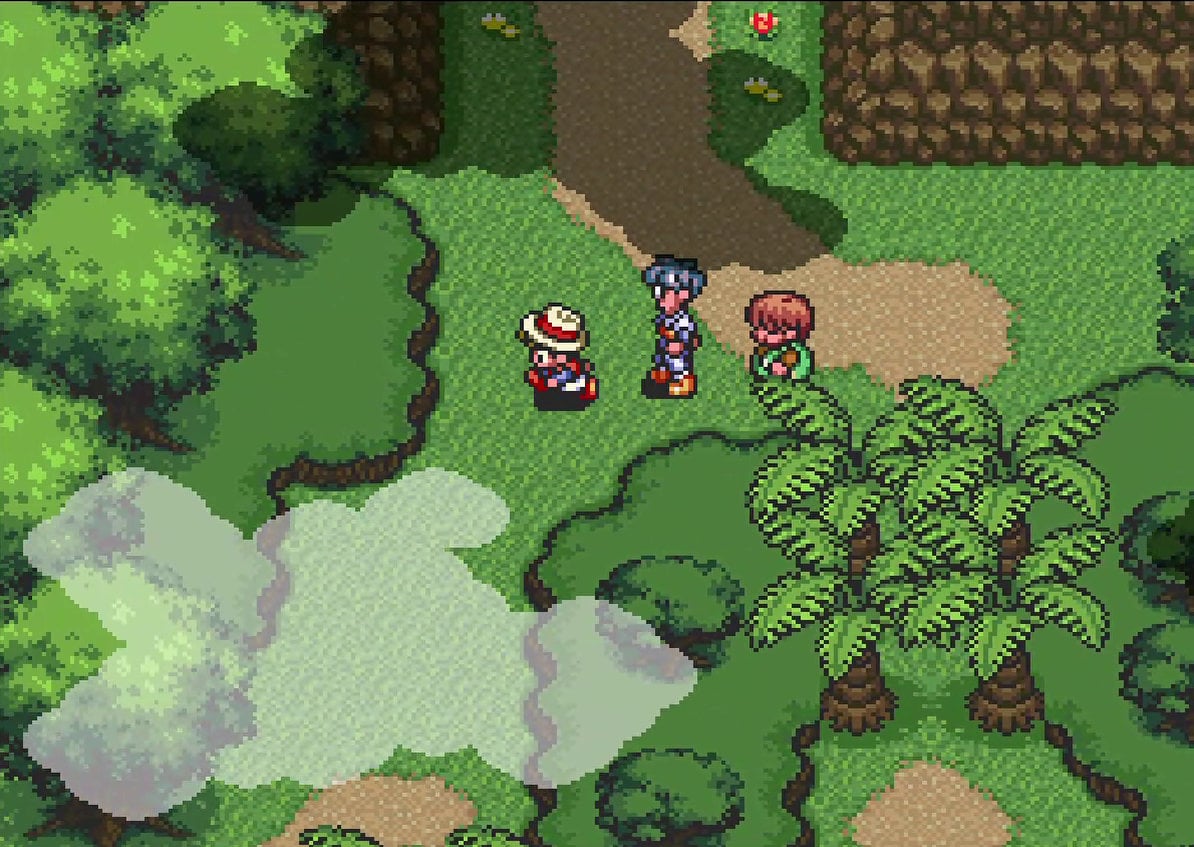
Eiji Aonuma’s road into The Legend of Zelda is one of those stories that feels almost too neat, like a secret door opening after someone solves the right puzzle. Before he became one of the most recognizable creative figures tied to Zelda, Aonuma directed Marvelous: Another Treasure Island for the Super Famicom. The game did not release worldwide in the same way Zelda did, so it never became a household name outside Japan, but its place in Nintendo history is surprisingly important. It showed Aonuma’s eye for adventure design, his comfort with playful exploration, and his interest in making the player feel clever rather than simply powerful. Those qualities would soon matter a great deal.
Marvelous arrived after The Legend of Zelda: A Link to the Past had already set a high standard for top-down adventure design on Nintendo hardware. Players had learned to expect secrets tucked into corners, environmental puzzles, and a sense that every screen might hide something useful or strange. Aonuma understood that feeling. He did not simply borrow a surface-level look or chase a trend. He seemed drawn to the way Zelda turned exploration into a kind of conversation between player and world. That is why Marvelous matters in this story. It was not Zelda, but it clearly spoke a similar design language, and that language helped bring Aonuma closer to the franchise that would define much of his career.
Why Marvelous felt familiar to fans of A Link to the Past
Marvelous: Another Treasure Island had a strong adventure identity of its own, but it is easy to understand why people connected it to The Legend of Zelda. It used a top-down perspective, encouraged observation, and leaned into the pleasure of poking around a world to see what might happen. That sense of curiosity is the heartbeat of classic Zelda. You see a strange object, an odd path, or a suspicious corner, and your brain immediately starts whispering, “There has to be something here.” Marvelous understood that little spark. It gave players a reason to pay attention and rewarded them for treating the world like a toy box full of hidden switches.
Aonuma later acknowledged that Marvelous was described as similar to The Legend of Zelda in terms of gameplay. More importantly, he did not distance himself from that comparison. He said he wanted to incorporate some of Zelda’s essence into Marvelous, which gives the whole situation a warm sense of honesty. Many games are influenced by great works, but not every creator says it so plainly. In Aonuma’s case, that influence became a bridge. The very qualities that made Marvelous feel familiar also made it a calling card. It showed Miyamoto that Aonuma understood something essential about how Zelda worked, not just mechanically, but emotionally.
How the spirit of Zelda showed through Marvelous
The most interesting part of the Marvelous connection is that it was not about copying Zelda beat for beat. The shared feeling came from structure, curiosity, and the way progress could depend on reading the environment. Zelda has always worked best when it makes players feel like they are slowly becoming fluent in the world around them. A locked path is not just an obstacle. A strange item is not just decoration. A quiet corner is not just empty space. Everything might become meaningful once the player understands the rules. Marvelous played with that same kind of attention, which likely helped it stand out inside Nintendo.
That design instinct is also why Aonuma’s future with Zelda makes so much sense in hindsight. Zelda needs designers who can think like puzzle makers, storytellers, and mischievous magicians all at once. The best dungeons do not simply block the player with locked doors. They teach, tease, test, and surprise. Marvelous showed that Aonuma was already comfortable with those ideas before he formally joined the Zelda team. It was almost like he had been training in the same creative language from the next room over. Once Miyamoto noticed that, the leap from Marvelous to Zelda no longer looked like coincidence. It looked like a perfect fit.
How Miyamoto noticed Aonuma’s Zelda-like design instincts
Shigeru Miyamoto’s role in this story is small in terms of action, but huge in terms of consequence. After seeing what Aonuma had done with Marvelous, Miyamoto asked whether he would be interested in working on The Legend of Zelda. That question changed the direction of Aonuma’s career. It also says a lot about how creative talent can be recognized inside a studio like Nintendo. Aonuma had created something that carried clear Zelda-like instincts, and Miyamoto saw the value in bringing that perspective directly into the series. In a way, Marvelous acted like an audition, even if it was never intended to be one.
There is something wonderfully Nintendo about that. It was not a dramatic recruitment tale filled with boardroom theatrics or corporate fireworks. It was closer to a craftsman noticing another craftsman’s work and saying, “You understand this. Come help us build the real thing.” That kind of creative recognition can be powerful because it is based on the work itself. Aonuma had already shown that he could think in terms of adventure flow, player curiosity, and interactive discovery. Miyamoto did not need a long speech to see the connection. The game had already made the case for him.
Why the invitation changed Zelda’s future
When Miyamoto asked Aonuma to join Zelda, he was not just adding another name to a development team. He was bringing in someone whose creative instincts would eventually become central to the series. Aonuma would go on to help shape how Zelda dungeons worked, how the series handled structure, and how its worlds balanced freedom with carefully arranged challenges. That influence did not arrive all at once, of course. It grew over years of work, experimentation, pressure, and reinvention. Still, the invitation after Marvelous was the first domino. Once it tipped, a major part of Zelda’s modern identity began moving into place.
This is what makes the story so satisfying for longtime fans. Zelda history often focuses on the big names, the major releases, and the famous turning points. Yet sometimes the smaller connecting threads explain just as much. Marvelous was not a Zelda game, but it helped bring Aonuma to Zelda. Aonuma’s first major work on the series helped define Ocarina of Time. Ocarina of Time then became a landmark release whose design legacy still echoes through the medium. That chain of events gives Marvelous a quiet but meaningful place in Nintendo’s wider creative story. It is a side path that leads straight to the castle gates.
Why Aonuma said yes to Zelda without hesitation
Aonuma’s response to Miyamoto’s offer was simple: he said yes. That quick acceptance feels completely natural given what Marvelous already suggested about his interests. He had made a game that openly carried some Zelda spirit, so being asked to work on the real series must have felt like stepping into a workshop he had admired from afar. There is a pleasing lack of drama to it. No grand negotiation, no mystery, no slow-burn career debate. Just a creator being invited into a world he clearly respected and immediately recognizing the opportunity in front of him.
It is also easy to imagine why that offer would be difficult to refuse. Zelda was already one of Nintendo’s most important franchises, and A Link to the Past had shown just how elegant and ambitious the series could be in two dimensions. Joining the team meant getting close to the design machinery behind one of gaming’s most beloved adventure formats. For a creator who had already tried to capture part of that feeling in Marvelous, the chance must have felt like being handed the master key. Sometimes opportunity does not knock. Sometimes it appears wearing a green tunic and carrying decades of design potential.
How a simple yes became a defining career moment
That one yes carried more weight than anyone could have known at the time. Aonuma did not merely contribute briefly and disappear into Nintendo’s wider development structure. He stayed with Zelda and became one of the central figures associated with the franchise. His work would span multiple generations of Nintendo hardware, from the Nintendo 64 era through later handheld and console releases. Fans now often discuss Zelda through a Miyamoto and Aonuma lens, seeing them as two major creative pillars in the series’ long evolution. That status began with an invitation that came after a smaller, stranger, less internationally famous SNES adventure.
The beauty of this story is that it shows how careers in game development can turn on the strength of a single project. Marvelous did not need to become as famous as Zelda to matter. It needed to show that Aonuma understood how an adventure game could make players curious. That understanding was enough to put him in the right conversation with the right person. From there, his future opened up. In that sense, Marvelous is more than a historical footnote. It is the creative breadcrumb trail that led Aonuma into one of Nintendo’s most treasured worlds.
How Ocarina of Time became Aonuma’s first major Zelda milestone
After joining the Zelda team, Aonuma worked on dungeon design for The Legend of Zelda: Ocarina of Time. That detail matters because Ocarina of Time was not just another entry. It was the series’ enormous leap into 3D, a shift that required Nintendo to rethink how exploration, combat, puzzles, camera movement, and spatial design would work in a new dimension. Designing dungeons for that project was no small assignment. It meant helping translate Zelda’s puzzle-box identity into spaces that players could walk through, look around, and understand from entirely new angles. That kind of work demanded precision, patience, and a strong sense of player psychology.
Ocarina of Time became one of the most influential games in Nintendo history, and its dungeons remain a major part of that legacy. They taught players how to read 3D spaces, how to think vertically, and how to use items in ways that felt both logical and magical. Aonuma’s involvement placed him at the center of a major turning point for Zelda. The series had to keep the soul of A Link to the Past while becoming something much bigger, more cinematic, and more physically complex. That is a tricky balancing act. It is like rebuilding a beloved clock while it is still ticking, and somehow making it sing when you are done.
Why dungeon design was such an important first role
Dungeon design is one of the purest expressions of Zelda’s identity. A strong Zelda dungeon is not just a maze with enemies. It is a layered space that teaches the player how to think. It introduces a rule, gives the player a tool, complicates the rule, then rewards mastery with forward motion. That rhythm is part of what makes Zelda so satisfying. By working on dungeons in Ocarina of Time, Aonuma contributed to the part of the series where mechanics, pacing, mystery, and atmosphere meet. It was a role that matched the design instincts he had already shown through Marvelous.
In a 3D Zelda game, dungeons also carried extra responsibility. Players had to understand where they were, where they had been, and where they might go next, all while navigating rooms that could stack above and below one another. Designers had to build spaces that felt puzzling without becoming unreadable. That is a difficult needle to thread. Too simple, and the dungeon feels flat. Too confusing, and players feel lost rather than challenged. Aonuma’s work in this area helped connect his earlier adventure design experience with Zelda’s future. It was the beginning of a much larger creative relationship.
What Aonuma’s recruitment says about Nintendo’s creative culture
Aonuma’s move from Marvelous to Zelda also gives us a small but telling glimpse into Nintendo’s creative culture. Nintendo has often been described through the language of iteration, experimentation, and playful problem-solving. The Aonuma story fits that image well. A developer makes something with a strong design personality, another senior creator recognizes the spark, and that spark is redirected into a major franchise where it can grow. There is no need to over-romanticize it, but it does show how Nintendo’s best work often seems to come from paying close attention to talent already inside the building.
This kind of creative movement matters because franchises can become stale when they are protected too tightly. Zelda has lasted because it keeps changing while still feeling recognizable. Bringing Aonuma into the series after Marvelous added a designer who understood Zelda’s classic appeal but could also help reinterpret it. That balance is difficult. Fans want the feeling they remember, but they also want surprise. They want dungeons, tools, secrets, and strange characters, but they do not want the exact same adventure forever. Aonuma’s career became closely tied to managing that tension, and the first sign of that fit was visible before he ever officially worked on Zelda.
How Nintendo turns influence into evolution
The Marvelous story also shows that influence does not have to be a creative dead end. Aonuma was inspired by Zelda, but that inspiration did not trap him in imitation. Instead, it helped him build a skill set that became useful to Zelda itself. That is a lovely creative loop. A game inspires a designer, the designer makes another game, that game catches the attention of the original series’ creator, and the designer then helps shape the future of the series that inspired him. It sounds almost like a fairy tale, but in Nintendo terms, it is more like a very clever gameplay mechanic.
Great creative traditions often work this way. Someone learns the language, speaks it in their own accent, then eventually helps the language grow. Aonuma’s work after Marvelous did not freeze Zelda in the past. It helped the series move through 3D design, darker stories, oceanic exploration, motion controls, handheld experiments, open-air worlds, and more. Not every idea landed the same way for every fan, but the willingness to evolve became part of the franchise’s identity. That evolution did not come from rejecting Zelda’s roots. It came from understanding them well enough to bend them without breaking them.
Why Marvelous remains an important part of Zelda history
Marvelous: Another Treasure Island is not usually the first game people mention when they talk about Zelda history. It is not a mainline entry, it did not introduce Link, and it does not sit on the usual timeline charts that fans love to debate with the intensity of courtroom attorneys. Yet it still belongs in the larger conversation because of what it set in motion. Without Marvelous, Miyamoto may not have seen the same proof of Aonuma’s Zelda-like instincts. Without that proof, Aonuma’s path into the franchise might have looked very different. That makes Marvelous a quiet but meaningful turning point.
The game also reminds us that influence can be productive when handled with sincerity. Aonuma did not hide from the Zelda comparison. He recognized it and explained that he wanted to include some of Zelda’s essence in Marvelous. That honesty gives the story extra charm. It frames Marvelous not as a lesser echo, but as a creative stepping stone. It was a game made by someone who admired a design tradition and wanted to explore similar feelings through his own work. In the end, that admiration became part of Zelda’s own future. Not bad for a game many players outside Japan still know mainly through historical footnotes and developer anecdotes.
Why fans still enjoy rediscovering this connection
Stories like this are catnip for Nintendo fans because they make familiar games feel connected in fresh ways. Zelda is already surrounded by decades of lore, interviews, development notes, fan theories, and design analysis. Learning that Aonuma’s route into the series passed through Marvelous adds another layer to that history. It gives fans a clearer sense of how people, ideas, and projects move behind the scenes. The games on the shelf may look separate, but the creative paths behind them often twist together like vines in a forest temple.
That kind of context can change how people view both Marvelous and Zelda. Marvelous becomes more than an obscure Super Famicom adventure. Zelda becomes not just the product of one creator or one fixed team, but a series shaped by creative handoffs, unexpected opportunities, and designers who arrived with their own influences. It also makes Aonuma’s long connection to Zelda feel less sudden. He was already circling the same ideas before Miyamoto invited him in. Once you know that, his later role feels less like a surprise promotion and more like the natural next chapter of a story that had already begun.
How Aonuma’s legacy grew from one unexpected invitation
Aonuma’s legacy within The Legend of Zelda is now enormous, but its beginning was disarmingly simple. He made Marvelous, a game influenced by Zelda’s adventurous spirit. Miyamoto noticed. Aonuma was asked to join Zelda. He said yes. From there, he became involved in Ocarina of Time, then continued shaping the series across many years and many different creative eras. That progression is easy to summarize, but its impact is hard to overstate. Zelda is one of Nintendo’s defining franchises, and Aonuma became one of the people most closely associated with keeping it alive, flexible, and surprising.
What stands out most is the way his story blends admiration with opportunity. Aonuma did not enter Zelda as an outsider unfamiliar with its appeal. He entered as someone who had already tried to capture part of that appeal elsewhere. That gave him a foundation. He understood the pleasure of discovery, the appeal of puzzle-like spaces, and the importance of making the player feel like an explorer rather than a passenger. Those ideas would continue to matter as Zelda grew larger, stranger, and more technically ambitious. One invitation opened the door, but Aonuma’s instincts helped him stay in the room.
Why this story still matters for Zelda’s identity
The story matters because Zelda has always been about discovery, and Aonuma’s own path into the series reflects that same theme. He followed an interest, made something inspired by it, and found an unexpected doorway into a much bigger adventure. That is almost comically appropriate for Zelda. It is the career version of finding a cracked wall, placing a bomb, and realizing there was a whole hidden chamber behind it. Fans love these stories because they make the series feel human. Behind every dungeon, item, and strange little character, there are creators making choices, following instincts, and sometimes stumbling into history.
It also highlights how important individual creative voices can be inside long-running franchises. Zelda is bigger than any one person, but the series has always been shaped by people with specific instincts and tastes. Miyamoto’s invitation mattered because he recognized something in Aonuma’s work. Aonuma’s acceptance mattered because he brought that something into Zelda and kept developing it. The result is a legacy that links Marvelous, Ocarina of Time, and decades of Zelda evolution together. It is not just a neat anecdote. It is a reminder that even legendary franchises are built from personal moments, small decisions, and the occasional well-timed yes.
Conclusion
Eiji Aonuma’s journey into The Legend of Zelda began with Marvelous: Another Treasure Island, a Super Nintendo adventure that carried clear affection for Zelda’s design spirit. Shigeru Miyamoto recognized that connection and invited Aonuma to join the Zelda team, setting up a creative partnership that would help shape one of Nintendo’s most important franchises. Aonuma’s later work on Ocarina of Time and beyond turned that opportunity into a lasting legacy. The story remains fascinating because it feels so fitting: a creator inspired by Zelda made a Zelda-like adventure, and that adventure became the doorway into Zelda itself.
FAQs
- How did Eiji Aonuma become involved with The Legend of Zelda?
- Eiji Aonuma became involved with The Legend of Zelda after Shigeru Miyamoto noticed his work on Marvelous: Another Treasure Island. Aonuma later recalled that Miyamoto asked whether he wanted to work on Zelda, and he accepted the offer.
- What was Marvelous: Another Treasure Island?
- Marvelous: Another Treasure Island was a Super Famicom adventure game directed by Eiji Aonuma. It shared some gameplay similarities with The Legend of Zelda, especially in its top-down exploration and puzzle-oriented design.
- Did Aonuma intentionally make Marvelous feel like Zelda?
- Aonuma said he wanted to incorporate some of Zelda’s essence into Marvelous. That does not mean Marvelous was simply a copy, but it does show that Zelda’s design spirit had a clear influence on the project.
- What was Aonuma’s first major Zelda role?
- Aonuma’s first major Zelda role was working on dungeon design for The Legend of Zelda: Ocarina of Time. That placed him inside one of the most important development shifts in the series, as Zelda moved into 3D.
- Why is this story important to Zelda fans?
- The story shows how Aonuma’s Zelda journey began before he officially joined the franchise. Marvelous helped reveal his understanding of adventure design, and that led to a career that deeply shaped Zelda’s future.
Sources
- Zelda boss Eiji Aonuma became part of the series because Miyamoto saw him making his own SNES game in the wake of A Link to the Past, GamesRadar, May 25, 2026
- Miyamoto recruited Aonuma to Zelda team after he developed Zelda-like game Marvelous for SNES, My Nintendo News, May 26, 2026
- Miyamoto Recruited Aonuma After SNES Marvelous, RetroShell, May 27, 2026
- Massive Wind Waker Interview, Good Blood, published date not listed