














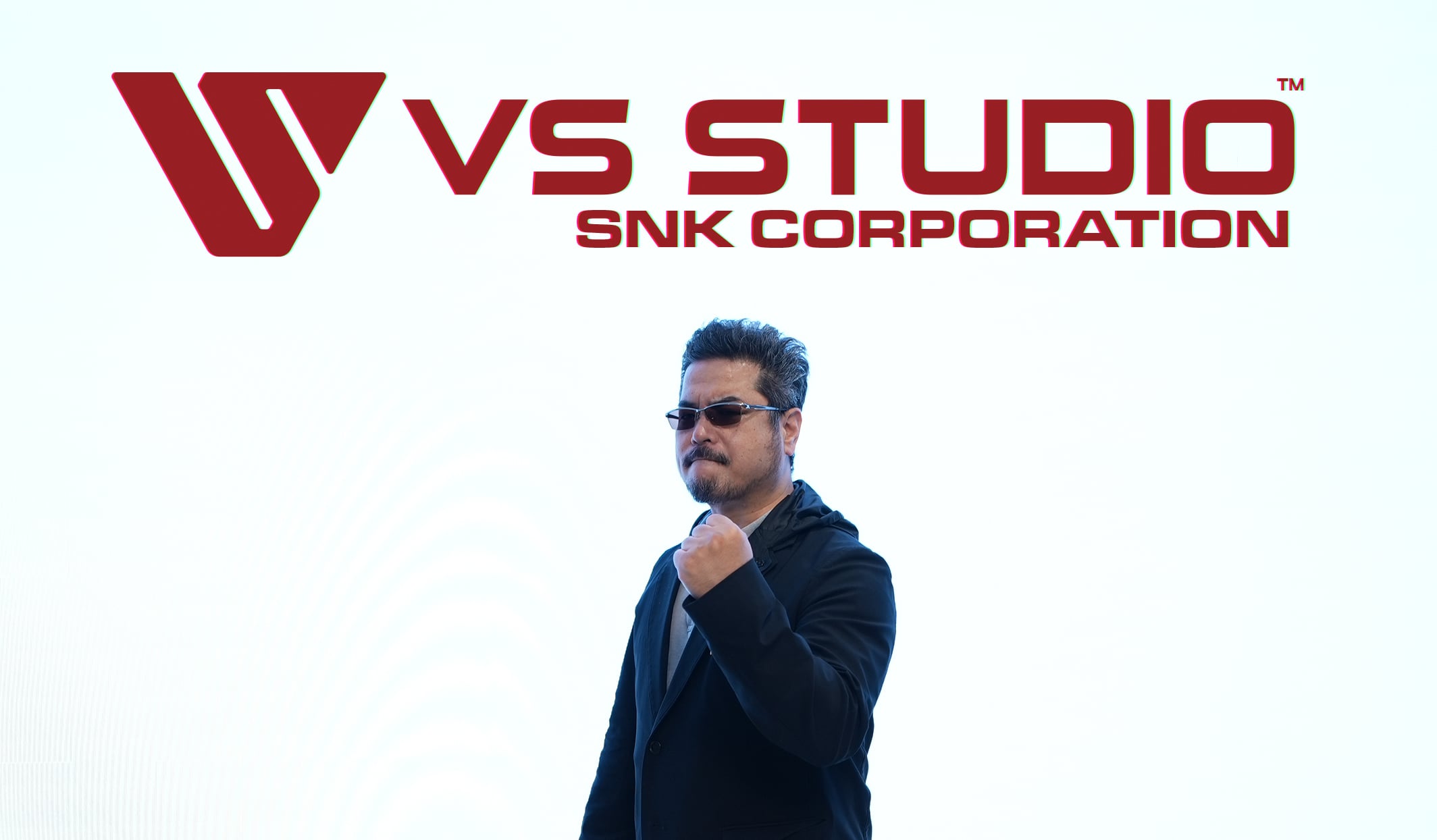
Summary:
Katsuhiro Harada has officially stepped into a new role with VS Studio SNK, a newly established game development studio backed by SNK. The announcement is significant because Harada is not just another experienced developer changing seats. After more than 31 years connected to Bandai Namco and the Tekken series, he carries the kind of fighting game history that fans immediately recognize. SNK has invested in the studio and plans to bring it into the group as a consolidated subsidiary, with both sides set to collaborate on game software development. That gives VS Studio SNK a strong foundation from day one, rather than making it feel like a distant experiment floating outside the company’s main ambitions.
The studio was established on May 1, 2026, with Harada serving as Representative Director and CEO. Its stated philosophy, “Beyond tradition, crafted to perfection,” neatly captures why this announcement has caught so much attention. SNK has a long legacy through franchises such as Fatal Fury, The King of Fighters, Samurai Shodown, Metal Slug, and more, while Harada has spent decades working closely with competitive players, arcade culture, global tournaments, and the broader fighting game community. No specific project has been announced yet, and that uncertainty is important. Instead of forcing expectations onto one franchise or genre too early, VS Studio SNK currently feels like a carefully placed chess piece – one that could shape SNK’s future in exciting ways once the studio reveals what it is building.
Katsuhiro Harada begins his next chapter with VS Studio SNK
Katsuhiro Harada’s new chapter has started with the establishment of VS Studio SNK, a game development studio created with SNK’s support and investment. The move immediately stands out because Harada’s name carries decades of weight in the fighting game world. For many players, he is inseparable from Tekken, competitive play, arcade memories, tournament stages, and the kind of direct community interaction that can turn a producer into a familiar face. Now, instead of stepping away from development after leaving Bandai Namco, Harada is taking on a leadership role at a newly formed studio inside SNK’s orbit. That alone gives the announcement a little spark. It feels less like a quiet career move and more like a new match loading on the character select screen.
VS Studio SNK was established on May 1, 2026, with Harada appointed as Representative Director and CEO. SNK has described the studio as a newly established game development company founded by Harada, with SNK investing in the operation and planning to make it a consolidated subsidiary. That wording matters because it shows the studio is not being presented as a loose partnership or one-off collaboration. It is being positioned as part of SNK’s broader structure, with a clear purpose tied to future game software development. For fans watching SNK’s recent activity, this feels like another sign that the company wants to sharpen its development pipeline and build momentum with recognizable creative leadership.
SNK’s investment gives the new studio immediate weight
New studios are announced all the time, but not every launch arrives with the backing of an established publisher and a well-known industry figure at the center. VS Studio SNK starts from a different place because SNK is directly supporting the studio’s launch. The company has stated that the new studio and SNK will collaborate on game software development to strengthen development capabilities. That gives the whole announcement a practical backbone. This is not only about a famous creator getting a new office sign and a stylish philosophy line. It is about SNK adding another development pillar to its business, one that could eventually support new games, existing brands, or ideas that do not fit neatly into the company’s usual rhythm.
SNK’s investment also makes the timing interesting. The company has been actively working to keep its classic identity alive while pushing into modern development expectations. That is not easy. Legacy can be a treasure chest, but it can also become a heavy backpack if a company only looks backward. Bringing Harada into the group through VS Studio SNK creates room for a fresh development environment while still connecting that environment to SNK’s history. It is a careful balance: respect the old fire, but do not keep cooking the same meal forever. With Harada leading the studio, SNK now has a development figure known for long-term franchise stewardship, global fan engagement, and competitive game culture sitting inside its future plans.
Why Harada’s move matters to fighting game fans
For fighting game fans, Harada’s move to SNK is the kind of announcement that makes group chats wake up fast. It brings together two histories that have often existed side by side in the same competitive universe. SNK’s fighting game legacy runs through names like Fatal Fury, The King of Fighters, and Samurai Shodown, while Harada’s career is deeply tied to Tekken and the global rise of competitive play around 3D fighters. Those worlds are different, but they speak the same language of timing, spacing, mind games, footsies, pressure, execution, and that tiny moment when one wrong button turns into a full disaster. Anyone who has eaten a counter-hit combo knows the feeling.
The announcement does not confirm that VS Studio SNK is making a fighting game, and that distinction is important. Still, it is easy to understand why fans immediately connect the dots. Harada spent more than three decades shaping games and communities where competition, personality, and long-term player trust mattered. SNK also has a strong fighting game identity, even when its catalog stretches beyond that genre. Put those facts together, and the imagination starts running. Could this lead to a new fighting project? Could Harada help rethink one of SNK’s classic properties? Could VS Studio SNK build something entirely new with a competitive spirit at its core? None of that has been announced, but the possibilities are clearly part of why the news feels so lively.
Three decades of experience now sit at the heart of VS Studio SNK
Harada’s career gives VS Studio SNK something many young studios do not have: lived experience across multiple generations of game development. He was involved with game production during the arcade era, the rise of home console fighting games, the expansion of online play, the growth of global tournament scenes, and the modern era where a game’s community can be just as important as its launch window. That kind of perspective is hard to fake. It comes from years of seeing what players actually do once a game leaves the developer’s hands. Players break systems, invent tactics, complain loudly, discover beauty in mechanics the developers underestimated, and occasionally ask for things in ways that make everyone reach for coffee.
SNK’s announcement highlights Harada’s long involvement in arcade, home console, and VR titles, as well as his work in global marketing and community activities connected to tournaments and fan events. That last part matters because modern games, especially competitive ones, do not live in isolation. They live through updates, events, streams, patch notes, rivalries, feedback, local scenes, and the emotional connection players build over time. Harada’s experience with those layers could help VS Studio SNK think beyond the simple question of what game to make. A stronger question is how to build something players want to return to, argue about, improve at, and share with friends for years.
The studio’s philosophy points toward craft, challenge, and fresh ideas
VS Studio SNK’s philosophy is “Beyond tradition, crafted to perfection,” and that phrase says a lot without locking the studio into one genre. Tradition is a tricky word in games. It can mean beloved mechanics, familiar characters, shared memories, and design lessons earned through decades of trial and error. It can also become a fence if nobody is willing to climb over it. The studio’s philosophy suggests a desire to respect what came before while still challenging old habits. That fits both Harada and SNK. Harada’s career has been tied to series evolution, while SNK’s identity is built on classic brands that still need to speak to modern players.
Harada has described VS Studio as a place that will combine technology, sensibility, and world-class expertise to pursue memorable games. That wording gives the studio a broad creative lane. Technology alone is not enough, because a game can be visually impressive and still feel cold. Sensibility alone is not enough either, because great ideas need the production skill to survive deadlines, platforms, and player expectations. The interesting part is the combination. VS Studio SNK appears to be presenting itself as a studio where craft matters, but not in a stiff museum-glass kind of way. More like a workshop where every tool has a purpose, every idea gets tested, and every finished project needs to feel sharp in the player’s hands.
What VS Studio SNK will actually do inside the SNK group
For now, VS Studio SNK’s announced role is focused on game software development. That may sound simple, but it leaves plenty of room for interpretation. The studio could eventually support existing SNK franchises, develop new properties, collaborate with other internal teams, or help create projects that expand SNK’s reach beyond what fans currently expect. Since no specific game has been announced, the safest reading is also the most practical one: SNK is adding development strength, leadership, and creative flexibility. Rather than promising a named project too early, the company is giving VS Studio SNK room to take shape before the curtain rises on its first work.
That approach is wise. Game studios need identity, but they also need breathing space. Announcing a project too early can create a pressure cooker before the recipe is even finished. By establishing the studio first, SNK can let the team build its internal culture, recruit talent, set production goals, and decide how best to use Harada’s experience. Fans naturally want immediate answers, but patience may be the smarter play here. A good studio launch is not just a headline. It is a foundation. If VS Studio SNK is going to matter long-term, the most important work may be happening quietly behind the scenes before anyone sees a logo on a trailer.
The studio is built around planning, development, and operation
SNK lists VS Studio SNK’s business activities as planning, development, and operation of video game software. That three-part structure is worth noting because it points to a studio that is not only meant to produce assets or assist with isolated tasks. Planning suggests concept development, production direction, and early-stage decision-making. Development covers the actual creation process, from systems and art to tools and implementation. Operation can point toward the ongoing life of a game after release, which is especially relevant in a market where updates, events, balance adjustments, and player communication can shape long-term success.
That setup fits the modern reality of game creation. A title does not simply launch and vanish anymore, especially if it has competitive elements, online features, seasonal updates, or community-driven play. Players expect support. They expect fixes. They expect developers to understand what is happening in real matches, real lobbies, and real player discussions. Harada’s background makes that especially relevant, because his public career has often involved direct engagement with players and tournament culture. If VS Studio SNK eventually works on games with long-term support needs, that operational mindset could be a key part of its value inside the SNK group.
The Tokyo location gives VS Studio SNK its own identity
VS Studio SNK is based in Tokyo, while SNK’s headquarters are in Osaka. That gives the new studio a physical identity of its own, even as it becomes part of the wider SNK group. Location does not determine creativity by itself, of course. A brilliant idea can show up anywhere, usually when someone is half-awake and holding a convenience store coffee. Still, a separate studio space can help shape culture. It can give a team room to define how it works, how it recruits, how it communicates, and how it balances independence with the expectations of a larger company.
The Tokyo base may also help with talent attraction. Japan’s game development scene is spread across several major hubs, and Tokyo remains a major center for developers, publishers, contractors, media, and international connections. For a studio led by Harada and backed by SNK, that could be useful when building a team around specialized skills. Harada has also said VS Studio is looking for new team members who share its vision. That recruitment angle adds another layer to the announcement. VS Studio SNK is not only a label attached to one veteran creator. It is being positioned as a place where a new team can gather, grow, and eventually show what it can build.
Yasuyuki Oda’s comments add an interesting SNK angle
Yasuyuki Oda’s reaction gives the announcement a warm, slightly personal tone. SNK’s game designer described Harada as a long-time friend and worthy rival, and said the idea of working together had been discussed before becoming reality. That detail matters because the best collaborations often start long before paperwork makes them official. Rivalry in game development can be healthy when it pushes people to think harder, polish ideas, and respect the craft on the other side of the fence. In fighting games, rivalry is almost sacred anyway. It is the engine under the hood. Without rivalry, you are just pressing buttons in a quiet room.
Oda’s comments also help frame the mood around VS Studio SNK. This is not being presented as a takeover of SNK’s identity by an outside name. It sounds more like SNK welcoming a familiar competitor into the same house, with curiosity about what that could unlock. That distinction is important for fans who care deeply about SNK’s own creative heritage. Harada’s presence does not erase SNK’s history. Instead, the appeal lies in the overlap between different schools of fighting game thought, production experience, and community awareness. The result could be a studio that benefits from contrast rather than smoothing every edge into something bland.
Nothing has been decided yet, and that matters
One of the most important details in the announcement is also one of the easiest to overlook: Oda said nothing has been decided yet. That may disappoint anyone hoping for an immediate game reveal, but it is actually a healthy sign. It means SNK is not rushing to attach Harada’s name to a famous series just for quick excitement. It also means VS Studio SNK has not been boxed into a narrow public promise. Once a company says a studio is making a specific game, fans naturally start building expectations brick by brick. Sometimes those bricks become a castle. Sometimes they become a wall nobody can climb.
By leaving the first project unannounced, SNK and VS Studio SNK keep the conversation open. That gives the team room to decide what makes the most sense creatively and commercially. Maybe the studio will eventually work on a known SNK franchise. Maybe it will create something new. Maybe it will support technology, systems, or production pipelines across multiple projects. The key point is that speculation should stay speculation until SNK confirms more. We can be excited without pretending we already know the answer. That is a rare and useful skill in gaming news, where rumors sometimes run faster than Sonic after three espressos.
Why this announcement feels bigger than a normal studio launch
VS Studio SNK feels bigger than a normal studio announcement because it sits at the intersection of legacy, timing, and personality. SNK is a company with deep roots in arcade and fighting game history. Harada is a developer whose public identity is tied to one of the most recognizable fighting franchises ever made. Put those together, and the result naturally attracts attention beyond the usual business language of investment and subsidiaries. This is not simply about a new legal entity appearing on a corporate list. It is about a recognizable creative force entering a company with its own competitive heritage and global fanbase.
There is also a broader industry angle. Many Japanese game companies are thinking carefully about how to preserve legacy while modernizing production. Classic brands still matter, but players now expect stronger online features, smoother performance, better training tools, clearer communication, and long-term support. A studio like VS Studio SNK could become one way for SNK to address those expectations with fresh structure and leadership. That does not mean instant transformation. Studios need time. But the move signals intent, and intent matters. It tells players, partners, and potential recruits that SNK is not standing still with its arms folded in front of an arcade cabinet.
SNK is strengthening its future without abandoning its roots
SNK’s strength has always come from a mix of style, character, and mechanical identity. Its best-known games often have a distinct flavor: bold characters, punchy presentation, technical combat, and a kind of arcade spirit that feels different from other publishers. The challenge is making that identity work in a modern environment without sanding it down too much. VS Studio SNK could help with that challenge by giving SNK another development arm built around both experience and experimentation. The studio’s philosophy does not say “replace tradition.” It says to go beyond it and craft something carefully.
That phrasing is important because legacy brands are emotional. Fans do not want companies to treat classic games like dusty trophies, but they also do not want careless reinvention that forgets why people cared in the first place. SNK’s investment in VS Studio SNK suggests a middle path. The company can continue valuing its roots while building teams capable of new ideas. Harada’s history adds weight to that idea because he has spent years working with a franchise where legacy, competitive depth, and community expectations all collide. Anyone who has followed fighting games knows that changing even one mechanic can cause fireworks. Careful craft is not optional. It is survival gear.
Harada’s community-first history fits the modern fighting game scene
Modern fighting games are not built only in studios. They are shaped in tournaments, Discord servers, training modes, patch discussions, local meetups, streams, and late-night sets where someone swears they blocked low even though the replay says otherwise. Harada’s career has always had a strong community-facing element, and SNK specifically noted his support for tournaments and fan events around the world since the 1990s. That history could be valuable for VS Studio SNK, especially if the studio eventually works on projects where player trust and competitive longevity matter.
A community-first mindset does not mean giving players everything they ask for. That would be chaos with a comment section attached. It means understanding why players care, how they interact with systems, and where friction becomes either a fun challenge or a genuine problem. The best competitive games often survive because their developers know when to listen, when to hold firm, and when to explain decisions clearly. Harada’s experience in that space gives VS Studio SNK a leader who understands the emotional temperature of competitive communities. For SNK, that could become a major advantage if the studio’s future work touches the fighting game audience directly.
The name VS Studio carries more than one meaning
The name VS Studio is not just a simple nod to versus play, although that meaning is certainly hard to ignore given Harada and SNK’s histories. Harada explained that “VS” carries several meanings, including roots in “Video game Soft,” the spirit of “Versus” challenging tradition, and phrases such as “Visionary Standard,” “Volition Shift,” and “Vanguard Spirit.” That makes the name feel intentionally flexible. It can speak to competition, ambition, transformation, and forward movement without tying the studio to only one interpretation.
That flexibility is useful because VS Studio SNK’s first project remains unannounced. The name can comfortably fit a fighting game, but it could also fit a broader creative mission. “Versus” does not have to mean only player against player. It can mean new ideas versus old assumptions, craft versus shortcuts, or ambition versus comfort. That may sound a little dramatic, but game development is full of those battles. Every project has to fight time, budget, technology, expectations, and the terrifying moment when someone asks whether the build is ready. VS Studio SNK’s name captures that tension in a way that feels appropriate for a studio built around challenge.
What players should expect from VS Studio SNK next
Players should expect patience before answers. VS Studio SNK has been announced, Harada is leading it, SNK is investing in it, and the studio will collaborate with SNK on game software development. Beyond that, no specific title has been revealed. That means the smartest expectation is not a particular game, but a period of team building and creative planning. New studios need to recruit, organize, prototype, test ideas, and decide what kind of work best fits their mission. The public sees the announcement. The real work begins after the spotlight cools down.
Still, there is plenty to watch. Recruitment updates could reveal what kinds of roles the studio values. Future SNK presentations may offer hints about whether VS Studio SNK is tied to a known franchise or a new project. Harada’s public communication may also help shape expectations, although fans should be careful not to turn every sentence into a treasure map. For now, the announcement is strongest as a statement of direction. SNK wants more development strength. Harada wants a studio environment built around craft, technology, knowledge, and passionate people. VS Studio SNK is where those goals meet, and that makes its future worth watching.
Conclusion
VS Studio SNK marks a notable new step for both Katsuhiro Harada and SNK. Harada’s move from a 31-year Bandai Namco career into a leadership role at a newly established SNK-backed studio brings obvious attention, but the announcement is more than a famous name changing companies. SNK is investing in a studio that will collaborate on game software development and help strengthen the company’s future capabilities. The studio’s philosophy, “Beyond tradition, crafted to perfection,” fits the moment well. It respects the weight of history while leaving room for something new. No project has been announced yet, and that restraint is welcome. For now, VS Studio SNK stands as a promising foundation, one built from experience, rivalry, craft, and the possibility that SNK’s next major creative push may already be taking shape in Tokyo.
FAQs
- What is VS Studio SNK?
- VS Studio SNK is a newly established game development studio founded by Katsuhiro Harada. SNK has invested in the studio and plans to make it a consolidated subsidiary, with both companies collaborating on game software development.
- Who is leading VS Studio SNK?
- Katsuhiro Harada is leading VS Studio SNK as Representative Director and CEO. He is widely known for his long career at Bandai Namco and his work connected to the Tekken series and fighting game community.
- Has VS Studio SNK announced its first game?
- No specific game has been announced. SNK’s Yasuyuki Oda has said that nothing has been decided yet, so any claims about the studio’s first project should be treated as speculation until official details are shared.
- Is VS Studio SNK part of SNK?
- SNK has stated that it will support the studio’s launch and plans to make VS Studio SNK a consolidated subsidiary. That means the studio is being brought into SNK’s group while operating with its own identity.
- Why is Harada’s move to SNK important?
- Harada brings more than three decades of development, production, marketing, and community experience to SNK’s future plans. Because SNK has its own strong fighting game legacy, the move has naturally attracted attention from players who follow competitive games and Japanese studio history.
Sources
- Announcement of New Studio Establishment Katsuhiro Harada Appointed as Representative, SNK Corporation, May 13, 2026
- Fatal Fury publisher SNK announces VS Studio, a new development team founded by Tekken creator Katsuhiro Harada, TechRadar, May 12, 2026
- Katsuhiro Harada to leave Bandai Namco after more than 31 years, Gematsu, December 8, 2025
- Katsuhiro Harada Establishes VS Studio, An SNK Subsidiary, Gamer Matters, May 13, 2026