














Summary:
LA Noire has stepped back into the spotlight after recent comments from Take-Two Interactive CEO Strauss Zelnick gave fans a small, but interesting, reason to keep the detective series in mind. During a gaming business event, Zelnick discussed Take-Two’s wider library of intellectual property and made it clear that the company regularly thinks about what could be done with older franchises. He did not announce a new LA Noire game, and he also made it clear that any official news about the series would need to come from Rockstar Games. Still, for a franchise that has been quiet for so long, even a careful comment can feel like a flicker of neon in a rainy alley. LA Noire remains one of Rockstar’s most unusual releases, blending crime scenes, interrogations, open-world exploration, period drama, and cinematic detective work into something that still has its own flavor. The 2017 Nintendo Switch version also gave the game a second life, introducing Cole Phelps’ story to portable players and proving that the noir mystery still had plenty of pull. Nothing is confirmed, but the conversation around LA Noire has clearly warmed up again, and that alone is enough to make longtime fans listen closely.
LA Noire returns to the conversation after new Take-Two comments
LA Noire is one of those games that never really disappears. It may not dominate release calendars, showcase events, or social feeds every week, but it lingers in the back of the room like a detective waiting for one more clue to drop. That is why Take-Two Interactive CEO Strauss Zelnick’s recent comments have caught so much attention. When asked about the future of LA Noire, he did not reveal a sequel, a remake, or a fresh platform release. Instead, he pointed to a broader company mindset, saying Take-Two thinks about what it can do with all of its intellectual property. That answer leaves the door open without pretending something is already standing on the other side. For fans, that matters. LA Noire has always sat in a strange and fascinating corner of Rockstar’s history, and even a cautious mention is enough to make the old case files feel relevant again.
Why Strauss Zelnick’s remarks matter for Rockstar fans
Zelnick’s comments matter because they came from the top of Take-Two, the parent company behind Rockstar Games. That does not mean a new LA Noire project is in production, and it would be careless to treat it that way. Still, his wording suggests that older properties are not simply forgotten in a dusty filing cabinet. He framed legacy IP as something teams continue to consider, with the key question being whether there is a passionate group ready to work on a specific idea. That is an important detail, because Rockstar projects are not small weekend experiments. They need time, talent, budget, and a clear creative reason to exist. LA Noire fans can take one practical thing from this: the franchise has not been publicly dismissed. It remains part of a wider library that Take-Two is willing to think about, even if the next move is still unknown.
The important difference between hope and confirmation
There is a big difference between hope and confirmation, and LA Noire fans have to walk that line carefully. Zelnick’s remarks create interest, but they do not create a release date, a platform list, a trailer, or a logo. He also made it clear that if anything specific were happening with LA Noire, Rockstar would be the company to announce it. That matters because Rockstar controls the creative identity of its franchises, and a project like LA Noire would need to fit its standards. Fans can be excited without turning a careful business answer into a full reveal. Think of it like finding a footprint at a crime scene. It is worth studying, but it is not the whole case. The clue is real, the conclusion is not yet proven, and the mystery is still open.
Why LA Noire still feels different from other Rockstar games
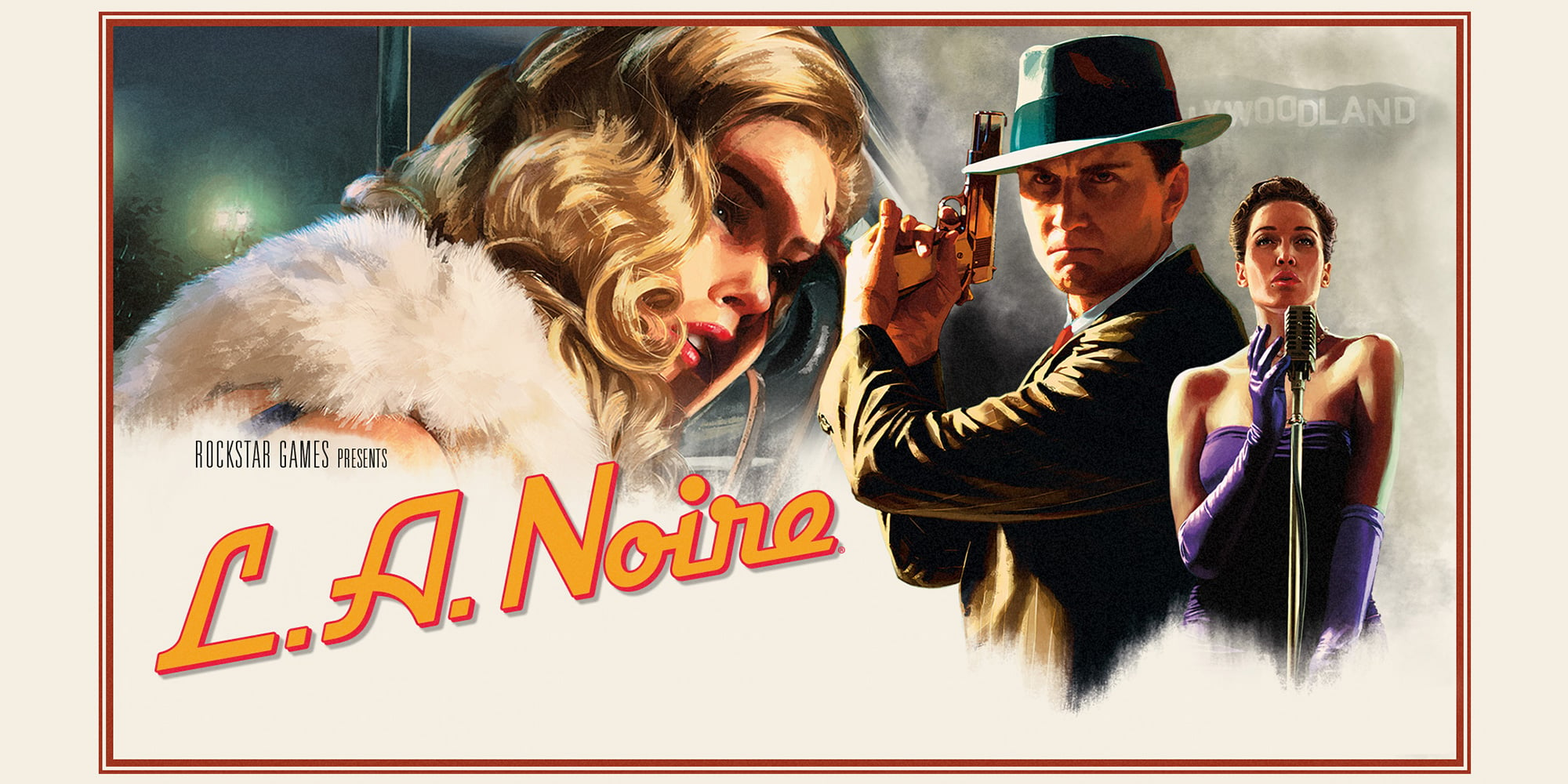
LA Noire still stands out because it does not behave like the Rockstar games people usually talk about first. It has open-world driving, crime, gunfights, and cinematic storytelling, but its rhythm is slower and more investigative. Instead of building its biggest moments around chaos, it asks players to study faces, read rooms, collect evidence, and decide when someone is hiding the truth. That makes the experience feel closer to a hard-boiled detective drama than a traditional action game. The setting helps too. 1947 Los Angeles gives the streets a glamorous, uneasy mood, where sunshine can feel just as suspicious as a dark alley. It is a world of polished cars, smoky rooms, sharp suits, and moral rot hiding under a beautiful surface. That identity is hard to replace, which is why people still talk about LA Noire with such affection.
How the Nintendo Switch version helped keep the game alive
The Nintendo Switch release in 2017 played a meaningful role in keeping LA Noire visible beyond its original generation. Bringing the game to Nintendo’s hybrid system gave players a chance to revisit the mystery in a portable format, which fit the case-based structure surprisingly well. A single investigation could be played on the couch, in handheld mode, or during shorter sessions without losing the game’s sense of atmosphere. The Switch version also arrived with the complete original game and its extra downloadable cases, making it a strong entry point for players who missed the 2011 launch. For Nintendo fans, it was notable because Rockstar’s support on Nintendo hardware has often been selective. LA Noire on Switch felt like a rare meeting point between Rockstar’s cinematic style and Nintendo’s flexible play style, and that combination helped the game stay part of the conversation.
The detective fantasy that still gives LA Noire its identity
The appeal of LA Noire comes from a fantasy that games still do not explore often enough. It lets players step into the shoes of a detective who has to do more than chase a marker across a map. You examine bodies, inspect rooms, follow leads, interview witnesses, and try to separate nervous honesty from practiced deception. That structure gives every case a hands-on quality. You are not just watching Cole Phelps solve crimes. You are trying to keep up with him, and sometimes you may feel one step behind. That is part of the fun. The game turns suspicion into a mechanic and makes observation feel powerful. In an industry full of bigger weapons, louder explosions, and faster movement, LA Noire still feels refreshing because it trusts silence, tension, and raised eyebrows to do some of the heavy lifting.
Why facial animation became central to the experience
One of LA Noire’s defining features was its use of detailed facial performance capture, which became central to the way interrogations worked. The idea was simple to understand but tricky in practice: watch a suspect closely, compare their expression with the evidence, and decide whether they are telling the truth. That made faces feel like part of the puzzle. A glance, a twitch, or a nervous pause could pull the player into the moment. It was not perfect, and some players still debate how clear those reads were, but it gave LA Noire a signature that people remember. In a modern return, that same idea could be fascinating with current technology. Better animation, stronger writing, and more natural dialogue systems could make interrogations feel sharper, more human, and far less mechanical.
How small details made every case feel personal
LA Noire worked because its smaller details often carried as much weight as its bigger plot turns. A matchbook, a broken window, a discarded letter, or a suspect’s odd reaction could change how a case felt. These little pieces encouraged players to slow down and actually look, which is not always easy in a medium that often rewards speed. The best moments felt like putting together a jigsaw puzzle while someone kept turning down the lights. That sense of uncertainty gave the game personality. You could enter a crime scene thinking you understood what happened, only to find one object that made the whole thing wobble. A future LA Noire would need to protect that feeling, because the magic is not only in solving crimes. It is in doubting yourself along the way.
Why Rockstar’s legacy IP library creates so much speculation
Rockstar’s older franchises create endless speculation because the company has made so many distinctive games, yet releases major projects at a very deliberate pace. Fans still discuss Bully, Midnight Club, Manhunt, Max Payne, and LA Noire because each one offered something with a clear identity. That kind of catalog naturally creates questions. Which worlds are worth revisiting? Which ideas still fit modern expectations? Which teams would want to take them on? Zelnick’s comments touch that exact pressure point. When a company has famous legacy IP, fans want reassurance that those names are not locked away forever. At the same time, a beloved name can become a trap if it returns without purpose. Rockstar’s reputation is built on patience and polish, so any revival would need more than nostalgia. It would need a creative reason strong enough to justify reopening the file.
What a modern LA Noire return would need to get right
A modern LA Noire return would need to respect the original while being honest about how much the medium has changed. Players would expect more reactive investigations, richer character writing, and less rigid case logic. The original game had memorable ideas, but a new entry could give players more ways to interpret evidence, challenge suspects, and reach conclusions. Imagine a case where the truth is clear, but proving it depends on how well you handled earlier interviews. That kind of structure could make detective work feel less like choosing the correct menu option and more like building a legal and emotional argument. The world would also need to feel alive without distracting from the investigation. LA Noire does not need to become a giant playground of chaos. It needs a city that whispers secrets when players are willing to listen.
How the setting could evolve without losing the noir mood
The original 1947 Los Angeles setting is a huge part of LA Noire’s identity, but a future project would not have to copy it exactly to feel authentic. It could return to post-war Los Angeles with more detail, or it could explore another era where crime, politics, media, and public image collide. The key is mood. LA Noire needs a setting where beauty and corruption sit side by side, where every polished surface might hide something ugly underneath. That could mean another late-1940s story, a 1950s crime drama, or even a different city shaped by its own scandals. Whatever direction Rockstar might choose, the setting would need texture. Players should feel the heat from the pavement, the tension in a suspect’s living room, and the weight of a city pretending everything is fine.
How Cole Phelps and 1940s Los Angeles shaped the original appeal
Cole Phelps remains a memorable lead because he is not a simple wish-fulfillment hero. He is disciplined, ambitious, flawed, and often difficult to like, which makes him more interesting than a spotless detective archetype. His journey through the LAPD gives the game structure, while the city around him reflects the pressure of his career and personal life. Los Angeles is not just scenery. It is part of the story’s machinery, filled with glamour, crime, secrets, and people trying to survive in a world that rewards appearances. That combination gave LA Noire its strange emotional pull. You were not only solving disconnected cases. You were watching a man climb through a system that could expose criminals while hiding its own rot. That is why the game still has dramatic weight years later.
Why patience is part of the Rockstar conversation
Talking about any possible Rockstar project requires patience, because the company rarely moves on the same rhythm as fans’ wish lists. That can be frustrating, especially when a franchise like LA Noire has been quiet for so long. Yet Rockstar’s slow pace is also part of why its announcements carry so much force. The company tends to reveal projects when it is ready, not when speculation gets loud enough. Zelnick’s comments fit that pattern. They give fans something to discuss, but they do not create a roadmap. For anyone hoping to see LA Noire return, patience is not just a polite suggestion. It is part of the deal. The best thing fans can do is enjoy the renewed conversation while staying realistic about what has and has not been said.
What fans can realistically take from Zelnick’s wording
The realistic takeaway is simple: LA Noire is still a name Take-Two is willing to discuss, but no new project has been announced. Zelnick’s answer suggests openness, not confirmation. He spoke broadly about intellectual property and the importance of having a passionate team behind a project. That last part is important because it points to creative motivation rather than simple brand recognition. A new LA Noire would need people who genuinely want to build it, not just a company hoping to pull a familiar title off the shelf. Fans can treat the comments as a positive sign, but not as proof. It is encouraging to hear the door is not bolted shut. It is also wise to remember that no one has handed over the key yet.
The lasting charm of LA Noire on Nintendo platforms
For Nintendo players, LA Noire carries a special kind of charm because its Switch version offered something different from much of the system’s library at the time. It was mature, slow-burning, cinematic, and unusually grounded. Instead of colorful fantasy or fast arcade energy, it brought crime scenes, moral pressure, jazz-soaked atmosphere, and a city full of suspects. That contrast helped it stand out. Playing LA Noire in handheld mode also gave the investigations a personal feel, almost like reading a crime novel you could drive through. If the franchise ever returns, Nintendo fans will naturally wonder whether a future version could land on a Nintendo platform again. There is no confirmed answer, but the Switch release proved that LA Noire can work well in a portable space when handled thoughtfully.
Conclusion
LA Noire has not been officially revived, but it has returned to the conversation in a way that feels worth noticing. Strauss Zelnick’s remarks do not promise a sequel, remake, or remaster, yet they show that Take-Two continues to think about its wider library of legacy IP. For a game as distinctive as LA Noire, that is enough to spark interest without needing to invent certainty. The original remains memorable because it mixed detective work, cinematic storytelling, expressive performances, and a richly staged version of 1940s Los Angeles. The Nintendo Switch version helped keep that identity accessible to another wave of players, proving that the mystery still had a pulse. If Rockstar ever returns to LA Noire, expectations will be high, but the foundation is still strong. Until then, the case remains open, the evidence is intriguing, and fans have every reason to keep one eye on the shadows.
FAQs
- Has a new LA Noire game been announced?
- No. Take-Two CEO Strauss Zelnick recently spoke about the company thinking broadly about its intellectual property, but no new LA Noire game has been officially announced.
- Who would announce a new LA Noire project?
- Zelnick indicated that if anything specific were announced for LA Noire, it would come from Rockstar Games rather than Take-Two corporate leadership.
- When did LA Noire come to Nintendo Switch?
- LA Noire launched for Nintendo Switch on November 14, 2017, alongside updated versions for PlayStation 4 and Xbox One.
- Why do fans still care about LA Noire?
- Fans still care because LA Noire offers a rare mix of detective work, interrogation, evidence gathering, period atmosphere, and cinematic crime drama that still feels distinct from other Rockstar games.
- Could LA Noire work on a modern Nintendo system?
- The 2017 Switch version showed that the game’s case-based structure can fit portable play well. Any future Nintendo release would depend on Rockstar’s plans and platform decisions.
Sources
- Take-Two Boss Gives Hope For LA Noire 2 And Other Sequels, GameSpot, April 28, 2026
- An L.A. Noire Return? Take-Two CEO Strauss Zelnick Hints At Something New, Insider Gaming, April 28, 2026
- 4 New Versions of L.A. NOIRE Coming November 14, Rockstar Games, September 7, 2017
- L.A. Noire Now Available for Nintendo Switch, PS4 and Xbox One, Rockstar Games, November 14, 2017