














Summary:
LEGO and SEGA have recently revealed the LEGO SEGA Genesis Console, a 479-piece display model that celebrates one of the most recognizable gaming systems of the 16-bit generation. Launching on June 1, 2026, the set is priced at $39.99 / £34.99 / €39.99 and gives builders the choice to customize the finished model as either the SEGA Genesis or SEGA Mega Drive. That regional flexibility is a clever touch, because the console carries different names and different memories depending on where you grew up. For some players, it is the Genesis that brought Sonic speeding into living rooms across North America. For others, it is the Mega Drive that defined SEGA’s console identity across Europe and Japan. Either way, the brick-built model taps directly into the kind of retro gaming affection that still makes old hardware feel warm, noisy, and wonderfully alive.
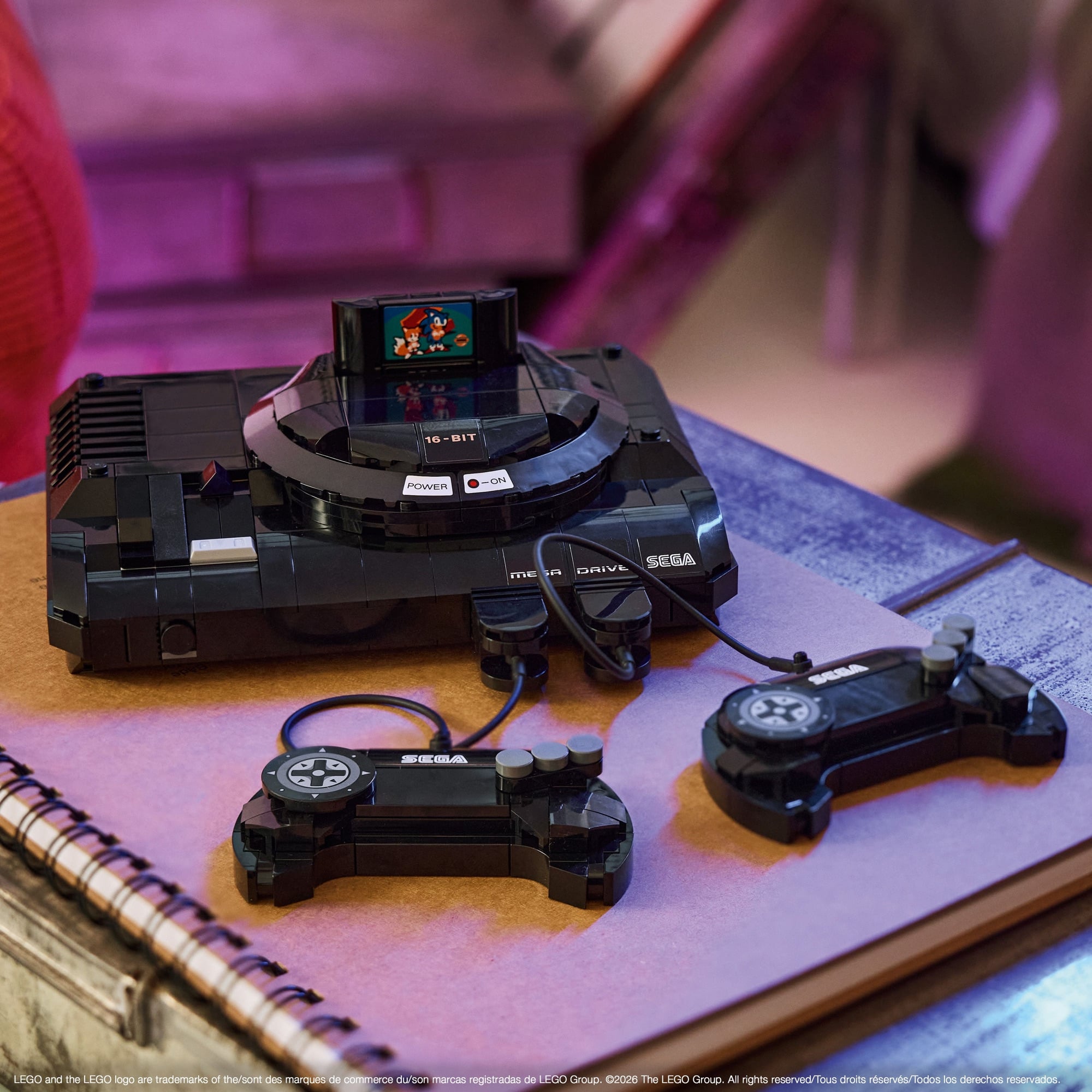
The set includes two detachable controllers, decorative stickers, a removable game card, and a Sonic the Hedgehog-themed detail that gives longtime SEGA fans something extra to smile about. It is not a full-size replica, and it is not trying to be one. Instead, LEGO 40926 looks like a small, shelf-friendly tribute built for desks, gaming rooms, bedrooms, and collector corners. With its approachable price and compact scale, it feels designed for fans who want a neat piece of gaming history without clearing an entire table for it. The result is a charming mix of nostalgia, display value, and playful customization, all wrapped around a console that still knows how to make a room feel a little more 1990s.
LEGO and SEGA bring back a 16-bit icon in brick-built form
LEGO and SEGA have found a neat way to put classic gaming hardware back in the spotlight without asking anyone to blow dust out of a cartridge slot. The LEGO SEGA Genesis Console, also known through its Mega Drive build option, turns SEGA’s famous 16-bit machine into a 479-piece display model made for builders aged 12 and up. It is a small idea with a lot of charm, because this is not just another branded collectible. It is a little brick-built time capsule. For anyone who remembers the bold black console under the television, the click of the controller, or the unmistakable swagger of SEGA’s 1990s identity, this set has that familiar spark. It takes something once designed for play and transforms it into something designed to be admired, which feels fitting for a machine that helped shape so many gaming memories.
Why the SEGA Genesis still carries so much gaming nostalgia
The SEGA Genesis has never really left the conversation, even decades after its original run. Part of that comes from the games, of course, because Sonic the Hedgehog, Streets of Rage, Phantasy Star, Golden Axe, and countless sports titles gave the console a personality that felt fast, loud, and slightly rebellious. But nostalgia is not only about software. It is also about the object itself. The Genesis and Mega Drive had a look that felt sharper and more grown-up than many players expected from a home console at the time. That black casing, circular detail, and no-nonsense controller helped give SEGA’s machine a distinct attitude. It felt like the console equivalent of a leather jacket hanging in a room full of school uniforms. LEGO leaning into that shape makes sense, because the system’s design remains instantly recognizable to fans who lived through that generation or discovered it later through collections, mini consoles, and retro rereleases.
The LEGO SEGA Genesis Console release date, price, and piece count
The LEGO SEGA Genesis Console is scheduled to launch on June 1, 2026, with a listed price of $39.99 / £34.99 / €39.99. That places it in a much more approachable range than many large gaming-themed LEGO releases, which can quickly climb into wallet-sweating territory. The set contains 479 pieces, making it substantial enough to feel like a proper build while still staying compact and easy to display. That balance matters. Not every fan has room for a giant centerpiece, and not every collector wants a weekend-long project that eats the dining table. Here, the appeal sits in the sweet spot between detail and convenience. It is the kind of set someone could build, place near a monitor, and glance at during the day with the quiet satisfaction of seeing a favorite gaming memory rebuilt brick by brick.
What LEGO 40926 includes in the box
LEGO 40926 focuses on the pieces that make the console instantly readable as a SEGA tribute. The model includes the buildable console itself, two detachable controllers, decorative stickers, and a game card that can be removed from the console. Those details matter because retro hardware is often remembered through touch as much as sight. The cable, the controller, the cartridge, the branding, the little design marks on the shell – all of it helps sell the illusion. Of course, this is not a functioning console, and no one should expect to boot up Sonic from a pile of bricks. But as a display piece, it captures the spirit of the original hardware in a playful way. It gives fans the recognizable silhouette first, then rewards closer inspection with smaller details that make the build feel more affectionate than generic.
Two regional build options make the set feel personal
One of the smartest parts of the LEGO SEGA Genesis Console is its ability to represent either the SEGA Genesis or the SEGA Mega Drive. That may sound like a small branding choice, but for retro gaming fans, names carry memories. In North America, Genesis was the name that stood beside SEGA’s famous confidence during the console wars. In Europe and Japan, Mega Drive was the identity tied to the same hardware family. Giving builders both options means the set does not force one version of nostalgia onto everyone. Instead, it lets fans choose the version that matches their own history. That is a lovely move, because retro gaming often lives in the tiny differences. Box art, logos, cartridges, commercials, and regional naming can all shape how people remember the same machine. LEGO seems to understand that the emotional hook is not only the console itself, but the version of the console that lived in someone’s home.
The Mega Drive and Genesis names tell the same story from different angles
The regional naming makes the set feel like a conversation between different gaming childhoods. Someone in the United States might look at the Genesis branding and immediately think of North American marketing, sports games, and Sonic’s rise as a mascot with attitude. Someone in Europe might see Mega Drive and remember a slightly different shelf at the store, different packaging, and a different local gaming culture around the same black console. The hardware connection is shared, but the memories are not identical. That is why this customizable approach works so well. It respects the fact that SEGA’s classic console became a global icon through many local stories. In brick form, those stories can sit on the same shelf, depending on how the builder chooses to finish the model.
Detachable controllers and stickers add the tiny details fans love
A retro console model lives or dies by its details, and detachable controllers are a simple but effective way to make LEGO 40926 feel more complete. The controllers help the display model look less like a static box and more like a tiny gaming setup waiting for someone to press start. Decorative stickers also play an important role here, because branding and surface details are a huge part of what made old consoles recognizable. A plain black brick shape would not carry the same personality. With the right labels and finishing touches, the model starts to feel like a miniaturized tribute rather than just a vague approximation. That is where LEGO often shines. The pieces build the structure, but the small finishing elements give the model its voice. In this case, that voice says, very politely, that blast processing nostalgia still has legs.
Why detachable parts make the display feel more alive
Detachable pieces add a little bit of playfulness even when the set is mainly intended for display. Being able to remove the controllers or game card gives the model a tactile quality, which fits perfectly with a console remembered through physical interaction. Older gaming hardware had rituals. You held the controller, inserted the cartridge, checked the cable, and settled in close enough to the television that someone probably told you to move back. LEGO cannot fully recreate that ritual, but detachable elements nod toward it. They give the set a sense of movement and personality. Even sitting still on a shelf, the model feels like it has just paused between sessions, as if Sonic could burst out of the screen the moment someone turns the imaginary power switch on.
A compact display model built for shelves, desks, and gaming rooms
The LEGO SEGA Genesis Console is clearly built with display in mind, and that makes its compact scale part of the appeal. A smaller model can live almost anywhere. It can sit near a gaming setup, on a bookcase, beside a retro collection, or on an office desk where it quietly tells people that yes, someone here has strong opinions about 16-bit sound chips. That kind of flexibility is useful, because modern collectors often have to choose carefully. Space disappears fast when games, figures, controllers, amiibo, books, and boxed sets start multiplying like Goombas after midnight. A compact tribute avoids that problem. It gives fans a visible piece of SEGA history without demanding too much room. For many people, that makes it more practical than a huge premium set, especially if the goal is a neat display accent rather than a centerpiece that dominates the entire room.
Retro decor works best when it feels intentional
Gaming decor can go wrong when it feels like random merchandise thrown into a corner, but this set has the advantage of being specific and recognizable. It is not just a logo on a plastic item. It is a small object that recreates a piece of hardware history. That gives it a more intentional feel. Someone who sees it on a shelf can understand what it is, and anyone with SEGA memories will likely lean in for a closer look. The build also fits nicely into the growing habit of treating gaming hardware as design history. Consoles are no longer only machines we used until the next generation arrived. They are cultural objects, full of visual language, memories, and identity. LEGO 40926 turns that idea into something charmingly physical.
Sonic the Hedgehog gives the set an extra wink for SEGA fans
No SEGA Genesis tribute would feel complete without at least a nod to Sonic the Hedgehog. LEGO’s official listing mentions a Sonic the Hedgehog portrait as an Easter egg, while coverage of the set has also highlighted Sonic-themed touches connected to the removable game card. That matters because Sonic and the Genesis are almost impossible to separate in gaming history. Sonic gave SEGA a mascot with speed, color, and attitude, while the Genesis gave Sonic the stage he needed to become a global name. Adding a Sonic detail to the set is not just a cute extra. It is a recognition of the character’s role in making the console feel so iconic. Even people who never owned the hardware often associate the Genesis and Mega Drive with blue blur energy, bright loops, and music that still gets stuck in your head at inconvenient moments.
The Sonic detail connects the hardware to the games that defined it
A console model can look accurate, but games are what give hardware its heartbeat. That is why a Sonic reference feels so appropriate. The Genesis was home to many memorable releases, but Sonic became the face of SEGA’s confidence during the 16-bit years. He was fast, cheeky, and colorful in a way that matched the company’s image at the time. A small Sonic detail inside a LEGO set works like a secret handshake for fans. It reminds builders that this was not just a console shaped by plastic, ports, and buttons. It was a machine shaped by afternoons, rivalries, schoolyard debates, and the thrill of seeing a mascot move faster than anything many players had seen before. Small touch, big grin. That is the formula.
How LEGO 40926 fits into the growing world of gaming collectibles
LEGO has been leaning more confidently into gaming-related sets, and LEGO 40926 feels like part of that wider movement. Gaming collectibles have changed a lot over the years. Once, they were often limited to posters, strategy books, figures, or the occasional special edition item. Now, fans can build scenes, consoles, characters, display models, and interactive-looking tributes from bricks. That shift makes sense because games themselves are often about building worlds, learning systems, and interacting with objects. LEGO and gaming share a natural sense of play. A SEGA Genesis model sits comfortably in that space because it celebrates hardware as much as software. It gives fans a way to honor the platform that helped deliver so many memories, while also enjoying the slower, hands-on pleasure of building something piece by piece.
Gaming hardware has become part of pop culture memory
Old consoles are no longer just outdated electronics. They are memory machines. People remember where they sat, who they played with, what games they rented, which levels drove them mad, and which soundtracks made the whole room feel electric. That is why hardware-inspired collectibles can hit harder than expected. They are not only decorative objects. They are triggers for stories. The LEGO SEGA Genesis Console taps into that perfectly. It does not need to be playable to matter. Its job is to remind people of the real console, the energy around it, and the games that made it special. In that sense, LEGO 40926 feels less like a simple model and more like a small tribute to the era when 16-bit gaming felt like the future arriving through a cartridge slot.
Why the lower price makes this set especially interesting
The $39.99 / £34.99 / €39.99 price point is one of the most interesting parts of this reveal. LEGO gaming sets can be wonderful, but they can also be expensive enough to make fans pause, stare at the cart, and start negotiating with themselves like they are buying a small appliance. This set feels different. By keeping the model compact and the piece count at 479, LEGO has created something that feels accessible while still offering meaningful display value. That could make it appealing to a wider group of buyers, including SEGA fans, Sonic fans, casual LEGO builders, retro collectors, and gift shoppers looking for something recognizable without going overboard. It also gives the set an easy impulse-friendly quality. Not completely casual, of course, but close enough that it may tempt plenty of people who would normally skip larger premium builds.
A budget-friendly retro build can reach more fans
There is something refreshing about a nostalgic gaming set that does not feel locked behind a premium price. Retro love is not limited to collectors with huge shelves and even bigger budgets. Plenty of fans simply want a small, well-made reminder of a console they loved, and this set seems aimed directly at them. The lower price also makes it more giftable, especially for birthdays, gaming room upgrades, or the kind of surprise present that says, “Yes, your oddly specific SEGA memories have been noticed.” That matters because nostalgia works best when it feels shared. A more accessible LEGO SEGA Genesis model has a better chance of reaching people who may not buy many LEGO sets but still feel a spark when they see that familiar console shape.
What Nintendo fans may appreciate about this SEGA tribute
Even though this is a SEGA set through and through, Nintendo fans may still find plenty to enjoy here. The Genesis and Mega Drive were once part of one of gaming’s most famous rivalries, but time has softened those old battle lines into something warmer. Many players now look back on the 16-bit generation as a shared golden period, where competition pushed companies to be sharper, stranger, and more creative. For Nintendo fans, a brick-built SEGA Genesis can feel like a tribute to the wider era rather than just one side of the old console war. It is a reminder of playground debates, magazine screenshots, rental store discoveries, and that electric feeling of choosing a side even when everyone secretly wanted to play everything. Funny how time works, right? Yesterday’s rival becomes today’s nostalgic shelf buddy.
The old console rivalry now feels more like shared history
The SEGA and Nintendo rivalry helped define a generation, but modern gaming culture often treats it with affection rather than hostility. That shift is easy to understand. Many players who grew up during that era now appreciate both sides for what they brought to the table. Nintendo had its polished platforming, iconic characters, and family-friendly identity. SEGA brought speed, edge, arcade flavor, and a marketing attitude that felt impossible to ignore. The LEGO SEGA Genesis Console carries that history in miniature. It may be a SEGA product, but it belongs to a broader story about how console competition shaped gaming’s personality. For anyone who loves that era, no matter which system sat under their television, this set offers a small but meaningful reminder of how exciting those years felt.
Why this reveal works as more than simple nostalgia
The LEGO SEGA Genesis Console works because it does more than point at the past and say, “Remember this?” It gives fans something to build, choose, customize, and display. That active element matters. Nostalgia can sometimes feel passive, like scrolling through old screenshots or watching a trailer for the hundredth time. A LEGO build asks you to slow down and physically reconstruct the memory. Each brick becomes part of the console’s shape, and each sticker helps complete the illusion. That process turns a familiar object into a small project. By the time the model is finished, the builder has not just looked back at an old console. They have rebuilt a version of it with their own hands, which makes the final display feel more personal.
The final build feels like a love letter to 16-bit gaming
At its best, LEGO 40926 looks like a compact love letter to the 16-bit years. It understands that the Genesis and Mega Drive were not only pieces of hardware, but symbols of a louder, faster, more competitive gaming period. The set’s two regional options, removable details, controllers, stickers, and Sonic reference all help it feel thoughtful rather than flat. It is not trying to replace the original console, and it is not trying to be a museum-grade replica. It is doing something simpler and arguably more fun. It lets fans celebrate an old favorite in a format that feels playful, affordable, and easy to display. For a console remembered for speed and attitude, that is a pretty charming second life.
Conclusion
The LEGO SEGA Genesis Console is shaping up to be a clever, approachable tribute to one of gaming’s most beloved machines. With 479 pieces, two regional build options, detachable controllers, decorative stickers, a removable game card, and a Sonic the Hedgehog Easter egg, it captures the spirit of SEGA’s 16-bit hardware without becoming oversized or overpriced. The June 1, 2026 launch gives retro fans, LEGO builders, and gaming collectors a clear date to watch, while the $39.99 / £34.99 / €39.99 price makes the set feel refreshingly reachable. More than anything, LEGO 40926 understands why the Genesis and Mega Drive still matter. They were not just consoles. They were attitude, speed, rivalry, sound, color, and countless living room memories packed into one unforgettable black box.
FAQs
- When does the LEGO SEGA Genesis Console launch?
- The LEGO SEGA Genesis Console is scheduled to launch on June 1, 2026.
- How much does the LEGO SEGA Genesis Console cost?
- The set is priced at $39.99 / £34.99 / €39.99, depending on region.
- How many pieces are included in LEGO 40926?
- LEGO 40926 includes 479 pieces.
- Can the set be built as both the SEGA Genesis and SEGA Mega Drive?
- Yes, the model can be customized as either the SEGA Genesis or the SEGA Mega Drive, giving builders a choice between the regional versions.
- Does the LEGO SEGA Genesis Console include controllers?
- Yes, the set includes two detachable controllers, along with decorative stickers and a removable game card.
Sources
- SEGA® Genesis™ Console 40926, LEGO, May 2026
- SEGA® Mega Drive™ console 40926, LEGO, May 2026
- Lego reveals Sega Genesis / Mega Drive console, bringing 479 pieces of retro charm this summer, Video Games Chronicle, May 2, 2026
- SEGA Genesis / Mega Drive LEGO Console Set Launches June 2026, Nintendo Life, May 2, 2026
- LEGO SEGA Genesis Console revealed!, Brickset, May 2, 2026