





Summary:
Shigeru Miyamoto recently explained why the original Super Mario Bros. doesn’t end with a traditional boss battle against Bowser. Facing tight technical limits and a design built around running and jumping, Miyamoto and the team realised a full-on fight didn’t fit the game’s rhythm. Instead they leaned into the core rule of the game – reach the far right of the stage – and discovered that simply jumping over Bowser so he falls into the lava felt fun and satisfying. That single decision solved a development problem while reinforcing the game’s identity, and it helped shape how Mario boss encounters evolved in later entries. For Nintendo fans, hearing this backstory highlights how elegant solutions, not flashy mechanics, often create the most memorable moments.
How Miyamoto Solved the Boss Problem
At a press conference held in October, Shigeru Miyamoto described the development challenge the team faced when they tried to design a finale for Super Mario Bros. The designers had a clear goal – the game is about running to the right and performing actions like jumping, swimming and flying – but creating a convincing, satisfying boss fight inside those constraints proved difficult. Rather than force a conventional combat script that would break the flow, Miyamoto asked a simple question: what fits the system we already have? By rethinking the win condition to be about reaching the far right of the stage, the team found a solution that matched the core mechanics instead of contradicting them. The result was the iconic bridge-and-axe setup where, most of the time, players simply jump over Bowser and trigger the environment to defeat him. That choice wasn’t a cop-out – it was a system-first decision that preserved momentum while delivering a gratifying payoff.
Why the NES Hardware and Design Constraints Mattered
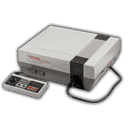
Back in the 1980s, Nintendo’s team worked with extremely limited memory and processing power on the NES. Those hardware constraints shaped every design choice – from level length to enemy behavior – and forced developers to prioritise clear, reliable mechanics. Building an elaborate, multi-phase boss with lots of animations, AI states or complex attack patterns would have been expensive in ROM space and development time. Instead, Miyamoto leaned on what the hardware did well: smooth side-scrolling and tight jump physics. Designing a boss that could be defeated by environmental interaction or a simple timing trick required fewer resources while fitting neatly into the existing level structure. This pragmatic approach is why the original encounter feels so elegant: it solves a technical problem without asking the player to learn an entirely new system at the very end of a level.
Jumping Over Bowser – A Design Choice That Fits the Game
Jumping over Bowser wasn’t just technically convenient; it also matched the way players had learned to engage with the game. Super Mario Bros. teaches players to judge distance, time a jump and keep moving forward – those are the skills that carry through every stage. Turning the finale into a test of those same skills makes the boss encounter feel like a natural extension of the whole experience. Miyamoto pointed out that games like Pac-Man or Tetris make their win conditions obvious by staying true to their systems; Mario’s win condition needed the same clarity. The bridge-and-axe approach preserves the running-and-jumping identity while giving players a moment of triumph that reinforces the mechanics they’d been using all game. It’s a design move that makes sense whether you’re playing for the first time or perfecting a speedrun.
What Players Actually Did: Axe, Fire Flower, and Timing
In practice, most players beat Bowser by jumping to the far right, hitting the axe and watching the bridge collapse. That environmental defeat is the default route and requires nothing beyond the platforming skills the player already has. There is, however, another option: if the player preserved a Fire Flower, they could chip away at Bowser with fireballs and defeat him directly. Both approaches exist because the design team wanted to give players meaningful choices without forcing a new combat system. Timing plays a role too – misjudge a jump or mistime a run and the encounter becomes a tense moment of platforming rather than a scripted boss. That variety keeps the encounter memorable and allows different playstyles to shine, whether you’re cautious, aggressive or just trying to breeze right through.
Impact on Later Mario Games
That early choice to avoid a conventional boss fight didn’t mean Mario never faced Bowser directly again. As the series evolved and hardware capabilities expanded, later titles introduced more active confrontations where Mario could attack or grapple with Bowser in ways that fit those games’ mechanics. But the original decision left a legacy: many Mario boss encounters remain built around the central systems of their respective games. Whether it’s using the environment, power-ups or level-specific mechanics to defeat a boss, the principle is the same – design the boss around what the player already does. For fans tracing Mario’s design lineage, the non-combat Bowser in Super Mario Bros. is a clear ancestor to the varied, creative boss fights that follow across the franchise.
The Philosophy Behind ‘Run and Jump’ Gameplay
Miyamoto has often emphasised designing around player actions and intuition. For Super Mario Bros., that meant building a world where the player’s natural impulses – to keep moving, to time jumps, to react to obstacles – are the primary language of play. The decision to have Mario ‘not fight’ Bowser in the classic sense reflects that philosophy: don’t invent a new language at the last second, stick to the one players already understand. This makes each victory feel earned and consistent with the rest of the experience. It’s a design philosophy NintendoReporters highlights when looking back at classic games – the most memorable moments often come from elegant, reinforcing solutions rather than tacked-on complexity.
Community Reaction and Legacy
Fans and historians regularly point to the original Bowser encounter when discussing the evolution of boss design. The moment of jumping over Bowser has become a shared cultural memory for generations of players, and Miyamoto’s recent comments add fresh context that many find fascinating. Retro players tend to appreciate the cleverness and constraints that produced such a simple-yet-iconic moment, while newer audiences often discover the encounter as an example of how tight design can make a small space huge on emotional payoff. Across forums, videos and retrospectives – including discussions hosted by retro sites and translators who shared Miyamoto’s press remarks – the choice continues to be praised as one of those small decisions that shaped how we think about platform games.
What This Means for New Players and Speedrunners
For someone jumping into Super Mario Bros. for the first time, the bridge encounter is a straightforward lesson in using what the game teaches you. For speedrunners and veterans, that same moment becomes a point of optimisation: how do you reach the axe fastest, how do you preserve power-ups, when is it faster to fire at Bowser rather than trigger the bridge? The encounter’s flexibility is part of its charm – it rewards mastery without punishing casual play. Miyamoto’s explanation shows that this flexibility was intentional: design a system with room for multiple valid approaches, and you create a moment that stays interesting for decades.
Conclusion
Hearing Miyamoto explain why Mario doesn’t directly fight Bowser in the original Super Mario Bros. is a reminder that great game design often comes from asking simple questions and working within limits. The decision to let the environment defeat Bowser fits the game’s rules, conserved resources and created a satisfyingly natural finale. For NintendoReporters readers who live and breathe Nintendo, it’s a neat example of how small, system-driven choices become franchise-defining moments. The story also underlines a timeless lesson for designers and players alike: the most memorable solutions are often the ones that respect the rules already in play.
FAQs
- Did Miyamoto actually say Mario doesn’t fight Bowser?
- Yes – Miyamoto explained this during an October press conference tied to his Order of Culture recognition, saying the team struggled to design a conventional boss fight and found jumping over Bowser fit the game best.
- Was the axe the only way to beat Bowser?
- No – while most players used the axe, preserving a Fire Flower allows defeating Bowser with fireballs, so multiple defeat methods exist by design.
- Does this mean Bowser was always intended to be non-combat?
- Not necessarily; Miyamoto said the choice came from practical development constraints and a desire to stay true to the running-and-jumping system, not from an ideological stance against combat.
- How did this affect future Mario games?
- The approach set a precedent: bosses are often designed around the game’s core mechanics, leading to varied and creative encounters in later Mario titles.
- Where can I read the original press coverage?
- Primary reports and translations were published by outlets that covered Miyamoto’s press conference; see the Sources list below for direct links to those reports.
Sources
- 任天堂・宮本茂氏の文化勲章受章が決定。『マリオ』『ゼルダ』『ピクミン』の生みの親。, Famitsu, October 23, 2026
- 〖快挙〗任天堂・宮本茂氏が「文化勲章」を受章、会見の質疑応答を詳細に掲載, Denfaminicogamer, October 23, 2026
- “I Can’t Create A Battle Like This” – Miyamoto On The Origins Of NES Mario’s Non-Violent Bowser ‘Fights’, Nintendo Life, October 26, 2026
- Shigeru Miyamoto reveals why Mario doesn’t “fight” Bowser in the first Super Mario Bros., Nintendo Wire, October 26, 2026