














Summary:
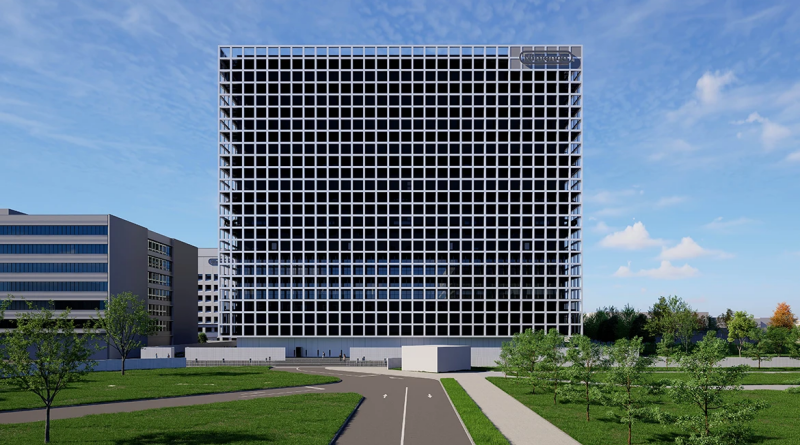
Nintendo has revealed detailed plans for its Technology Development Center, a major research and development facility currently being constructed next to the company’s headquarters in Kyoto, Japan. The building was previously known by the temporary name Corporate Headquarters Development Center, Building No. 2, but Nintendo has now adopted a permanent name that more clearly reflects its purpose. Scheduled for completion in March 2029, the facility will support research involving both software and hardware.
The center will provide office space for developers alongside the technical functions and infrastructure required for future projects. Nintendo specifically mentions development servers, showing that the building is being designed as more than a conventional workplace. It will give teams access to the computing resources, working environments and shared facilities needed as modern game and hardware development becomes larger and more technically demanding.
Nintendo currently estimates that construction will cost ¥121 billion. The completed building will contain nine floors above ground and one below ground, with a total floor area of 49,305.87 square metres. These specifications differ substantially from the original proposal announced in 2022, reflecting how Nintendo has expanded and revised the project over time. The company also says it intends to continue investing in the center after construction, making the facility a long-term foundation for its research activities rather than a finished project that remains frozen in place.
Nintendo reveals its Technology Development Center
Nintendo has shared a clearer picture of the large research and development facility taking shape beside its headquarters in Kyoto. The building will officially be known as the Nintendo Co., Ltd. Technology Development Center, replacing the somewhat less memorable working title Corporate Headquarters Development Center, Building No. 2. That earlier name sounded more like a label attached to an architect’s folder than the identity of a major new facility. The permanent name is simpler, more direct and closely connected to the work Nintendo expects to carry out inside it. Construction is already underway, with completion currently planned for March 2029. Nintendo describes the building as a new research and development base for its software and hardware, placing it at the heart of the company’s preparations for future entertainment products. Although the announcement does not reveal any games, systems or accessories being developed there, it confirms that Nintendo is creating a substantial physical foundation for the work that will shape its future.
A permanent name replaces the original working title
When Nintendo first announced the project in April 2022, it referred to the proposed building as Corporate Headquarters Development Center, Building No. 2. That name was always temporary, and the newly confirmed Technology Development Center gives the facility a clearer identity before construction is completed. The change may look minor on paper, but names often reveal how a company thinks about a building’s role. Rather than presenting it as little more than an extension of the headquarters complex, Nintendo is placing technology development front and centre. The wording also suits a facility designed to support several forms of research rather than one isolated team or product line. Software, hardware, technical infrastructure and developer workspaces will all share the same base. It is a practical name for what appears to be a highly practical building, even though the projects created inside may eventually involve plumbers, princesses, squid children or talking flowers. Nintendo’s imagination can be colourful, but the machinery behind it requires serious space and planning.
The facility will support software and hardware research
The most important detail in Nintendo’s announcement is the center’s intended purpose. It will serve as a new research and development base for both software and hardware, reinforcing the close relationship between the two sides of Nintendo’s business. That connection has long distinguished the company from publishers that primarily create games for systems designed by someone else. Nintendo develops the machines, operating environments, controllers, services and software experiences that work together around them. Bringing more of that research into a purpose-built facility could make communication between technical specialists and creative developers easier. A hardware feature can inspire a new game mechanic, while an idea from a software team can reveal what future hardware needs to accomplish. The relationship works like a conversation rather than a one-way street. Nintendo has not identified which departments will occupy the building, so it would be premature to assign particular teams to it. What is confirmed is that the center will provide a shared base for the company’s continuing software and hardware research.
Development servers will form part of the infrastructure
Nintendo says the Technology Development Center will contain the functions and infrastructure needed for future research and development, including development servers. That specific reference offers a useful clue about the building’s technical role. Modern development depends on far more than desks, meeting rooms and powerful individual workstations. Teams need servers for compiling software, storing and managing project data, testing builds, running automated processes and supporting collaboration between large groups of specialists. Games and system software can involve enormous numbers of files, frequent updates and countless internal versions, so dependable infrastructure is essential. A server room may not attract the same excitement as a new console reveal, but it is part of the engine room that keeps production moving. Think of it as the backstage crew at a theatre: rarely visible to the audience, yet absolutely necessary once the curtain rises. By planning this infrastructure directly into the new center, Nintendo can create an environment tailored to its future technical requirements instead of squeezing new workflows into spaces designed for an earlier period.
Nintendo plans to keep investing after construction
The project will not end when the builders hand over the keys. Nintendo states that it plans to continue investing in the Technology Development Center over time, suggesting that its equipment and capabilities will evolve alongside the company’s development needs. That matters because technical facilities can age quickly. Servers require replacement, security systems need updating, data capacity grows and new production methods place different demands on internal networks. A building completed in 2029 must be capable of supporting work well beyond that date. Nintendo’s commitment to continued investment indicates that the center is being treated as a living technical environment rather than a static collection of offices. The structure provides the shell, but the tools inside will determine how useful it remains. Continued spending could cover computing infrastructure, laboratories, testing equipment and other resources, although Nintendo has not provided a detailed list. The confirmed point is straightforward: the company expects to keep developing the center itself while its teams use it to develop future software and hardware.
The building represents a major financial commitment
Nintendo currently estimates the construction cost at ¥121 billion, making the Technology Development Center a significant long-term investment. The amount covers the building project rather than every future expense associated with operating and upgrading the facility. Even so, it demonstrates how seriously Nintendo is treating the expansion of its research capabilities. Companies rarely commit this level of capital to a temporary requirement. The center is being built to support years of development activity and to give Nintendo room for future growth. Physical infrastructure may lack the immediate glamour of a blockbuster release, but it can influence how efficiently many later projects are produced. Better spaces, stronger technical systems and closer collaboration can support multiple teams at once. The investment also arrives during a period in which game development has become increasingly demanding, with larger assets, more complicated testing processes and a growing need for specialised expertise. Nintendo is effectively building a larger workshop while ensuring that the workshop has enough electricity, storage and tools for whatever its creators attempt next.
Revised specifications reveal how the project has grown
The finalised plans describe a substantial building at 11-1 Hokotate-cho, Kamitoba, Minami-ku, Kyoto. It will cover a building area of 6,084 square metres and provide a total floor area of 49,305.87 square metres. The structure will stand 67.570 metres tall when rooftop structures are excluded, with nine floors above ground and one underground level. Those numbers make the scale easier to understand. This is not a small satellite office tucked quietly behind the headquarters. It is a major development base designed to accommodate people, technology and supporting infrastructure under one roof. The underground floor may naturally invite playful speculation about secret laboratories and experimental controllers, but Nintendo has disclosed no such details. What matters is the usable scale of the facility. A floor area approaching 50,000 square metres gives the company considerable flexibility when arranging offices, technical areas, meeting spaces and development infrastructure. The specifications also show how far the project has moved beyond the outline first presented in 2022.
The Kyoto location keeps research close to Nintendo headquarters
The Technology Development Center is being constructed on land adjacent to Nintendo’s headquarters in Kyoto. That location is strategically useful because it keeps the new research base close to the company’s senior management, existing development operations and other corporate functions. Physical proximity still matters, even when digital communication can connect teams in seconds. Hardware prototypes, confidential demonstrations and specialised testing equipment are not always things you casually send through a group chat. Being nearby can make meetings, reviews and cross-team cooperation more direct. It also allows Nintendo to expand its development capacity without spreading important functions across distant parts of the city. The company acquired the site from the City of Kyoto after being selected through a public proposal process. The land had previously contained a startup support factory and part of a materials and disaster prevention center. Its redevelopment will therefore transform an existing urban site into a base intended to support Nintendo’s next generations of technical and creative work.
The project has changed considerably since its 2022 announcement
Nintendo’s original proposal looked rather different from the facility now under construction. In April 2022, the company announced that it would purchase the 10,028.55-square-metre site for ¥5 billion. The early plan described a 12-storey, steel-framed building approximately 72 metres tall, with around 38,000 square metres of floor space and completion expected in December 2027. Nintendo later revised the project and decided to increase its scale, moving the expected completion into 2028. The latest plan now targets March 2029 and lists nine above-ground floors, one basement level and a much larger total floor area of 49,305.87 square metres. Fewer visible storeys do not mean a smaller facility, since the overall floor space has increased substantially. The redesign appears to favour broader floors or a different internal arrangement. Nintendo has not published every reason behind each architectural change, but it has previously explained that the project was expanded. Buildings of this size rarely travel from sketch to completion without a few mushrooms appearing on the path.
What the center may mean for Nintendo’s future
The Technology Development Center gives Nintendo more room and stronger infrastructure for future research, but it should not be treated as confirmation of a particular console, game or experimental device. Research and development covers a broad range of activities. Teams may investigate graphics technology, networking, operating systems, controllers, accessibility, audio, storage, manufacturing methods, security, development tools and entirely new ways to interact with entertainment. Some ideas eventually become visible products, while others improve internal processes or never leave the prototype stage. That uncertainty is part of research. You test ten doors because one of them might open somewhere interesting. Nintendo’s statement carefully avoids naming individual projects, focusing instead on the environment required to create them. The value of the center may therefore emerge gradually across multiple releases rather than through one dramatic announcement. Its influence could appear in smoother development workflows, new hardware features, stronger technical performance or playful ideas that are difficult to predict from the outside.
The announcement does not confirm individual products
It is tempting to connect a new technology facility with rumours about Nintendo’s next system or a long-awaited return for a particular franchise. However, the confirmed information does not support claims about specific products. The building is scheduled for completion in March 2029, but Nintendo is already conducting research and development through its existing facilities and teams. The Technology Development Center will expand that capacity rather than switch it on for the first time. Its purpose is broad enough to support several hardware and software generations, including projects that may still be years away from public discussion. Readers should therefore separate the significance of the investment from speculation about what will emerge from it. The center clearly matters, but its importance lies in creating options. More space, infrastructure and technical resources give Nintendo’s teams greater freedom to explore ideas. Which ideas eventually reach consumers will depend on development results, business decisions and Nintendo’s belief that they can offer something genuinely different.
Nintendo connects the investment to original entertainment
Nintendo says the new facility and further investment in research and development will help it create more reasons for consumers to choose Nintendo for unique, family-friendly entertainment. That statement links a very practical construction project to the company’s wider creative philosophy. Buildings and servers are not entertainment by themselves, of course. Nobody is likely to queue overnight for a development server, no matter how impressive its cooling system looks. Their value comes from what developers can produce with them. Nintendo has built its identity around combining familiar technology with distinctive ideas, whether through portable play, unusual controllers, local multiplayer or software that reaches audiences beyond traditional gaming circles. The Technology Development Center is intended to strengthen the foundations behind that approach. It gives Nintendo a larger place to test, build and refine its ideas while maintaining close ties between hardware and software research. The results may remain invisible for years, but the investment shows that Nintendo is preparing the tools and space needed to keep experimenting.
Conclusion
Nintendo’s Technology Development Center is shaping up to be one of the company’s most important infrastructure investments in recent years. The Kyoto facility will support software and hardware research, provide offices for developers and house technical resources that include development servers. Its estimated ¥121 billion construction cost, nearly 50,000 square metres of floor area and planned continued investment underline the scale of Nintendo’s commitment. The project has grown and changed since it was announced in 2022, with its completion date now scheduled for March 2029. No individual games or systems have been connected to the building, and speculation should remain separate from the facts Nintendo has disclosed. What is clear is that the company wants more room, stronger infrastructure and a modern base from which its teams can prepare future entertainment. We may not see the experiments taking place inside, but their influence could eventually reach millions of players through the hardware, software and unexpected ideas that follow.
FAQs
- What is Nintendo’s Technology Development Center?
- It is a new research and development facility being constructed in Kyoto, Japan. Nintendo says it will support the development of both software and hardware while providing offices, development servers and other infrastructure required for future projects.
- When will the Nintendo Technology Development Center be completed?
- Nintendo currently plans to complete construction in March 2029. The original proposal targeted December 2027, but the project was later expanded and revised.
- How much will Nintendo’s new development center cost?
- The current estimated construction cost is ¥121 billion. Nintendo also plans to continue investing in the center after its construction has been completed.
- Where is the Technology Development Center located?
- The facility is located at 11-1 Hokotate-cho, Kamitoba, Minami-ku, Kyoto, Japan, on land adjacent to Nintendo’s headquarters.
- Has Nintendo confirmed which products will be developed there?
- No. Nintendo has confirmed that the facility will support future software and hardware research, but it has not announced any specific games, consoles, accessories or other products connected to the building.
Sources
- Construction of the Technology Development Center, Nintendo, June 25, 2026
- The Acquisition of the City Owned Land Adjacent to Nintendo Headquarters, Nintendo, April 12, 2022
- Nintendo Announces The Construction Of A New ¥121 Billion R&D Center In Japan, Nintendo Life, June 25, 2026
- Nintendo Confirms That Its New Development Centre Has Been Delayed To Make It Bigger, Video Games Chronicle, November 8, 2023
- Nintendo Buys Land Opposite Kyoto Headquarters To Build New R&D Facility, Game Developer, April 13, 2022