














Summary:
Nintendo fans can expect the company to continue exploring original characters, although every new creation will need to clear a demanding internal test. Shigeru Miyamoto recently explained that developing fresh faces is good for Nintendo, but the company must carefully judge whether those characters can connect with players around the world. His comments suggest that Nintendo recognizes the importance of looking beyond familiar heroes such as Mario and Link without creating something new merely for the sake of novelty.
Splatoon provides a particularly revealing example of that philosophy. During development, Nintendo questioned whether the project would be stronger with Mario characters. That possibility disappeared once the team developed the Inklings, whose ability to transform between humanoid and squid forms naturally supported the central ink-based mechanics. Their appearance, personality and movement were not decorations placed on top of the experience. They became inseparable from how it worked.
Miyamoto also looked back at Pikmin, which emerged from his own attempt to develop characters with worldwide appeal roughly 25 years ago. He believes Nintendo now needs to act more proactively, although he jokingly placed responsibility for the next breakthroughs in the hands of younger developers. That passing of the creative torch could lead to unfamiliar heroes, unusual creatures and unexpected worlds appearing alongside Nintendo’s established stars. The company is not abandoning its icons, but it appears increasingly aware that even the brightest constellation needs a few new stars from time to time.
Nintendo Wants to Create More Original Characters
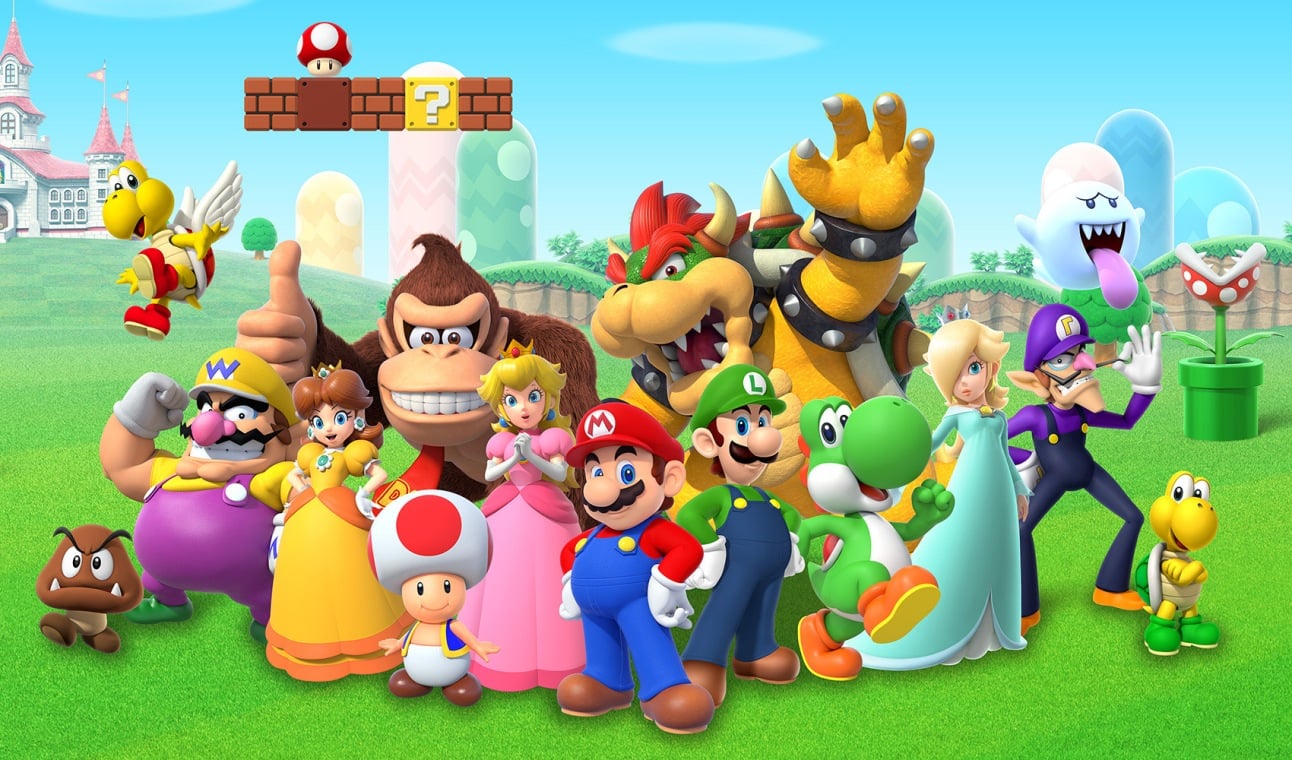
Nintendo has one of the most recognizable collections of characters in entertainment. Mario can be identified by little more than a red cap and moustache, while Link, Kirby, Donkey Kong and Pikachu have become familiar far beyond the people who regularly play games. That history gives Nintendo an enviable advantage, but it also creates a difficult question: when should the company rely on a trusted character, and when should it introduce someone entirely new? Shigeru Miyamoto’s recent comments indicate that Nintendo does not want its famous history to become a creative cage. He described the creation of new characters as worthwhile and said the company should be more proactive about it. That does not sound like a promise that dozens of unfamiliar mascots will suddenly appear. Instead, it points towards a deliberate effort to identify ideas that deserve their own identities rather than automatically dressing them in Mario’s overalls.
Global Appeal Will Remain an Important Test
Miyamoto also stressed that Nintendo must be strict when determining whether a new character can succeed globally. That standard may sound intimidating, especially when players in different countries can have wildly different tastes. A design that charms one audience might leave another completely cold. Nintendo therefore has to look beyond a clever sketch or amusing personality and consider whether a character communicates clearly through movement, expression and gameplay. Mario does not need a lengthy biography to make sense. You see him run, leap and enthusiastically punch the air, and his upbeat nature is immediately understandable. New Nintendo characters face a similarly demanding test. They need to feel distinctive without depending on pages of explanation. Global appeal does not necessarily mean sanding away every unusual edge. In Nintendo’s case, it often means finding an idea so readable and enjoyable that cultural and language barriers become much smaller.
Nintendo Does Not Want Familiar Faces to Restrict New Ideas
Using an established character can make a project easier to introduce. Players already understand Mario, Yoshi or the residents of the Animal Crossing series, so Nintendo can skip some of the work involved in presenting an unfamiliar world. However, that familiarity can also create expectations. Put Mario in a project and players will reasonably anticipate certain movements, sounds and visual rules. A radically different concept may struggle beneath all that history, like trying to squeeze a squid through a plumber-shaped pipe. Miyamoto’s remarks suggest that Nintendo evaluates whether an existing character genuinely strengthens an idea or merely makes it easier to market. When a concept has its own mechanical personality, forcing a familiar cast into it can weaken what makes it special. Creating an original identity gives developers freedom to shape every detail around the central idea, from the way characters move to the language, clothing and architecture of their world.
Splatoon Nearly Became a Mario Experience
Splatoon is now difficult to imagine without its energetic Inklings, neon ink and fashionable urban attitude, yet Nintendo considered whether Mario should be used during development. Miyamoto recalled moments when the company wondered whether the characters being explored were strong enough to justify an original identity. If they were not, using Mario might have been the more sensible choice. That internal discussion reveals how high Nintendo’s standards can be. The team was not automatically rewarded with a new franchise simply because it had invented an ink-based competition. It still needed characters that belonged to that concept. Mario could certainly throw paint around, and he has taken part in enough sporting events to make almost any hobby seem plausible. Even so, placing him in Splatoon would have changed the project’s tone. Players might have viewed it as another Mario spin-off rather than the beginning of a strange, stylish world with its own rules.
The Inklings Proved Their Identity Through Gameplay
The breakthrough came when the team developed the Inklings that players recognize today. These characters can shift between humanoid and squid forms, allowing them to fire ink while standing upright and swim rapidly through surfaces covered in their team’s colour. Their design explains the mechanics before a tutorial has said very much. Why can they disappear into ink? Because they are squid-like creatures. Why does covering the environment matter? Because their alternate form can travel through it. The connection is so natural that replacing them with Mario would have required additional explanations or a very different set of abilities. Miyamoto said the prototype made Nintendo realize there was no need to use Mario. In other words, the Inklings earned their place. They were not simply attractive mascots attached after development. They solved creative problems while giving Splatoon a personality that could not easily be confused with another Nintendo series.
Splatoon Shows How New Nintendo Characters Can Succeed
Splatoon has grown from an unusual Wii U release into one of Nintendo’s most visible modern properties. Its characters appear in merchandise, live performances, crossover appearances and competitive events, while the series has continued across multiple generations of hardware. The Inklings succeeded because Nintendo introduced them through an experience that made their identity meaningful. Their clothing reflects an obsession with street fashion, their music is performed in fictional languages, and their society revolves around ink-based competition. Even small details reinforce the same mischievous, youthful energy. That consistency matters. A memorable character rarely becomes popular because of a single facial feature or catchphrase. Players remember the entire package: the way a character moves, the sounds associated with them, the world they inhabit and the emotions they create. Splatoon combined those elements so effectively that the Inklings quickly stopped feeling like Nintendo’s new experiment and started feeling like natural members of its wider family.
Strong Gameplay Concepts Come Before Market Trends
Miyamoto has also spoken about Nintendo’s preference for beginning with ideas its developers find genuinely entertaining rather than simply following whatever happens to be popular. Splatoon illustrates that approach beautifully. Its foundation was an easily understood question about covering territory with ink. The characters, weapons and competitive structure developed around that central activity. Nintendo did not appear to begin by deciding it needed a fashionable new mascot for a particular audience. It began with play. That order is important because players can sense when a character exists only as packaging. A polished design might earn a few admiring glances, but it will struggle to build a lasting relationship if the surrounding experience feels hollow. When the mechanics and character reinforce one another, each action tells you something about who that character is. The result feels less like a product assembled from market research and more like a living idea that discovered the right shape.
Distinctive Worlds Help Characters Become Memorable
The Inklings would not have made the same impact in a plain arena without music, fashion or social spaces. Their world gives them context. Inkopolis and the Splatlands are filled with signs, shops, musicians, food stalls and sea-creature residents who make the setting feel playful but coherent. That surrounding culture transforms the playable characters from squid-shaped avatars into members of a recognizable society. Nintendo has often used this method to strengthen its creations. Pikmin belong in overgrown natural environments where ordinary objects appear enormous. The inhabitants of Animal Crossing make sense in peaceful communities shaped by daily routines and seasonal changes. Even Mario’s colourful enemies become more memorable because the Mushroom Kingdom follows its own cheerful dream logic. For future characters to thrive, Nintendo will likely need to create similarly convincing spaces around them. A good silhouette catches your eye, but a good world gives you reasons to keep looking.
Pikmin Remains an Important Point of Comparison
Miyamoto noted that approximately 25 years have passed since he arrived at Pikmin, which he described as the outcome of his pursuit of a character capable of appealing globally. Pikmin presented a very different type of Nintendo hero. These tiny plant-like creatures were not wisecracking adventurers or fearless warriors. They were vulnerable, obedient and oddly mysterious, capable of being both adorable and a little unsettling when danger arrived. Their simple shapes and bright colours made them easy to recognize, while their behaviour was tied directly to the strategic mechanics. Players could throw them, direct them, separate them by type and watch them work together to carry objects far larger than themselves. As with the Inklings, form and function supported each other. The Pikmin were not added because Nintendo needed another cute face for a box. The entire experience depended on players understanding and caring about a crowd of tiny creatures.
Pikmin also demonstrates that global appeal does not require a character to resemble Nintendo’s previous successes. The series is quieter, stranger and more contemplative than Mario, yet its characters have gradually become recognizable across games, merchandise, mobile experiences and Nintendo’s wider promotional efforts. Their growth was not instantaneous. It developed through repeated appearances and a clearly maintained identity. That history may influence how Nintendo approaches future creations. Every new character does not need to become a worldwide phenomenon immediately. Some need time, stronger sequels or new ways for audiences to meet them. Strict judgment can protect Nintendo from weak ideas, but patience remains equally valuable. A seed does not become a flower because someone shouts at it, and a new character may need more than one appearance before its full potential becomes visible.
Younger Nintendo Developers Will Shape the Next Generation
Miyamoto ended his thoughts with a laugh, saying he would leave the creation of new characters to Nintendo’s younger generation. The joke carries genuine significance. Nintendo’s best-known properties are strongly associated with legendary creators, but no company can depend forever on the same handful of people. New designers bring different experiences, interests and cultural influences into development. They grew up with games, online communities and forms of entertainment that did not exist when Mario first jumped over a barrel. That background could produce characters that feel unmistakably Nintendo while expressing ideas that earlier generations might never have considered. Splatoon already shows what can happen when younger developers receive room to explore. Its fashion, music and multiplayer culture speak with a voice distinct from Nintendo’s older properties. Future characters may be equally surprising, particularly when their creators are trusted to pursue ideas they personally find exciting.
New Characters Do Not Always Require Entirely New Genres
Creating a new character does not mean Nintendo must invent a category of entertainment nobody has ever seen before. Familiar mechanics can feel fresh when they are reorganized around a strong identity. Splatoon still contains recognizable elements of competitive action games, yet swimming through ink, controlling territory and changing forms give it a personality of its own. Pikmin includes strategy and resource management, but its small creatures and garden-like environments create an emotional tone unlike a traditional military strategy experience. Future Nintendo teams may take similarly familiar foundations and twist them around a new central idea. The important question is not whether every individual ingredient has never appeared elsewhere. It is whether the final combination creates a clear reason for a new character to exist. A chef does not need to invent salt to create a memorable meal. The skill lies in choosing ingredients that belong together.
Nintendo Can Balance Established Franchises With Fresh Ideas
Nintendo’s desire to create new characters does not mean Mario, Zelda, Kirby or its other established properties will be pushed aside. Those series remain enormously valuable, and each one can support new mechanics, settings and interpretations. The more realistic possibility is a balanced schedule in which familiar names provide dependable anchors while original projects introduce greater uncertainty and surprise. That balance benefits both sides. Successful established releases can give Nintendo the confidence to support riskier concepts, while new creations prevent its line-up from feeling trapped in an endless loop of nostalgia. Players often say they want completely original experiences, but they also become excited when a beloved series returns. Nintendo has to serve both desires without allowing either one to dominate. It is a tricky juggling act, although this is a company that has kept a plumber, a princess, a dinosaur and several talking mushrooms in the air for decades.
Original characters can also create opportunities beyond games. Nintendo now uses its properties across films, theme parks, stores, merchandise and mobile services. A character with a strong visual identity can reach people who have never held a controller, but that broader potential makes the initial creative decision even more important. Nintendo will want characters that work inside their original experiences before considering how they might appear elsewhere. Starting with merchandise or cinematic ambitions could place the cart several miles ahead of the horse. Mario, the Inklings and Pikmin became valuable because players first formed relationships with them through play. Other appearances then expanded those relationships. Future creations are likely to follow the same path: establish a meaningful role, develop a recognizable world and only then explore how far the character can travel.
What Miyamoto’s Comments Mean for Nintendo’s Future
Miyamoto’s remarks should not be treated as confirmation of a specific unannounced project. He did not reveal a character, game or release schedule. What he offered was a view of Nintendo’s creative direction. The company sees value in developing original faces and believes it should pursue them more actively, but it will not lower its standards simply to claim that it has launched something new. Each character must justify itself through an idea that can resonate internationally. Splatoon met that standard when the Inklings made Mario unnecessary. Pikmin met it by turning tiny, plant-like helpers into the emotional and mechanical centre of an unusual strategy experience. The next success may look nothing like either of them. That is part of the excitement. Nintendo’s most enduring creations tend to feel obvious only after someone has taken the risk of inventing them.
For players, this approach offers a promising middle ground. Nintendo is not suggesting it will abandon the heroes people already love, nor is it satisfied with relying exclusively on familiar faces. It wants its younger developers to find concepts capable of standing beside those icons. The process will probably produce prototypes that disappear, characters that are redesigned beyond recognition and ideas that eventually return to Mario because they never establish a stronger identity. That selectiveness is not necessarily a weakness. The discarded experiments can help a team discover what makes the successful one special. Somewhere inside Nintendo, another group may already be asking the same question once raised during Splatoon’s development: does this really need to be Mario? The most interesting moment will arrive when the answer is a confident no.
Conclusion
Shigeru Miyamoto believes Nintendo should be more proactive in creating new characters, but originality alone will not be enough. The company intends to judge whether each idea can connect with a worldwide audience and whether an original identity genuinely serves the experience. Splatoon remains the clearest modern example. Nintendo considered using Mario, yet the Inkling prototype matched the mechanics so perfectly that the project no longer needed him. Pikmin offers another model, showing how an unusual design can build lasting recognition when every feature supports the way players interact with it. By placing more responsibility in the hands of younger developers, Nintendo can preserve the playful philosophy behind its classic properties without endlessly repeating them. We may not know what its next major character will be, but the conditions are being created for someone unexpected to step into the spotlight.
FAQs
- Does Nintendo plan to create more new characters?
- Shigeru Miyamoto said Nintendo needs to be more proactive about creating new characters. However, each idea will still be carefully evaluated to determine whether it can appeal to players around the world.
- Did Nintendo consider using Mario in Splatoon?
- Yes. During development, Nintendo questioned whether Mario would be a better fit than the early character concepts. Once the team developed the modern Inklings, it concluded that Splatoon no longer needed Mario.
- Why were the Inklings right for Splatoon?
- Their ability to change between humanoid and squid forms directly supports Splatoon’s mechanics. They can use weapons while upright and swim through friendly ink in squid form, connecting their design to every match.
- Why did Miyamoto mention Pikmin?
- Miyamoto described Pikmin as the result of his own effort to create globally appealing characters. With roughly 25 years having passed since their original arrival, he believes Nintendo should pursue more original creations.
- Will Miyamoto personally create Nintendo’s next character?
- Miyamoto jokingly said he would leave that responsibility to Nintendo’s younger generation. His statement suggests that newer development teams will play a central role in shaping the company’s future characters and properties.
Sources
- Miyamoto Says Nintendo Is Interested in Creating New Characters, but Only if They Have Global Appeal, Nintendo Everything, July 23, 2026
- Shigeru Miyamoto Says Nintendo Needs to Be Strict When Creating New Characters, GamesRadar+, July 23, 2026
- Miyamoto: Games Based on Developers’ Personal Interests Resonate Around the World, Video Games Chronicle, July 22, 2026
- The Splatoon Journey, Nintendo, 2026
- Ask the Developer Vol. 10, Pikmin 4 – Chapter 1, Nintendo, July 20, 2023